
Category: Places Less Visited

Hidden gems and quieter corners of Britain: abbey ruins, secret gardens, coastal art and the places most visitors miss.

  • Isle of Skye Beyond the Crowds: the Fairy Glen and Quieter Corners

    Isle of Skye Beyond the Crowds: the Fairy Glen and Quieter Corners

    Skye rewards the traveller who arrives early, lingers late and turns down the road everyone else drives past, from the green hummocks of the Fairy Glen to the soft, wooded shores of Sleat.

    Why Skye Is Still Worth It

    Few Scottish islands carry quite so much romance. The Cuillin ridge, the basalt pinnacles of Trotternish and the long sea lochs make Skye one of the most photographed places in Britain, and in July and August its most famous viewpoints can feel more like a festival than a wilderness. Yet the island is large, and most visitors follow the same short circuit. Step a little sideways in time or place and Skye becomes what it always was: quiet townships, seals on the skerries, peat smoke on the air and light that changes every ten minutes.

    This guide, part of our Places Less Visited series, shows how to see the icons at gentler hours, where to go instead when the car parks overflow, and the handsome hotels that make a slower Skye stay a genuine pleasure.
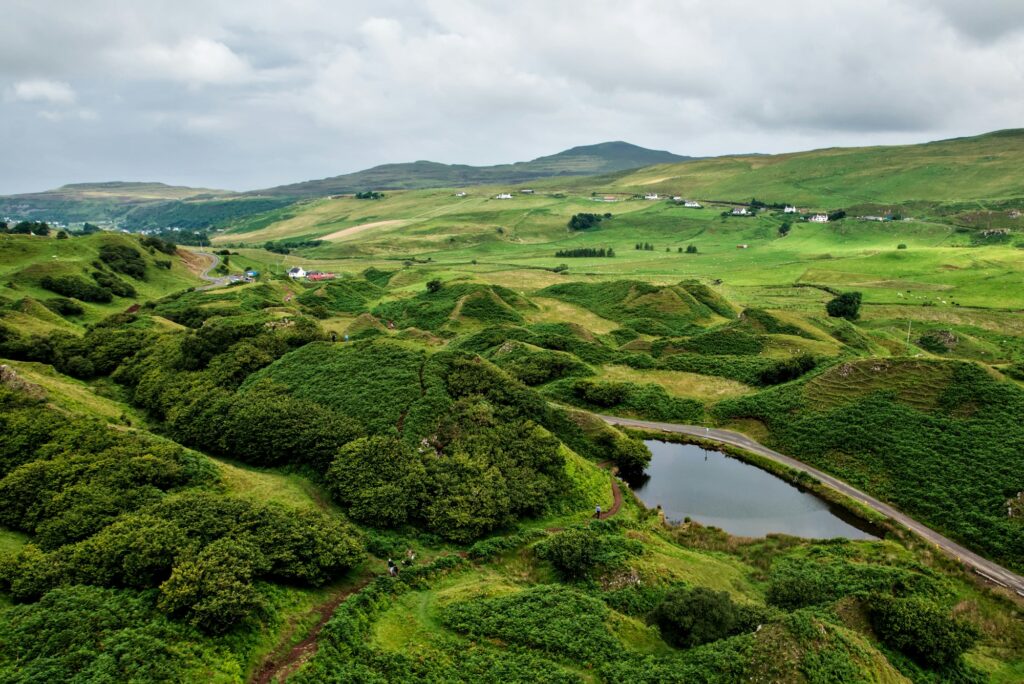
    Grassy cones, winding road and a small lochan in the Fairy Glen near Uig, seen from Castle Ewen, Isle of Skye
    The Fairy Glen at first light, before the day trippers arrive. Photo: Stefano Bucciarelli / Unsplash

    The Fairy Glen, Gently

    Tucked into the hills above Uig in northern Trotternish, the Fairy Glen is a miniature landscape of grassy cones, terraces and a small lochan, crowned by a rocky outcrop known as Castle Ewen. It is utterly charming and, because it is small, easily overwhelmed. Take the single-track road signposted to Sheader and Balnaknock, just south of Uig; the glen lies about a mile and a half along it, with a modest pay car park run by Highland Council. When it is full, park considerately in Uig and walk up rather than squeezing onto verges.

    A word on the stone spirals you may see in older photographs. They are not ancient and they are not a local tradition: visitors made them, and residents have repeatedly cleared away hundreds of stacked stones to protect the turf. Please do not build circles, stack cairns or add stones, and leave no coins or trinkets behind. The magic of the place is that it looks untouched.

    Tip: Arrive before 9am or in the last hours of a summer evening. Tour groups tend to come mid-morning, and the low light makes the little hills glow.

    The Famous Four, at Quieter Hours

    You need not skip Skye’s icons. You simply need to choose your moment, and know a calmer alternative when the timing will not work.

    Old Man of Storr

    The pinnacle above Loch Leathan draws the biggest crowds on the island. The car park is managed by Highland Council, with toilets and a visitor building, and charges apply (from about £6 for up to six hours under the tariff approved for April 2026). Walk up at dawn, when the sun rises behind the Storr and the path is near empty. If you would rather avoid it altogether, the coastline further north around Staffin offers sea cliffs and big views with far fewer people.

    Quiraing

    The landslip scenery here is extraordinary, and the pay car park on the pass fills quickly in summer. Go early, walk a short way along the path for the classic view, and come back down the single-track road before the coaches climb up. Weekdays outside the school holidays are noticeably calmer.

    Fairy Pools

    The clear blue pools of Glen Brittle sit beneath the Cuillin, and the paid car park is operated by the Outdoor Access Trust for Scotland, which reinvests in the path. Visit early or after 5pm in summer. For a quieter Cuillin experience, take a boat trip from Elgol to Loch Coruisk, where the mountains rise straight from a freshwater loch reachable only on foot or by sea.

    Neist Point

    The lighthouse on Skye’s westernmost headland is a sunset favourite, so parking is tight in the evening. Try a bright morning instead, or watch the sun go down over the Outer Hebrides from the Waternish peninsula, described below.

    Quieter Corners Worth the Detour

    The Sleat Peninsula

    Skye’s southern arm is known as the Garden of Skye for its woodland and sheltered bays, and it is where many travellers arrive on the ferry from Mallaig. The minor road loop through Tarskavaig and Tokavaig delivers some of the finest Cuillin views on the island, with barely a car in sight. Armadale Castle, the ruined mansion and gardens long associated with Clan Donald, changed hands in early 2026, so check what is open before you go. Nearby, Torabhaig Distillery is a handsome stop for whisky lovers; our guide to private whisky distillery tours has more ideas.

    Waternish

    This quiet peninsula between Loch Dunvegan and Loch Snizort feels a world away from Trotternish. The roofless medieval church at Trumpan, burned during a clan feud in 1578, stands on a headland looking west to the Outer Hebrides, and makes a moving place for sunset. From the church car park a longer walk heads out to Waternish Point. Finish at the Stein Inn on Loch Bay, often described as the oldest inn on Skye, for a dram by the fire.

    A Day on Raasay

    Skye’s long, slender neighbour is a 25-minute CalMac crossing from Sconser, and the route runs all year. Raasay offers empty roads, woodland and coastal walks, and the climb to the flat summit of Dun Caan, with views across to the Cuillin. The Isle of Raasay Distillery runs tours timed to fit the ferry; in the winter months it opens fewer days a week, so book ahead. Vehicle bookings on the ferry are strongly recommended in summer.
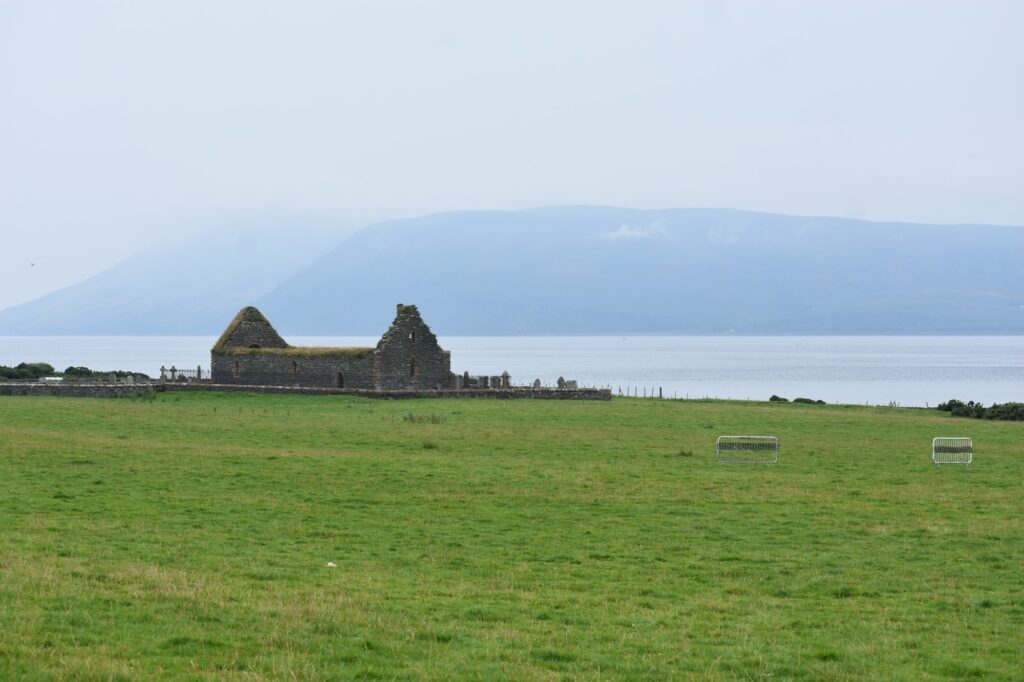
    Roofless stone ruin of Trumpan church in a grassy field above the sea in Waternish, Isle of Skye, with misty hills beyond
    Trumpan church, Waternish: a quieter place to watch the sun set over the Minch. Photo: Andrew Hall / Unsplash

    Where to Stay: Luxury on Skye

    Staying on the island, rather than visiting on a day trip, is the single best way to beat the crowds. All of the following were open and taking bookings when we last checked.

    • Kinloch Lodge (Sleat): a former hunting lodge on the shore of Loch na Dal, holding a Michelin Key and known for its restaurant. After more than five decades run by the Macdonald family, it passed in 2026 to the Wickman family, long-established Skye hoteliers.
    • Duisdale House (Sleat): a Victorian former hunting lodge with gardens running down towards the Sound of Sleat, part of the Sonas Collection, and well placed for the Mallaig ferry.
    • Skeabost House (near Portree): a Victorian lodge on the shores of Loch Snizort with its own nine-hole golf course and fishing on the River Snizort, also part of the Sonas Collection. Handy for Trotternish and the Fairy Glen.
    • The Three Chimneys & The House Over-By (Colbost, near Dunvegan): one of Scotland’s most celebrated restaurants, now part of The Wee Hotel Company, with six suites beside it on Loch Dunvegan. Ideal for Waternish and Neist Point at quieter hours.

    If you would like to add a night in a turreted castle on your way north or south, see our guide to castle stays in Scotland.

    Getting There, Parking and When to Go

    Bridge, rail and ferry

    Most travellers drive over the Skye Bridge from Kyle of Lochalsh, which has been toll-free since December 2004. For a more romantic arrival, take the CalMac ferry from Mallaig to Armadale in Sleat. CalMac advises booking ahead, even for foot passengers. Mallaig is also the end of the West Highland Line, so you can combine the crossing with a journey on the Jacobite steam train from Fort William; see our guide to luxury train travel in Scotland.

    Parking and roads

    • Expect pay parking at the main honeypots, including the Storr, Quiraing, Fairy Glen and Fairy Pools. Most machines take cards, but tariffs change, so check on arrival.
    • Many roads are single track. Use passing places to let others overtake, and never park in them.
    • Overnight parking in campervans is not permitted at many beauty spot car parks.
    • Carry a good map, as mobile signal is patchy in the north and west. An Ordnance Survey map of Skye is worth having for walks.

    Best seasons

    July and August are the busiest months. We love May and September for longer days and thinner crowds, with April and October close behind. Winter is wonderfully quiet and atmospheric, but daylight is short, weather can close roads and some attractions and boat trips pause, so check opening before you travel. In peak season, book hotels and dinner tables months ahead.

    Tip: Base yourself in two places, such as Sleat and the north-west, rather than driving the whole island from Portree. You will spend less time in the car and more time in the quiet hours.

    A Sample Quieter Day in the North

    1. Dawn: walk to the Old Man of Storr as the sun comes up, then breakfast back at your hotel.
    2. Mid-morning: drive the coast road past Staffin and Kilt Rock, pausing for views rather than queues.
    3. Lunch: a relaxed meal in Uig or Portree while the day trippers fill the Fairy Glen.
    4. Late afternoon: wander the Fairy Glen as the crowds thin and the light turns gold.
    5. Evening: cross to Waternish for sunset at Trumpan, then dinner at The Three Chimneys (book well ahead).
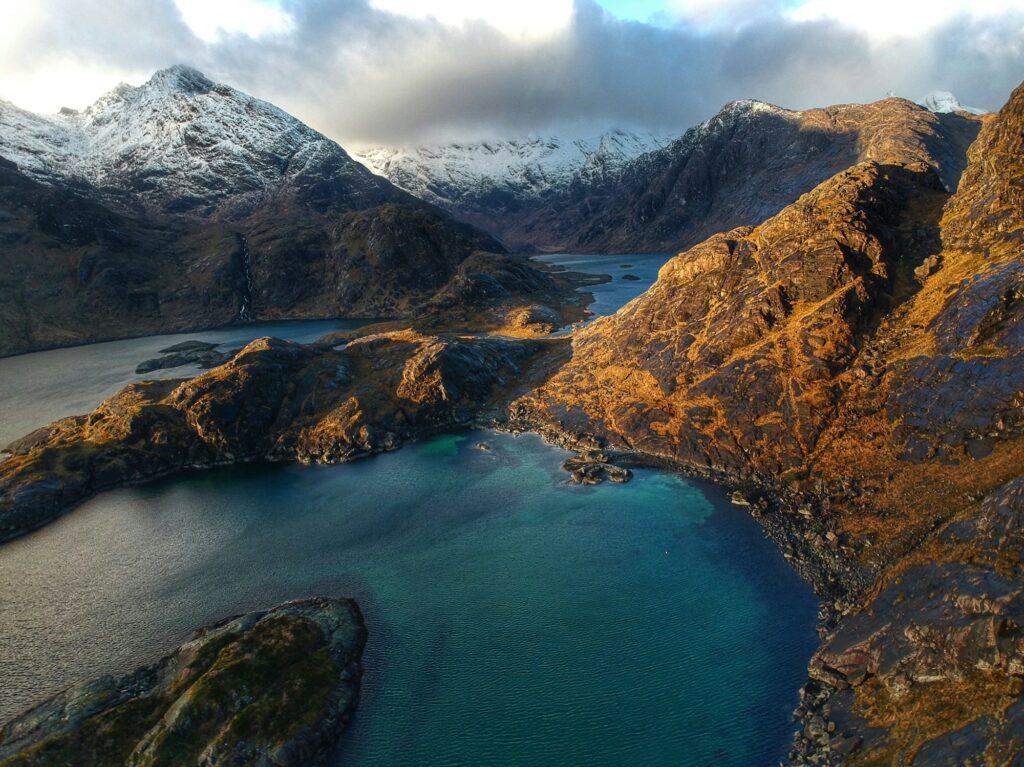
    Loch Coruisk and its rocky shores beneath the snow-dusted peaks of the Black Cuillin, Isle of Skye
    Loch Coruisk, reached by boat from Elgol: the Cuillin without the crowds. Photo: K B / Unsplash

    FAQs

    How many days do I need on Skye?

    Three nights is a sensible minimum, and four or five lets you explore Sleat, Waternish and Raasay at an unhurried pace, with flexibility for weather.

    Can I see Skye without a car?

    Yes. Arrive by train and ferry via Mallaig, or by train to Kyle of Lochalsh, then join a guided Skye tour or hire a private driver-guide. Buses exist but are limited, particularly outside summer.

    Is the Fairy Glen free to visit?

    There is no charge to enter the glen itself, but the car park is paid. Please keep to existing paths and leave the stones exactly where you find them.

    Is winter a good time to visit Skye?

    For solitude and moody light, yes. Pack for wind and rain, plan around short days, and confirm that hotels, restaurants, ferries and tours are operating on your dates.

    Let Us Plan Your Quieter Skye

    Tell us your dates and pace, and we will design a Skye journey around the best hotels, the right hours and the corners most visitors miss.
  • Best Hidden Winter Villages in Britain

    Best Hidden Winter Villages in Britain

    When the crowds have gone home and the frost settles on thatch and slate, Britain’s smaller villages come into their own, with lantern-lit harbours, crackling inn fires and Christmas customs that have little to do with the high street.

    Why Choose a Village in Winter?

    Summer is when Britain’s prettiest villages are busiest. Come between late November and February and the same lanes are quiet, the light is low and golden, and the local pub becomes the centre of village life once again.

    Our choices below are deliberately smaller and less visited than the famous honeypots, spread across England, Scotland and Wales. For each, we suggest one characterful place to stay or eat, and note any winter events. Dates for festive events are set locally each year, so always check before you travel.

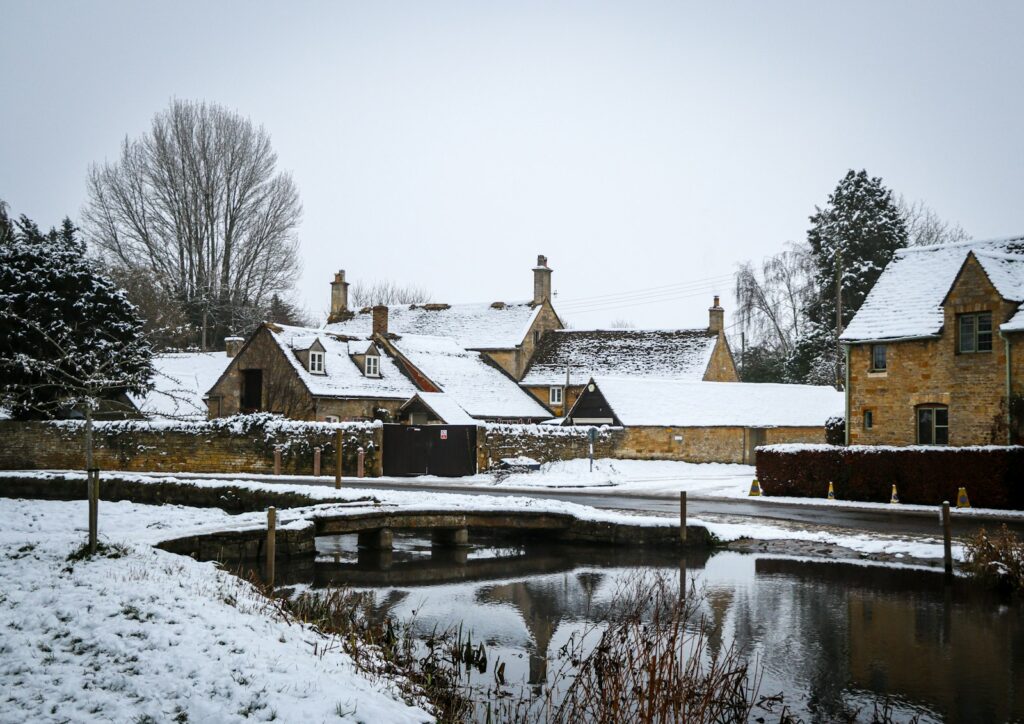
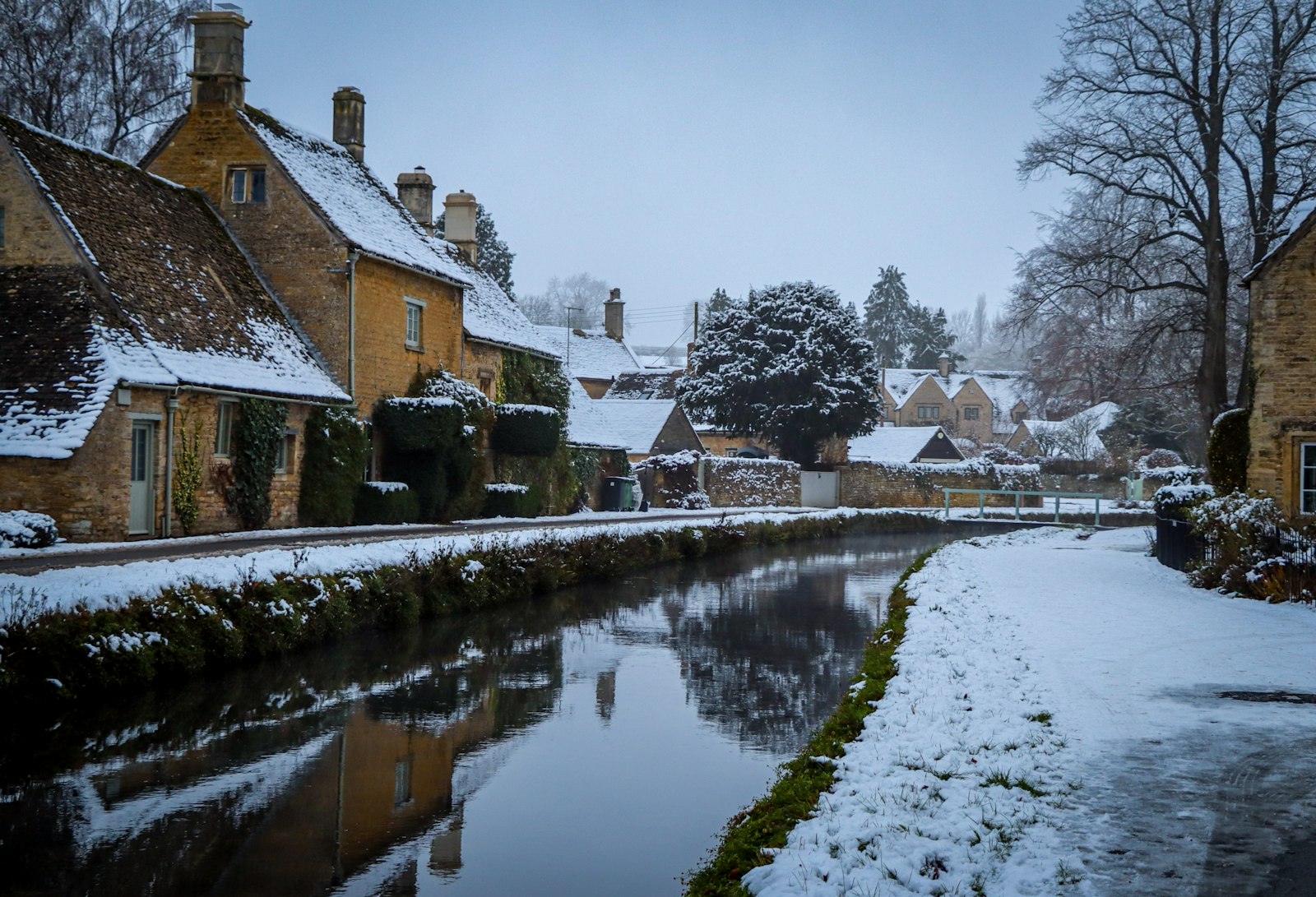
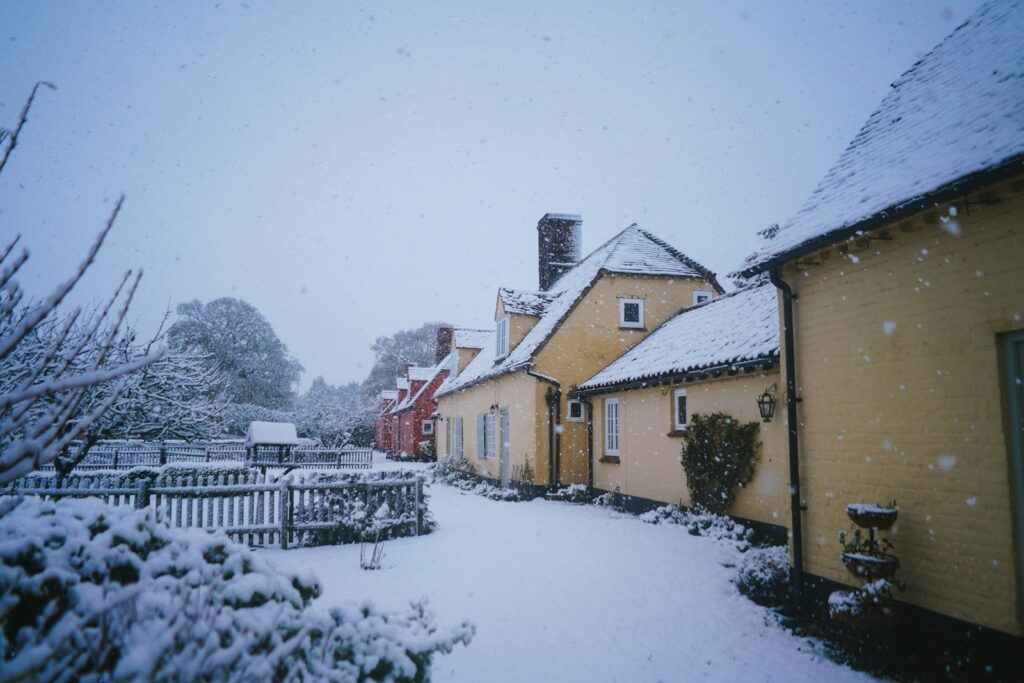
    Stone house under winter snow
    Frosty mornings and wood smoke: the quiet season in a British village. Photo: Phil Hearing / Unsplash

    The Villages

    1. Clovelly, Devon

    Clovelly tumbles down a 400-foot cliff to a tiny harbour on the North Devon coast, with a steep cobbled street and no vehicle access at all. The village is privately owned and charges an entry fee, which covers parking, the gardens of Clovelly Court, the Fisherman’s Cottage and Kingsley Museum, and a contribution to the care of its famous donkeys.

    Winter event: The RNLI Christmas Light Switch On, run by Clovelly’s lifeboat volunteers, is listed on the village website for Sunday 6 December, starting at 4pm with a brass band procession down to the harbour, carols, food and drink and a lights display. All proceeds support Clovelly RNLI. Confirm the date before you go.

    Where to stay: The Red Lion Hotel is an eighteenth-century inn right on the quay, and all 17 of its rooms have sea views.

    2. Mousehole, Cornwall

    This granite fishing village near Penzance is at its most magical in December, when the Mousehole Harbour Lights turn the harbour and its walls into a glowing display. The switch-on is usually in mid-December and the lights stay on into early January. On 19 December they are switched off in memory of the eight crew of the Penlee lifeboat Solomon Browne, lost in 1981, a moving moment that visitors are welcome to share quietly.

    Winter event: On 23 December the village celebrates Tom Bawcock’s Eve, honouring the legendary fisherman who braved a storm to save Mousehole from famine. Stargazy pie, with fish heads gazing skywards through the pastry, is traditionally served at the Ship Inn, and lantern processions wind around the harbour. The 2026 lights switch-on date had not been confirmed at the time of writing.

    Where to stay: The Old Coastguard sits above the sea with 14 bedrooms, most looking across Mount’s Bay towards St Michael’s Mount and the Lizard. It is run by the team behind the Gurnard’s Head and holds a Michelin Plate for relaxed, seasonal cooking. Check Christmas opening when you book.

    Tip: Mousehole’s lanes are narrow and parking is very limited during the lights. Stay in the village or nearby and walk in, or park in Penzance and take the bus or walk the coast path.

    3. Castle Combe, Wiltshire

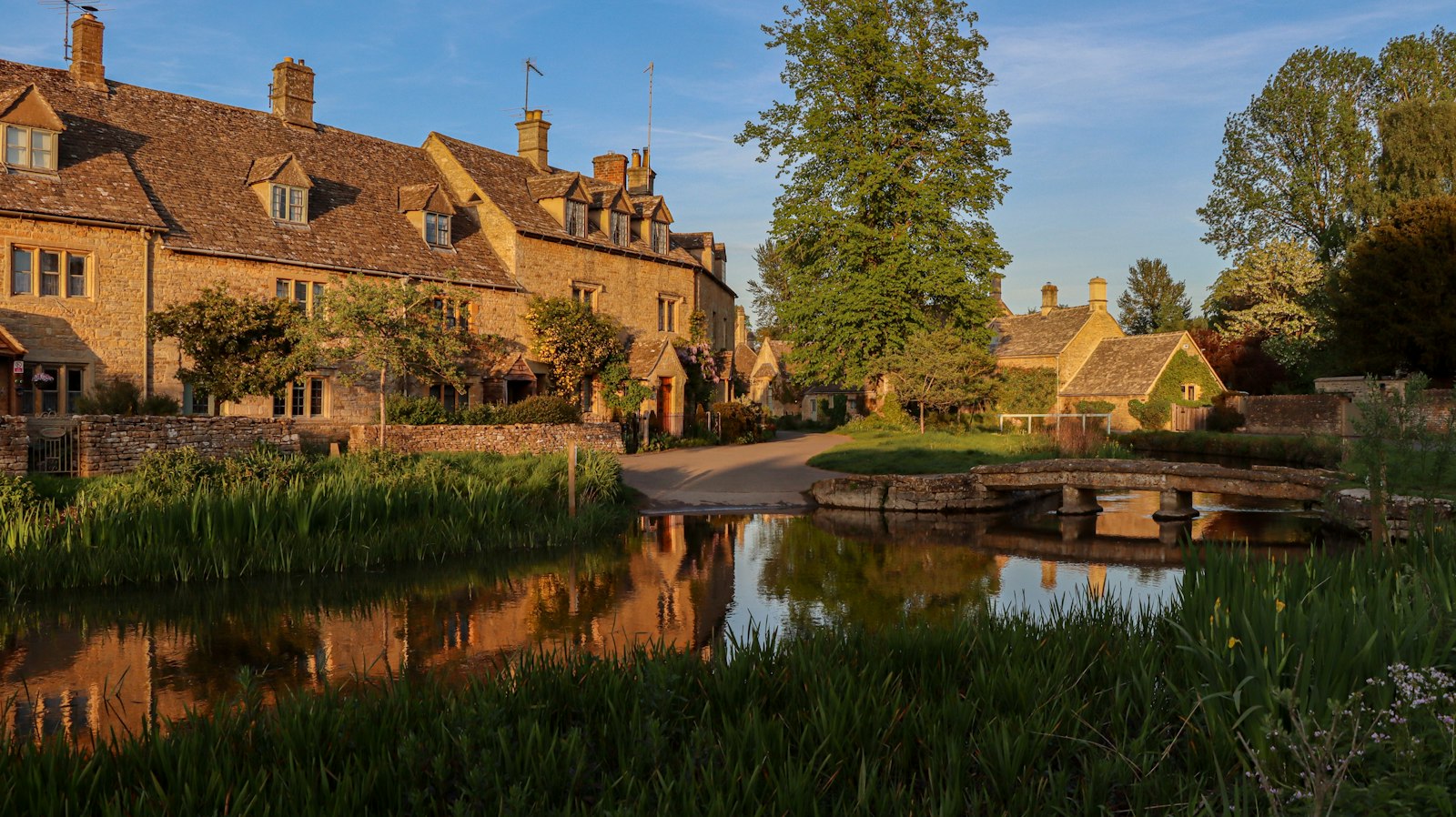
    Tucked into a wooded valley at the southern edge of the Cotswolds, Castle Combe is all honey-coloured stone, a medieval market cross and a stream running under a little bridge.

    Where to stay: The Manor House is a historic country house hotel with its own golf course, a short stroll from the village. Its Christmas packages tend to sell out early, a good illustration of why festive stays need booking well ahead; other December and January dates are well worth considering. For more Cotswold ideas, see our boutique hotels in the Cotswolds.

    Prefer a guide? A small-group Cotswolds villages tour that includes Castle Combe is an easy winter day out from Bath or London.

    4. Kersey, Suffolk

    Kersey is one of Suffolk’s loveliest wool villages, a street of timber-framed and colour-washed cottages that dips down to a shallow ford, known locally as “the splash”, and climbs again to the church above.

    Where to eat: The Bell Inn, a fourteenth-century pub close to the splash, is the natural place to warm up. Check opening hours before you go, as village pubs often trim hours in winter. Kersey makes an easy pairing with the medieval wool towns of Lavenham and Long Melford nearby, where you will find more places to stay.

    5. Kettlewell, Yorkshire Dales

    In Upper Wharfedale, deep in the Yorkshire Dales National Park, Kettlewell is a cluster of stone cottages and barns beside the River Wharfe, ringed by limestone fells.

    Where to stay: The Racehorses Hotel is a rambling eighteenth-century inn by the river with a real fire, en-suite rooms and hearty food. The Blue Bell Inn across the road and the King’s Head offer more cosy corners for a pint. Without a car, a guided Yorkshire Dales day tour from York is a relaxed way to see the valleys in winter.

    Snowy English village reflected in water
    Upper Wharfedale in winter, with Kettlewell tucked into the valley floor. Photo: martin fenton / Unsplash

    6. Blanchland, Northumberland

    Hidden in a wooded valley of the North Pennines, Blanchland grew from an abbey founded in 1165 for Premonstratensian canons, and much of the village is built from the abbey’s stone. Its honey-coloured square, gatehouse and abbey church feel almost unchanged, and on a frosty evening, with very little light pollution in these hills, the stars can be spectacular. The North Pennines has a number of Dark Sky Discovery Sites, so bring a warm coat and look up.

    Where to stay: The Lord Crewe Arms is a Grade II* listed inn with twelfth-century origins and one of the most atmospheric places to stay in the North of England. Rooms are spread through the village, dinner is served in the Bishop’s Dining Room, and the vaulted Crypt Bar is made for winter evenings. The hotel offers a festive break and New Year celebrations; check what is planned this year.

    Blanchland pairs beautifully with the coast: continue north with our guide to Northumberland’s castle coast, or add a night in a castle with a ghost story from our pick of haunted castles you can sleep in, which includes Langley Castle in Northumberland.

    7. Beddgelert, Eryri (Snowdonia)

    Beddgelert is a stone village where rivers meet beneath the mountains of Eryri, with an old bridge, riverside paths and snow-capped peaks above in a cold winter. It takes its name from the legend of Gelert, the faithful hound of Prince Llywelyn. The “grave” in the meadow is said to have been created by the late eighteenth-century landlord of the Goat Hotel to draw in visitors.

    Where to stay: The Saracens Head is a country inn in the heart of the village with 11 en-suite rooms, a restaurant and a bar serving cask ales, and dogs are welcome. The Tanronnen Inn is another cosy option for homemade food.

    8. Plockton, Wester Ross

    On a sheltered bay off Loch Carron, Plockton is a crescent of whitewashed cottages facing the water, with cabbage palms (Cordyline australis) growing along Harbour Street thanks to the mild influence of the North Atlantic Drift. Television fans may recognise it as Lochdubh from the 1990s series Hamish Macbeth. In winter the village is wonderfully quiet.

    Where to stay: The Plockton Inn, run by Highland Coast Hotels, has been extensively renovated and serves fresh local seafood, with live music and quiz nights in the bar. Confirm winter opening when you book, as many Highland businesses close for part of the season. Nearby Eilean Donan Castle makes a wonderful short excursion, and guided tours are an option if you would rather not drive on winter roads.

    Winter Travel Practicalities

    • Short days: Around the winter solstice, Cornwall has about eight hours of daylight, Northumberland about seven, and the Western Highlands closer to six and a half. Plan walks and drives for the middle of the day and save the evenings for the fireside.
    • Roads and weather: Moorland and mountain roads, including those around Blanchland, Kettlewell, Beddgelert and Plockton, can be affected by snow and ice. Check forecasts and road updates on the day, carry warm layers and water in the car, and allow extra time. A pair of slip-on ice grips for winter walking make icy cobbles and frosty paths far safer.
    • Book Christmas early: Small inns have few rooms and festive packages sell out months ahead, as The Manor House shows. For Christmas and New Year, aim to book by late summer.
    • Check opening: Pubs, cafés and attractions often reduce hours or close for a few weeks after New Year. Ring ahead for lunch and dinner, especially midweek.
    • Events change: Village events are volunteer-run and dates move from year to year. Always confirm on the organisers’ own pages or social media before travelling.

    A Sample Winter Weekend

    Friday: Arrive in Blanchland

    Drive into the North Pennines in the afternoon light, check in at the Lord Crewe Arms and settle into the Crypt Bar before dinner. If the sky is clear, step out into the square to see the stars.

    Saturday: Walk and wander

    Take a riverside walk along the Derwent, explore the abbey church and gatehouse, and return for a long lunch by the fire. In the late afternoon, drive on towards the Northumberland coast for a night by the sea.

    Sunday: Castles and coast

    Spend the day on the castle coast, with Bamburgh’s battlements against a winter sky, before heading home or extending the trip.

    FAQs

    When are the Mousehole Christmas lights on?

    Usually from mid-December into early January, except on 19 December, when they are switched off in memory of the Penlee lifeboat crew. The 2026 switch-on date was not confirmed at the time of writing, so check locally.

    Do I have to pay to visit Clovelly?

    Yes. Clovelly is privately owned and there is an entry fee, which includes parking, the gardens, the museums and a contribution to the donkeys’ care. Tickets are available all year.

    Which village is best for Christmas itself?

    For festive atmosphere, Mousehole and Clovelly have the strongest traditions. For a cosy Christmas break with everything arranged, an inn such as the Lord Crewe Arms is ideal, but book months ahead.

    Plan Your Winter Village Escape

    Tell us your dates and we will design a winter journey through Britain’s quietest villages, with fireside inns, festive events and the best of the short days.

  • Places Less Visited: Tintern and Fountains, Britain’s Great Abbey Ruins

    Places Less Visited: Tintern and Fountains, Britain’s Great Abbey Ruins

    Places Less Visited: two great Cistercian ruins, one in a misty Welsh valley and one in a Yorkshire water garden, and why they are worth an early start.

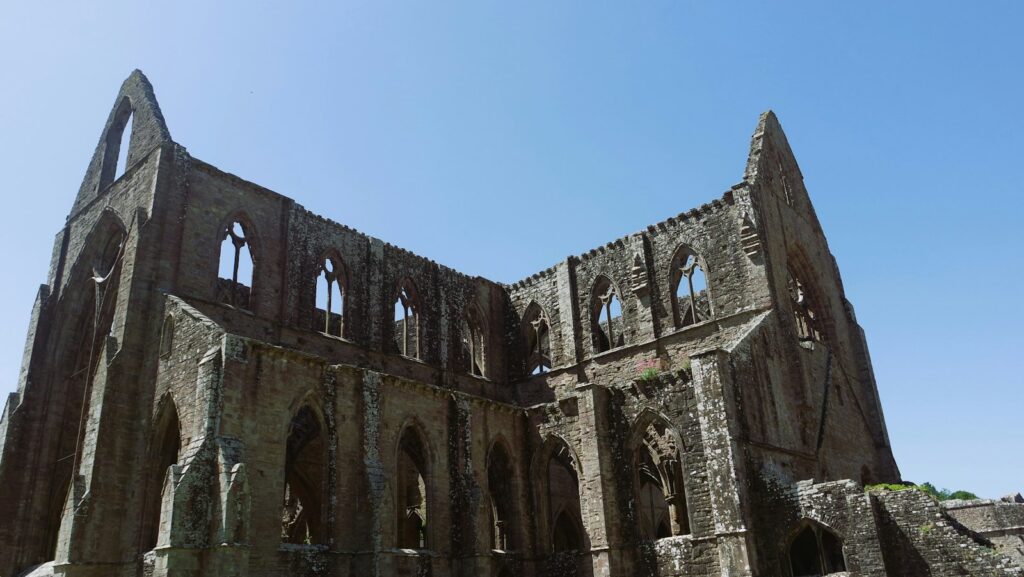
    Tintern Abbey, Wye Valley

    I’m sharing with you one of my favourite places in the UK and Ireland. I’d like to paint a picture of a large ruined gothic church nestled next to the River Wye in a green valley. The sun has yet to break through and the mist is rising from the river, and you are watching this stately, large ruin appear in front of you. It may be autumn and there is a little chill in the morning air but being here at Tintern Abbey makes it all worthwhile.

    Originally founded in 1131, these old stones hold a fascination for me. Every time I visit, I walk the grounds and feel the history of the place, the people working in the fields, the monks in their church and a closeness with nature.

    The leadership of the order said that “none of our houses is to be built in cities, in castles or villages; but in places remote from the conversation of men. Let there be no towers of stone for bells, nor of wood of an immoderate height, which are unsuited to the simplicity of the order” and in all the Cistercian sites that I have visited they have been true to this mandate.

    The roofless Gothic walls of Tintern Abbey against a clear blue sky, Wye Valley
    Tintern at first light, when the mist lifts off the Wye. Photo: Amy W. / Unsplash

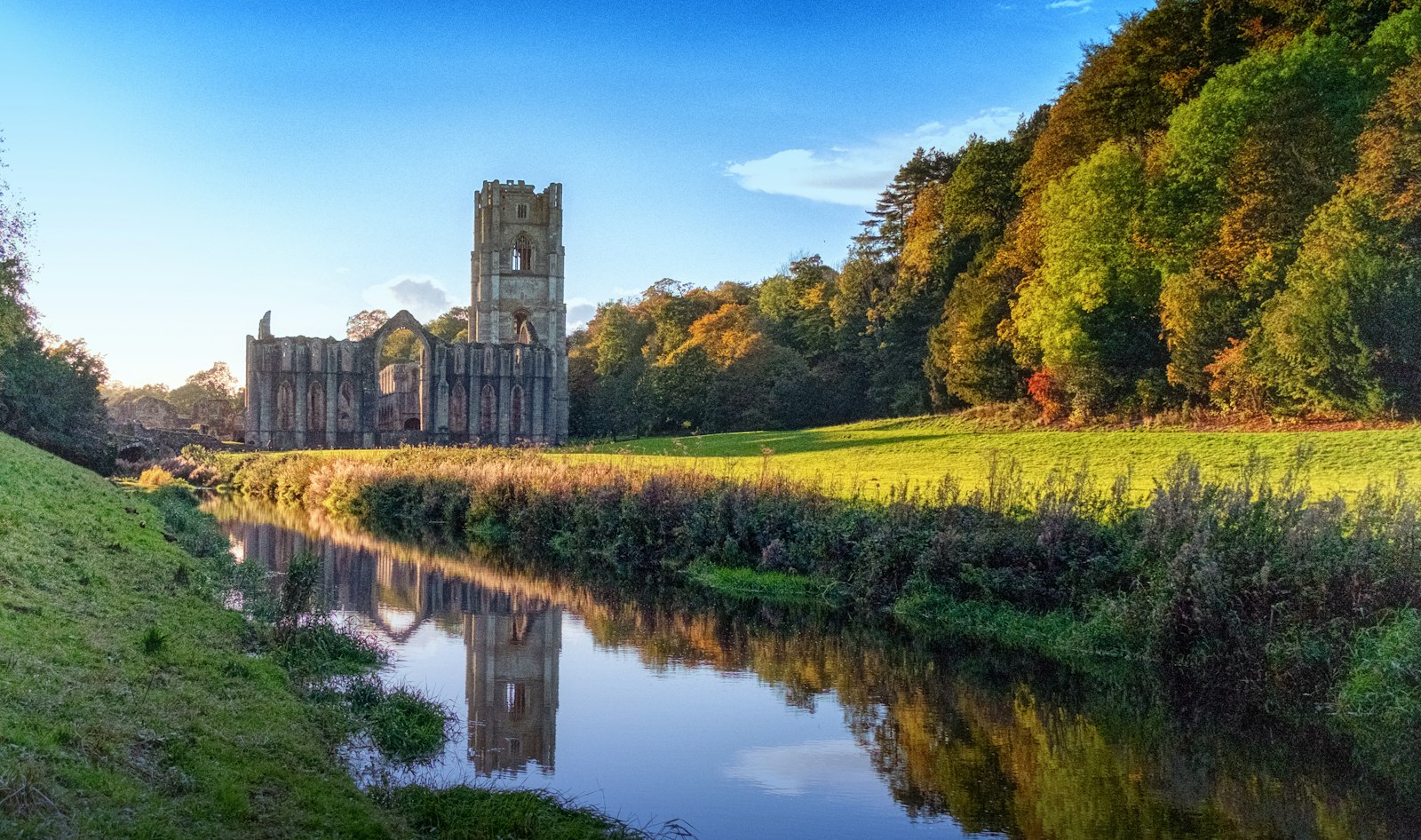
    Fountains Abbey, North Yorkshire

    Fountains Abbey was very close to where I used to live, and when compared to Tintern Abbey it is HUGE. Fountains Abbey is one of the largest monastic ruins in Britain.

    In common with many abbeys, Fountains Abbey lies next to a river, in this case the River Skell in North Yorkshire. At a time when wealth came from the land, this abbey became one of the wealthiest in Britain, based on its trading in wool and lead, and it had large land holdings across the area.

    The ruins sit within a great estate of park, gardens and woods, and the Abbey together with the Studley Royal Water Garden is a UNESCO World Heritage Site. It has been the location for several films and documentaries.

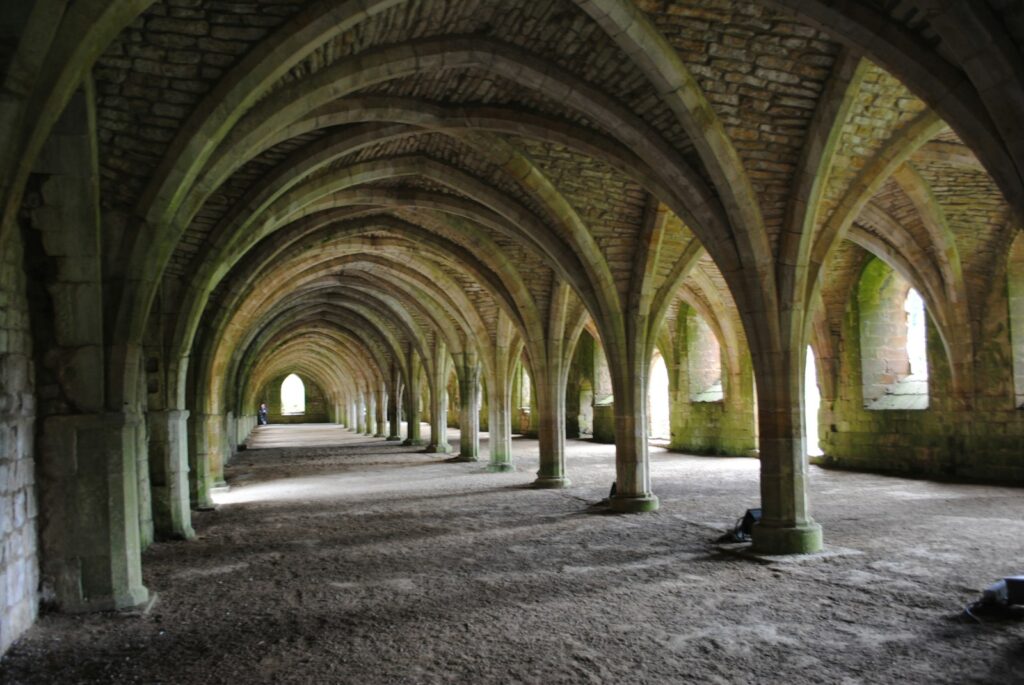
    In common with many of these abbeys that I have visited over the years, the surviving ruins carry a sense of contemplation, especially when you have the opportunity to walk the grounds outside of normal visiting times. At Fountains there is a cellarium that is almost 300ft long and fills you with a sense of wonderment. You can almost feel the monks walking alongside you.

    Parts of its history are darker. William Thirsk, a former abbot of Fountains, and Adam Sedbergh, the last abbot of nearby Jervaulx Abbey, were both executed at Tyburn in 1537 for their part in the northern rising against Henry VIII.

    The long rib-vaulted cellarium inside Fountains Abbey, North Yorkshire
    The cellarium at Fountains, almost 300ft of vaulted stone. Photo: JR Harris / Unsplash

    Planning Your Visit

    • Who runs them: Tintern Abbey is cared for by Cadw, the Welsh heritage body. Fountains Abbey and Studley Royal are cared for by the National Trust.
    • Opening times: Both change with the seasons, and Fountains has closed on some winter days, so check the official websites before you travel.
    • Go early: Arrive at opening time for the quietest hour, and the best chance of mist at Tintern.
    • After dark: Fountains holds floodlit evenings in the autumn on selected dates, a very different way to see the ruins.
    • Combining them: The two abbeys are a long day’s drive apart, so treat them as two trips: Tintern with the Wye Valley and the Welsh borders, Fountains with Harrogate, Ripon and the Yorkshire Dales.

    Tip: Fountains is the larger visit. Allow at least half a day to walk from the abbey through the Studley Royal Water Garden.

    Add an Abbey to Your Journey

    Tell us your dates and interests, and we’ll weave the quieter corners of Britain into your trip.

  • Places Less Visited: The Cotswold Canals

    Places Less Visited: The Cotswold Canals

    Places Less Visited: the quiet waterways behind the honey-stone villages, and a slower way to see the Cotswolds.

    The Cotswolds You Don’t Expect

    When we think of the Cotswolds we think of honey and butter-coloured buildings in quaint settings with beautiful village greens. What we usually don’t associate with this area is the network of canals that was created during the late 1700s to deliver goods and coal, as at that time there were no railways. The first public steam railway in Britain opened in 1825, and that operated in the north, far from the Cotswolds.

    The Cotswold canals first started life in 1730, when the first Act of Parliament for the Stroudwater Navigation was passed, and at one stage, during a court battle with local landowners and millers in the 1770s, each side had poems written to try and persuade the justices.

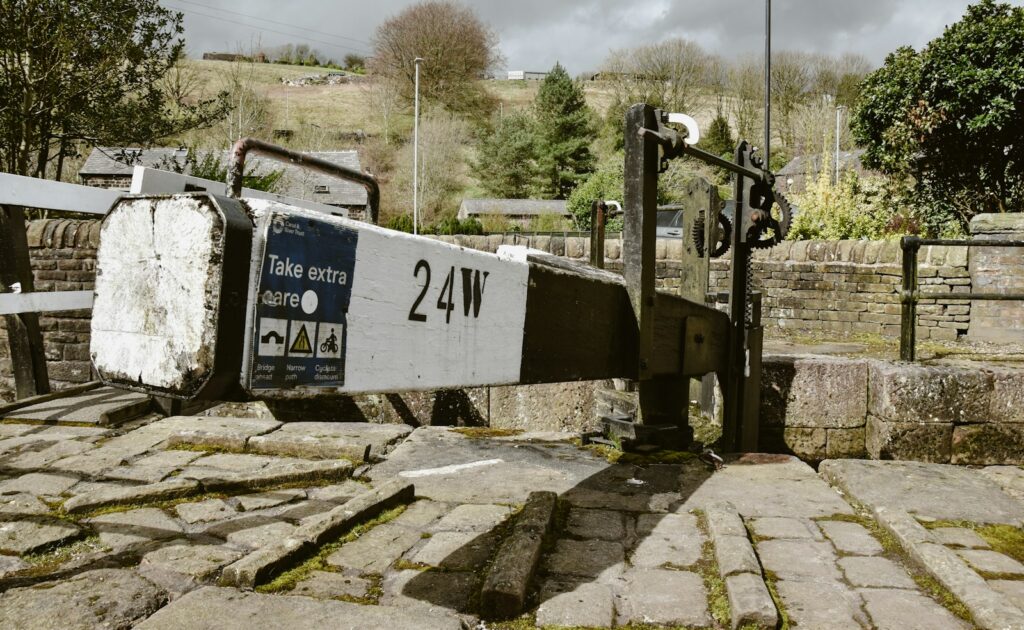
    Black and white painted balance beam and winding gear of a restored canal lock
    A restored canal lock. Photo: Dan Stephens / Unsplash

    Bringing the Canals Back to Life

    The canals link two of England’s major rivers, the Severn and the Thames, and had fallen into disuse or had been filled in. Restoration has been under way for many years, led by the Cotswold Canals Trust and its partners, with the goal to “restore the Cotswold Canals to full navigation in the interests of conservation, biodiversity and local quality of life, and to use the restoration as a catalyst for wider social, economic and environmental regeneration in areas neighbouring the canals”.

    Work has now begun on the “Missing Mile”, the stretch that will reconnect the canals to the national waterway network at Saul Junction. The link to the national network is expected to open towards the end of this decade, around the 250th anniversary of the Stroudwater Navigation in 2029.

    Walking the Towpath

    The canals are around 36 miles in length and there is a partial footpath for walkers, with towns and villages along the way to partake of food and beverages together with a good night’s sleep.

    • Stroud: The best base for the restored western sections, with locks, mills and towpath cafés.
    • Saul Junction: Where the Stroudwater meets the Gloucester and Sharpness Canal, and where the Missing Mile will join up.
    • Lechlade and Inglesham: The eastern end, where the canal meets the Thames.

    Tip: Some sections are still under restoration and parts of the towpath are not continuous, so check the Cotswold Canals Trust website before planning a long walk.

    Where to Stay Nearby

    While the Cotswolds are pretty, the canal adds another dimension to the area, bringing to life the intimate and changing history in one of England’s most beautiful areas. For a comfortable base near Stroud, see The Painswick and our other picks in 10 Boutique Hotels in the Cotswolds.

    Explore the Quieter Cotswolds

    Tell us your dates and interests, and we’ll pair the famous villages with the places most visitors miss.
  • Places Less Visited: The Line, London’s Hidden Art Walk

    Places Less Visited: The Line, London’s Hidden Art Walk

    Places Less Visited: London’s first public art walk, following the Greenwich Meridian along East London’s waterways, and free to explore.

    Discovering The Line

    I was amazed and pleased to discover The Line, London’s first dedicated public art walk. It connects three boroughs, Newham, Tower Hamlets and Greenwich, and follows the line of the Greenwich Meridian between the Queen Elizabeth Olympic Park and The O2.

    Along the way, sculptures and installations by leading artists sit beside canals, creeks and the Thames, mixed in with old industrial buildings, wildlife and new neighbourhoods. Works come and go, so the walk keeps changing, and it costs nothing to explore.

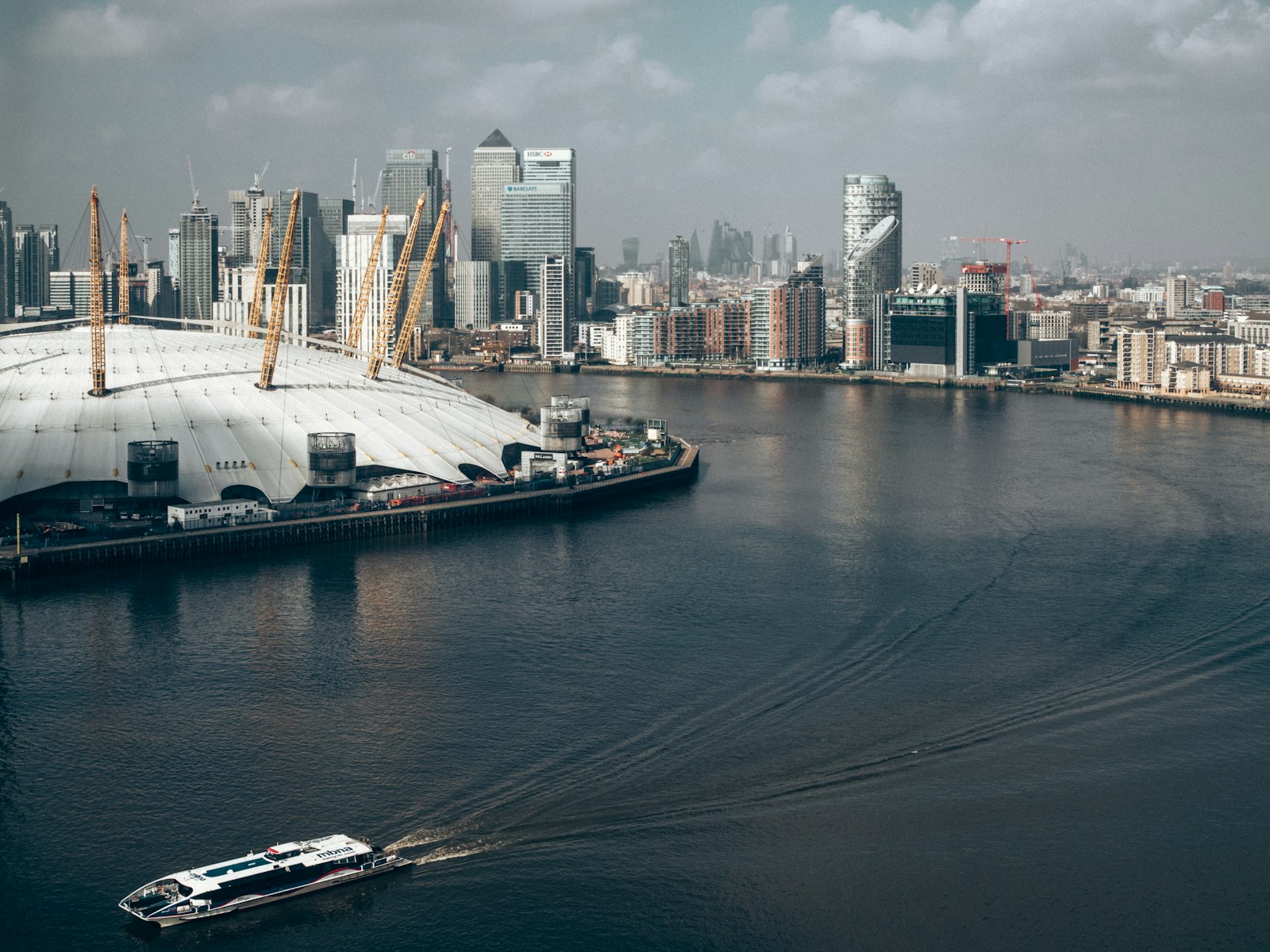
    The O2 on the Greenwich Peninsula beside the River Thames, with Canary Wharf beyond
    The O2 on the Greenwich Peninsula, where Quantum Cloud stands by the river. Photo: Claus Grünstäudl / Unsplash

    Walking the Route

    The route is three miles as the crow flies, however most of the walk is along winding waterways, so it takes around three hours to complete the entire route. You can walk The Line in one go or visit different sections on different days. One of the joys of The Line is that it’s constantly changing: different seasons, times of day and tides mean it’s always worth a return visit.

    The route also involves crossing the River Thames by cable car, today called the IFS Cloud Cable Car, for views back over the city.

    • Start: Queen Elizabeth Olympic Park in Stratford.
    • Finish: The O2 at North Greenwich, where Antony Gormley’s Quantum Cloud rises beside the river.
    • Time: Around three hours, or split it over two visits.

    Tip: The artworks change over time, so check the current map on The Line’s website before you go, and wear comfortable shoes for the towpaths.

    See a Different Side of London

    Tell us your dates and interests, and we’ll add London’s quieter corners to your trip.

  • Places Less Visited: Painswick Rococo Garden and the Queen of the Cotswolds

    Places Less Visited: Painswick Rococo Garden and the Queen of the Cotswolds

    High above one of Stroud’s Five Valleys, the silver-grey village of Painswick hides England’s last complete Rococo garden, a churchyard of clipped yews and a quieter, more artistic side of the Cotswolds than most visitors ever see.

    Why Painswick?

    The postcard Cotswolds lies further east: Bibury, Bourton-on-the-Water, the Slaughters. Painswick, in the hills about four miles north of Stroud, is something different. Its houses are built of a paler, almost silvery local stone, its lanes tumble steeply down the hillside, and many cottages still have the south-facing attic windows where weavers once worked during the wool boom. Little wonder it has long been called the “Queen of the Cotswolds”, and in 2025 it was named Gloucestershire Village of the Year.

    That is why we include it in our Places Less Visited series. Here you can spend a morning in an eighteenth-century pleasure garden, walk a stretch of the Cotswold Way, find Laurie Lee’s grave in the next valley and finish the day in a Palladian hotel, all without the coach parties.

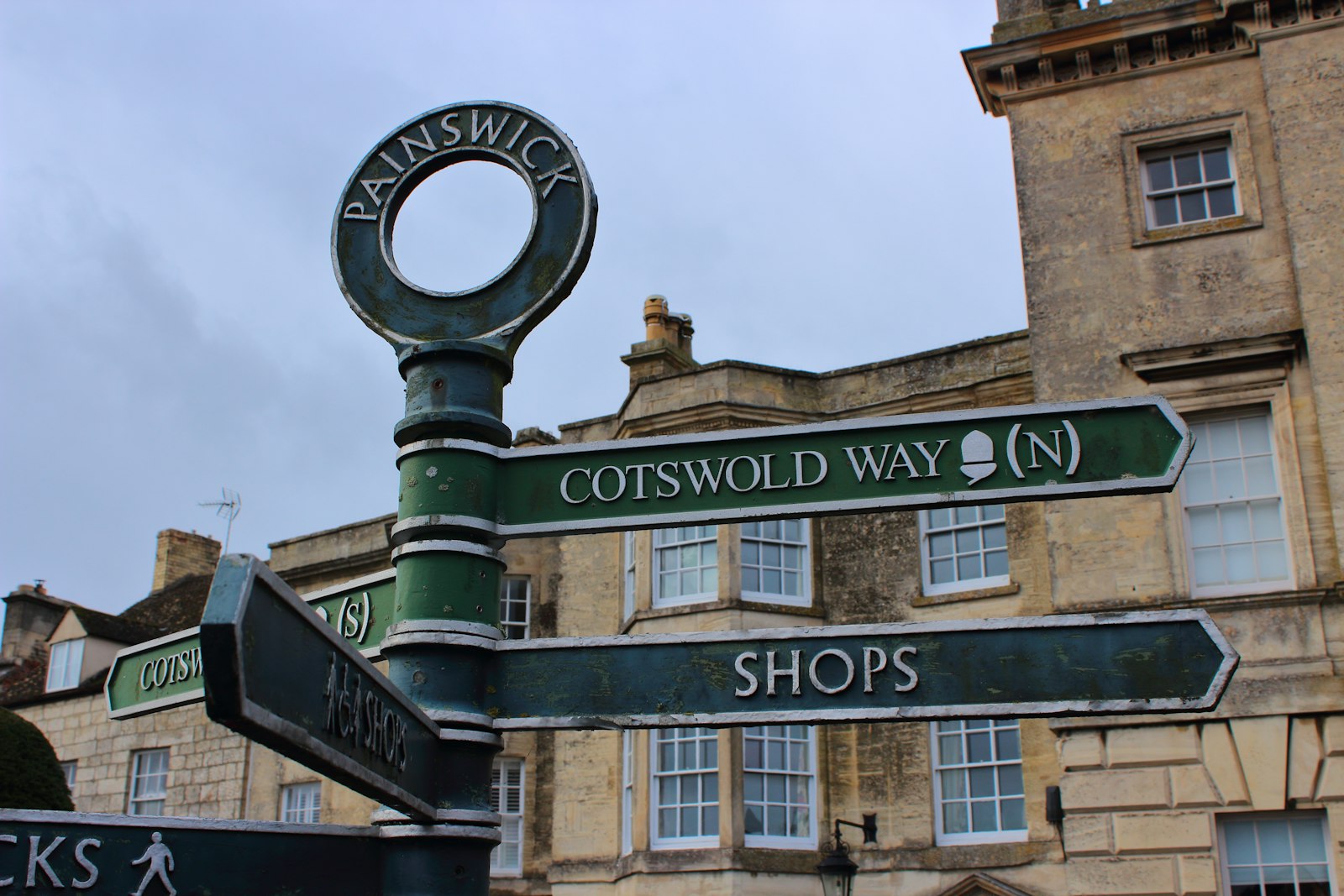
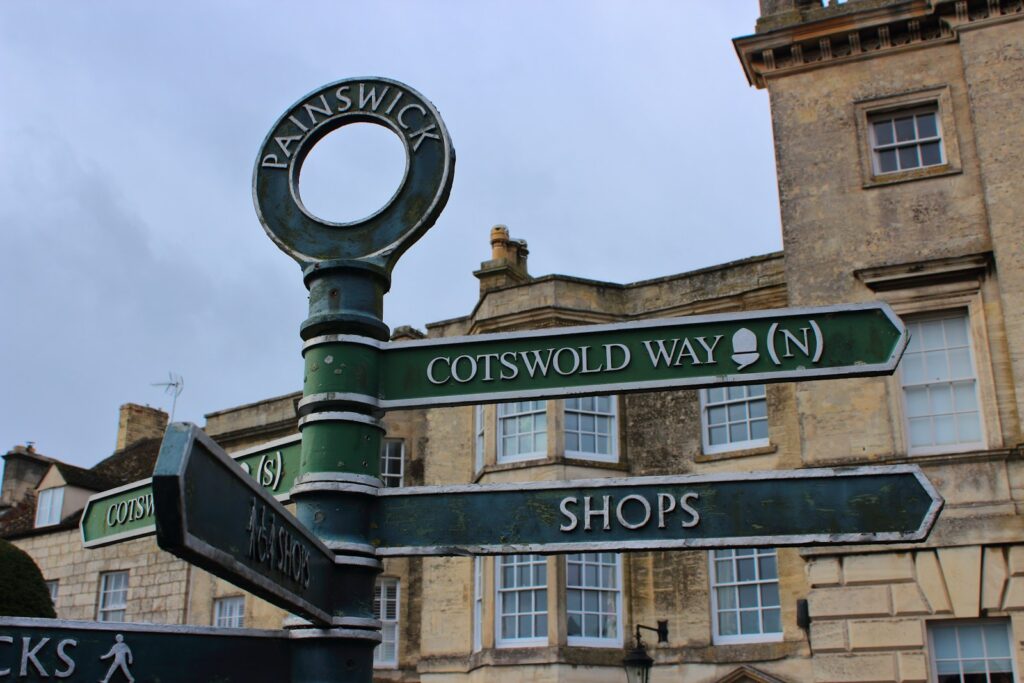
    A Painswick fingerpost pointing along the Cotswold Way in front of a pale Cotswold stone building
    Painswick’s pale stone, on the Cotswold Way high above the Painswick Valley. Photo: Jason / Unsplash

    Painswick Rococo Garden

    Just north of the village centre, tucked into a hidden valley behind Painswick House, lies one of the most unusual gardens in Britain. It was laid out in the 1740s for Benjamin Hyett as a fanciful pleasure garden for entertaining his guests, a place of winding paths, playful buildings and theatrical views rather than grand formality. Garden historians describe it as England’s sole surviving complete Rococo garden, and the garden itself proudly calls it the UK’s only complete surviving Rococo garden.

    Restored from a painting

    Like most Rococo gardens, it fell out of fashion and slowly vanished under woodland. Its rescue is a wonderful story. In 1748 the artist Thomas Robins the Elder painted the garden in loving detail, and when restoration began in the 1980s, led by the owner, Lord Dickinson, that painting became the blueprint. Paths, ponds and buildings were brought back to match Robins’s view, and the work continues today. The garden is now run by a charitable trust, so every ticket helps.

    The follies

    The joy of a visit lies in turning a corner to find another eccentric little building framed at the end of a vista. Look out for:

    • The Red House: A Gothic pavilion of around 1750 with deliberately asymmetrical facades angled to close two converging vistas, the garden’s most photographed folly.
    • The Exedra: A curved, white classical screen, a twentieth-century recreation of a lost building, with a planted garden that fills with more than 9,000 bulbs in spring.
    • The Eagle House and the Pigeon House: Two charming pavilions that punctuate the slopes.
    • The Gothic Alcove: A pointed-arched seat for admiring the views back across the valley.

    The maze and the kitchen garden

    To the west of the Exedra, a hedge maze was planted in the late 1990s to mark the 250th anniversary of Robins’s painting, its design based on the figure “250”. The productive kitchen garden is equally appealing: wild garlic, salads, heritage fruit and apples for juice all find their way into the café, which is known for its homemade cakes.

    Snowdrop season

    The garden’s most famous moment comes in late winter. Around five million snowdrops carpet the woodland and banks, including less common varieties such as the double Flore Pleno and Galanthus ‘Atkinsii’. The garden reopens in January as the first flowers appear, and they are usually at their finest in February. In recent years February admission has been by advance booking, so reserve your slot early.

    Tip: Opening days vary through the year (it usually closes for a short winter break before reopening for the snowdrops), and the garden can close at short notice in high winds. Always check the Painswick Rococo Garden website before you travel. Dogs on short leads are welcome and parking is free.

    A drift of white snowdrops in flower among green leaves
    Snowdrop season, when the garden’s woodland turns white. Photo: Yoksel Zok / Unsplash

    Painswick Village and St Mary’s Churchyard

    Painswick grew rich on wool, and its streets are lined with handsome clothiers’ houses, old inns and independent shops and galleries. At its heart stands St Mary’s Church, Grade I listed, its tower still bearing the scars of cannonballs fired during the Civil War.

    The 99 yews

    The churchyard is unforgettable: an avenue of clipped yew trees shaped into neat domes and arches, set among elaborate table tombs carved by local masons. Legend has it that there are only ever 99 yews, because the Devil will always destroy the hundredth if anyone tries to plant it. Counts over the years have in fact found 100 or more, but the story is part of the charm, and we recommend testing it for yourself.

    Clypping the church

    Each September Painswick holds its Feast Sunday, on the first Sunday after 19 September. The highlight is the ancient custom of “clypping the church”. Despite appearances, it has nothing to do with trimming the yews (that happens separately, also in September). The name comes from an Old English word meaning to embrace: villagers and children join hands in a ring around St Mary’s and sing hymns. Tradition also associates the day with “puppy dog pie”, which, reassuringly, is a fruit pie that once hid a small china dog.

    The Cotswold Way, Slad and Stroud

    Walking the Cotswold Way

    Painswick sits on the Cotswold Way, the 102-mile National Trail between Chipping Campden and Bath, and the village makes a lovely base for a day’s walking. Our favourite short outing heads north from St Mary’s to Painswick Beacon, around a mile away, where the ramparts of an Iron Age hill fort look out across the Severn Vale towards the Malvern Hills and, on a clear day, Wales. The trail skirts the summit, so take the short detour to the top. Popular loops of four to nine miles continue on to Haresfield Beacon. Take the OS Explorer 179 map and a good Cotswold Way guidebook if you plan to go further.

    Slad and Laurie Lee

    Over the hill lies the steep, wooded Slad Valley, immortalised by Laurie Lee in his 1959 memoir Cider with Rosie, a glowing portrait of a Cotswold village childhood before the motor car changed everything. Lee’s family moved to Slad in 1917, and he is buried in the churchyard of Holy Trinity, across the road from the sixteenth-century Woolpack inn, where he was a regular. A memorial window in the church and the walking route known as the Laurie Lee Way let you trace the landscapes of the book. We recommend reading it before you go.

    Stroud and the Cotswold Canals

    Painswick’s nearest town, Stroud, is creative, independent and refreshingly unpolished. Its award-winning farmers’ market fills Cornhill Market Place every Saturday morning. Stroud is also the best base for exploring the Cotswold Canals, where restored locks, old mills and towpath walks reveal the industrial story behind the wool trade. Read more in our guide to the Cotswold Canals.

    If you would rather someone else did the driving, a guided small-group tour is an easy way to pair Painswick with the better-known villages. Browse Cotswolds small-group day tours.

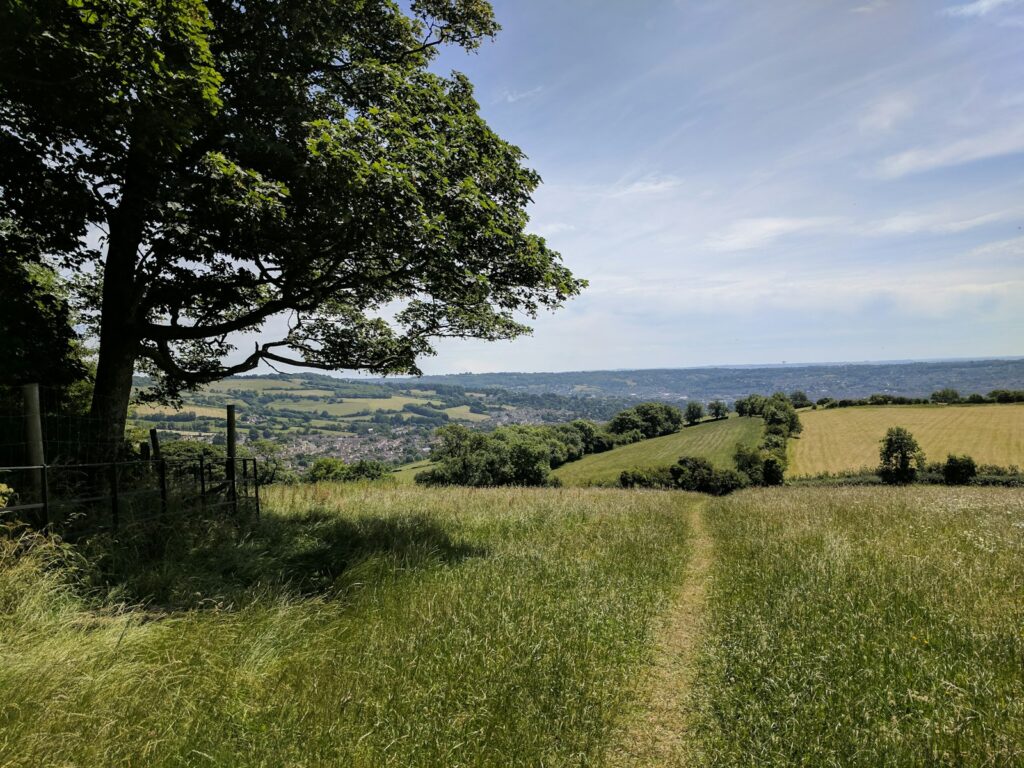
    A grassy footpath across a hillside meadow beside a tree, with views over a green English valley
    Summer footpaths and green valleys, the kind of landscape Laurie Lee wrote about in Cider with Rosie. Photo: Sintija Linuza / Unsplash

    Where to Stay

    The Painswick

    Our first choice is The Painswick, a Palladian house built in the eighteenth century as Prospect House and now a stylish small hotel, part of the Calcot Collection. Rooms range from cosy hideaways to suites and a private cottage, many with valley views, and the restaurant and afternoon tea are worth booking even if you stay elsewhere. It features in our guide to 10 boutique hotels in the Cotswolds.

    The Falcon, Painswick

    For a characterful village inn, The Falcon sits opposite St Mary’s churchyard, with around a dozen rooms that blend original features with a fresh, modern style, a proper bar and hearty breakfasts. It is ideal for walkers on the Cotswold Way.

    The Bear of Rodborough

    A few miles south, above Stroud, The Bear of Rodborough is a seventeenth-century coaching inn set on National Trust common land, with sweeping views, a library restaurant and easy access to the canals and Minchinhampton Common.

    How to Visit

    • Getting there: Painswick is about four miles north of Stroud and seven and a half miles south of Gloucester. Stroud has direct trains from London Paddington; from there a taxi is the simplest way up the hill. A car makes it easier to combine Painswick with Slad and the canals.
    • When to go: February for the snowdrops, May and June for the gardens and walks, and September for Feast Sunday and the clypping ceremony. The Rococo Garden closes over the winter months, so check dates before planning around it.
    • How long: Allow two to three hours for the garden, and at least one night to enjoy the village once the day visitors have gone.

    A Perfect Painswick Day

    Morning

    Arrive at the Rococo Garden as it opens, wander the follies while the light is soft, test yourself in the maze and stop for coffee and cake in the café.

    Afternoon

    Stroll into the village to count (or fail to count) the yews in St Mary’s churchyard, browse the galleries, then walk the Cotswold Way up to Painswick Beacon for the view over the Severn Vale.

    Evening

    Drive over the hill to Slad for a drink at the Woolpack and a moment at Laurie Lee’s grave, then return to The Painswick for dinner and a night in the Queen of the Cotswolds.

    FAQs

    Is Painswick Rococo Garden really the only one in England?

    It is widely described as England’s only complete surviving Rococo garden, its survival owed largely to the restoration guided by Thomas Robins’s 1748 painting.

    When is the best time to see the snowdrops?

    Usually February, though a mild winter can bring them out from late January. Book tickets in advance for snowdrop season and check the garden’s updates before you go.

    Are there really 99 yew trees in Painswick churchyard?

    That is the legend, with the Devil said to destroy any hundredth tree. Actual counts have come out at 100 or more, but the story endures.

    What is the clypping ceremony?

    An ancient custom on Painswick’s Feast Sunday, the first Sunday after 19 September, when villagers join hands around St Mary’s Church and sing. “Clypping” means embracing, not cutting.

    Discover the Quieter Cotswolds

    Tell us your dates and interests and we will design a Cotswolds itinerary that pairs gardens like Painswick with characterful stays and the villages most visitors miss.
  • Secret Gardens of London

    Secret Gardens of London

    Behind office blocks, inside bombed churches and high above the traffic, London hides a string of quiet gardens that most visitors walk straight past.

    Why Seek Out London’s Secret Gardens?

    London is famously green, but the Royal Parks are only half the story. Tucked between the towers of the City, along the river and on the slopes of Hampstead are smaller, stranger gardens: a ruined church wrapped in climbing plants, a walled physic garden planted by apothecaries, a Japanese garden with a waterfall and koi. Many are free, and most are blissfully quiet on a weekday morning.

    Every garden below is open to the public, but several have limited hours, seasonal closures or booking rules, so we note those as we go. Always check the official website before you set out.

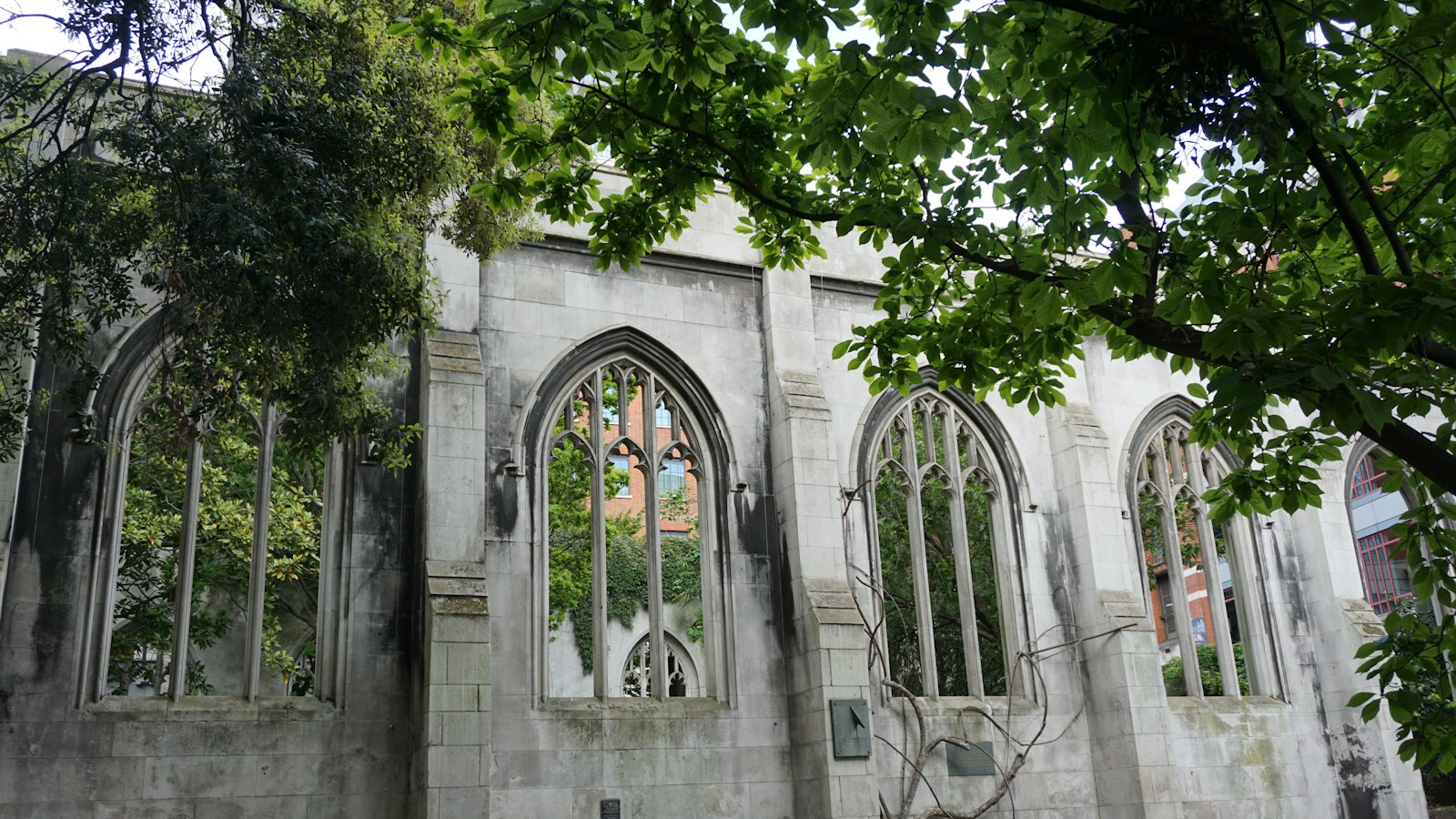
    Ruined church walls in the City of London
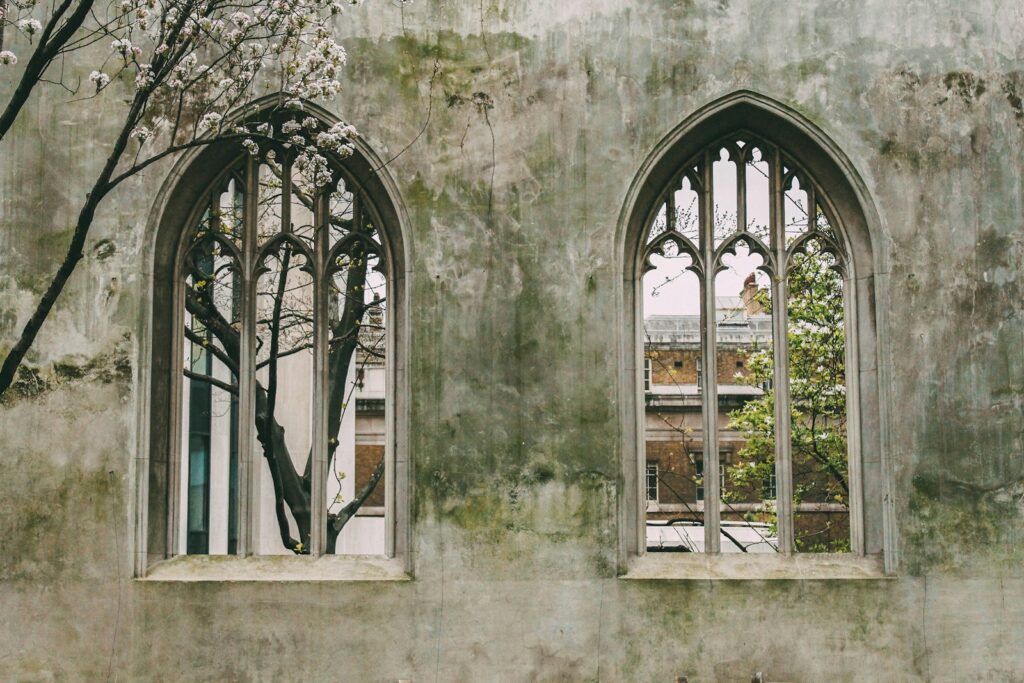
    St Dunstan-in-the-East, where a Blitz-damaged church became one of the City's loveliest gardens. Photo: eduard / Unsplash

    Hidden Gardens of the City

    St Dunstan-in-the-East

    If you see only one secret garden, make it this one. The church of St Dunstan-in-the-East was badly damaged in the Blitz of 1941, leaving little more than its outer walls and the tower and steeple designed by Sir Christopher Wren after the Great Fire. Rather than rebuild, the City of London turned the ruins into a public garden, which opened in 1971. Today trees, climbers and ferns grow through the empty Gothic windows, and a small fountain sits where the nave once stood.

    It is free, and generally open daily from about 8am until 7pm or dusk, whichever is earlier, closed over Christmas and New Year. Arrive early on a weekday: it is a favourite with photographers.

    Postman’s Park and the Watts Memorial

    A few minutes’ walk north of St Paul’s Cathedral, Postman’s Park is a small, shady garden on a former churchyard, named for the workers of the old General Post Office nearby. Its treasure is the Memorial to Heroic Self-Sacrifice, conceived by the Victorian painter George Frederic Watts. Under a wooden loggia, rows of glazed ceramic tablets, the earliest made by William De Morgan, record ordinary Londoners who died saving others. The memorial was unveiled in 1900 and is Grade II listed. It is quietly, unforgettably moving. Opening hours are similar to St Dunstan’s, roughly 8am to 7pm or dusk.

    Inner Temple Garden

    Down by the river, behind the Inns of Court, Inner Temple Garden is one of the most beautifully kept gardens in London, with deep herbaceous borders, fine trees and a long lawn running towards the Embankment. Access is the catch: the garden is usually open to the public only on weekdays from 12.30pm to 3pm, excluding bank holidays, and it closes for private functions and maintenance. Enter by the main gate on Crown Office Row. Alcohol, barbecues and ball games are not allowed, and only assistance dogs and residents’ dogs may enter.

    Sky Garden

    At the top of 20 Fenchurch Street, the Sky Garden is less secret, but earns its place for planted terraces and sweeping views under a glass dome. General admission is free, but you must book a timed ticket on the official Sky Garden website. Tickets are released weekly, about three weeks ahead, and popular weekend slots go fast. Recent opening hours have been 10am to 6pm on weekdays and 11am to 9pm at weekends, with last entry an hour before closing. Avoid third-party ticket sellers.

    Tip: The Barbican Conservatory is closing for a long refurbishment, expected to last until around 2030, so check before you go.

    A Walking Route Through the City’s Gardens

    These City gardens link neatly into a walk of roughly two miles, best done on a weekday so Inner Temple Garden is open. Allow a relaxed half day with stops.

    1. Inner Temple Garden (12.30pm): Start among the borders of the Temple, then walk up to Fleet Street.
    2. St Paul’s Cathedral: Follow Fleet Street and Ludgate Hill to the cathedral, pausing in the churchyard gardens around it.
    3. Postman’s Park: Just north, off King Edward Street, read a few of the Watts tablets in the shade.
    4. Bank: Walk east along Cheapside towards the Bank of England and The Ned, a good spot for tea.
    5. Sky Garden: Continue to Fenchurch Street for your pre-booked slot, ideally late afternoon for the light.
    6. St Dunstan-in-the-East: Finish a few minutes away in the ruined church garden, best in the soft evening light before it closes.

    Prefer a guide? A hidden gardens and secret London walking tour covers many of these spots with the stories behind them, or try a City of London history walk. If the art of the streets appeals too, pair this route with our London art walk along The Line.

    Further Afield: Gardens Worth the Journey

    Chelsea Physic Garden

    Founded in 1673 by the Worshipful Society of Apothecaries to grow and study medicinal plants, Chelsea Physic Garden is London’s oldest botanic garden, a walled haven of rare plants, historic glasshouses and order beds beside the Thames. Unlike most gardens here it charges for entry and works on timed tickets. It currently opens Sunday to Friday and is closed on Saturdays, with shorter hours in winter and a closure around the Christmas and New Year period, so book ahead.

    The Garden Museum

    Across the river beside Lambeth Palace, the Garden Museum occupies the deconsecrated church of St Mary-at-Lambeth. In its courtyard garden, designed by Dan Pearson as part of the 2017 redevelopment, stand the tombs of the Tradescants, the seventeenth-century royal gardeners and plant hunters, and of Admiral William Bligh of the Bounty. The museum is closed on Mondays and recently opened 10am to 4pm on weekdays and until 5pm at weekends, with occasional closures for events. There is an admission charge.

    The Kyoto Garden, Holland Park

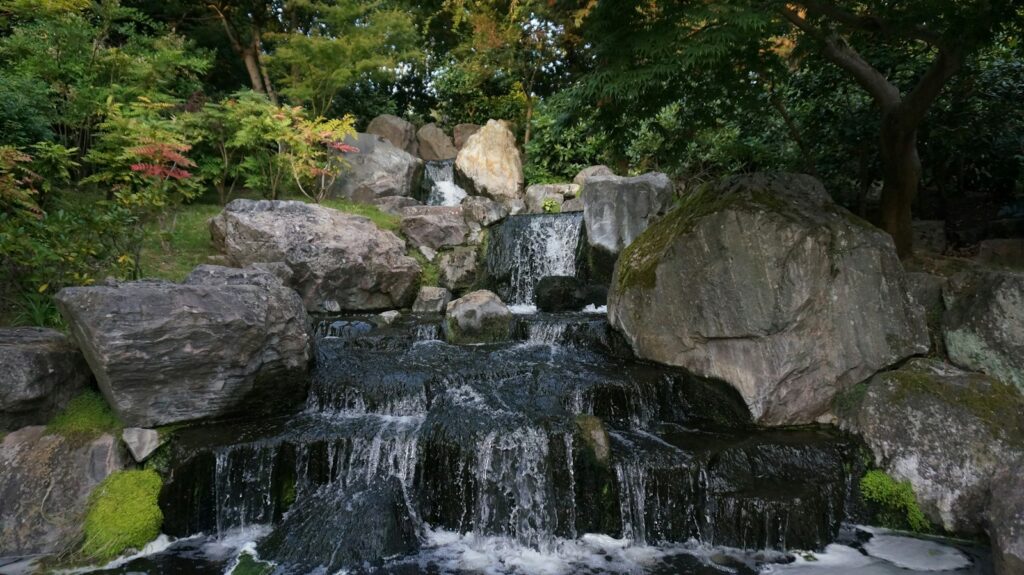
    In the woodland heart of Holland Park, the Kyoto Garden was a gift from the city of Kyoto and opened in 1991. Stone lanterns, clipped shrubs and a tiered waterfall tumbling into a koi pond make it one of the most serene corners of west London. It is free and follows the park’s hours, from 7.30am until about half an hour before dusk. Dogs are not allowed in the Japanese garden.

    The Phoenix Garden

    Between Soho and Covent Garden, on Stacey Street, the Phoenix Garden is a volunteer-run community garden created in 1984 and the last of the original Covent Garden community gardens. Wild and wildlife-friendly, it is wonderfully unexpected in theatreland. Entry is free; it opens roughly dawn to dusk, though hours can change.

    The Hill Garden and Pergola, Hampstead

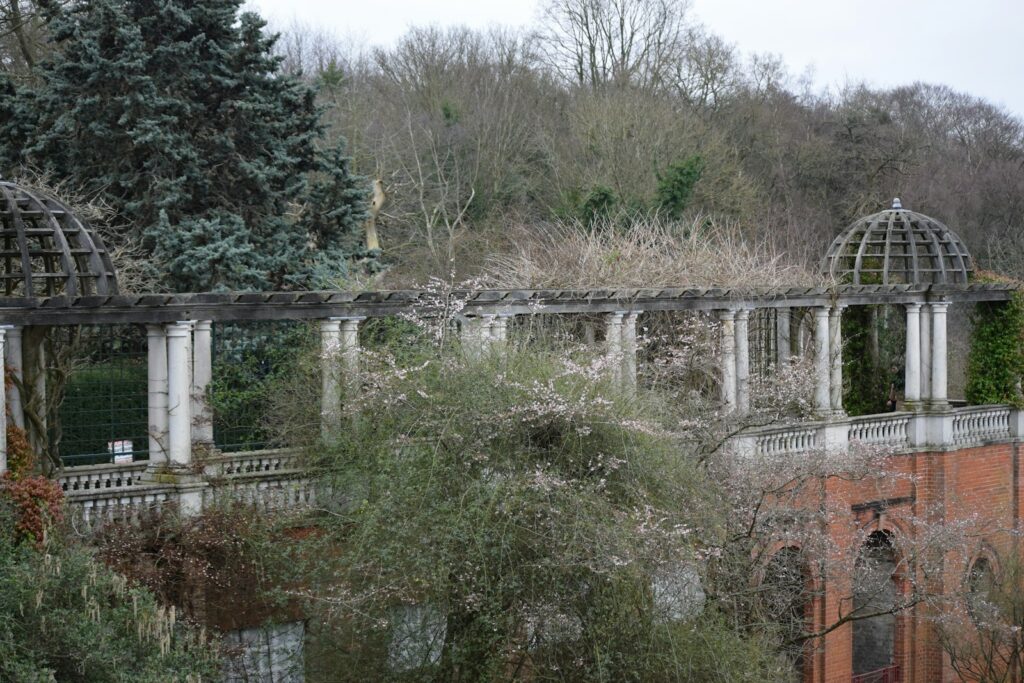
    On the western edge of Hampstead Heath, this is London’s most romantic folly. Soap magnate William Lever, later Lord Leverhulme, bought Hill House in 1904 and commissioned the landscape architect Thomas Mawson to create a raised Edwardian pergola, begun in 1905 and extended over the following two decades. Today its weathered stone columns and timber beams are draped in wisteria and climbing roses, with views out over the Heath. It is free and managed by the City of London Corporation, opening around 8.30am and closing near dusk. Nearby, the National Trust’s Fenton House has a charming walled garden and old orchard, so check opening dates before combining the two.

    Crossrail Place Roof Garden, Canary Wharf

    Above the Elizabeth line station at Canary Wharf, Foster + Partners wrapped a curving timber lattice roof around a planted garden landscaped by Gillespies. It is free, needs no booking and is a surprisingly peaceful place among the towers. Hours vary by season, so check the Canary Wharf website.

    The Hill Garden and Pergola, Hampstead Heath
    The Hill Garden and Pergola, an Edwardian folly on the edge of Hampstead Heath. Photo: Ben Tovee / Unsplash

    Before you go, we recommend a good London gardens guidebook.

    Best Seasons for London’s Gardens

    • April and May: Blossom in the Kyoto Garden, wisteria on the Hampstead Pergola and fresh borders everywhere. Our favourite time.
    • June and July: Roses and herbaceous borders at their peak at Inner Temple and Chelsea Physic Garden, and the longest evenings for the City walk.
    • October and November: Japanese maples turn crimson in Holland Park, and St Dunstan’s climbers glow in the low sun.
    • Winter: Shorter hours and some closures, but the Sky Garden and Crossrail Place make good covered alternatives.

    Luxury Hotels With Notable Gardens

    The Goring, Belgravia

    Family-owned since it opened in 1910, The Goring has one of the largest private gardens in central London, closed to the public but enjoyed by guests, with afternoon tea on the Veranda overlooking the lawns and croquet that the concierge can arrange.

    The Cadogan, A Belmond Hotel, Chelsea

    On Sloane Street, The Cadogan gives guests keys to the private Cadogan Place Gardens across the road, with tennis courts. Chelsea Physic Garden is an easy walk away.

    Ham Yard Hotel, Soho

    Firmdale’s Ham Yard Hotel has a leafy rooftop garden and terrace for in-house guests, with olive trees and espaliered fruit. In the run-up to Christmas it has opened to ticket holders as a winter pop-up; check what is on. The Phoenix Garden is a few minutes’ walk away.

    The Ned, City of London

    In the former Midland Bank headquarters beside Bank, The Ned is the natural base for the City walk. Its rooftop, with a pool and views to St Paul’s, is part of the members’ club, so check whether your room category includes rooftop access when you book.

    For dinner after a day in the gardens, see our guide to Michelin-starred dining in London.

    A Perfect Garden Day in London

    Morning: A timed slot at Chelsea Physic Garden. Early afternoon: Inner Temple Garden before it closes at 3pm. Late afternoon: Postman’s Park, then your booked Sky Garden slot. Evening: The ruins of St Dunstan-in-the-East, then dinner.

    Waterfall and rocks in the Kyoto Garden, Holland Park
    Autumn maples in the Kyoto Garden, Holland Park. Photo: Uliana Sova / Unsplash

    FAQs

    Are London’s secret gardens free?

    Most are. St Dunstan-in-the-East, Postman’s Park, Inner Temple Garden, the Phoenix Garden, the Kyoto Garden, the Hill Garden and Crossrail Place are free, and the Sky Garden is free with a booked ticket. Chelsea Physic Garden and the Garden Museum charge admission.

    Do I need to book the Sky Garden?

    Yes. Free tickets are released on the official website about three weeks ahead and are timed. Walk-ups are not guaranteed.

    When is Inner Temple Garden open?

    Usually on weekdays from 12.30pm to 3pm, excluding bank holidays and private events. Check the Inner Temple website or Instagram before you go.

    Let Us Design Your Garden Lover’s London

    Tell us your dates and we will craft a tailored London itinerary, with timed garden visits, private guides and a hotel with its own green retreat.

  • Places Less Visited: Sculpture in the Sand

    Places Less Visited: Sculpture in the Sand

    Places Less Visited: two seaside sculptures that divide opinion, from Antony Gormley’s iron men at Crosby to Maggi Hambling’s Scallop at Aldeburgh.

    Art Where the Tide Comes In

    There are few items that generate more different points of view or discussion than art works or sculpture outside of a gallery, and some of the most intense discussions seem to happen when an installation is created on a pristine beach where until now only the tide had disturbed the sand.

    I came across several intriguing installations that are close to the ocean or on the beach. These are two of my favourites.

    Another Place, Crosby

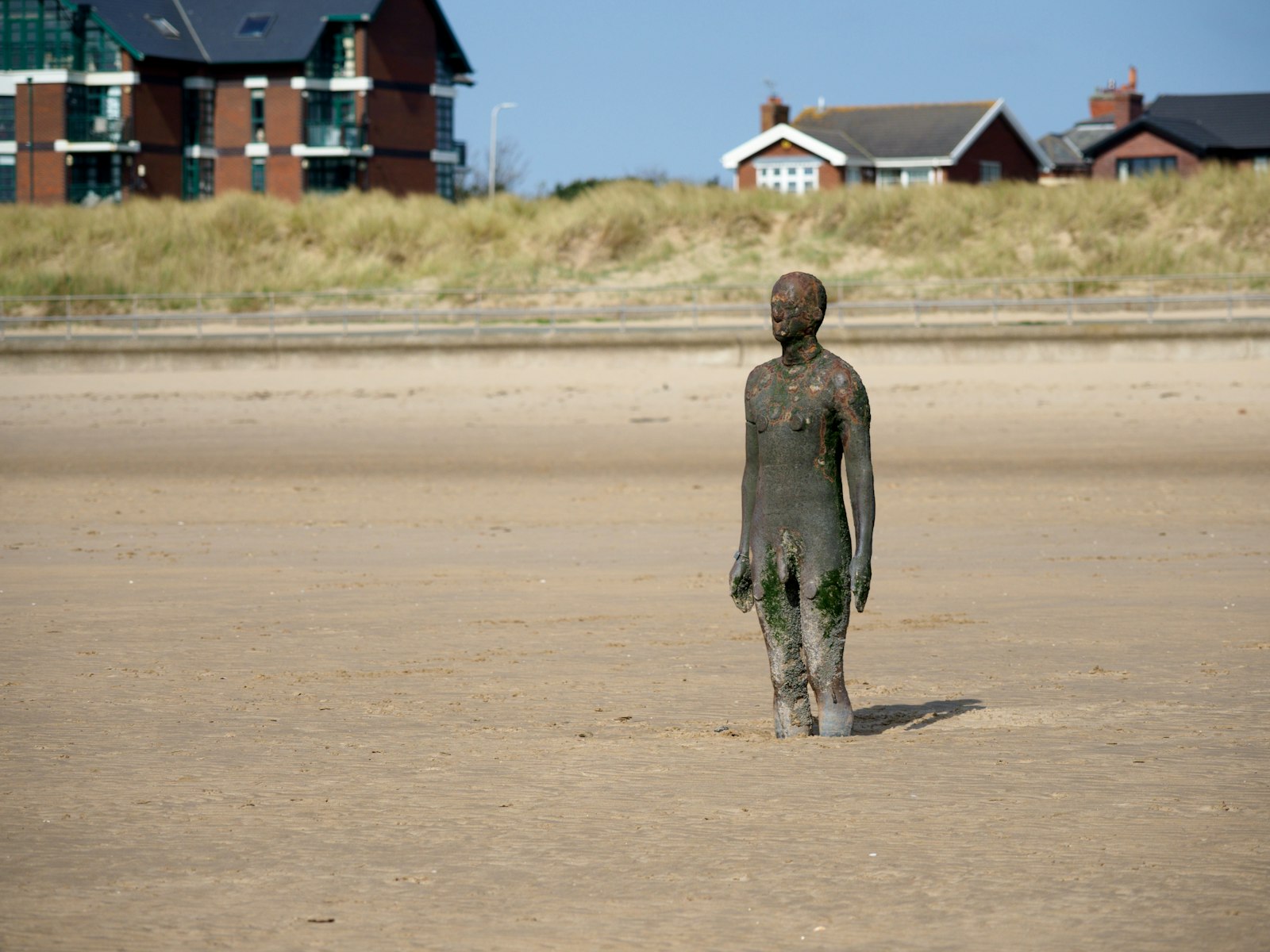
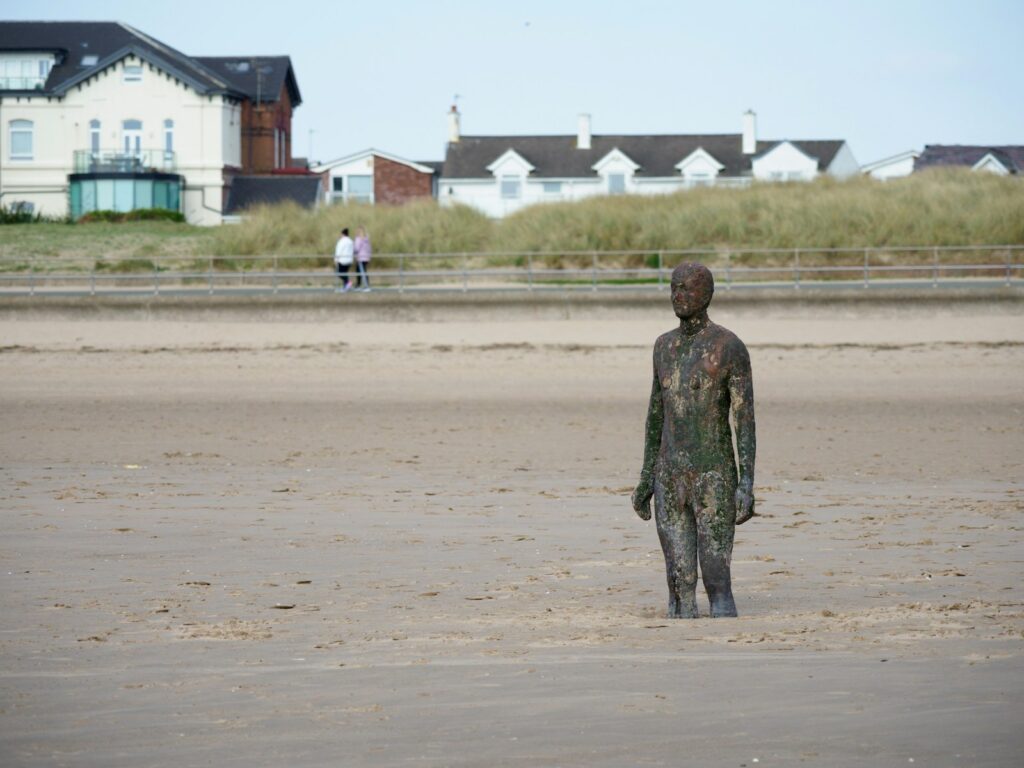
    The first that caught my eye is known as Another Place, by the artist Antony Gormley. This installation is in Crosby, just north of Liverpool, and consists of 100 figures, all of which are casts of Antony Gormley’s own body, rising out of the sand. These life-size iron figures are spread along about three kilometres of the shore. Many are covered by the tide, and you can see where the sea and its marine life have left their mark on the statues.

    Controversy has followed this exhibit wherever it has been. It was shown in Cuxhaven in Germany, Stavanger in Norway and De Panne in Belgium before finding a permanent home in Crosby in 2007.

    Antony Gormley figures of Another Place on Crosby Beach
    Another Place on Crosby beach at sunset. Photo: Brett Jordan / Unsplash

    Scallop, Aldeburgh

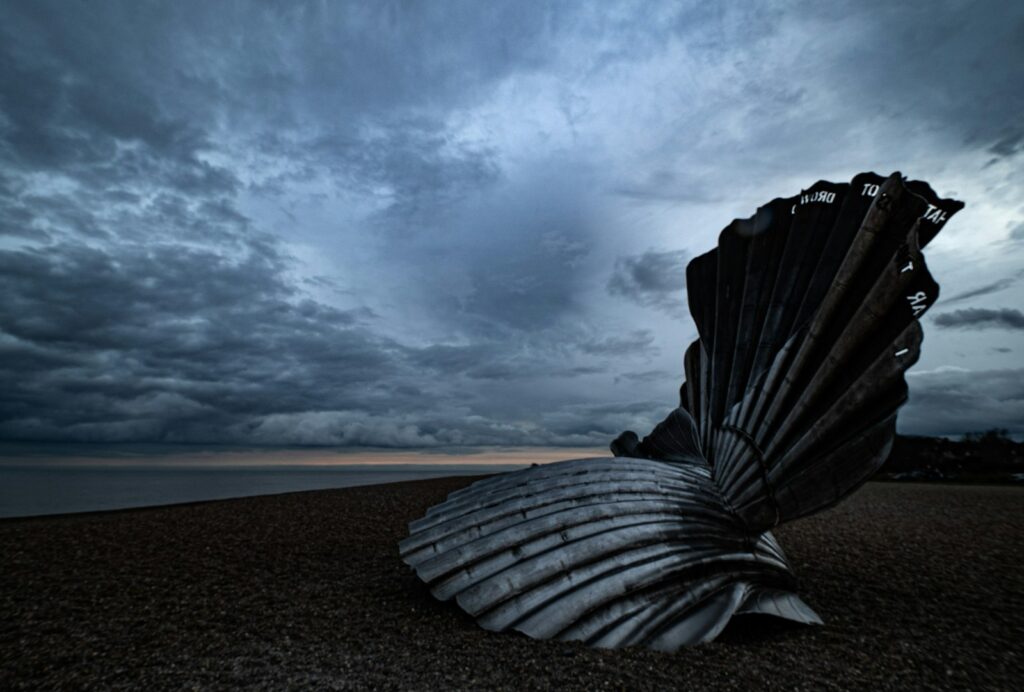
    Created as a tribute to the composer Benjamin Britten (1913 to 1976), this giant scallop shell rises from the beach at Aldeburgh in Suffolk, where Britten regularly walked. The Scallop was created by the Suffolk-born artist Maggi Hambling, who is herself a fan of Britten’s music.

    The sculpture depicts two broken, interlocking scallop shells. Words from Britten’s opera Peter Grimes are cut into the rim of the upright shell and read “I hear those voices that will not be drowned”. Maggi Hambling describes Scallop as a conversation with the sea and said, “An important part of my concept is that at the centre of the sculpture, where the sound of the waves and the winds are focused, a visitor may sit and contemplate the mysterious power of the sea.”

    As with Another Place, the Scallop has attracted a considerable number of different opinions. Some residents campaigned to have it moved, and in 2015 a national newspaper critic named it among the worst public art in Britain. Love it or not, it is well worth seeing for yourself.

    The Scallop sculpture on the beach at Aldeburgh
    Scallop on the shingle at Aldeburgh. Photo: Ruth Gledhill / Unsplash

    Planning Your Visit

    • Crosby: The figures stand between Waterloo and Blundellsands, a short train ride from Liverpool. Stay on the promenade and paths, as the tide comes in fast and the sand can be soft.
    • Aldeburgh: Scallop stands on the beach north of the town, towards Thorpeness. Walk along the shingle from the town, or park nearby.
    • Best light: Late afternoon and sunset, at both.

    Add Coastal Art to Your Journey

    Tell us your dates and interests, and we’ll build the quieter corners of Britain into your trip.

  • The Folklore Explorer’s Trail: The Rollright Stones and England’s Legend-Haunted Landscapes

    The Folklore Explorer’s Trail: The Rollright Stones and England’s Legend-Haunted Landscapes

    On a quiet ridge where Oxfordshire meets Warwickshire, a ring of weathered stones keeps one of England’s best-loved legends alive, and it makes the perfect first stop on a trail through the country’s most story-haunted landscapes.

    Why Follow a Folklore Trail?

    England’s ancient monuments have lived a second life in story. For centuries, people who had no idea who raised these stones explained them with witches, kings, elf-smiths and dragons, and visiting with those tales in mind brings a field of grey stones vividly to life.

    This trail begins at the Rollright Stones on the northern edge of the Cotswolds, then heads south along the Ridgeway to Wayland’s Smithy, the Uffington White Horse and Avebury, before ending in Somerset and Dorset at Glastonbury Tor and the Cerne Abbas Giant. Most sites are free or nearly so, open in daylight all year, and blissfully quiet outside summer weekends.

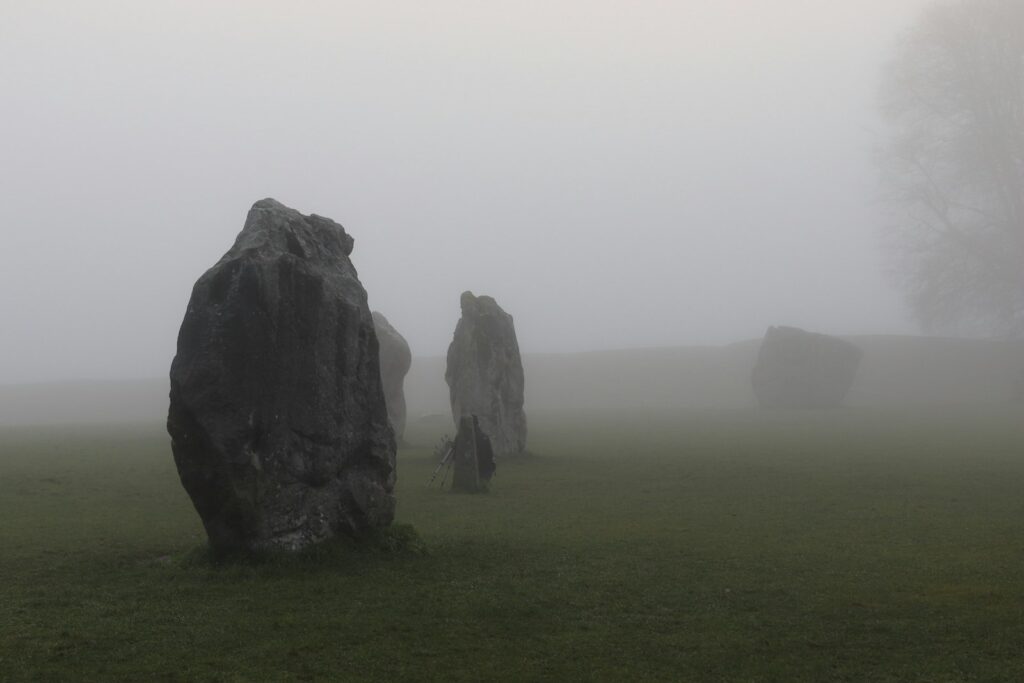
    Weathered prehistoric standing stones in a misty English field
    Ancient standing stones in the mist, the stuff of legends like the Rollright King’s Men. Photo: T / Unsplash

    The Rollright Stones: Witch, King and Knights

    The Rollright Stones lie about two and a half miles north-northwest of Chipping Norton, close to the village of Long Compton, and straddle the county boundary. There are three separate monuments, spanning nearly 2,000 years of prehistory.

    The King’s Men

    The stone circle, in Oxfordshire, dates from the Late Neolithic or Early Bronze Age. It is about 33 metres across, with around 77 closely spaced, heavily weathered stones.

    The King Stone

    Across the lane, in Warwickshire, stands a single tall monolith. Archaeologists think it most likely marked a Bronze Age burial site.

    The Whispering Knights

    A short walk east across the fields, four upright stones and a fallen capstone huddle together like conspirators. This is the oldest of the three monuments, the remains of an Early Neolithic portal dolmen, or burial chamber, built centuries before the circle.

    The legend

    According to local tradition, a king marching with his army to conquer England met a witch on this ridge. She challenged him: “Seven long strides thou shalt take, and if Long Compton thou canst see, King of England thou shalt be.” The king strode forward, but on the seventh step a rise in the ground hid the village from view. The witch turned him to stone as the King Stone, his soldiers became the King’s Men, and four knights who had hung back plotting treachery became the Whispering Knights.

    The stones are also said to be uncountable. Legend holds that no one can count the King’s Men three times and arrive at the same number, and that anyone who does will have their heart’s desire. One story tells of a baker who placed a loaf on each stone to keep track, only to find loaves mysteriously missing each time.

    Visiting the Rollright Stones

    Since 2001 the stones have been owned by the Rollright Trust, a small charity that bought the site after a public campaign and now cares for it. The Trust asks for a modest entry fee (English Heritage lists it at £2 per adult and £1 for children aged 7 to 16, under-7s free), which you can pay online in advance, by QR code on site or in the honesty box. The stones are open daily all year, and the site is a Dark Sky Discovery Site, so a clear night visit is magical.

    There are no facilities at the stones and parking is limited to two small lay-bys, with pubs in Long Compton and Chipping Norton. Please do not climb or sit on the stones.

    Along the Ridgeway: Wayland’s Smithy and the White Horse

    An hour or so south, the Ridgeway National Trail runs about 87 miles along the chalk downs from Avebury to Ivinghoe Beacon, following a route used for thousands of years. Its most legend-rich stretch lies above the Vale of the White Horse.

    Wayland’s Smithy

    Hidden in a ring of beech trees beside the Ridgeway, this Neolithic long barrow was built in two phases, the first around 3590 to 3555 BC and the larger, with its monumental stone façade, around 3460 to 3400 BC. Its name recalls Wayland, the smith of Germanic legend. Tradition says that if you leave your horse here overnight with a small coin, the invisible smith will shoe it by morning. Wayland’s Smithy is in the care of English Heritage, free to enter and open in daylight, and lies just over a mile’s walk along the Ridgeway from the White Horse Hill car park.

    The Uffington White Horse

    Owned by the National Trust, this sleek, abstract chalk horse is Britain’s oldest known hill figure, dated by archaeologists to the Late Bronze Age, roughly 3,000 years ago. It stretches about 110 metres across the hillside and is still re-chalked by volunteers. Below it rises Dragon Hill, a flat-topped mound where St George is said to have slain the dragon; the bare chalk patch on top is where its blood spilled and nothing will grow. Above stands Uffington Castle, an Iron Age hillfort. It is open dawn to dusk, with a pay-and-display car park.

    For walkers, a good OS Explorer map of the Vale of White Horse makes the loop from the horse to Wayland’s Smithy and back an easy, rewarding morning.

    A walker watching the sun set over the Vale of the White Horse from Uffington Castle hillfort
    Sunset from Uffington Castle, the hillfort just above the 3,000-year-old White Horse. Photo: Sam Headland / Unsplash

    Avebury: A Village Inside a Stone Circle

    At the western end of the Ridgeway, Avebury is the largest stone circle in Britain, built and remodelled between roughly 2850 and 2200 BC. A vast bank and ditch encloses an outer ring that once held around 100 stones and two smaller circles within it, and part of the village, including its pub, sits right inside the henge. It forms part of the Stonehenge and Avebury World Heritage Site, and the National Trust manages it on behalf of English Heritage. Entry to the stones is free at any reasonable time in daylight.

    Start at the Alexander Keiller Museum, then wander the stones. To go deeper, a guided Avebury and Stonehenge day tour pairs the two great circles with expert commentary.

    Further South: Glastonbury Tor and the Cerne Abbas Giant

    Glastonbury Tor

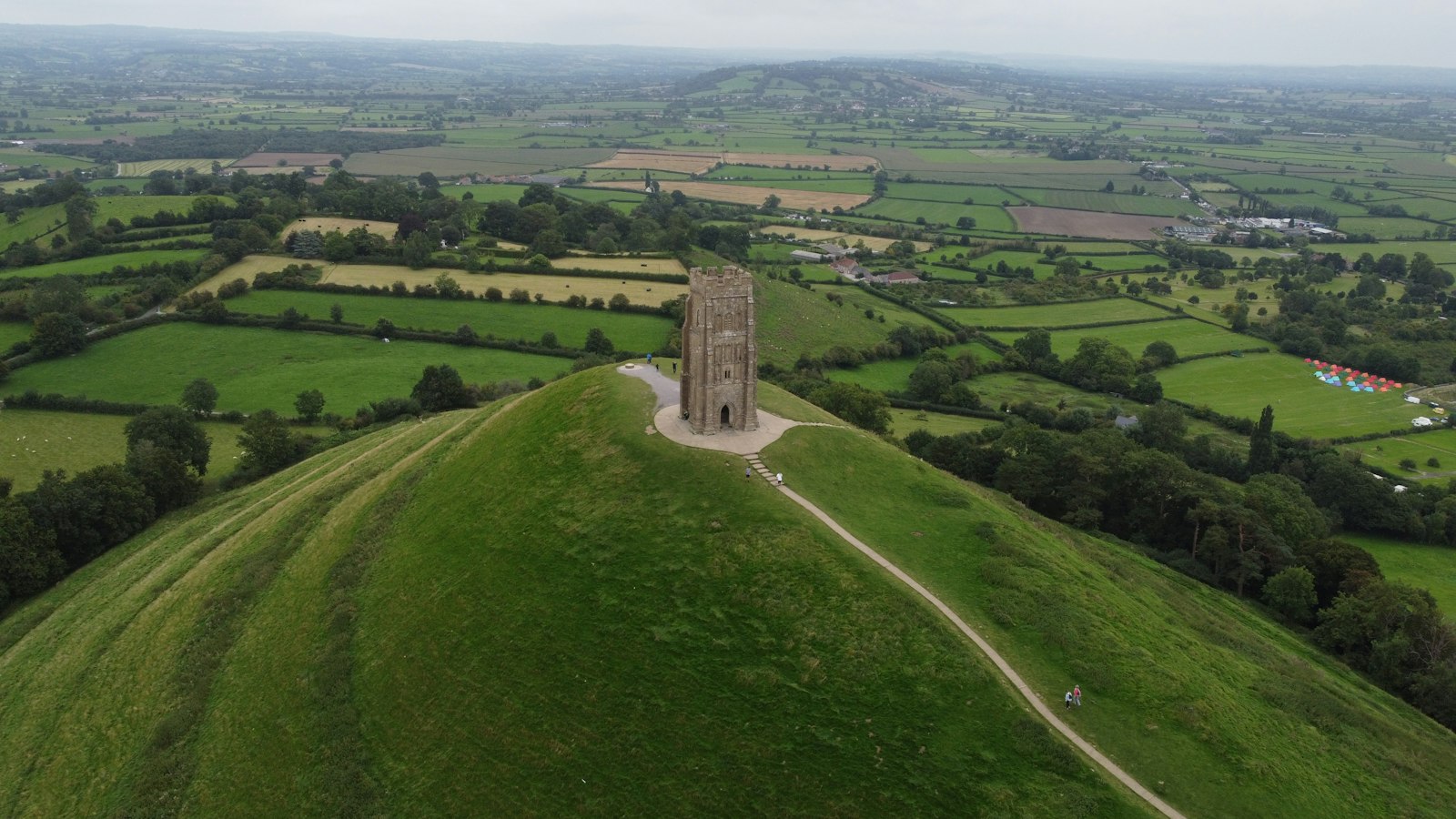
    Rising from the Somerset Levels and crowned by the roofless tower of St Michael’s church, the National Trust’s Glastonbury Tor is steeped in story. It is often identified with the Isle of Avalon, where the wounded King Arthur was carried after his last battle. Below, at Glastonbury Abbey, the monks announced in 1191 that they had found the grave of Arthur and Guinevere, a claim most historians now regard as a fundraising coup after a devastating fire. There is almost no parking at the Tor itself, so walk up from the town centre, around 25 minutes. A guided tour of Glastonbury and the stone circles takes the strain out of the logistics.

    The Cerne Abbas Giant

    In Dorset, the National Trust’s 55-metre club-wielding giant is Britain’s largest chalk hill figure. Long assumed to be prehistoric or Roman, he was dated in 2021 to between AD 700 and 1100, the late Saxon period. The best view is from the signposted viewing area, about a quarter mile’s walk from the village.

    Seasonal Customs Worth Timing a Trip Around

    • May Morning, Oxford (1 May): At 6am, Magdalen College Choir sings from the top of Magdalen Tower to thousands gathered below, followed by Morris dancing in the streets.
    • Padstow ‘Obby ‘Oss (1 May): A long way west in Cornwall, but unforgettable. Two hobby horses, each led by a Teaser, dance through the town all day.
    • Bampton Morris (Spring Bank Holiday Monday): The Oxfordshire village of Bampton has one of England’s few unbroken Morris traditions, with several sides dancing around the village from early morning.
    • Clear winter nights: The Rollright Stones’ dark skies make a crisp, starry evening visit memorable, and the sites are wonderfully quiet.

    Before you go, we recommend reading The Lore of the Land by Jennifer Westwood and Jacqueline Simpson, a county-by-county guide to England’s legends and the perfect companion for this trail.

    Where to Stay

    The Wild Rabbit, Kingham

    A short drive from the Rollrights, The Wild Rabbit is a seventeenth-century inn run by Daylesford, with stylish bedrooms, a fine-dining room built on produce from the Daylesford farm. It also features in our guide to boutique hotels in the Cotswolds.

    The Feathered Nest, Nether Westcote

    A former malt house of around 350 years, The Feathered Nest has four individually decorated rooms plus a cottage, sweeping views over the Evenlode Valley and a kitchen with three AA Rosettes. Note that the pub and restaurant close on Tuesdays and Wednesdays, so check before booking.

    The Greyhound Inn, Letcombe Regis

    For the Ridgeway and the White Horse, The Greyhound Inn is an eighteenth-century free house at the foot of the downs, with stylish bedrooms named after local landmarks and award-winning food.

    The Bell at Ramsbury

    Within easy reach of Avebury, The Bell at Ramsbury is an eighteenth-century inn in the Kennet Valley with ten characterful bedrooms, a dining room, a bar and a coffee shop.

    A Four-Day Folklore Trail

    Day 1: The Rollright Stones

    Visit the Rollrights in late afternoon light, try counting the King’s Men, then dine in Kingham or Nether Westcote.

    Day 2: The Ridgeway

    Walk from White Horse Hill along the Ridgeway to Wayland’s Smithy and back. Overnight in Letcombe Regis.

    Day 3: Avebury

    Explore the Avebury stones and museum, lunch inside the henge, and stay in Ramsbury.

    Day 4: Glastonbury

    Climb Glastonbury Tor and explore the abbey ruins, or swing south to the Cerne Abbas Giant.

    FAQs

    Who owns the Rollright Stones?

    The Rollright Trust, a charity, has owned and cared for the stones since 2001. A small entry fee supports its work.

    Can you really not count the Rollright Stones?

    The stones have, in fact, been counted and recorded, but legend says no one can count them three times and get the same number. The weathered stones make it surprisingly hard.

    Do I need a car?

    Realistically, yes: the Rollrights are not on a public transport route. A guided tour is a good alternative for Avebury and Glastonbury.

    Let Us Plan Your Folklore Journey

    Tell us your dates and we will design a seamless trail of stone circles, chalk giants and characterful inns, timed to the seasons and customs you love.

  • Places Less Visited: Portmeirion, Wales’ Italianate Fantasy Village

    Places Less Visited: Portmeirion, Wales’ Italianate Fantasy Village

    On a wooded headland above the Dwyryd estuary in North Wales, an architect’s lifelong daydream of pastel campaniles, salvaged colonnades and subtropical woodland has become one of Britain’s most enchanting and unexpected places to spend a day, or better still, a night.

    Why Portmeirion?

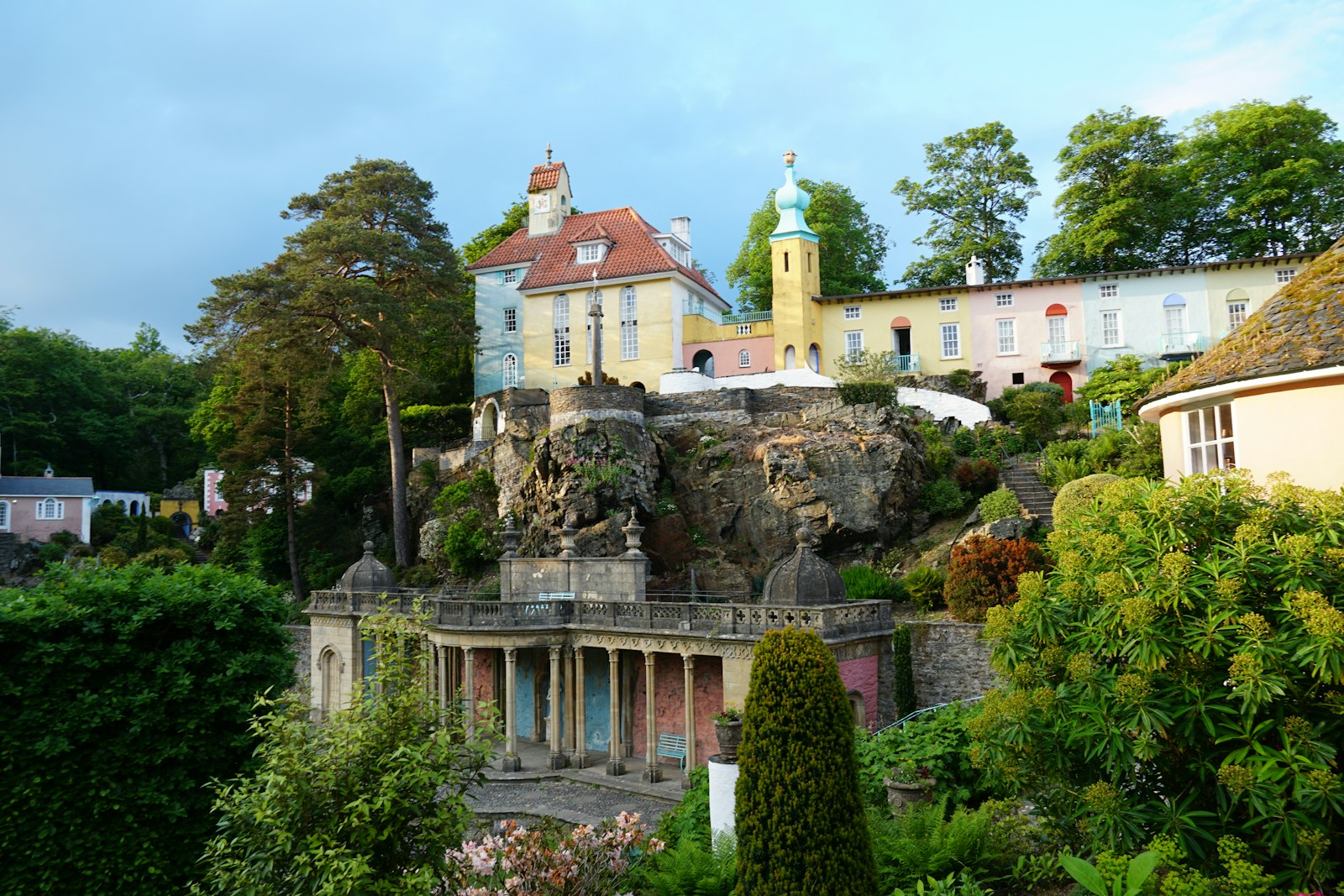
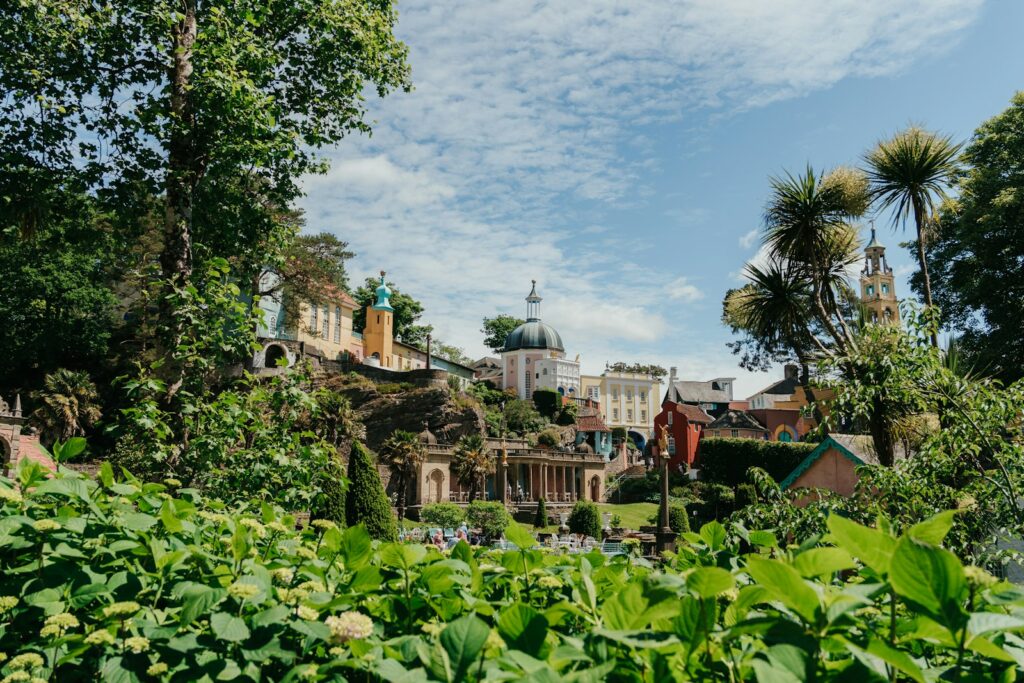
    Portmeirion looks as though a Mediterranean hill town has drifted ashore in Gwynedd. Domes, loggias and painted façades in ice-cream colours tumble down towards a sandy estuary, framed by palms, hydrangeas and the mountains of Eryri. It is part architectural folly, part conservation manifesto, part film set, and entirely unlike anywhere else in Britain.

    Portmeirion turned 100 in 2026, a century since the Hotel Portmeirion first opened its doors at Easter 1926, and sixty years since The Prisoner began filming here. Yet once the day visitors leave in the early evening, it becomes wonderfully quiet, which is why we think it belongs firmly in our Places Less Visited series.

    Pastel-coloured Italianate buildings and a slender tower among trees at Portmeirion village, Wales
    Portmeirion’s pastel Italianate village, tucked into the woods above the Dwyryd estuary. Photo: Sheila C / Unsplash

    Clough Williams-Ellis and His Dream Village

    The village was the creation of the architect Sir Clough Williams-Ellis (1883 to 1978), who acquired the site in 1925 and spent the next half-century designing and building it, finishing in 1975. He was knighted in 1972 for services to architecture and environmental preservation, and was a tireless campaigner against careless development: his 1928 book England and the Octopus attacked urban sprawl, and he later helped shape Britain’s national parks.

    Portmeirion was his argument in stone that a naturally beautiful place could be developed without spoiling it, and could even be improved. He denied copying Portofino, preferring to describe a general Mediterranean spirit filtered through his own playful imagination. Today the village is owned by a charitable trust, and many of its buildings are listed by Cadw, with the Town Hall listed at Grade I.

    Architecture and Salvaged Buildings

    Part of Portmeirion’s charm is that much of it is rescued. Williams-Ellis gathered fragments of demolished buildings and gave them new lives here, earning the village its affectionate nickname, a “home for fallen buildings”. Look out for:

    • The Town Hall (Hercules Hall): Incorporating stonework and an elaborate plaster-ceilinged hall salvaged from Emral Hall in Flintshire after it was demolished.
    • The Bristol Colonnade: An eighteenth-century colonnade from the Arnos Court bathhouse in Bristol, threatened by road widening and carefully rebuilt here by Williams-Ellis’s master mason, William Davies, at the end of the 1950s.
    • The Campanile and Piazza: The village’s theatrical centrepiece, with fountains, statuary and gilded figures set against the trees.

    Tip: Arrive at opening time or linger after 5pm if you are staying. The piazza in soft morning or evening light, with no crowds, is when Portmeirion feels most magical for photography.

    The Prisoner: Be Seeing You

    For film and television fans, Portmeirion is forever The Village. Patrick McGoohan shot the exteriors for his cult series The Prisoner here in 1966 and 1967, and the show first aired on ITV in autumn 1967. Famously, the location was kept a secret on screen until the credits of the final episode.

    Fans can trace the show around the village: the Round House, built in 1958 to 1959, served as Number Six’s residence, and the Hotel Portmeirion appeared as the Old People’s Home. The Prisoner Shop sells memorabilia and merchandise. Before you go, it is worth revisiting the series on The Prisoner complete series box set.

    The annual Prisoner convention

    Each spring the appreciation society Six of One holds its convention, known as PortmeiriCon, in the village, complete with a human chess game and a parade. The 42nd convention ran in April 2026. Registration is for Six of One members, so join the society if you would like to attend, and watch their website for 2027 dates.

    Festival No. 6: A Short, Bright Chapter

    From 2012 to 2018, Portmeirion hosted Festival No. 6, a September music and arts festival named in homage to The Prisoner. After the 2018 edition, the organisers announced an indefinite break, and it has not returned. Music still finds its way here, though: in the centenary year, the village hosted the summer Gŵyl Portmeirion concerts, so check the events calendar for future programmes.

    The Gwyllt Gardens and Woodland

    Many visitors never get beyond the piazza, which is a shame. Behind the village lies Y Gwyllt (Welsh for “the wild”), around 70 acres of subtropical woodland laced with miles of paths. Its exotic planting predates Williams-Ellis: the previous owner, George Henry Caton Haigh, was an authority on Himalayan flowering trees, and the gardens are now Grade II* listed.

    Expect one of Britain’s finest early twentieth-century rhododendron collections, magnolias and ginkgos, a Japanese garden with a pagoda and a lily-covered lake, a derelict castle and secluded coves along the shore. The woodland is at its most spectacular in late spring when the rhododendrons are in flower. Wear proper shoes: some paths are steep and uneven.

    Palms and lush green planting framing the domed buildings of Portmeirion
    Palms and lush planting thrive in Portmeirion’s sheltered, mild microclimate. Photo: Shawn / Unsplash

    Portmeirion Pottery

    The famous pottery has its roots here too. Clough’s eldest daughter, Susan Williams-Ellis, and her husband Euan Cooper-Willis first sold ceramics in the village gift shop, and by around 1961 they had turned two small Stoke-on-Trent potteries into Portmeirion Pottery. Susan’s Botanic Garden design, launched in 1972 and inspired by nineteenth-century botanical illustrations, remains one of the most successful tableware patterns ever made.

    Where to Stay in the Village

    Staying overnight is the real secret of Portmeirion. Once the gates close to day visitors, residents have the piazza, the estuary and the woodland almost to themselves. All the options below are run by Portmeirion.

    Hotel Portmeirion

    The original waterside mansion that started it all, opened in 1926, rebuilt after a fire in 1981 and reopened in 1988. Hotel Portmeirion sits right on the estuary, with an Art Deco dining room holding two AA Rosettes, lounges, a bar and terrace, and an open-air pool reserved for resident guests in summer.

    Castell Deudraeth

    Just outside the village gates, this Victorian castellated mansion, bought by Williams-Ellis in 1931, opened as a hotel in 2001. Castell Deudraeth has 11 contemporary rooms, a brasserie and a Victorian walled garden, and suits travellers who prefer a more modern style.

    Village rooms and cottages

    For the full fantasy, book one of the 32 individually decorated serviced rooms scattered through the village itself, or one of 13 self-catering cottages with access to hotel facilities.

    Visiting as a Day Guest

    Portmeirion is open to day visitors all year, except Christmas Day and Boxing Day, for an admission charge. Tickets can be bought at the toll booth or online in advance, which is strongly advised at busy times; online tickets are for a chosen date and arrival slot, and are non-refundable. Gates close earlier in winter than in the main season, so check current times and prices on the official website.

    A lovely alternative is to book lunch or afternoon tea at Hotel Portmeirion, or a two- or three-course lunch at Castell Deudraeth, which includes village entry (conditions apply, so confirm when booking). Note that pets are not allowed in the grounds, though assistance dogs are welcome.

    Exploring Nearby

    Eryri National Park

    Portmeirion sits on the edge of Eryri, the national park long known in English as Snowdonia, with Yr Wyddfa (Snowdon) and its neighbours rising inland.

    Ffestiniog and Welsh Highland Railways

    From Porthmadog harbour, two narrow-gauge heritage railways head into the mountains. The Ffestiniog Railway, whose company dates from 1832, climbs about 13.5 miles to the slate town of Blaenau Ffestiniog, stopping at Minffordd, close to Portmeirion. The Welsh Highland Railway runs about 25 miles to Caernarfon past the foot of Yr Wyddfa, making it the UK’s longest heritage railway. See North Wales steam railway experiences.

    Harlech Castle

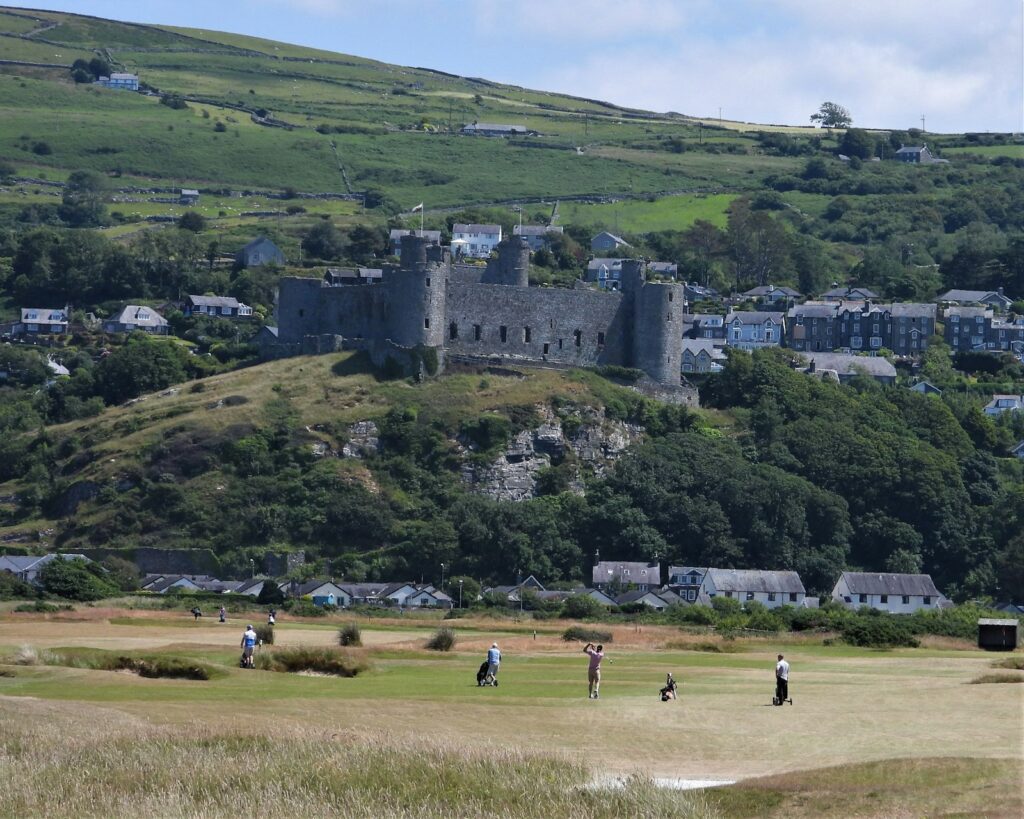
    Across the estuary, Edward I began Harlech Castle in 1283. Together with Caernarfon, Conwy and Beaumaris, it forms the UNESCO World Heritage Site of the Castles and Town Walls of King Edward in Gwynedd, inscribed in 1986, and is cared for by Cadw. Browse guided North Wales castles tours.

    Criccieth

    A short drive west, the seaside town of Criccieth is crowned by a castle built by the native Welsh princes of Gwynedd, begun by Llywelyn the Great and also cared for by Cadw. For more Welsh heritage, pair this trip with our guide to abbey ruins from Tintern to Fountains.

    How to Get There

    • By car: Portmeirion lies near Penrhyndeudraeth, about two miles from Porthmadog, signposted off the main coast road. There is parking for day visitors.
    • By train: Minffordd station, about a mile away, is served by Transport for Wales trains on the Cambrian Coast line and by the Ffestiniog Railway. A signed walk leads from the station to the village.
    • From further afield: Portmeirion fits neatly into a North Wales touring itinerary; we recommend at least two nights in the area to pair the village with the railways and castles.

    A Two-Day Portmeirion Escape

    Day 1: The village

    Arrive late morning, check in and explore the piazza, the Prisoner sights and the shops. Walk the Gwyllt in the afternoon, then enjoy dinner at Hotel Portmeirion as the tide changes on the estuary and the day visitors drift away.

    Day 2: Steam and castles

    Take an early stroll through the empty village, then head to Minffordd for a morning on the Ffestiniog Railway. In the afternoon, drive round to Harlech Castle for sweeping views back across the bay to Portmeirion, finishing with a walk by the sea at Criccieth.

    FAQs

    Do you have to pay to enter Portmeirion?

    Yes, day visitors pay an admission charge, which helps fund the upkeep of the village. Overnight guests, and diners with a qualifying restaurant booking, receive entry.

    Where was The Prisoner filmed?

    The exterior scenes of The Village were filmed at Portmeirion in 1966 and 1967, with interior scenes shot in the studio.

    Is Festival No. 6 still running?

    No. The festival ran from 2012 to 2018 and has been on an indefinite break since.

    How long should I spend at Portmeirion?

    Allow at least half a day to see the village and part of the woodland. To experience it at its most peaceful, stay at least one night.

    Let Us Plan Your North Wales Escape

    Tell us your dates and we will design a seamless itinerary, from a night in The Village to steam railways and Edward I’s great castles.

    Harlech Castle on its rocky crag above the town, seen across the links from the sea
    Harlech Castle, just across the estuary from Portmeirion. Photo: Huw Edwards / Unsplash
  • Unusual Day Trips from York You’ve Never Heard Of

    Unusual Day Trips from York You’ve Never Heard Of

    Most visitors to York stay within the city walls, yet within an easy drive or train ride lie Cistercian ruins, a novelist’s crooked old house, a hillside horse and a moorland valley so vast that legend says a giant scooped it out.

    Why Look Beyond the Usual Day Trips

    York sits at the centre of some of England’s richest countryside. To the north rise the Howardian Hills and the North York Moors; to the west, the gritstone edges of Nidderdale; to the east, the rolling Wolds. The places below are quieter and more personal than the famous names, and just as rewarding. All are within roughly an hour and a half of the city.

    A car gives you the most freedom, though two of our choices work well by public transport.

    1. Rievaulx Abbey and Terrace

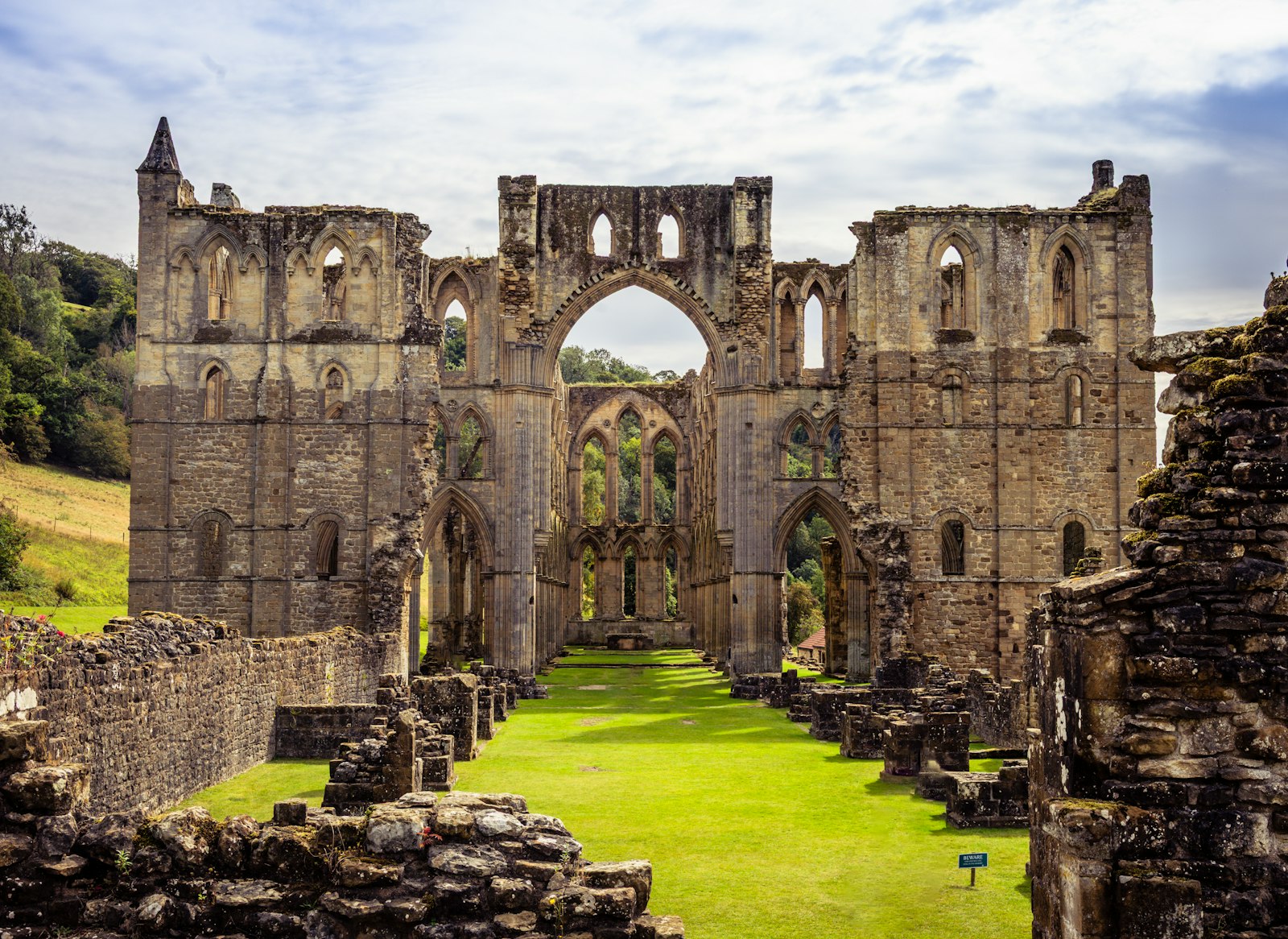
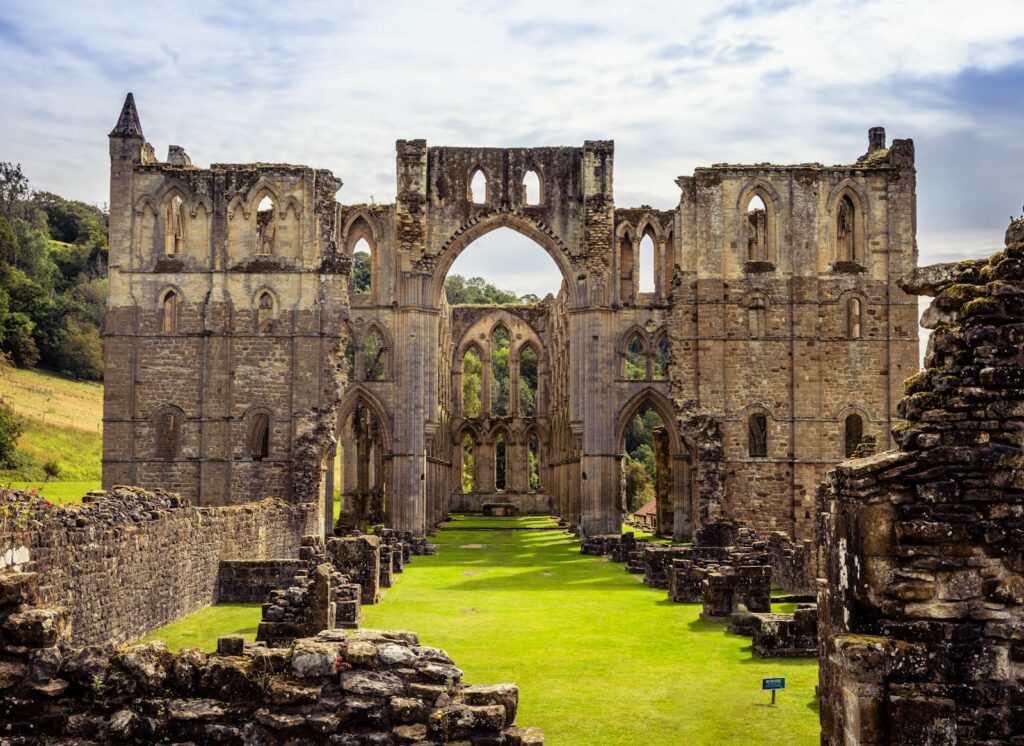
    Founded in 1132 by twelve monks from Clairvaux, Rievaulx was the first Cistercian monastery in the north of England, and its soaring ruins fill a wooded valley just outside Helmsley.

    Above the abbey, Rievaulx Terrace is a half-mile Georgian lawn laid out by Thomas Duncombe II as a viewing platform, with a Neoclassical temple at each end. The larger Ionic temple has a richly painted ceiling and gilt settees by William Kent. Since July 2026, English Heritage has run the Terrace on behalf of the National Trust, and a single joint ticket now covers both terrace and abbey.

    • Getting there: About an hour by car via Helmsley. Energetic walkers can park in Helmsley and follow the opening stretch of the Cleveland Way, roughly 3.5 miles each way.
    • Time to allow: Half a day, or a full day with the walk and lunch in Helmsley.
    • When: The abbey opens year round with reduced winter hours; the Terrace is seasonal, so check English Heritage before you go.
    The roofless Gothic ruins of Rievaulx Abbey, tall pointed arches framing a green lawn with wooded hills beyond
    Rievaulx Abbey, the ruin the Duncombes built a whole terrace lawn to admire. Photo: James Smith / Unsplash

    2. Byland Abbey, Shandy Hall and the Kilburn White Horse

    Three very different treasures sit within a few miles of each other on the edge of the Howardian Hills, making one of our favourite day trips from York.

    Byland Abbey

    Byland’s great west front survives with the shattered rim of a rose window whose design is thought to have inspired the south rose window of York Minster. Inside, large areas of glazed green and yellow medieval floor tiles still lie in place, a rare survival.

    Shandy Hall, Coxwold

    In the pretty village of Coxwold, Shandy Hall is the medieval house where Laurence Sterne lived as curate from 1760 until 1768, writing much of Tristram Shandy and A Sentimental Journey. Run by the Laurence Sterne Trust, it holds the world’s largest collection of editions of his work, and its two acres of gardens include over a hundred roses and a wildlife-friendly woodland garden. The house reopens each May.

    The Kilburn White Horse

    Cut into the hillside in 1857, the White Horse is visible for miles across the Vale of York. Park at the Sutton Bank National Park Centre and walk along the escarpment on the Cleveland Way to stand above it, with what is often called one of the finest views in England spread below.

    • Getting there: About 40 minutes to an hour by car; there is no practical public transport.
    • Time to allow: A full day for all three.
    • When: May to September, when Shandy Hall is open and Byland’s museum is staffed.

    3. Nunnington Hall

    On the quiet banks of the River Rye, this mellow National Trust manor house has a gentle, lived-in charm and riverside gardens made for a slow afternoon. Its secret lies in the attic: the Carlisle Collection of Miniature Rooms, exquisite scaled-down interiors complete with tiny furniture, paintings and even working musical instruments.

    • Getting there: About 40 minutes by car.
    • Time to allow: Two to three hours.
    • When: Spring to autumn, plus a festive opening (usually from mid-November to just before Christmas).

    4. Hutton-le-Hole and the Ryedale Folk Museum

    Sheep graze the greens and a stream runs through Hutton-le-Hole, one of the loveliest villages on the North York Moors. Here the Ryedale Folk Museum has rescued around twenty historic buildings from across the area and rebuilt them on six acres, from a thatched cruck-framed manor house to a roundhouse and craft workshops.

    • Getting there: About an hour by car. In summer the Moorsbus runs at weekends and on bank holidays.
    • Time to allow: Half a day.
    • When: Best from spring to autumn; check the museum’s website for current times.

    5. The Hole of Horcum and Goathland

    Local legend says the giant Wade scooped out the Hole of Horcum to hurl at his wife; geologists credit springs and patient erosion. Either way, this vast natural amphitheatre beside the A169 is spectacular, especially when the heather blooms purple in late summer. A popular five-mile circuit from the Saltergate car park follows the rim and drops into the valley, taking about three hours.

    Continue north to Goathland, where the station on the heritage North Yorkshire Moors Railway played Hogsmeade in the first Harry Potter film; see our guide to Harry Potter filming locations in Britain. In season you can ride steam trains between Pickering, Goathland and Whitby. Bridge repairs have affected Whitby services in recent winters, so check the railway’s timetable before you go. We recommend booking ahead: North Yorkshire Moors Railway steam experiences.

    • Getting there: About an hour and a quarter by car. The Coastliner 840 bus from York to Whitby crosses the moors and has stops at the Hole of Horcum, with selected journeys via Goathland.
    • Time to allow: A full day.

    Tip: There are no facilities on the Hole of Horcum walk and the moor is exposed, so carry water and waterproofs. A good OS Explorer map of the eastern North York Moors is worth packing.

    Purple heather on the North York Moors under a pink sunset sky
    The North York Moors in late summer, when the heather turns the uplands purple. Photo: Andy Carne / Unsplash

    6. Brimham Rocks

    High on the moor above Nidderdale, wind and weather have sculpted millstone grit into extraordinary balancing towers and arches. Owned by the National Trust and open year round, Brimham Rocks is pure fun for clambering, with sweeping views; on a clear day you can see York Minster. It sits just a short drive from Fountains Abbey and Studley Royal, so you can combine the two; read our guide to Fountains and Tintern abbeys first.

    • Getting there: About an hour by car, via Harrogate.
    • Time to allow: Two hours, or a full day with Fountains.

    7. Saltaire

    A UNESCO World Heritage Site since 2001, Saltaire is the model village built by the Victorian industrialist Sir Titus Salt for his mill workers, with neat stone terraces, a grand church and a park on the River Aire. The vast Salts Mill, opened in 1853, now houses the 1853 Gallery with a permanent display of work by Bradford-born David Hockney. The mill is closed on Mondays and Tuesdays.

    • Getting there: By train, usually changing at Leeds; Saltaire station sits beside the mill. This is the easiest car-free day out on our list.
    • Time to allow: Half to a full day.

    8. Burton Agnes Hall

    Built between about 1601 and 1610 for Sir Henry Griffith, probably to designs by Robert Smythson, Burton Agnes is a glorious red-brick Elizabethan house on the edge of the Wolds, still a family home today. Inside are fine carved ceilings and an eclectic art collection; outside, a walled garden. A Norman manor house of the 1170s survives beside it. The festive opening (usually from mid-November to just before Christmas) is magical.

    • Getting there: About an hour by car, between Driffield and Bridlington.
    • Time to allow: Half a day.

    If you would rather someone else did the driving, a guided North York Moors day tour from York covers several of these highlights. And if you do want a famous name, Castle Howard, half an hour from the city, remains a magnificent alternative.

    Where to Stay in York

    Grays Court

    Tucked behind the Minster with gardens bounded by the city walls, Grays Court claims continuous occupation since the eleventh century and was once the residence of the Treasurers of York Minster. Its twelve bedrooms are individually designed, and The Bow Room restaurant holds three AA Rosettes and is listed in the Michelin Guide 2026.

    The Grand, York

    Built in 1906 as the headquarters of the North Eastern Railway, The Grand is the city’s five-star address, a short walk from the station. Its new underground spa, SubRosa, opened in late 2025 and has already earned Good Spa Guide Five Bubble status.

    Middlethorpe Hall and Spa

    For a country-house feel within reach of the city, Middlethorpe Hall is a William and Mary house of around 1699 set in some twenty acres, about two miles from the centre. Owned by the National Trust since 2008, it donates its profits to the charity, and it has a spa with an indoor pool.

    A Sample Day: Abbeys and a Novelist

    Leave York after breakfast and drive to Helmsley. Walk the Cleveland Way to Rievaulx, explore the abbey, then climb to the Terrace. Lunch back in Helmsley, then drive on to Coxwold for Shandy Hall and a glimpse of Byland on the way. Finish at Sutton Bank as the light softens over the Vale of York and the White Horse, and be back in the city for dinner. A Yorkshire walking guidebook opens up many more routes.

    FAQs

    Which of these day trips can I do without a car?

    Saltaire is easiest, by train via Leeds. The Coastliner 840 bus reaches the Hole of Horcum and Goathland. For the rest, a car or guided tour is far more practical.

    When is the best time to visit?

    May to September, when every site is open. Late August brings heather on the moors, and several houses reopen for Christmas.

    Is the North Yorkshire Moors Railway running in winter?

    Mainly festive specials. Repairs to a bridge near Grosmont are planned for the 2026 to 2027 winter, so check timetables before planning a 2027 trip to Whitby.

    Can I visit Rievaulx Terrace with National Trust membership?

    Yes. Members still enter free but should book in advance through English Heritage, which now runs the site.

    Discover the Yorkshire Few Visitors See

    Tell us your interests and we will design a York itinerary with hidden abbeys, private drivers and the finest places to stay.