
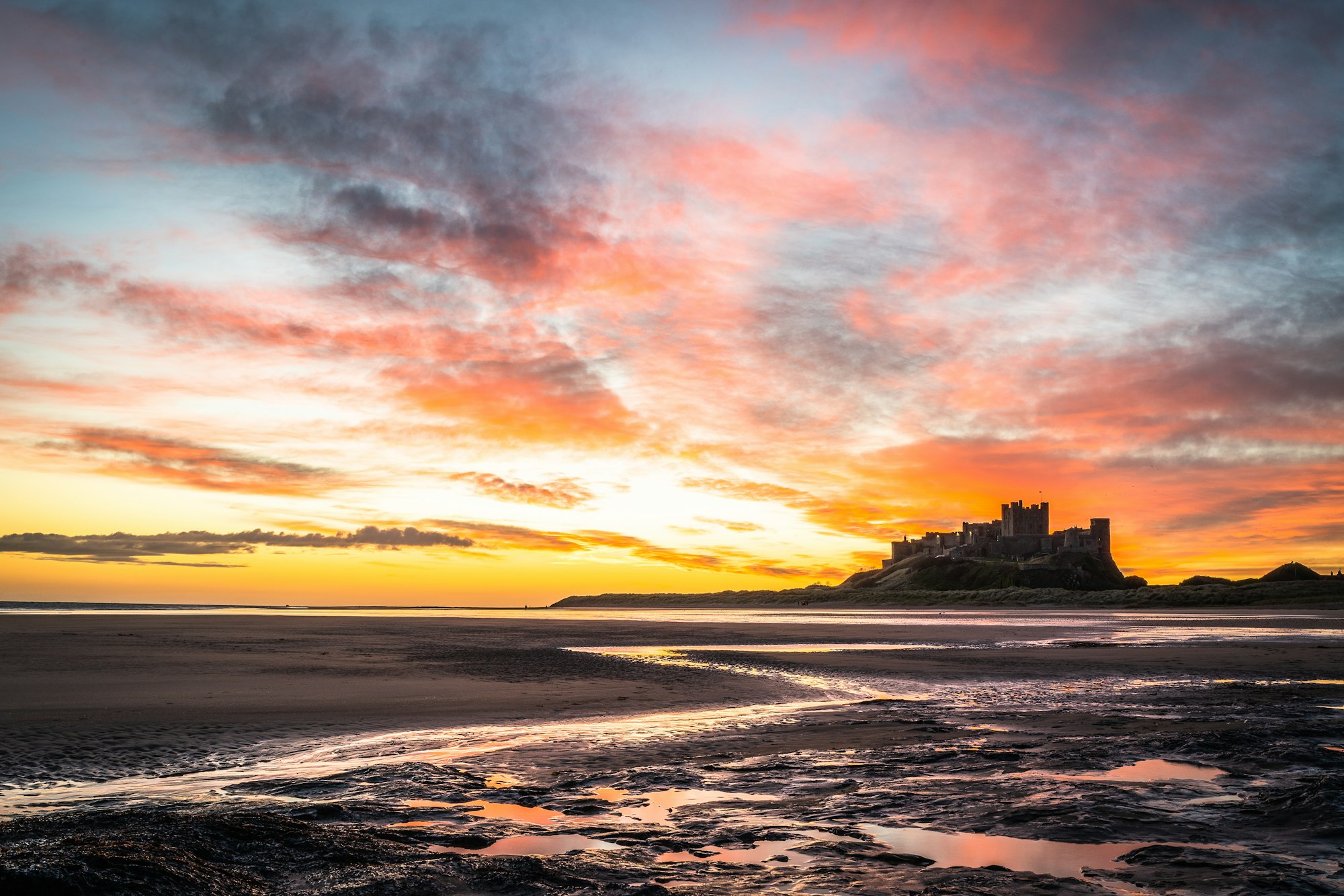
Between the Tyne and the Scottish border, the Northumberland coast unfolds as a run of empty golden beaches, fishing harbours and some of the most dramatic castles in Britain, each one standing guard over the North Sea.
Table of Contents
Why Northumberland’s Castle Coast?
England’s northernmost county was a frontier for centuries, fought over by Northumbrian kings, Vikings, Scots and rival English barons. The legacy is a coastline studded with fortresses, some still lived in, some gloriously ruined, all set against wide skies and sand that you can often have almost to yourself.
Much of this shore is protected as the Northumberland Coast National Landscape, the new name (since late 2023) for what was the Northumberland Coast Area of Outstanding Natural Beauty. Designated in 1958, it is a narrow ribbon of dunes, cliffs and islands running roughly from Berwick-upon-Tweed down to Amble. In a few days you can walk to a ruined castle, sail out to a puffin colony and cross a tidal causeway to a holy island.
The Castles
Bamburgh Castle
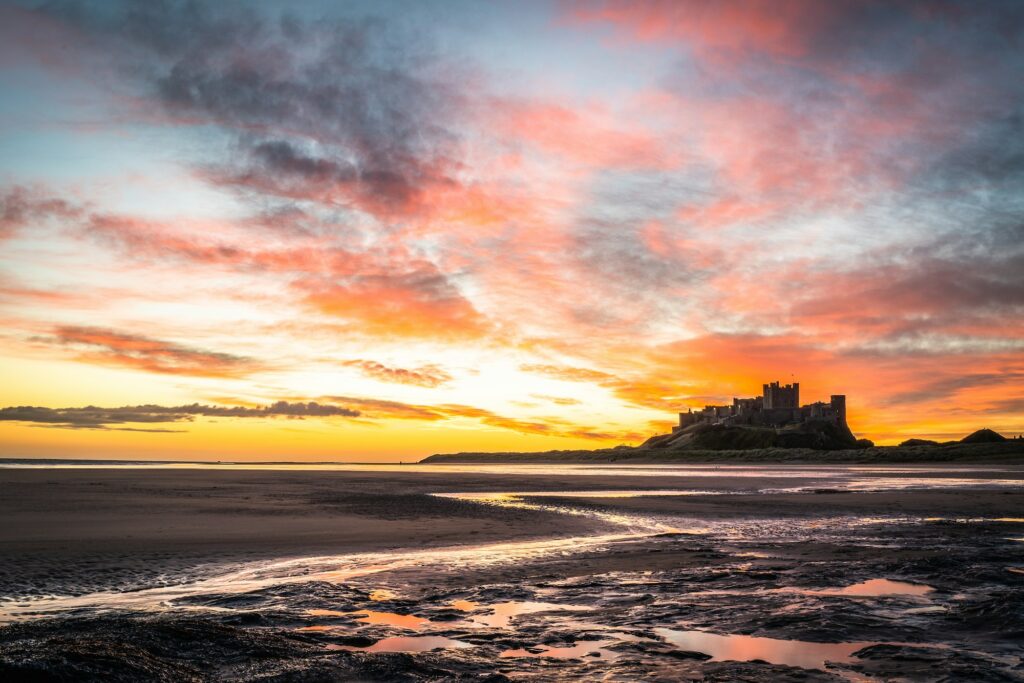
Few castles make an entrance like Bamburgh, sprawled along a volcanic crag above the dunes. The Northumbrian kings made it their royal capital in the sixth century, and fans of Bernard Cornwell’s novels and The Last Kingdom will know it as Bebbanburg, home of Uhtred. The Norman keep at its heart dates from after 1095, and during the Wars of the Roses it became the first castle in England to be destroyed by gunfire.
What you see today owes much to the Victorian industrialist William Armstrong, who bought the half-derelict castle in 1894 and poured more than a million pounds into restoring it. It remains the private home of the Armstrong family, with fourteen rooms open to visitors, including the medieval kitchen and the splendid King’s Hall. Opening hours change through the year and there is a short closure in November while the Christmas displays go up, so check the castle website before you travel.
Alnwick Castle and The Alnwick Garden
A few miles inland, Alnwick Castle has been the seat of the Percy family for more than 700 years and is still the family home of the Duke of Northumberland. Film lovers may recognise its courtyards: Alnwick stood in for Hogwarts in the first two Harry Potter films, and today’s broomstick training sessions take place in the Outer Bailey where Harry had his first flying lesson. The castle is seasonal, usually open from late March to the end of October.
Next door, The Alnwick Garden is a contemporary garden created by the Duchess of Northumberland and run by a charitable trust. Highlights include the tiered Grand Cascade, a cherry orchard and the famous Poison Garden, visited only on a guided tour. Book Alnwick Castle tickets and tours ahead in summer.
Dunstanburgh Castle and the walk from Craster
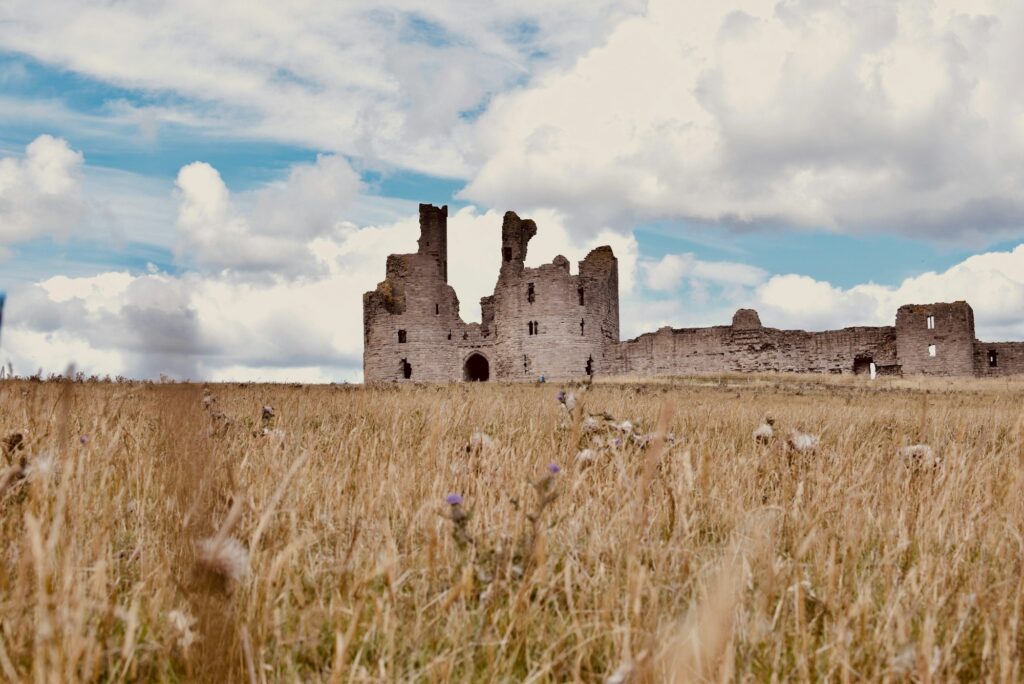
Dunstanburgh is the coast’s great romantic ruin, its shattered gatehouse silhouetted on a headland with nothing but sea beyond. It is owned by the National Trust and cared for by English Heritage, and you can only reach it on foot. The classic approach is the National Trust’s coastal trail of about 1.3 miles from the fishing village of Craster, across sheep-cropped grass beside the rocks. Strong walkers can continue along Embleton Bay to Low Newton-by-the-Sea.
Before or after, follow your nose to Craster’s smokehouse. L. Robson & Sons, now in its fourth generation, still oak-smokes herring into the celebrated Craster kippers in smokehouses dating back to the nineteenth century.
Tip: National Trust members enter Dunstanburgh free, but because tickets are sold by English Heritage, choose the “Associated Organisation” option if booking online.
Warkworth Castle and Hermitage
South towards Amble, Warkworth Castle crowns a loop of the River Coquet above a pretty village. For around three centuries it was a favourite home of the Percys, and its great tower was begun for the first Earl of Northumberland in 1377. The castle is in the care of English Heritage. Upriver, a small boat ferries visitors in summer to a medieval hermitage chapel carved into the cliff, one of the most atmospheric corners of the county.
Chillingham Castle
Inland, near Wooler, Chillingham Castle is a privately owned medieval fortress rescued from ruin by Sir Humphry Wakefield from 1982 onwards. It is famously eccentric, crammed with curiosities and reputed to be one of Britain’s most haunted castles, with evening ghost tours. You can also stay here in self-catering apartments.
Lindisfarne, the Holy Island
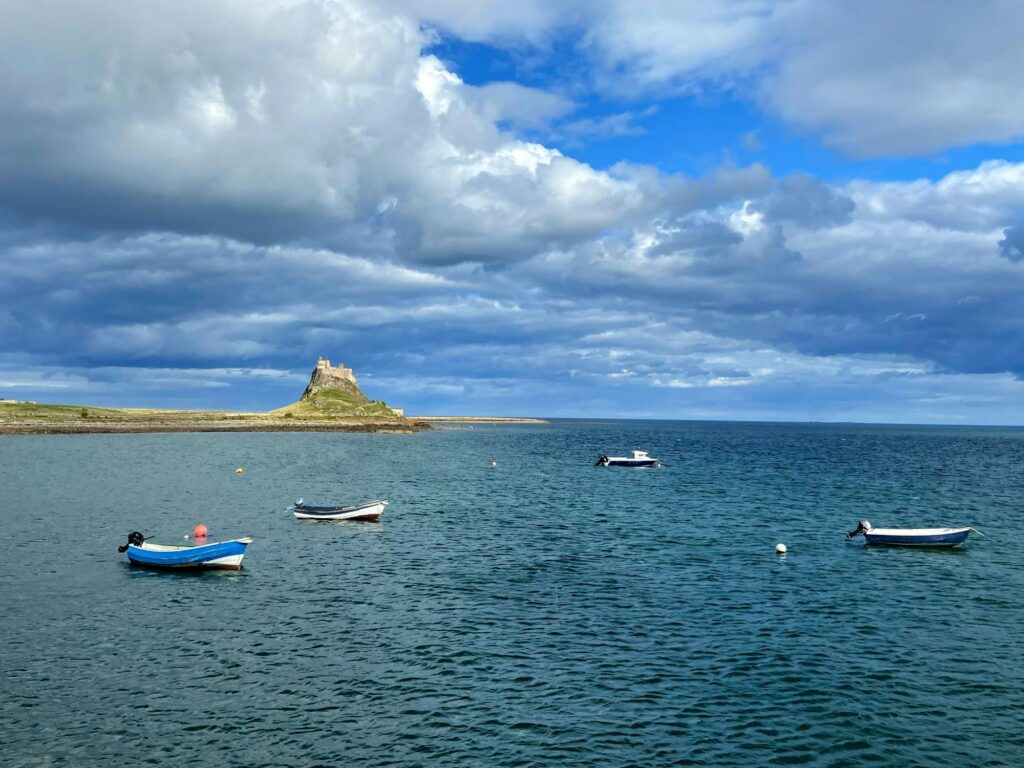
St Aidan came from Iona in 635 to found a monastery on Lindisfarne, and the island became the cradle of Christianity in northern England. Today you can explore the red sandstone ruins of the later Lindisfarne Priory (English Heritage) and the little Lindisfarne Castle (National Trust) perched on its rock, restored in the early twentieth century and gifted to the Trust in 1944.
Holy Island is reached by a causeway that floods twice a day. Northumberland County Council publishes official safe crossing times, which change daily with the tides, and vehicles are stranded every year by drivers who misjudge them. The tide comes in fast, and the road becomes deep water within minutes.
Tip: Always check the official Holy Island safe crossing times for your exact date (and make sure the page shows the right year) before you set off. Never drive onto the causeway if there is any water on the road. If you miss the window, relax and enjoy a few more hours on the island: it is never worth the risk.
The Farne Islands: Puffins and Seals
From Seahouses harbour, boats sail out to the Farne Islands, a National Trust nature reserve and one of Britain’s great seabird spectacles. Puffins return in April and are best seen in the breeding season from May to July, when the Farnes host around 40,000 pairs, alongside guillemots, razorbills and terns. In autumn the islands belong to England’s largest breeding colony of Atlantic grey seals, with pups appearing from September and numbers peaking in late October.
Landing on Inner Farne, where St Cuthbert lived as a hermit, is generally possible from spring to the end of September; boat trips run from April to October, weather permitting. Landing fees are paid separately from the boat fare (National Trust members land free), and landing times can be limited, so check current arrangements. Book a Farne Islands boat trip from Seahouses in advance for puffin season, wear a hat (the terns dive-bomb), and pack waterproof binoculars.
Affiliate-ready: Browse Northumberland coast and castle tours →
Dark Skies and Wide Horizons
Northumberland has some of the darkest skies in England. The International Dark Sky Park covering Northumberland National Park and Kielder lies inland, but the coast also enjoys very little light pollution, and on a clear winter night the Milky Way arcs over Bamburgh and Dunstanburgh. Wrap up warmly, find a spot away from village lights and give your eyes twenty minutes to adjust.
Best Time to Visit
- May to July: Puffin season, long light evenings and all the castles open. The busiest time, so book boats and hotels early.
- September and October: Golden light, quieter beaches and the start of the seal pupping season.
- November to February: Empty sands, dramatic seas and the best dark skies, though Alnwick Castle and some attractions close for winter.
Where to Stay
Doxford Hall Hotel & Spa, near Chathill
Our pick for a polished country-house base, Doxford Hall is a nineteenth-century mansion on a rural estate roughly fifteen minutes north of Alnwick, perfectly placed for Bamburgh, Craster and Seahouses. Expect fireside afternoon tea in the library, a spa with an indoor pool and the two AA Rosette George Runciman Restaurant.
The Lord Crewe, Bamburgh
Right on Front Street below the castle, The Lord Crewe is a stylishly updated seventeenth-century inn with smart rooms (some with window seats overlooking the village) and a short stroll to the beach.
The Bamburgh Castle Inn, Seahouses
For a characterful harbourside stay, The Bamburgh Castle Inn overlooks the boats in Seahouses, steps from the Farne Islands sailings. It is a relaxed, dog-friendly inn rather than a luxury hotel, but the location is hard to beat.
The Cookie Jar, Alnwick
A former convent a short walk from Alnwick Castle, The Cookie Jar is an intimate boutique hotel of eleven individually styled bedrooms with a bistro and walled garden.
Castle stays
To sleep inside the walls, Chillingham Castle lets apartments in the castle and its Coaching Rooms (book directly). Further inland near Hexham, Langley Castle Hotel is a natural add-on if you are heading for Hadrian’s Wall; we feature it in our guide to haunted castles you can sleep in. Continuing north over the border? See our favourite castle stays in Scotland.
Affiliate-ready: Compare hotels along the Northumberland coast →
A Three-Day Castle Coast Itinerary
Day 1: Alnwick and Warkworth
Spend the morning at Alnwick Castle and lunch in the Treehouse at The Alnwick Garden. In the afternoon, drive down to Warkworth for the castle and, in summer, the boat to the hermitage. Overnight at Doxford Hall.
Day 2: Craster, Dunstanburgh and Bamburgh
Walk from Craster to Dunstanburgh, then pick up kippers on the way back. Head north to Bamburgh for the castle in the afternoon and a sunset walk on the beach. Overnight at The Lord Crewe.
Day 3: Farne Islands and Lindisfarne
Take a morning boat from Seahouses to the Farnes, then time your afternoon around the Holy Island safe crossing times to explore the priory and castle on Lindisfarne.
For route planning, pack a good Northumberland coast walking guide.
FAQs
Who owns the Northumberland castles?
Bamburgh is the private home of the Armstrong family, Alnwick belongs to the Duke of Northumberland, and Chillingham is privately owned by the Wakefield family. Dunstanburgh is owned by the National Trust and run by English Heritage, Warkworth and Lindisfarne Priory are in the care of English Heritage, and Lindisfarne Castle belongs to the National Trust.
When can I see puffins on the Farne Islands?
Puffins return in April and are best seen from May to July. By August most have left for the open sea.
Is it safe to drive to Holy Island?
Yes, but only within the official safe crossing times published by Northumberland County Council. Never cross if there is water on the road.
Let Us Plan Your Castle Coast Escape
Tell us your dates and we will design a seamless Northumberland itinerary, with puffin trips, tide-timed island visits and beautiful places to stay.
Leave a Reply