Most visitors to York stay within the city walls, yet within an easy drive or train ride lie Cistercian ruins, a novelist’s crooked old house, a hillside horse and a moorland valley so vast that legend says a giant scooped it out.
Table of Contents
- Why Look Beyond the Usual Day Trips
- 1. Rievaulx Abbey and Terrace
- 2. Byland Abbey, Shandy Hall and the Kilburn White Horse
- 3. Nunnington Hall
- 4. Hutton-le-Hole and the Ryedale Folk Museum
- 5. The Hole of Horcum and Goathland
- 6. Brimham Rocks
- 7. Saltaire
- 8. Burton Agnes Hall
- Where to Stay in York
- A Sample Day: Abbeys and a Novelist
- FAQs
Why Look Beyond the Usual Day Trips
York sits at the centre of some of England’s richest countryside. To the north rise the Howardian Hills and the North York Moors; to the west, the gritstone edges of Nidderdale; to the east, the rolling Wolds. The places below are quieter and more personal than the famous names, and just as rewarding. All are within roughly an hour and a half of the city.
A car gives you the most freedom, though two of our choices work well by public transport.
1. Rievaulx Abbey and Terrace
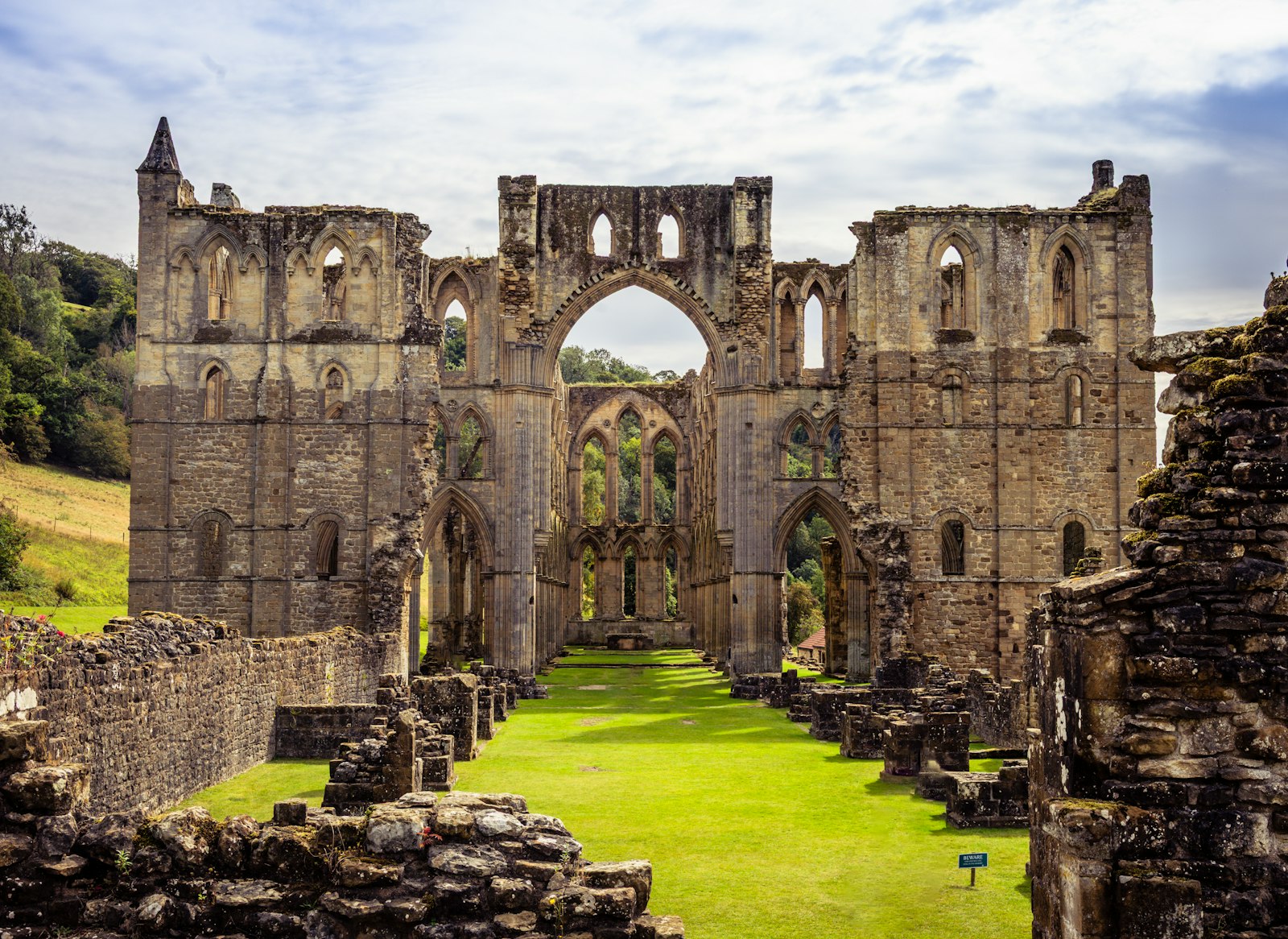
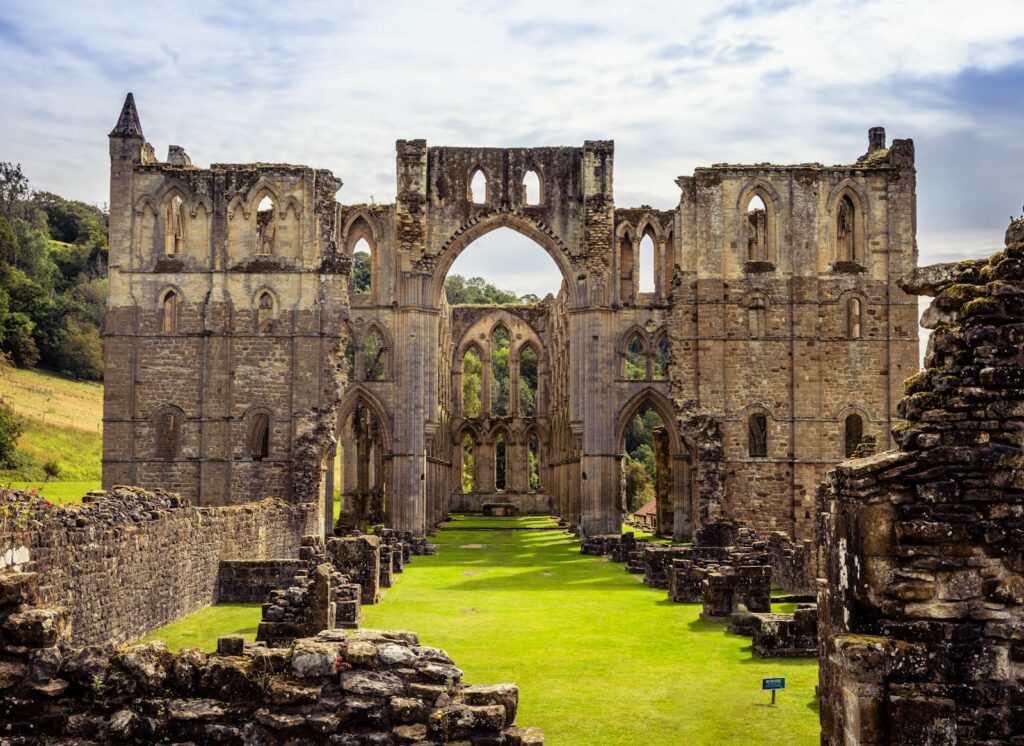
Founded in 1132 by twelve monks from Clairvaux, Rievaulx was the first Cistercian monastery in the north of England, and its soaring ruins fill a wooded valley just outside Helmsley.
Above the abbey, Rievaulx Terrace is a half-mile Georgian lawn laid out by Thomas Duncombe II as a viewing platform, with a Neoclassical temple at each end. The larger Ionic temple has a richly painted ceiling and gilt settees by William Kent. Since July 2026, English Heritage has run the Terrace on behalf of the National Trust, and a single joint ticket now covers both terrace and abbey.
- Getting there: About an hour by car via Helmsley. Energetic walkers can park in Helmsley and follow the opening stretch of the Cleveland Way, roughly 3.5 miles each way.
- Time to allow: Half a day, or a full day with the walk and lunch in Helmsley.
- When: The abbey opens year round with reduced winter hours; the Terrace is seasonal, so check English Heritage before you go.
2. Byland Abbey, Shandy Hall and the Kilburn White Horse
Three very different treasures sit within a few miles of each other on the edge of the Howardian Hills, making one of our favourite day trips from York.
Byland Abbey
Byland’s great west front survives with the shattered rim of a rose window whose design is thought to have inspired the south rose window of York Minster. Inside, large areas of glazed green and yellow medieval floor tiles still lie in place, a rare survival.
Shandy Hall, Coxwold
In the pretty village of Coxwold, Shandy Hall is the medieval house where Laurence Sterne lived as curate from 1760 until 1768, writing much of Tristram Shandy and A Sentimental Journey. Run by the Laurence Sterne Trust, it holds the world’s largest collection of editions of his work, and its two acres of gardens include over a hundred roses and a wildlife-friendly woodland garden. The house reopens each May.
The Kilburn White Horse
Cut into the hillside in 1857, the White Horse is visible for miles across the Vale of York. Park at the Sutton Bank National Park Centre and walk along the escarpment on the Cleveland Way to stand above it, with what is often called one of the finest views in England spread below.
- Getting there: About 40 minutes to an hour by car; there is no practical public transport.
- Time to allow: A full day for all three.
- When: May to September, when Shandy Hall is open and Byland’s museum is staffed.
3. Nunnington Hall
On the quiet banks of the River Rye, this mellow National Trust manor house has a gentle, lived-in charm and riverside gardens made for a slow afternoon. Its secret lies in the attic: the Carlisle Collection of Miniature Rooms, exquisite scaled-down interiors complete with tiny furniture, paintings and even working musical instruments.
- Getting there: About 40 minutes by car.
- Time to allow: Two to three hours.
- When: Spring to autumn, plus a festive opening (usually from mid-November to just before Christmas).
4. Hutton-le-Hole and the Ryedale Folk Museum
Sheep graze the greens and a stream runs through Hutton-le-Hole, one of the loveliest villages on the North York Moors. Here the Ryedale Folk Museum has rescued around twenty historic buildings from across the area and rebuilt them on six acres, from a thatched cruck-framed manor house to a roundhouse and craft workshops.
- Getting there: About an hour by car. In summer the Moorsbus runs at weekends and on bank holidays.
- Time to allow: Half a day.
- When: Best from spring to autumn; check the museum’s website for current times.
5. The Hole of Horcum and Goathland
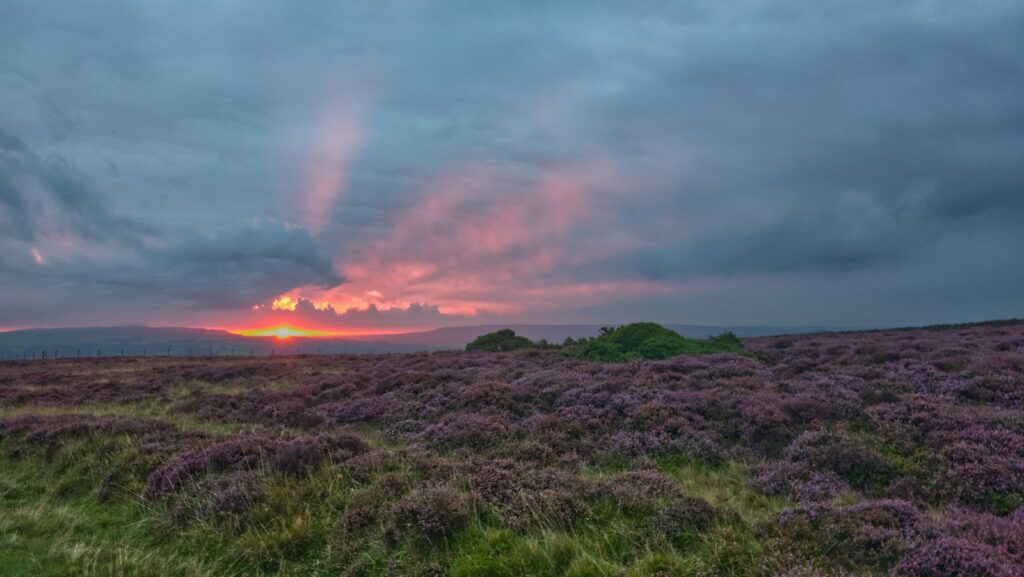
Local legend says the giant Wade scooped out the Hole of Horcum to hurl at his wife; geologists credit springs and patient erosion. Either way, this vast natural amphitheatre beside the A169 is spectacular, especially when the heather blooms purple in late summer. A popular five-mile circuit from the Saltergate car park follows the rim and drops into the valley, taking about three hours.
Continue north to Goathland, where the station on the heritage North Yorkshire Moors Railway played Hogsmeade in the first Harry Potter film; see our guide to Harry Potter filming locations in Britain. In season you can ride steam trains between Pickering, Goathland and Whitby. Bridge repairs have affected Whitby services in recent winters, so check the railway’s timetable before you go. We recommend booking ahead: North Yorkshire Moors Railway steam experiences.
- Getting there: About an hour and a quarter by car. The Coastliner 840 bus from York to Whitby crosses the moors and has stops at the Hole of Horcum, with selected journeys via Goathland.
- Time to allow: A full day.
Tip: There are no facilities on the Hole of Horcum walk and the moor is exposed, so carry water and waterproofs. A good OS Explorer map of the eastern North York Moors is worth packing.
6. Brimham Rocks
High on the moor above Nidderdale, wind and weather have sculpted millstone grit into extraordinary balancing towers and arches. Owned by the National Trust and open year round, Brimham Rocks is pure fun for clambering, with sweeping views; on a clear day you can see York Minster. It sits just a short drive from Fountains Abbey and Studley Royal, so you can combine the two; read our guide to Fountains and Tintern abbeys first.
- Getting there: About an hour by car, via Harrogate.
- Time to allow: Two hours, or a full day with Fountains.
7. Saltaire
A UNESCO World Heritage Site since 2001, Saltaire is the model village built by the Victorian industrialist Sir Titus Salt for his mill workers, with neat stone terraces, a grand church and a park on the River Aire. The vast Salts Mill, opened in 1853, now houses the 1853 Gallery with a permanent display of work by Bradford-born David Hockney. The mill is closed on Mondays and Tuesdays.
- Getting there: By train, usually changing at Leeds; Saltaire station sits beside the mill. This is the easiest car-free day out on our list.
- Time to allow: Half to a full day.
8. Burton Agnes Hall
Built between about 1601 and 1610 for Sir Henry Griffith, probably to designs by Robert Smythson, Burton Agnes is a glorious red-brick Elizabethan house on the edge of the Wolds, still a family home today. Inside are fine carved ceilings and an eclectic art collection; outside, a walled garden. A Norman manor house of the 1170s survives beside it. The festive opening (usually from mid-November to just before Christmas) is magical.
- Getting there: About an hour by car, between Driffield and Bridlington.
- Time to allow: Half a day.
If you would rather someone else did the driving, a guided North York Moors day tour from York covers several of these highlights. And if you do want a famous name, Castle Howard, half an hour from the city, remains a magnificent alternative.
Affiliate-ready: Browse Yorkshire day tours and steam railway experiences →
Where to Stay in York
Grays Court
Tucked behind the Minster with gardens bounded by the city walls, Grays Court claims continuous occupation since the eleventh century and was once the residence of the Treasurers of York Minster. Its twelve bedrooms are individually designed, and The Bow Room restaurant holds three AA Rosettes and is listed in the Michelin Guide 2026.
The Grand, York
Built in 1906 as the headquarters of the North Eastern Railway, The Grand is the city’s five-star address, a short walk from the station. Its new underground spa, SubRosa, opened in late 2025 and has already earned Good Spa Guide Five Bubble status.
Middlethorpe Hall and Spa
For a country-house feel within reach of the city, Middlethorpe Hall is a William and Mary house of around 1699 set in some twenty acres, about two miles from the centre. Owned by the National Trust since 2008, it donates its profits to the charity, and it has a spa with an indoor pool.
Affiliate-ready: Compare luxury hotels in York →
A Sample Day: Abbeys and a Novelist
Leave York after breakfast and drive to Helmsley. Walk the Cleveland Way to Rievaulx, explore the abbey, then climb to the Terrace. Lunch back in Helmsley, then drive on to Coxwold for Shandy Hall and a glimpse of Byland on the way. Finish at Sutton Bank as the light softens over the Vale of York and the White Horse, and be back in the city for dinner. A Yorkshire walking guidebook opens up many more routes.
FAQs
Which of these day trips can I do without a car?
Saltaire is easiest, by train via Leeds. The Coastliner 840 bus reaches the Hole of Horcum and Goathland. For the rest, a car or guided tour is far more practical.
When is the best time to visit?
May to September, when every site is open. Late August brings heather on the moors, and several houses reopen for Christmas.
Is the North Yorkshire Moors Railway running in winter?
Mainly festive specials. Repairs to a bridge near Grosmont are planned for the 2026 to 2027 winter, so check timetables before planning a 2027 trip to Whitby.
Can I visit Rievaulx Terrace with National Trust membership?
Yes. Members still enter free but should book in advance through English Heritage, which now runs the site.
Discover the Yorkshire Few Visitors See
Tell us your interests and we will design a York itinerary with hidden abbeys, private drivers and the finest places to stay.
Leave a Reply