
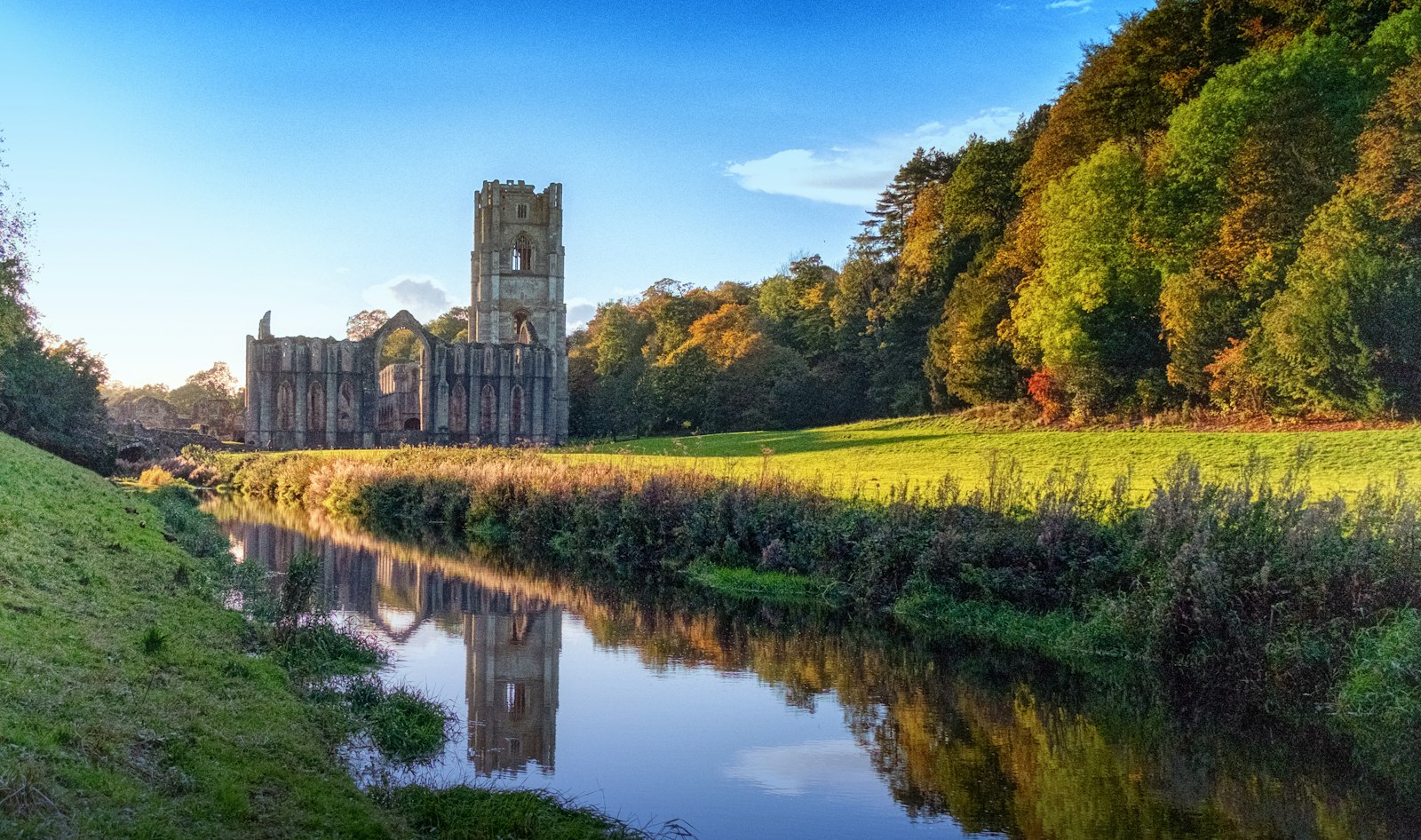
Places Less Visited: two great Cistercian ruins, one in a misty Welsh valley and one in a Yorkshire water garden, and why they are worth an early start.
Table of Contents
Tintern Abbey, Wye Valley
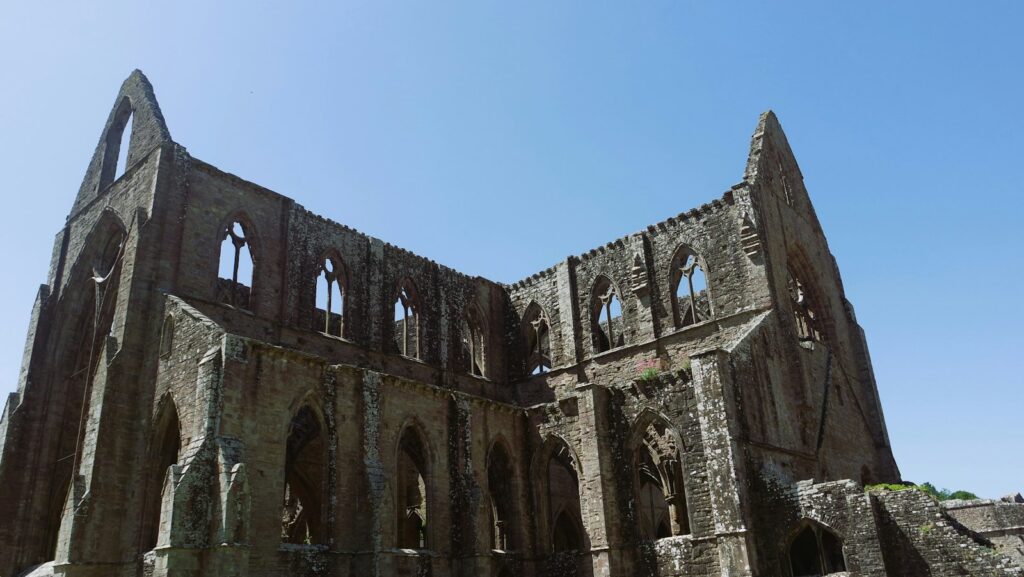
I’m sharing one of my favourite places in the UK and Ireland. Picture a large, ruined Gothic church nestled beside the River Wye in a green valley. The sun has not yet broken through; mist rises from the river as the stately ruin appears before you. It may be autumn with a little morning chill, but being at Tintern Abbey makes it worthwhile.
Originally founded in 1131, these old stones hold a fascination for me. Every time I visit, I walk the grounds and feel the history of the place, the people working in the fields, the monks in their church and a closeness with nature.
The leadership of the order said that “none of our houses is to be built in cities, in castles or villages; but in places remote from the conversation of men. Let there be no towers of stone for bells, nor of wood of an immoderate height, which are unsuited to the simplicity of the order” and in all the Cistercian sites that I have visited they have been true to this mandate.
Fountains Abbey, North Yorkshire
Fountains Abbey was very close to where I used to live, and when compared to Tintern Abbey it is HUGE. Fountains Abbey is one of the largest monastic ruins in Britain.
In common with many abbeys, Fountains Abbey lies next to a river, in this case the River Skell in North Yorkshire. At a time when wealth came from the land, this abbey became one of the wealthiest in Britain, based on its trading in wool and lead, and it had large land holdings across the area.
The ruins sit within a great estate of park, gardens and woods, and the Abbey together with the Studley Royal Water Garden is a UNESCO World Heritage Site. It has been the location for several films and documentaries.
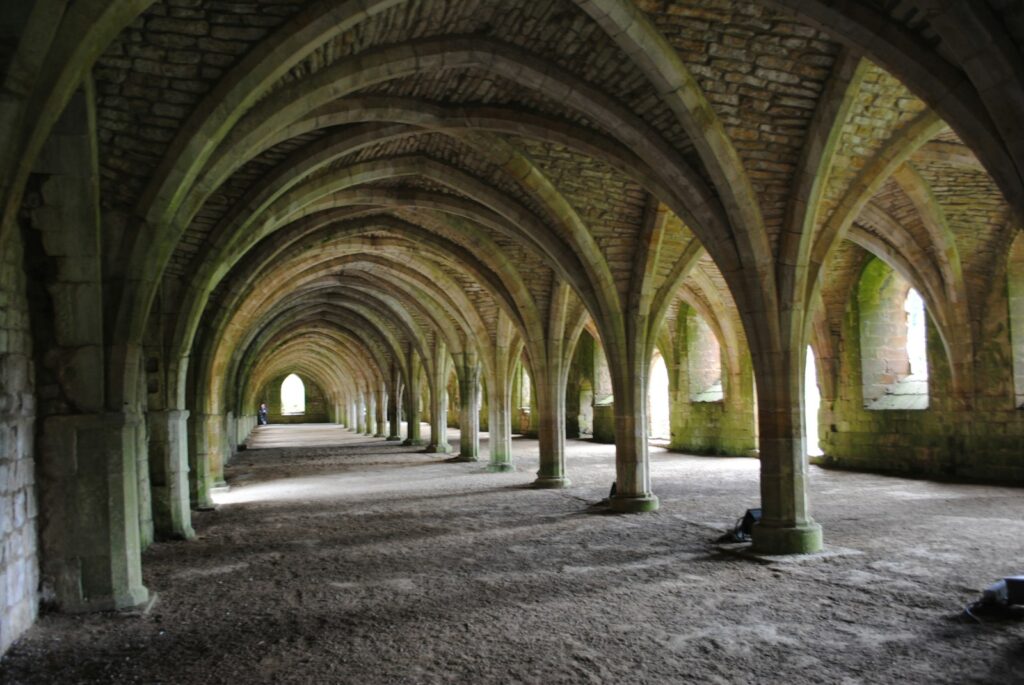
In common with many of these abbeys that I have visited over the years, the surviving ruins carry a sense of contemplation, especially when you have the opportunity to walk the grounds outside of normal visiting times. At Fountains there is a cellarium that is almost 300ft long and fills you with a sense of wonderment. You can almost feel the monks walking alongside you.
Parts of its history are darker. William Thirsk, a former abbot of Fountains, and Adam Sedbergh, the last abbot of nearby Jervaulx Abbey, were both executed at Tyburn in 1537 for their part in the northern rising against Henry VIII.
Planning Your Visit
- Who runs them: Tintern Abbey is cared for by Cadw, the Welsh heritage body. Fountains Abbey and Studley Royal are cared for by the National Trust.
- Opening times: Both change with the seasons, and Fountains has closed on some winter days, so check the official websites before you travel.
- Go early: Arrive at opening time for the quietest hour, and the best chance of mist at Tintern.
- After dark: Fountains holds floodlit evenings in the autumn on selected dates, a very different way to see the ruins.
- Combining them: The two abbeys are a long day’s drive apart, so treat them as two trips: Tintern with the Wye Valley and the Welsh borders, Fountains with Harrogate, Ripon and the Yorkshire Dales.
Tip: Fountains is the larger visit. Allow at least half a day to walk from the abbey through the Studley Royal Water Garden.
Add an Abbey to Your Journey
Tell us your dates and interests, and we’ll weave the quieter corners of Britain into your trip.
Leave a Reply