
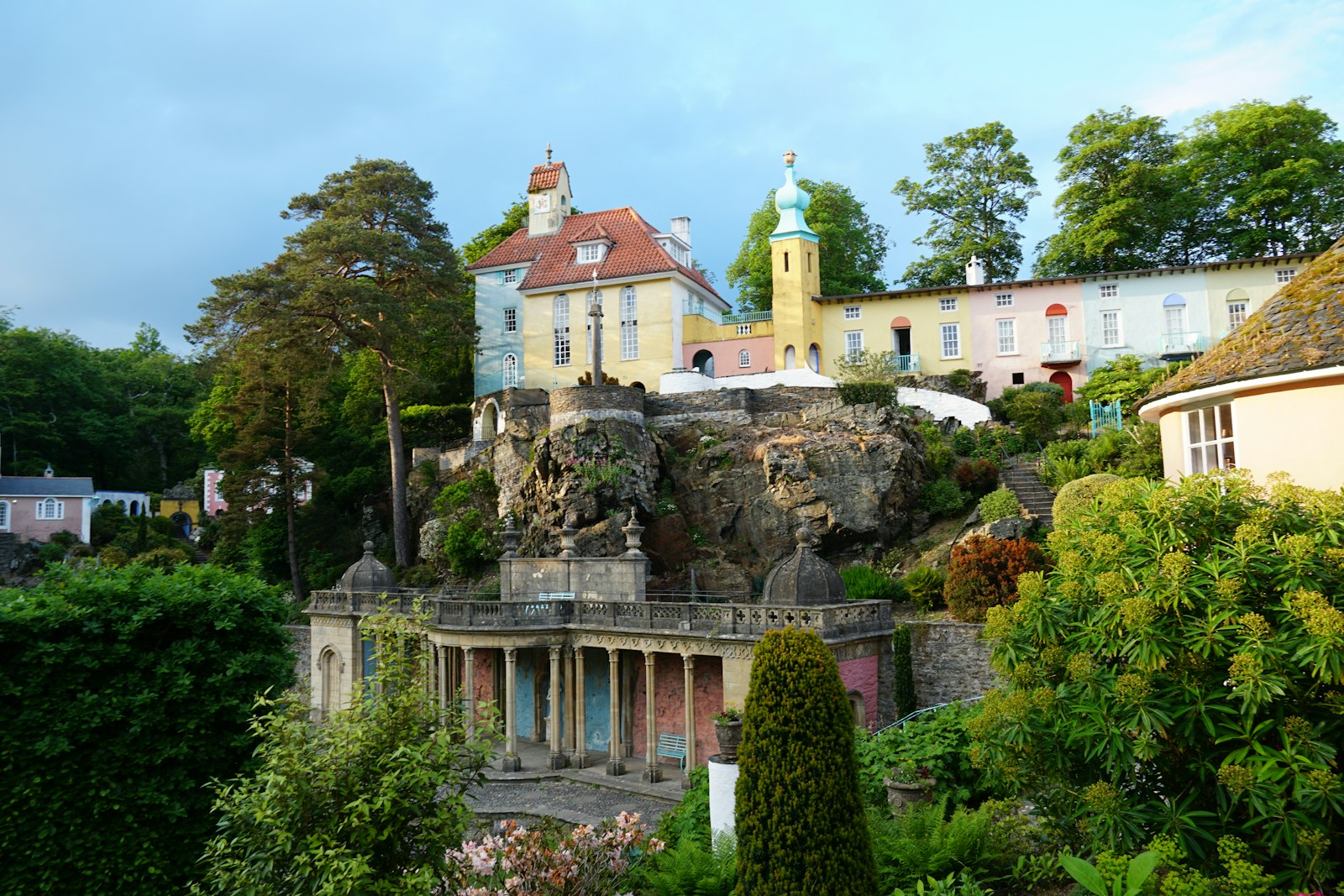
On a wooded headland above the Dwyryd estuary in North Wales, an architect’s lifelong daydream of pastel campaniles, salvaged colonnades and subtropical woodland has become one of Britain’s most enchanting and unexpected places to spend a day, or better still, a night.
Table of Contents
- Why Portmeirion?
- Clough Williams-Ellis and His Dream Village
- Architecture and Salvaged Buildings
- The Prisoner: Be Seeing You
- Festival No. 6: A Short, Bright Chapter
- The Gwyllt Gardens and Woodland
- Portmeirion Pottery
- Where to Stay in the Village
- Visiting as a Day Guest
- Exploring Nearby
- How to Get There
- A Two-Day Portmeirion Escape
- FAQs
Why Portmeirion?
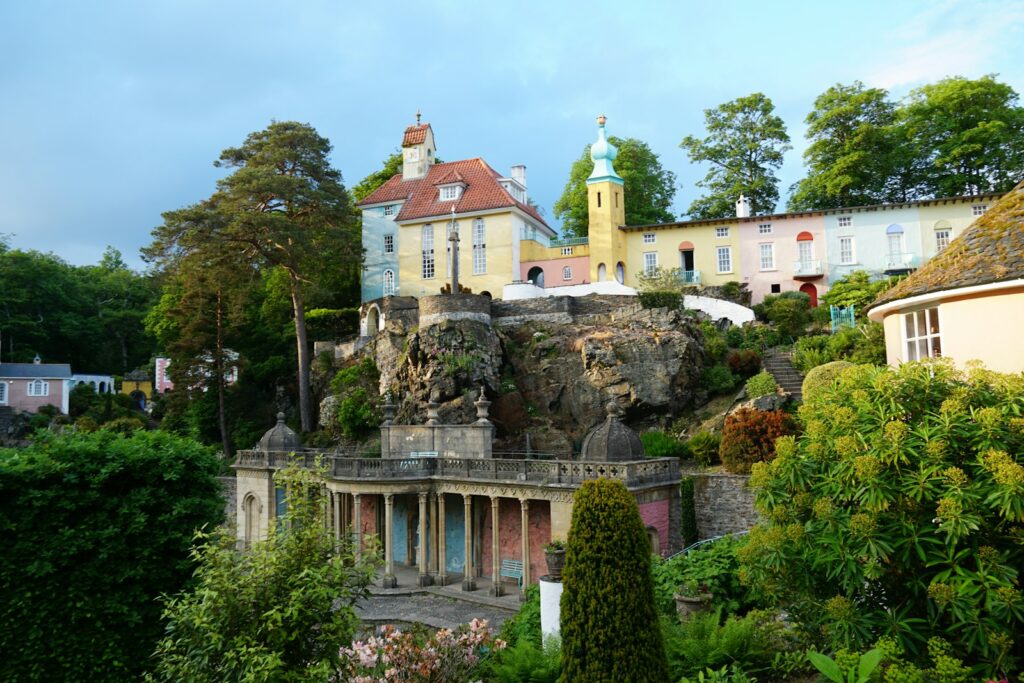
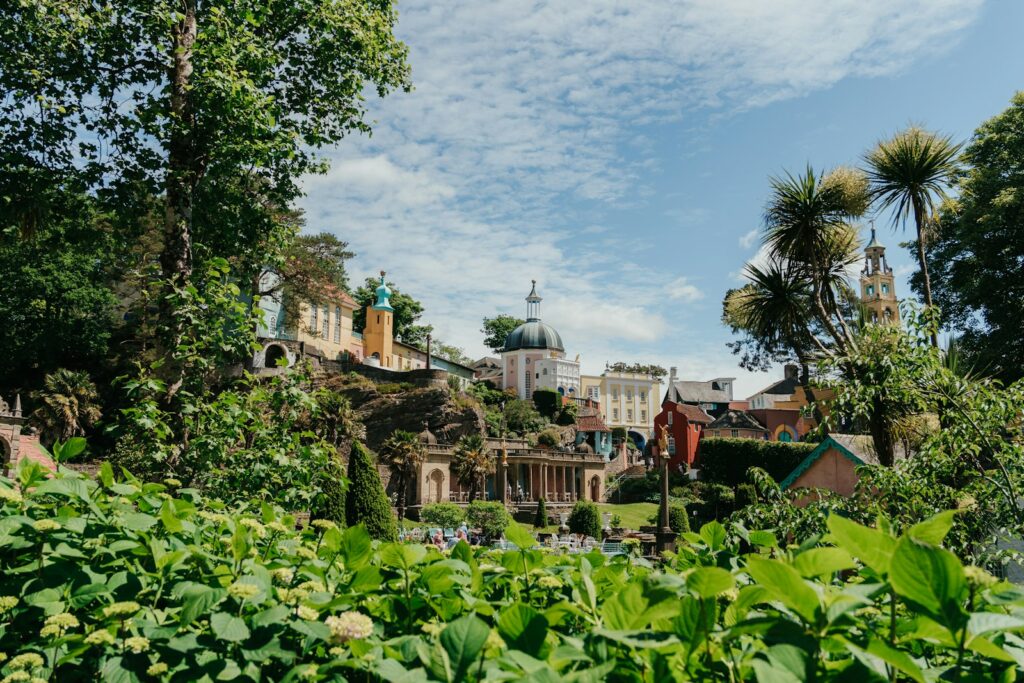
Portmeirion looks as though a Mediterranean hill town has drifted ashore in Gwynedd. Domes, loggias and painted façades in ice-cream colours tumble down towards a sandy estuary, framed by palms, hydrangeas and the mountains of Eryri. It is part architectural folly, part conservation manifesto, part film set, and entirely unlike anywhere else in Britain.
Portmeirion turned 100 in 2026, a century since the Hotel Portmeirion first opened its doors at Easter 1926, and sixty years since The Prisoner began filming here. Yet once the day visitors leave in the early evening, it becomes wonderfully quiet, which is why we think it belongs firmly in our Places Less Visited series.
Clough Williams-Ellis and His Dream Village
The village was the creation of the architect Sir Clough Williams-Ellis (1883 to 1978), who acquired the site in 1925 and spent the next half-century designing and building it, finishing in 1975. He was knighted in 1972 for services to architecture and environmental preservation, and was a tireless campaigner against careless development: his 1928 book England and the Octopus attacked urban sprawl, and he later helped shape Britain’s national parks.
Portmeirion was his argument in stone that a naturally beautiful place could be developed without spoiling it, and could even be improved. He denied copying Portofino, preferring to describe a general Mediterranean spirit filtered through his own playful imagination. Today the village is owned by a charitable trust, and many of its buildings are listed by Cadw, with the Town Hall listed at Grade I.
Architecture and Salvaged Buildings
Part of Portmeirion’s charm is that much of it is rescued. Williams-Ellis gathered fragments of demolished buildings and gave them new lives here, earning the village its affectionate nickname, a “home for fallen buildings”. Look out for:
- The Town Hall (Hercules Hall): Incorporating stonework and an elaborate plaster-ceilinged hall salvaged from Emral Hall in Flintshire after it was demolished.
- The Bristol Colonnade: An eighteenth-century colonnade from the Arnos Court bathhouse in Bristol, threatened by road widening and carefully rebuilt here by Williams-Ellis’s master mason, William Davies, at the end of the 1950s.
- The Campanile and Piazza: The village’s theatrical centrepiece, with fountains, statuary and gilded figures set against the trees.
Tip: Arrive at opening time or linger after 5pm if you are staying. The piazza in soft morning or evening light, with no crowds, is when Portmeirion feels most magical for photography.
The Prisoner: Be Seeing You
For film and television fans, Portmeirion is forever The Village. Patrick McGoohan shot the exteriors for his cult series The Prisoner here in 1966 and 1967, and the show first aired on ITV in autumn 1967. Famously, the location was kept a secret on screen until the credits of the final episode.
Fans can trace the show around the village: the Round House, built in 1958 to 1959, served as Number Six’s residence, and the Hotel Portmeirion appeared as the Old People’s Home. The Prisoner Shop sells memorabilia and merchandise. Before you go, it is worth revisiting the series on The Prisoner complete series box set.
The annual Prisoner convention
Each spring the appreciation society Six of One holds its convention, known as PortmeiriCon, in the village, complete with a human chess game and a parade. The 42nd convention ran in April 2026. Registration is for Six of One members, so join the society if you would like to attend, and watch their website for 2027 dates.
Festival No. 6: A Short, Bright Chapter
From 2012 to 2018, Portmeirion hosted Festival No. 6, a September music and arts festival named in homage to The Prisoner. After the 2018 edition, the organisers announced an indefinite break, and it has not returned. Music still finds its way here, though: in the centenary year, the village hosted the summer Gŵyl Portmeirion concerts, so check the events calendar for future programmes.
The Gwyllt Gardens and Woodland
Many visitors never get beyond the piazza, which is a shame. Behind the village lies Y Gwyllt (Welsh for “the wild”), around 70 acres of subtropical woodland laced with miles of paths. Its exotic planting predates Williams-Ellis: the previous owner, George Henry Caton Haigh, was an authority on Himalayan flowering trees, and the gardens are now Grade II* listed.
Expect one of Britain’s finest early twentieth-century rhododendron collections, magnolias and ginkgos, a Japanese garden with a pagoda and a lily-covered lake, a derelict castle and secluded coves along the shore. The woodland is at its most spectacular in late spring when the rhododendrons are in flower. Wear proper shoes: some paths are steep and uneven.
Portmeirion Pottery
The famous pottery has its roots here too. Clough’s eldest daughter, Susan Williams-Ellis, and her husband Euan Cooper-Willis first sold ceramics in the village gift shop, and by around 1961 they had turned two small Stoke-on-Trent potteries into Portmeirion Pottery. Susan’s Botanic Garden design, launched in 1972 and inspired by nineteenth-century botanical illustrations, remains one of the most successful tableware patterns ever made.
Where to Stay in the Village
Staying overnight is the real secret of Portmeirion. Once the gates close to day visitors, residents have the piazza, the estuary and the woodland almost to themselves. All the options below are run by Portmeirion.
Hotel Portmeirion
The original waterside mansion that started it all, opened in 1926, rebuilt after a fire in 1981 and reopened in 1988. Hotel Portmeirion sits right on the estuary, with an Art Deco dining room holding two AA Rosettes, lounges, a bar and terrace, and an open-air pool reserved for resident guests in summer.
Castell Deudraeth
Just outside the village gates, this Victorian castellated mansion, bought by Williams-Ellis in 1931, opened as a hotel in 2001. Castell Deudraeth has 11 contemporary rooms, a brasserie and a Victorian walled garden, and suits travellers who prefer a more modern style.
Village rooms and cottages
For the full fantasy, book one of the 32 individually decorated serviced rooms scattered through the village itself, or one of 13 self-catering cottages with access to hotel facilities.
Affiliate-ready: Compare stays in Portmeirion and around Porthmadog →
Visiting as a Day Guest
Portmeirion is open to day visitors all year, except Christmas Day and Boxing Day, for an admission charge. Tickets can be bought at the toll booth or online in advance, which is strongly advised at busy times; online tickets are for a chosen date and arrival slot, and are non-refundable. Gates close earlier in winter than in the main season, so check current times and prices on the official website.
A lovely alternative is to book lunch or afternoon tea at Hotel Portmeirion, or a two- or three-course lunch at Castell Deudraeth, which includes village entry (conditions apply, so confirm when booking). Note that pets are not allowed in the grounds, though assistance dogs are welcome.
Exploring Nearby
Eryri National Park
Portmeirion sits on the edge of Eryri, the national park long known in English as Snowdonia, with Yr Wyddfa (Snowdon) and its neighbours rising inland.
Ffestiniog and Welsh Highland Railways
From Porthmadog harbour, two narrow-gauge heritage railways head into the mountains. The Ffestiniog Railway, whose company dates from 1832, climbs about 13.5 miles to the slate town of Blaenau Ffestiniog, stopping at Minffordd, close to Portmeirion. The Welsh Highland Railway runs about 25 miles to Caernarfon past the foot of Yr Wyddfa, making it the UK’s longest heritage railway. See North Wales steam railway experiences.
Harlech Castle
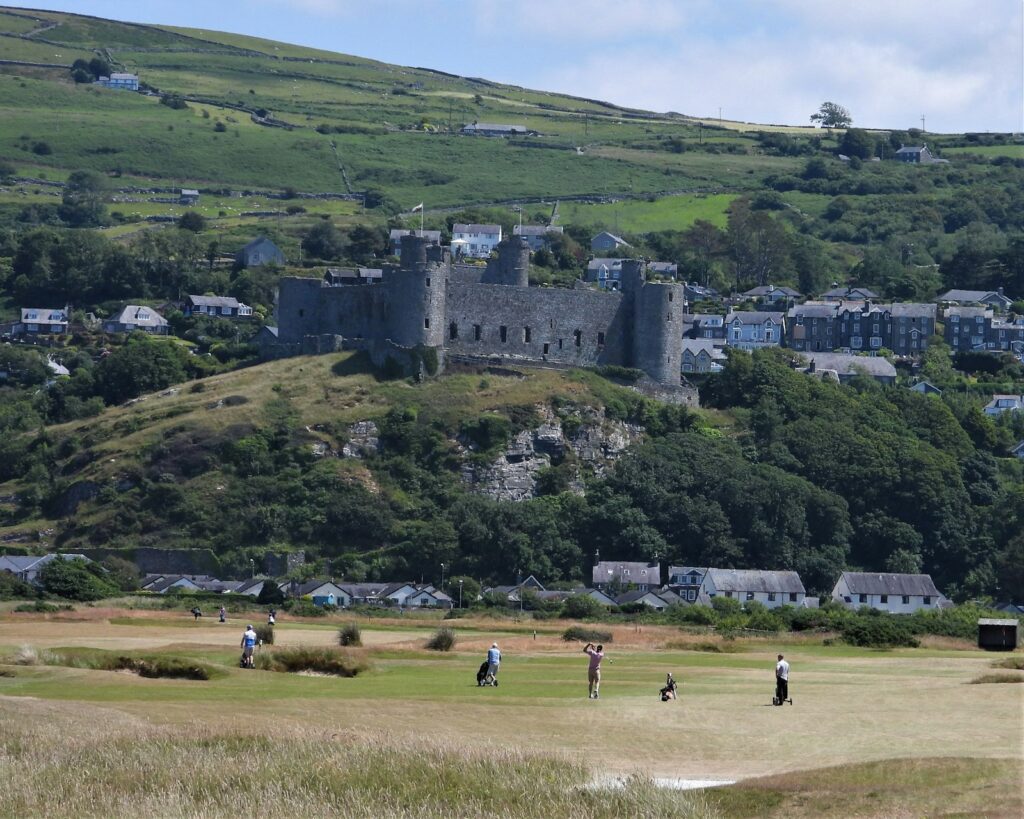
Across the estuary, Edward I began Harlech Castle in 1283. Together with Caernarfon, Conwy and Beaumaris, it forms the UNESCO World Heritage Site of the Castles and Town Walls of King Edward in Gwynedd, inscribed in 1986, and is cared for by Cadw. Browse guided North Wales castles tours.
Criccieth
A short drive west, the seaside town of Criccieth is crowned by a castle built by the native Welsh princes of Gwynedd, begun by Llywelyn the Great and also cared for by Cadw. For more Welsh heritage, pair this trip with our guide to abbey ruins from Tintern to Fountains.
Affiliate-ready: Pick up a North Wales and Eryri guidebook →
How to Get There
- By car: Portmeirion lies near Penrhyndeudraeth, about two miles from Porthmadog, signposted off the main coast road. There is parking for day visitors.
- By train: Minffordd station, about a mile away, is served by Transport for Wales trains on the Cambrian Coast line and by the Ffestiniog Railway. A signed walk leads from the station to the village.
- From further afield: Portmeirion fits neatly into a North Wales touring itinerary; we recommend at least two nights in the area to pair the village with the railways and castles.
A Two-Day Portmeirion Escape
Day 1: The village
Arrive late morning, check in and explore the piazza, the Prisoner sights and the shops. Walk the Gwyllt in the afternoon, then enjoy dinner at Hotel Portmeirion as the tide changes on the estuary and the day visitors drift away.
Day 2: Steam and castles
Take an early stroll through the empty village, then head to Minffordd for a morning on the Ffestiniog Railway. In the afternoon, drive round to Harlech Castle for sweeping views back across the bay to Portmeirion, finishing with a walk by the sea at Criccieth.
FAQs
Do you have to pay to enter Portmeirion?
Yes, day visitors pay an admission charge, which helps fund the upkeep of the village. Overnight guests, and diners with a qualifying restaurant booking, receive entry.
Where was The Prisoner filmed?
The exterior scenes of The Village were filmed at Portmeirion in 1966 and 1967, with interior scenes shot in the studio.
Is Festival No. 6 still running?
No. The festival ran from 2012 to 2018 and has been on an indefinite break since.
How long should I spend at Portmeirion?
Allow at least half a day to see the village and part of the woodland. To experience it at its most peaceful, stay at least one night.
Let Us Plan Your North Wales Escape
Tell us your dates and we will design a seamless itinerary, from a night in The Village to steam railways and Edward I’s great castles.
Leave a Reply