
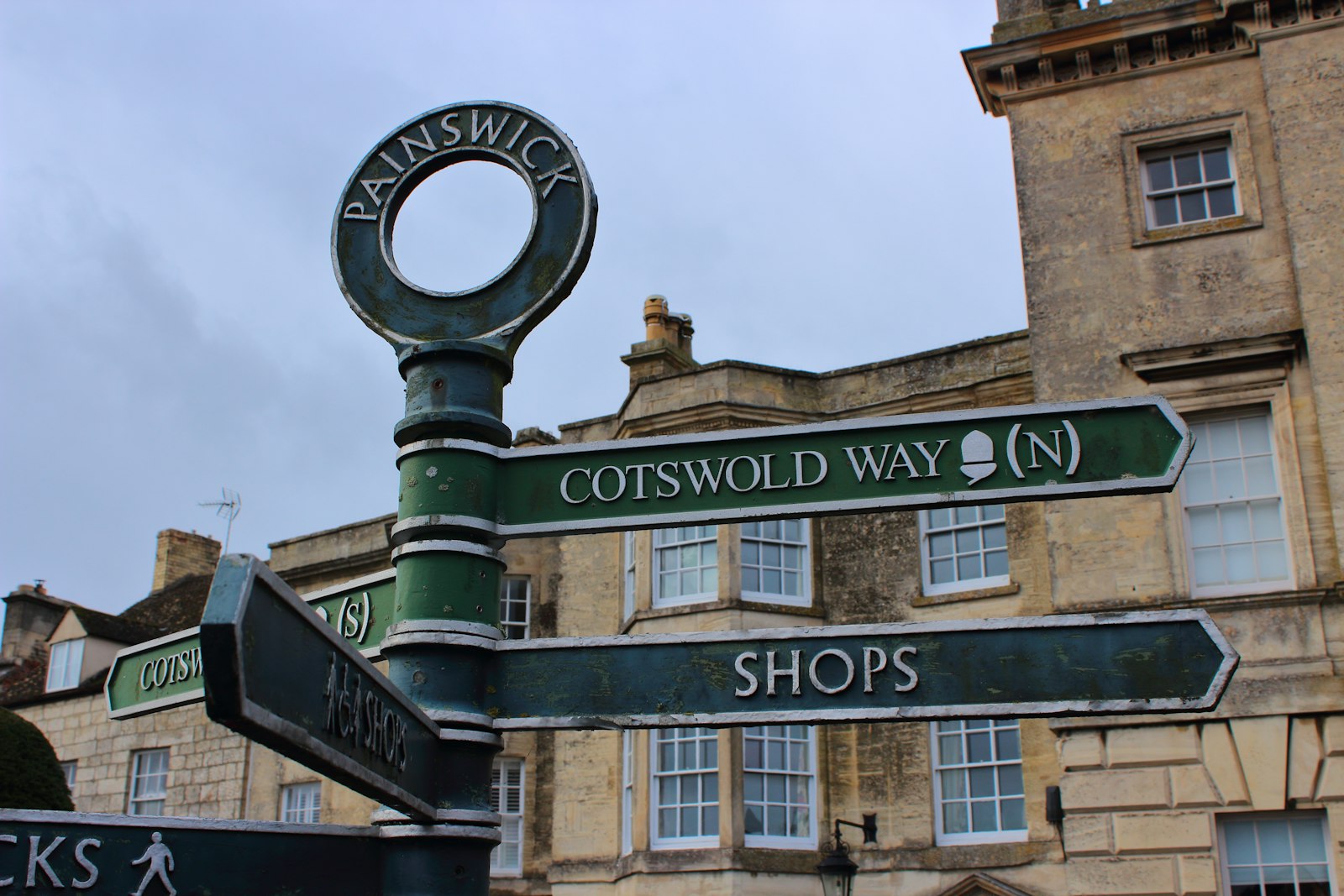
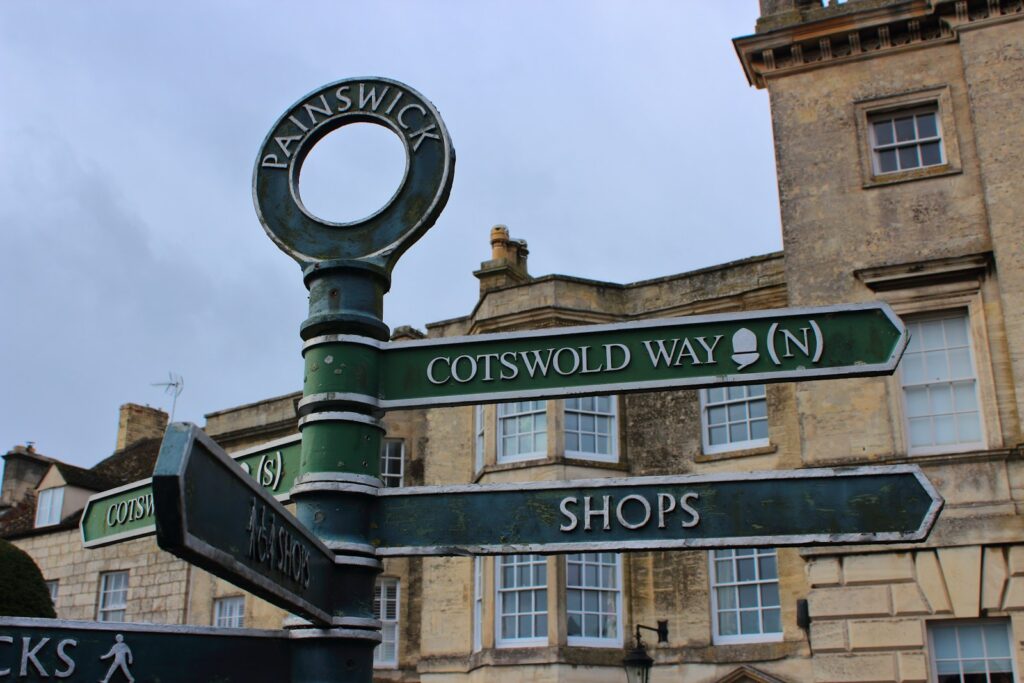
High above one of Stroud’s Five Valleys, the silver-grey village of Painswick hides England’s last complete Rococo garden, a churchyard of clipped yews and a quieter, more artistic side of the Cotswolds than most visitors ever see.
Table of Contents
Why Painswick?
The postcard Cotswolds lies further east: Bibury, Bourton-on-the-Water, the Slaughters. Painswick, in the hills about four miles north of Stroud, is something different. Its houses are built of a paler, almost silvery local stone, its lanes tumble steeply down the hillside, and many cottages still have the south-facing attic windows where weavers once worked during the wool boom. Little wonder it has long been called the “Queen of the Cotswolds”, and in 2025 it was named Gloucestershire Village of the Year.
That is why we include it in our Places Less Visited series. Here you can spend a morning in an eighteenth-century pleasure garden, walk a stretch of the Cotswold Way, find Laurie Lee’s grave in the next valley and finish the day in a Palladian hotel, all without the coach parties.
Painswick Rococo Garden
Just north of the village centre, tucked into a hidden valley behind Painswick House, lies one of the most unusual gardens in Britain. It was laid out in the 1740s for Benjamin Hyett as a fanciful pleasure garden for entertaining his guests, a place of winding paths, playful buildings and theatrical views rather than grand formality. Garden historians describe it as England’s sole surviving complete Rococo garden, and the garden itself proudly calls it the UK’s only complete surviving Rococo garden.
Restored from a painting
Like most Rococo gardens, it fell out of fashion and slowly vanished under woodland. Its rescue is a wonderful story. In 1748 the artist Thomas Robins the Elder painted the garden in loving detail, and when restoration began in the 1980s, led by the owner, Lord Dickinson, that painting became the blueprint. Paths, ponds and buildings were brought back to match Robins’s view, and the work continues today. The garden is now run by a charitable trust, so every ticket helps.
The follies
The joy of a visit lies in turning a corner to find another eccentric little building framed at the end of a vista. Look out for:
- The Red House: A Gothic pavilion of around 1750 with deliberately asymmetrical facades angled to close two converging vistas, the garden’s most photographed folly.
- The Exedra: A curved, white classical screen, a twentieth-century recreation of a lost building, with a planted garden that fills with more than 9,000 bulbs in spring.
- The Eagle House and the Pigeon House: Two charming pavilions that punctuate the slopes.
- The Gothic Alcove: A pointed-arched seat for admiring the views back across the valley.
The maze and the kitchen garden
To the west of the Exedra, a hedge maze was planted in the late 1990s to mark the 250th anniversary of Robins’s painting, its design based on the figure “250”. The productive kitchen garden is equally appealing: wild garlic, salads, heritage fruit and apples for juice all find their way into the café, which is known for its homemade cakes.
Snowdrop season
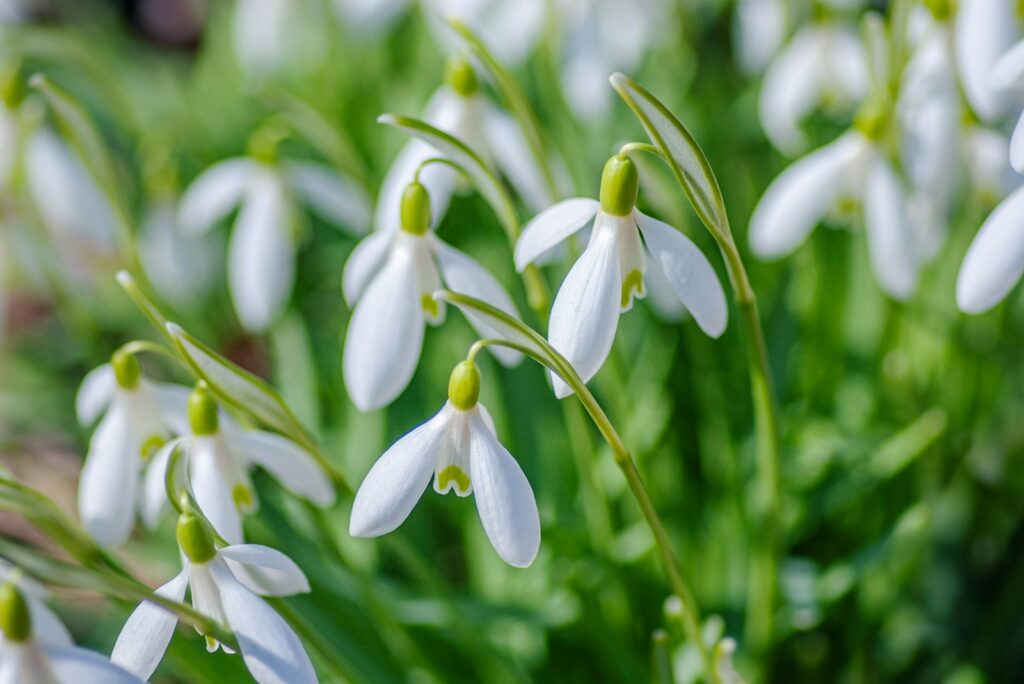
The garden’s most famous moment comes in late winter. Around five million snowdrops carpet the woodland and banks, including less common varieties such as the double Flore Pleno and Galanthus ‘Atkinsii’. The garden reopens in January as the first flowers appear, and they are usually at their finest in February. In recent years February admission has been by advance booking, so reserve your slot early.
Tip: Opening days vary through the year (it usually closes for a short winter break before reopening for the snowdrops), and the garden can close at short notice in high winds. Always check the Painswick Rococo Garden website before you travel. Dogs on short leads are welcome and parking is free.
Painswick Village and St Mary’s Churchyard
Painswick grew rich on wool, and its streets are lined with handsome clothiers’ houses, old inns and independent shops and galleries. At its heart stands St Mary’s Church, Grade I listed, its tower still bearing the scars of cannonballs fired during the Civil War.
The 99 yews
The churchyard is unforgettable: an avenue of clipped yew trees shaped into neat domes and arches, set among elaborate table tombs carved by local masons. Legend has it that there are only ever 99 yews, because the Devil will always destroy the hundredth if anyone tries to plant it. Counts over the years have in fact found 100 or more, but the story is part of the charm, and we recommend testing it for yourself.
Clypping the church
Each September Painswick holds its Feast Sunday, on the first Sunday after 19 September. The highlight is the ancient custom of “clypping the church”. Despite appearances, it has nothing to do with trimming the yews (that happens separately, also in September). The name comes from an Old English word meaning to embrace: villagers and children join hands in a ring around St Mary’s and sing hymns. Tradition also associates the day with “puppy dog pie”, which, reassuringly, is a fruit pie that once hid a small china dog.
The Cotswold Way, Slad and Stroud
Walking the Cotswold Way
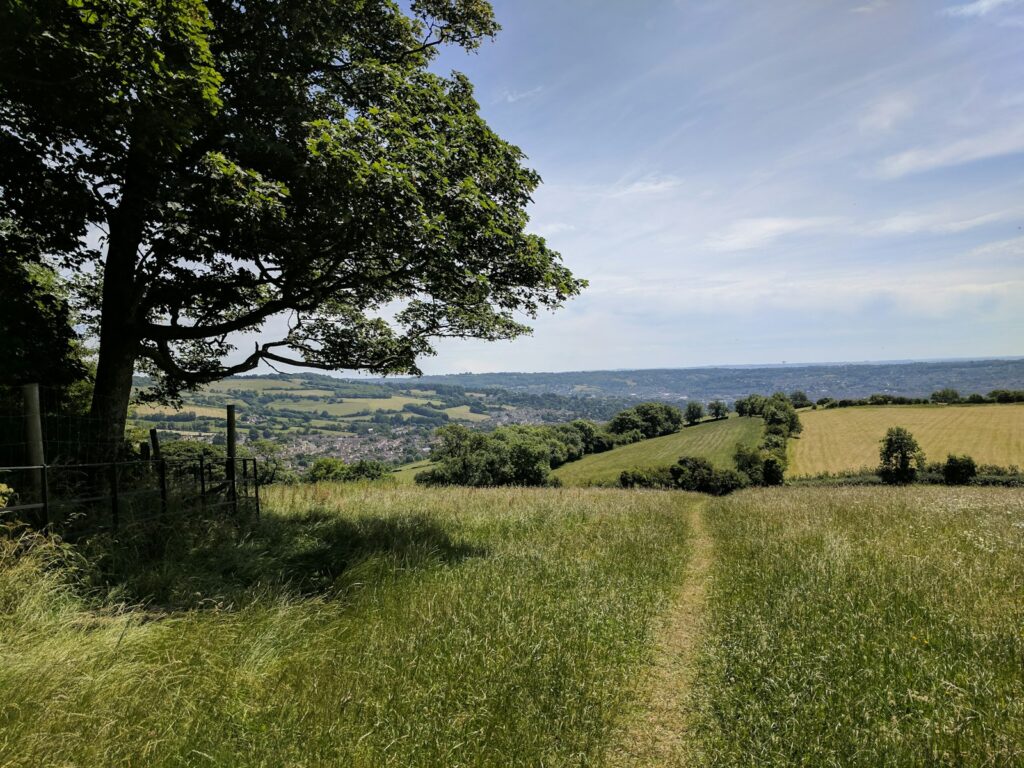
Painswick sits on the Cotswold Way, the 102-mile National Trail between Chipping Campden and Bath, and the village makes a lovely base for a day’s walking. Our favourite short outing heads north from St Mary’s to Painswick Beacon, around a mile away, where the ramparts of an Iron Age hill fort look out across the Severn Vale towards the Malvern Hills and, on a clear day, Wales. The trail skirts the summit, so take the short detour to the top. Popular loops of four to nine miles continue on to Haresfield Beacon. Take the OS Explorer 179 map and a good Cotswold Way guidebook if you plan to go further.
Slad and Laurie Lee
Over the hill lies the steep, wooded Slad Valley, immortalised by Laurie Lee in his 1959 memoir Cider with Rosie, a glowing portrait of a Cotswold village childhood before the motor car changed everything. Lee’s family moved to Slad in 1917, and he is buried in the churchyard of Holy Trinity, across the road from the sixteenth-century Woolpack inn, where he was a regular. A memorial window in the church and the walking route known as the Laurie Lee Way let you trace the landscapes of the book. We recommend reading it before you go.
Stroud and the Cotswold Canals
Painswick’s nearest town, Stroud, is creative, independent and refreshingly unpolished. Its award-winning farmers’ market fills Cornhill Market Place every Saturday morning. Stroud is also the best base for exploring the Cotswold Canals, where restored locks, old mills and towpath walks reveal the industrial story behind the wool trade. Read more in our guide to the Cotswold Canals.
If you would rather someone else did the driving, a guided small-group tour is an easy way to pair Painswick with the better-known villages. Browse Cotswolds small-group day tours.
Affiliate-ready: See Cotswolds tours and experiences →
Where to Stay
The Painswick
Our first choice is The Painswick, a Palladian house built in the eighteenth century as Prospect House and now a stylish small hotel, part of the Calcot Collection. Rooms range from cosy hideaways to suites and a private cottage, many with valley views, and the restaurant and afternoon tea are worth booking even if you stay elsewhere. It features in our guide to 10 boutique hotels in the Cotswolds.
The Falcon, Painswick
For a characterful village inn, The Falcon sits opposite St Mary’s churchyard, with around a dozen rooms that blend original features with a fresh, modern style, a proper bar and hearty breakfasts. It is ideal for walkers on the Cotswold Way.
The Bear of Rodborough
A few miles south, above Stroud, The Bear of Rodborough is a seventeenth-century coaching inn set on National Trust common land, with sweeping views, a library restaurant and easy access to the canals and Minchinhampton Common.
Affiliate-ready: Compare hotels in Painswick and around Stroud →
How to Visit
- Getting there: Painswick is about four miles north of Stroud and seven and a half miles south of Gloucester. Stroud has direct trains from London Paddington; from there a taxi is the simplest way up the hill. A car makes it easier to combine Painswick with Slad and the canals.
- When to go: February for the snowdrops, May and June for the gardens and walks, and September for Feast Sunday and the clypping ceremony. The Rococo Garden closes over the winter months, so check dates before planning around it.
- How long: Allow two to three hours for the garden, and at least one night to enjoy the village once the day visitors have gone.
A Perfect Painswick Day
Morning
Arrive at the Rococo Garden as it opens, wander the follies while the light is soft, test yourself in the maze and stop for coffee and cake in the café.
Afternoon
Stroll into the village to count (or fail to count) the yews in St Mary’s churchyard, browse the galleries, then walk the Cotswold Way up to Painswick Beacon for the view over the Severn Vale.
Evening
Drive over the hill to Slad for a drink at the Woolpack and a moment at Laurie Lee’s grave, then return to The Painswick for dinner and a night in the Queen of the Cotswolds.
FAQs
Is Painswick Rococo Garden really the only one in England?
It is widely described as England’s only complete surviving Rococo garden, its survival owed largely to the restoration guided by Thomas Robins’s 1748 painting.
When is the best time to see the snowdrops?
Usually February, though a mild winter can bring them out from late January. Book tickets in advance for snowdrop season and check the garden’s updates before you go.
Are there really 99 yew trees in Painswick churchyard?
That is the legend, with the Devil said to destroy any hundredth tree. Actual counts have come out at 100 or more, but the story endures.
What is the clypping ceremony?
An ancient custom on Painswick’s Feast Sunday, the first Sunday after 19 September, when villagers join hands around St Mary’s Church and sing. “Clypping” means embracing, not cutting.
Discover the Quieter Cotswolds
Tell us your dates and interests and we will design a Cotswolds itinerary that pairs gardens like Painswick with characterful stays and the villages most visitors miss.
Leave a Reply