Category: England

  • Secret Gardens of London

    Secret Gardens of London

    Behind office blocks, inside bombed churches and high above the traffic, London hides a string of quiet gardens that most visitors walk straight past.

    Why Seek Out London’s Secret Gardens?

    London is famously green, but the Royal Parks are only half the story. Tucked between the towers of the City, along the river and on the slopes of Hampstead are smaller, stranger gardens: a ruined church wrapped in climbing plants, a walled physic garden planted by apothecaries, a Japanese garden with a waterfall and koi. Many are free, and most are blissfully quiet on a weekday morning.

    Every garden below is open to the public, but several have limited hours, seasonal closures or booking rules, so we note those as we go. Always check the official website before you set out.
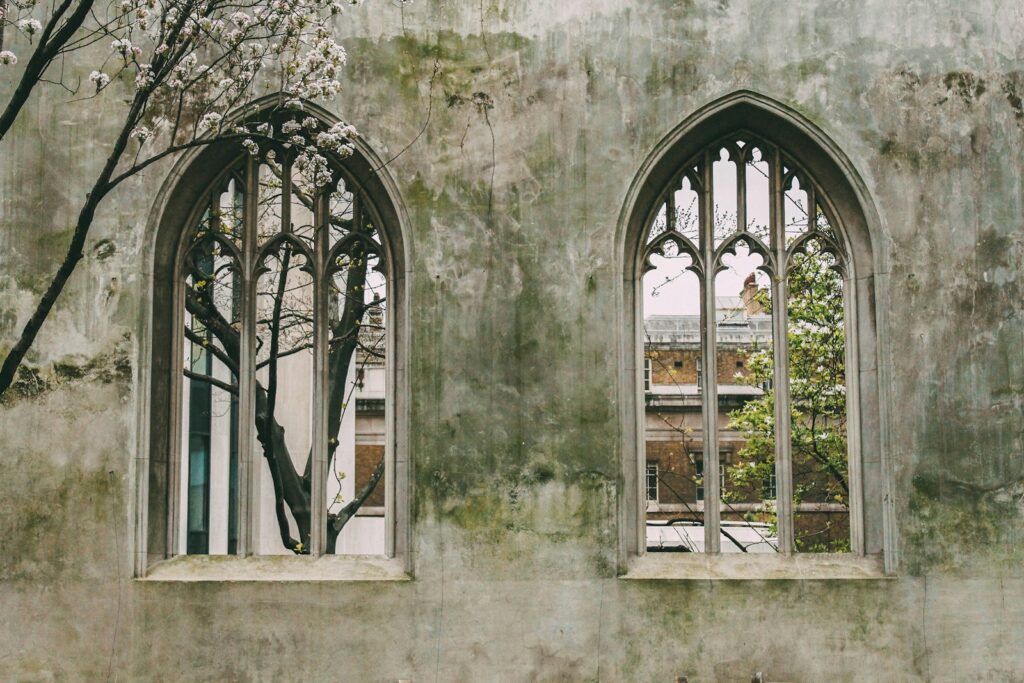
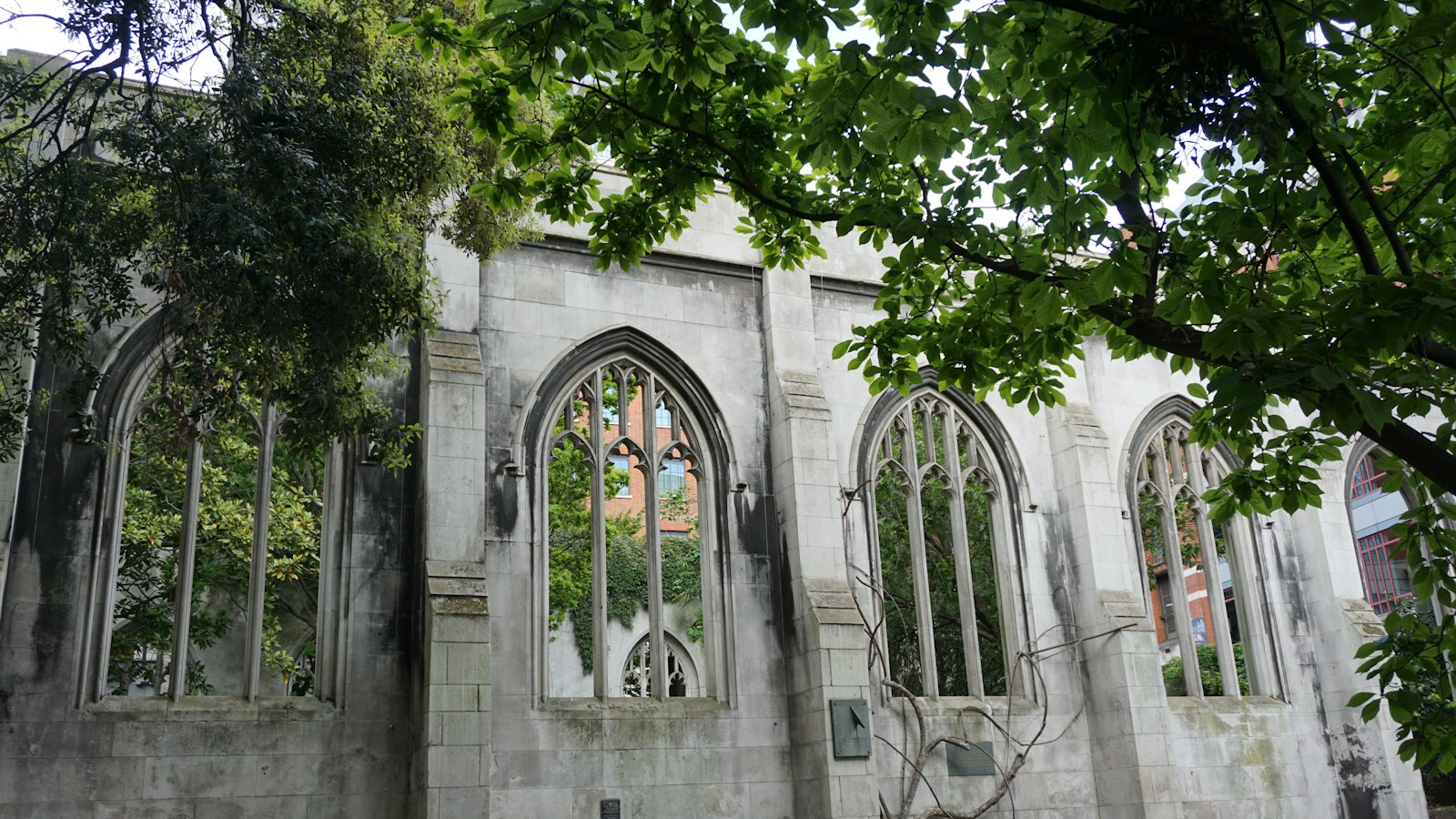
    Ruined church walls in the City of London
    St Dunstan-in-the-East, where a Blitz-damaged church became one of the City's loveliest gardens. Photo: eduard / Unsplash

    Hidden Gardens of the City

    St Dunstan-in-the-East

    If you see only one secret garden, make it this one. The church of St Dunstan-in-the-East was badly damaged in the Blitz of 1941, leaving little more than its outer walls and the tower and steeple designed by Sir Christopher Wren after the Great Fire. Rather than rebuild, the City of London turned the ruins into a public garden, which opened in 1971. Today trees, climbers and ferns grow through the empty Gothic windows, and a small fountain sits where the nave once stood.

    It is free, and generally open daily from about 8am until 7pm or dusk, whichever is earlier, closed over Christmas and New Year. Arrive early on a weekday: it is a favourite with photographers.

    Postman’s Park and the Watts Memorial

    A few minutes’ walk north of St Paul’s Cathedral, Postman’s Park is a small, shady garden on a former churchyard, named for the workers of the old General Post Office nearby. Its treasure is the Memorial to Heroic Self-Sacrifice, conceived by the Victorian painter George Frederic Watts. Under a wooden loggia, rows of glazed ceramic tablets, the earliest made by William De Morgan, record ordinary Londoners who died saving others. The memorial was unveiled in 1900 and is Grade II listed. It is quietly, unforgettably moving. Opening hours are similar to St Dunstan’s, roughly 8am to 7pm or dusk.

    Inner Temple Garden

    Down by the river, behind the Inns of Court, Inner Temple Garden is one of the most beautifully kept gardens in London, with deep herbaceous borders, fine trees and a long lawn running towards the Embankment. Access is the catch: the garden is usually open to the public only on weekdays from 12.30pm to 3pm, excluding bank holidays, and it closes for private functions and maintenance. Enter by the main gate on Crown Office Row. Alcohol, barbecues and ball games are not allowed, and only assistance dogs and residents’ dogs may enter.

    Sky Garden

    At the top of 20 Fenchurch Street, the Sky Garden is less secret, but earns its place for planted terraces and sweeping views under a glass dome. General admission is free, but you must book a timed ticket on the official Sky Garden website. Tickets are released weekly, about three weeks ahead, and popular weekend slots go fast. Recent opening hours have been 10am to 6pm on weekdays and 11am to 9pm at weekends, with last entry an hour before closing. Avoid third-party ticket sellers.

    Tip: The Barbican Conservatory is closing for a long refurbishment, expected to last until around 2030, so check before you go.

    A Walking Route Through the City’s Gardens

    These City gardens link neatly into a walk of roughly two miles, best done on a weekday so Inner Temple Garden is open. Allow a relaxed half day with stops.

    1. Inner Temple Garden (12.30pm): Start among the borders of the Temple, then walk up to Fleet Street.
    2. St Paul’s Cathedral: Follow Fleet Street and Ludgate Hill to the cathedral, pausing in the churchyard gardens around it.
    3. Postman’s Park: Just north, off King Edward Street, read a few of the Watts tablets in the shade.
    4. Bank: Walk east along Cheapside towards the Bank of England and The Ned, a good spot for tea.
    5. Sky Garden: Continue to Fenchurch Street for your pre-booked slot, ideally late afternoon for the light.
    6. St Dunstan-in-the-East: Finish a few minutes away in the ruined church garden, best in the soft evening light before it closes.

    Prefer a guide? A hidden gardens and secret London walking tour covers many of these spots with the stories behind them, or try a City of London history walk. If the art of the streets appeals too, pair this route with our London art walk along The Line.

    Further Afield: Gardens Worth the Journey

    Chelsea Physic Garden

    Founded in 1673 by the Worshipful Society of Apothecaries to grow and study medicinal plants, Chelsea Physic Garden is London’s oldest botanic garden, a walled haven of rare plants, historic glasshouses and order beds beside the Thames. Unlike most gardens here it charges for entry and works on timed tickets. It currently opens Sunday to Friday and is closed on Saturdays, with shorter hours in winter and a closure around the Christmas and New Year period, so book ahead.

    The Garden Museum

    Across the river beside Lambeth Palace, the Garden Museum occupies the deconsecrated church of St Mary-at-Lambeth. In its courtyard garden, designed by Dan Pearson as part of the 2017 redevelopment, stand the tombs of the Tradescants, the seventeenth-century royal gardeners and plant hunters, and of Admiral William Bligh of the Bounty. The museum is closed on Mondays and recently opened 10am to 4pm on weekdays and until 5pm at weekends, with occasional closures for events. There is an admission charge.

    The Kyoto Garden, Holland Park

    In the woodland heart of Holland Park, the Kyoto Garden was a gift from the city of Kyoto and opened in 1991. Stone lanterns, clipped shrubs and a tiered waterfall tumbling into a koi pond make it one of the most serene corners of west London. It is free and follows the park’s hours, from 7.30am until about half an hour before dusk. Dogs are not allowed in the Japanese garden.

    The Phoenix Garden

    Between Soho and Covent Garden, on Stacey Street, the Phoenix Garden is a volunteer-run community garden created in 1984 and the last of the original Covent Garden community gardens. Wild and wildlife-friendly, it is wonderfully unexpected in theatreland. Entry is free; it opens roughly dawn to dusk, though hours can change.

    The Hill Garden and Pergola, Hampstead

    On the western edge of Hampstead Heath, this is London’s most romantic folly. Soap magnate William Lever, later Lord Leverhulme, bought Hill House in 1904 and commissioned the landscape architect Thomas Mawson to create a raised Edwardian pergola, begun in 1905 and extended over the following two decades. Today its weathered stone columns and timber beams are draped in wisteria and climbing roses, with views out over the Heath. It is free and managed by the City of London Corporation, opening around 8.30am and closing near dusk. Nearby, the National Trust’s Fenton House has a charming walled garden and old orchard, so check opening dates before combining the two.

    Crossrail Place Roof Garden, Canary Wharf

    Above the Elizabeth line station at Canary Wharf, Foster + Partners wrapped a curving timber lattice roof around a planted garden landscaped by Gillespies. It is free, needs no booking and is a surprisingly peaceful place among the towers. Hours vary by season, so check the Canary Wharf website.
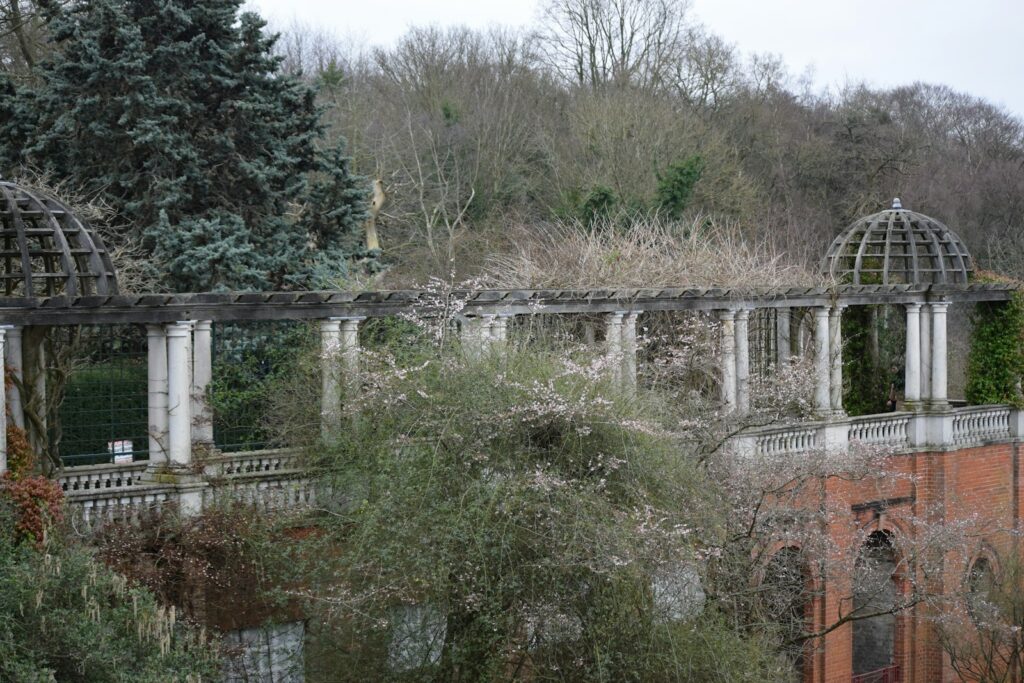
    The Hill Garden and Pergola, Hampstead Heath
    The Hill Garden and Pergola, an Edwardian folly on the edge of Hampstead Heath. Photo: Ben Tovee / Unsplash

    Before you go, we recommend a good London gardens guidebook.

    Best Seasons for London’s Gardens

    • April and May: Blossom in the Kyoto Garden, wisteria on the Hampstead Pergola and fresh borders everywhere. Our favourite time.
    • June and July: Roses and herbaceous borders at their peak at Inner Temple and Chelsea Physic Garden, and the longest evenings for the City walk.
    • October and November: Japanese maples turn crimson in Holland Park, and St Dunstan’s climbers glow in the low sun.
    • Winter: Shorter hours and some closures, but the Sky Garden and Crossrail Place make good covered alternatives.

    Luxury Hotels With Notable Gardens

    The Goring, Belgravia

    Family-owned since it opened in 1910, The Goring has one of the largest private gardens in central London, closed to the public but enjoyed by guests, with afternoon tea on the Veranda overlooking the lawns and croquet that the concierge can arrange.

    The Cadogan, A Belmond Hotel, Chelsea

    On Sloane Street, The Cadogan gives guests keys to the private Cadogan Place Gardens across the road, with tennis courts. Chelsea Physic Garden is an easy walk away.

    Ham Yard Hotel, Soho

    Firmdale’s Ham Yard Hotel has a leafy rooftop garden and terrace for in-house guests, with olive trees and espaliered fruit. In the run-up to Christmas it has opened to ticket holders as a winter pop-up; check what is on. The Phoenix Garden is a few minutes’ walk away.

    The Ned, City of London

    In the former Midland Bank headquarters beside Bank, The Ned is the natural base for the City walk. Its rooftop, with a pool and views to St Paul’s, is part of the members’ club, so check whether your room category includes rooftop access when you book.

    For dinner after a day in the gardens, see our guide to Michelin-starred dining in London.

    A Perfect Garden Day in London

    Morning: A timed slot at Chelsea Physic Garden. Early afternoon: Inner Temple Garden before it closes at 3pm. Late afternoon: Postman’s Park, then your booked Sky Garden slot. Evening: The ruins of St Dunstan-in-the-East, then dinner.
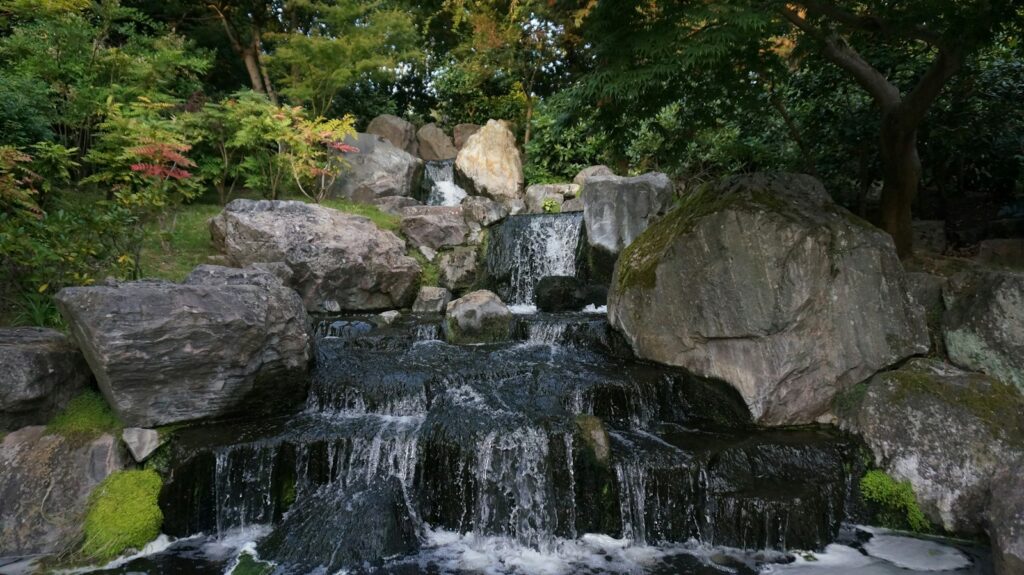
    Waterfall and rocks in the Kyoto Garden, Holland Park
    Autumn maples in the Kyoto Garden, Holland Park. Photo: Uliana Sova / Unsplash

    FAQs

    Are London’s secret gardens free?

    Most are. St Dunstan-in-the-East, Postman’s Park, Inner Temple Garden, the Phoenix Garden, the Kyoto Garden, the Hill Garden and Crossrail Place are free, and the Sky Garden is free with a booked ticket. Chelsea Physic Garden and the Garden Museum charge admission.

    Do I need to book the Sky Garden?

    Yes. Free tickets are released on the official website about three weeks ahead and are timed. Walk-ups are not guaranteed.

    When is Inner Temple Garden open?

    Usually on weekdays from 12.30pm to 3pm, excluding bank holidays and private events. Check the Inner Temple website or Instagram before you go.

    Let Us Design Your Garden Lover’s London

    Tell us your dates and we will craft a tailored London itinerary, with timed garden visits, private guides and a hotel with its own green retreat.
  • Places Less Visited: Sculpture in the Sand

    Places Less Visited: Sculpture in the Sand

    Places Less Visited: two seaside sculptures that divide opinion, from Antony Gormley’s iron men at Crosby to Maggi Hambling’s Scallop at Aldeburgh.

    Art Where the Tide Comes In

    There are few items that generate more different points of view or discussion than art works or sculpture outside of a gallery, and some of the most intense discussions seem to happen when an installation is created on a pristine beach where until now only the tide had disturbed the sand.

    I came across several intriguing installations that are close to the ocean or on the beach. These are two of my favourites.

    Another Place, Crosby

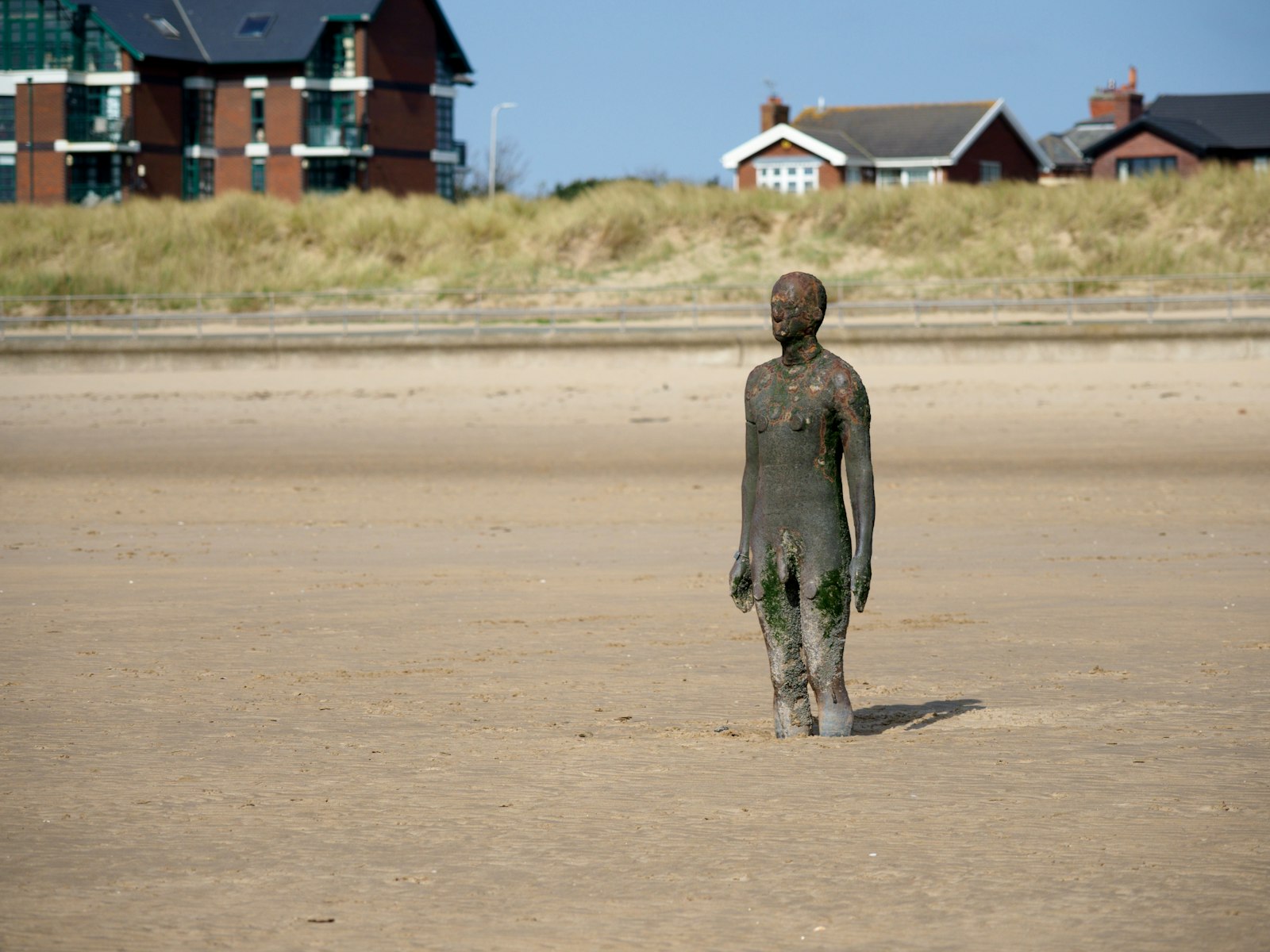
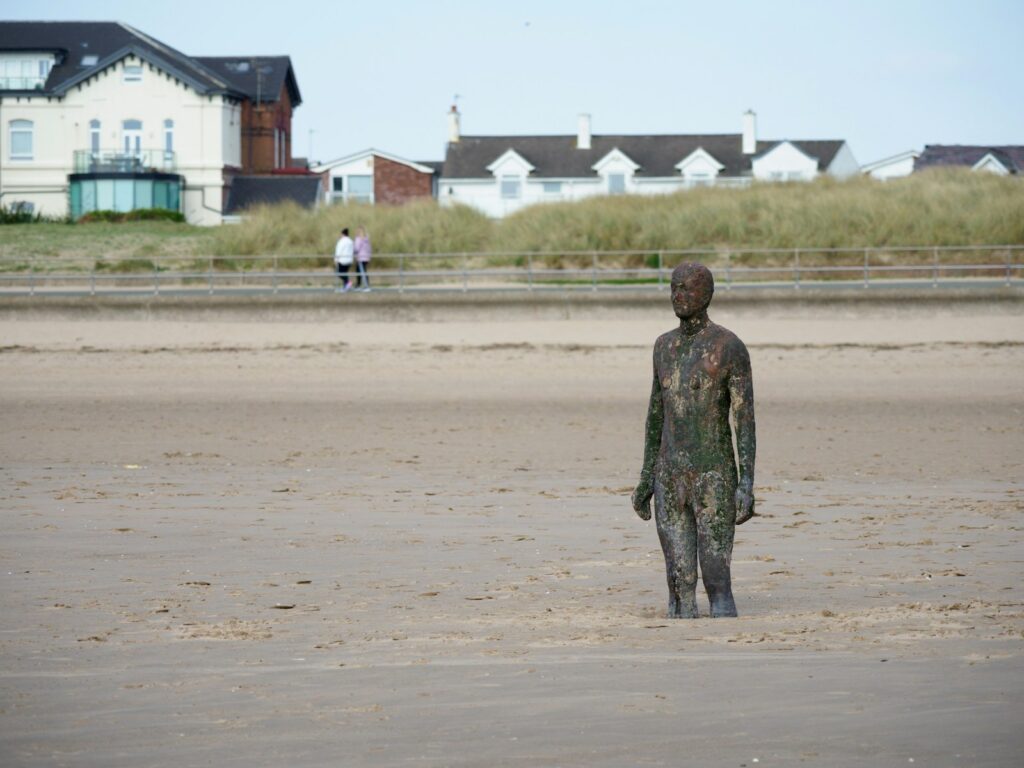
    The first that caught my eye is known as Another Place, by the artist Antony Gormley. This installation is in Crosby, just north of Liverpool, and consists of 100 figures, all of which are casts of Antony Gormley’s own body, rising out of the sand. These life-size iron figures are spread along about three kilometres of the shore. Many are covered by the tide, and you can see where the sea and its marine life have left their mark on the statues.

    Controversy has followed this exhibit wherever it has been. It was shown in Cuxhaven in Germany, Stavanger in Norway and De Panne in Belgium before finding a permanent home in Crosby in 2007.

    Antony Gormley figures of Another Place on Crosby Beach
    Another Place on Crosby beach at sunset. Photo: Brett Jordan / Unsplash

    Scallop, Aldeburgh

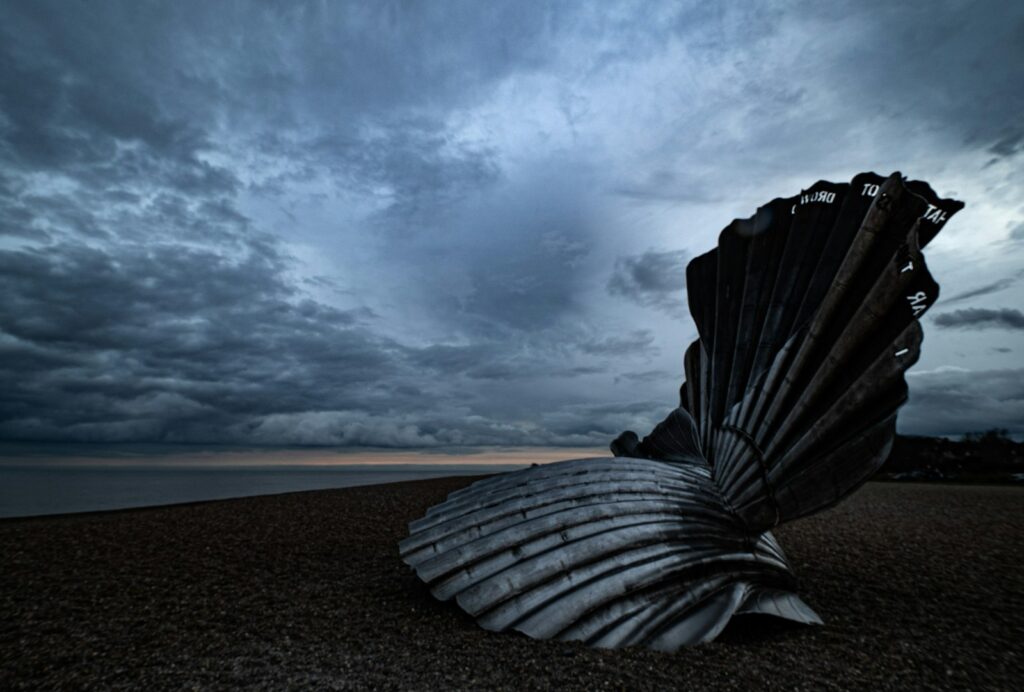
    Created as a tribute to the composer Benjamin Britten (1913 to 1976), this giant scallop shell rises from the beach at Aldeburgh in Suffolk, where Britten regularly walked. The Scallop was created by the Suffolk-born artist Maggi Hambling, who is herself a fan of Britten’s music.

    The sculpture depicts two broken, interlocking scallop shells. Words from Britten’s opera Peter Grimes are cut into the rim of the upright shell and read “I hear those voices that will not be drowned”. Maggi Hambling describes Scallop as a conversation with the sea and said, “An important part of my concept is that at the centre of the sculpture, where the sound of the waves and the winds are focused, a visitor may sit and contemplate the mysterious power of the sea.”

    As with Another Place, the Scallop has attracted a considerable number of different opinions. Some residents campaigned to have it moved, and in 2015 a national newspaper critic named it among the worst public art in Britain. Love it or not, it is well worth seeing for yourself.

    The Scallop sculpture on the beach at Aldeburgh
    Scallop on the shingle at Aldeburgh. Photo: Ruth Gledhill / Unsplash

    Planning Your Visit

    • Crosby: The figures stand between Waterloo and Blundellsands, a short train ride from Liverpool. Stay on the promenade and paths, as the tide comes in fast and the sand can be soft.
    • Aldeburgh: Scallop stands on the beach north of the town, towards Thorpeness. Walk along the shingle from the town, or park nearby.
    • Best light: Late afternoon and sunset, at both.

    Add Coastal Art to Your Journey

    Tell us your dates and interests, and we’ll build the quieter corners of Britain into your trip.

  • Bridgerton’s Bath: A Regency City Guide

    Bridgerton’s Bath: A Regency City Guide

    Honey-coloured crescents, colonnaded streets and candlelit ballrooms: Bath is where Bridgerton‘s Regency London comes to life, and where the real Regency still waits around every corner.

    Why Bath Is Bridgerton’s Real Home

    Netflix’s Bridgerton is set in Mayfair, but much of its glittering London was filmed a hundred miles west, in Bath. It is easy to see why. The city was built for exactly the society the show portrays: a Georgian resort where the fashionable came to take the waters, dance at the Assembly Rooms and be seen promenading along elegant streets. So much of that architecture survives intact that UNESCO inscribed the entire city as a World Heritage Site in 1987, and in 2021 Bath was inscribed a second time as one of the Great Spa Towns of Europe.

    For fans, that means a double pleasure: stand where the Featheringtons’ carriage pulled up, then sip tea in the Pump Room that Jane Austen knew. With four seasons now on Netflix, and Bath back on screen once more, there has never been a better moment to visit.

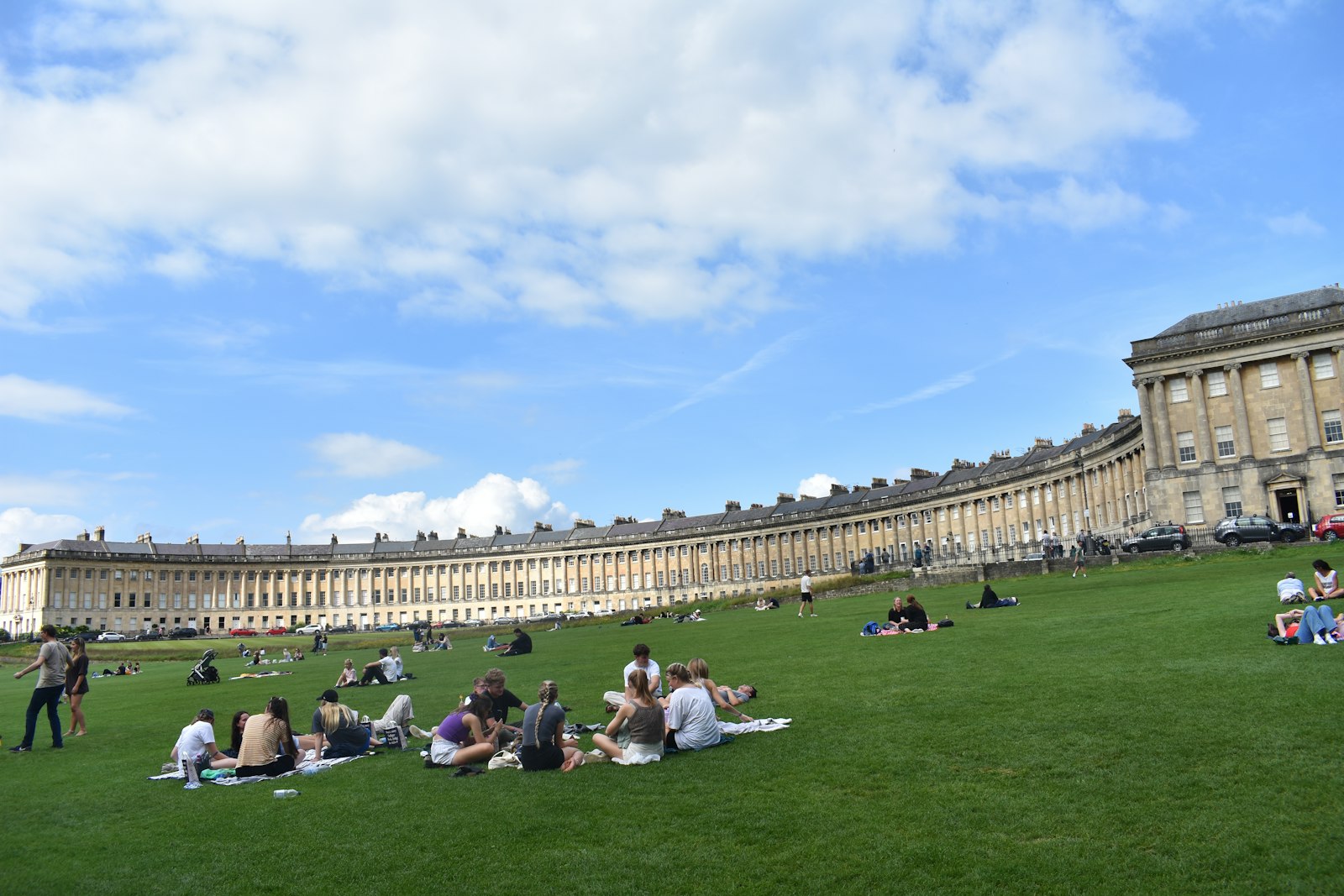
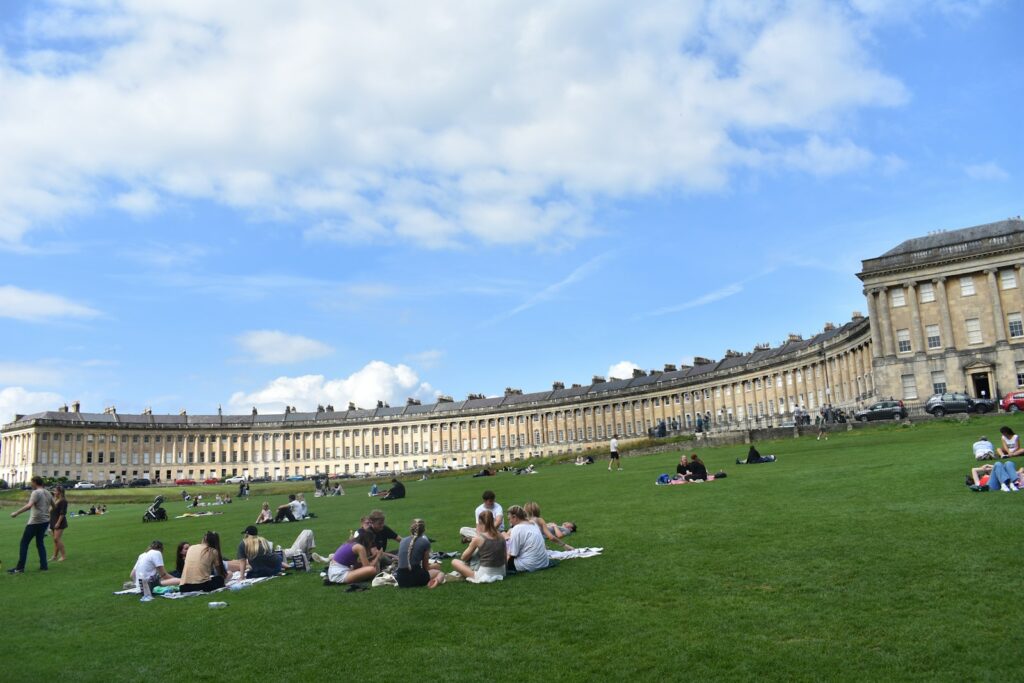
    The curving Georgian terrace of the Royal Crescent in Bath
    The Royal Crescent, the most famous street in Bath and a recurring Bridgerton backdrop. Photo: Martina Jorden / Unsplash

    Bridgerton Filming Locations in Bath

    No. 1 Royal Crescent: the Featherington house

    The front door and façade of No. 1 Royal Crescent play the Featheringtons’ London townhouse. For the show, the production added stone lions, pediments and rosettes to suggest the family’s showy taste, and digital effects placed the house on one side of a grand square facing the Bridgertons. The house was used again in season three. Today No. 1 is a museum run by Bath Preservation Trust, furnished as a fashionable Georgian home, with the servants’ quarters below stairs. It offers Bridgerton-themed tours showing how the house was used during filming.

    The Holburne Museum: Lady Danbury’s house

    At the end of Great Pulteney Street, the grand façade of the Holburne Museum is the exterior of Lady Danbury’s house, and it reprises the role in season four. Behind it is one of Bath’s finest small galleries, beside Sydney Gardens.

    Abbey Green: the modiste

    Tucked beside Bath Abbey, the leafy little square of Abbey Green starred in seasons one and two. The Abbey Deli became the Modiste, Madame Delacroix’s dress shop, while another corner of the square stood in for Covent Garden.

    The Assembly Rooms and Guildhall: the ballrooms

    The Tea Room and Ball Room of the Bath Assembly Rooms provided backdrops for ball scenes, as did the Banqueting Room of the Guildhall. The Assembly Rooms are cared for by the National Trust and are being transformed into a new Georgian visitor experience due to open in 2027. In the meantime, access is by pre-booked guided tour of the principal rooms, so check the National Trust website before you go.

    The streets: Bath Street, Trim Street, Beauford Square and Edward Street

    Much of the show’s street life was filmed on Bath’s cobbles. The colonnades of Bath Street, the quiet corners of Trim Street and Beauford Square, and, from season three, Edward Street off Great Pulteney Street, where crews filmed carriages, horses and costumed extras in January 2023. Many of those Edward Street scenes were shot right outside the Dukes hotel.

    Tip: The film locations are compact and walkable. Start at the Royal Crescent early in the morning, before the crowds, and work downhill towards Abbey Green, Pulteney Bridge and the Holburne Museum.

    To hear the behind-the-scenes stories as you go, we recommend a guided Bridgerton walking tour of Bath, which links the main sites in a couple of hours.

    The Real Regency City

    The Royal Crescent and the Circus

    The Royal Crescent, a sweeping arc of 30 houses designed by John Wood the Younger and built between 1767 and 1774, is the city’s showpiece. A short walk away is the Circus, designed by his father, John Wood the Elder. Work began in 1754, and when the elder Wood died within months of the first stone being laid, his son completed it to his design.

    Pulteney Bridge

    Designed by Robert Adam and completed in 1774, Pulteney Bridge is one of only a handful of bridges in the world lined with shops along its full span on both sides.

    The Roman Baths and the Pump Room

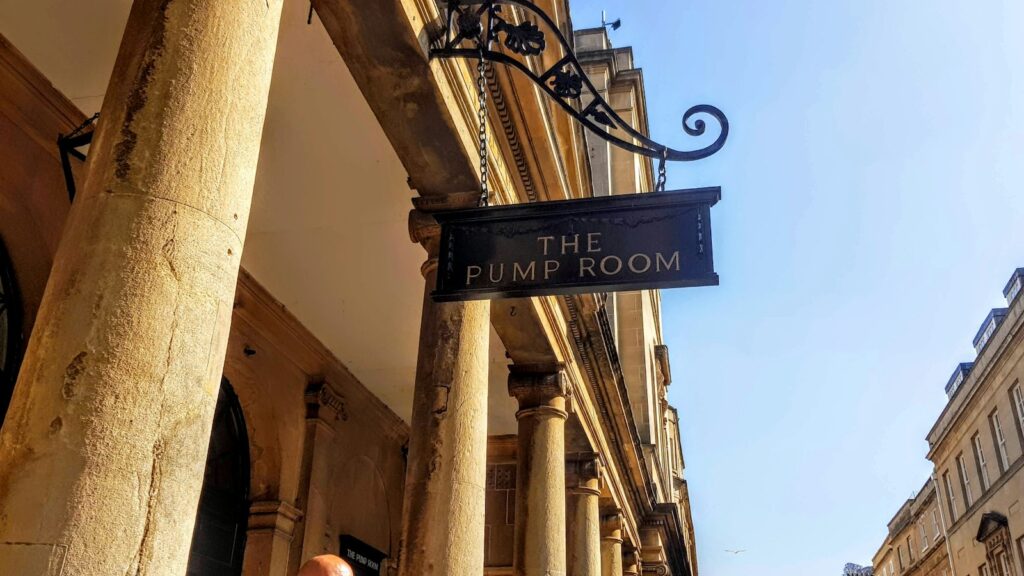
    The Roman Baths are the reason Bath exists, and no visit is complete without them. Next door, the elegant Pump Room, completed in the 1790s, was the social heart of Regency Bath, where visitors gathered to drink the waters and exchange gossip. Today it is a restaurant run by Searcys, serving morning coffee and afternoon tea to live music. Pre-book a Roman Baths entry ticket or guided visit to skip the queue, then book a table in the Pump Room for afterwards.

    The Pump Room sign hanging beneath the stone colonnade in Bath
    The Pump Room, the social heart of Regency Bath and still the place for afternoon tea. Photo: Elizabeth Jamieson / Unsplash

    Jane Austen’s Bath

    Jane Austen lived in Bath in the early 1800s and set parts of Northanger Abbey and Persuasion here. The Jane Austen Centre at 40 Gay Street, just below the Circus, tells her story and has a Regency Tea Room upstairs. Every September the city hosts the Jane Austen Festival, ten days of talks, dances and balls opening with the Grand Regency Costumed Promenade through the streets. It usually runs in mid-September; check the official festival website for dates.

    For reading on the train, we love a beautiful clothbound edition of Persuasion, Austen’s most Bath-soaked novel.

    Prior Park Landscape Garden

    On the hillside south of the city, Prior Park is an eighteenth-century landscape garden created by Ralph Allen, with input from the poet Alexander Pope and, possibly, Capability Brown. Now cared for by the National Trust, it has one of only four Palladian bridges of its design left in the world, with sweeping views back over the city. It is not a Bridgerton location, but it is pure Regency romance.

    Thermae Bath Spa

    To take the waters as the Georgians did, but with a modern twist, head to Thermae Bath Spa. Its natural thermal water fills both the indoor Minerva Bath and an open-air rooftop pool with views across the city’s rooftops and towards the surrounding hills.

    Bridgerton Beyond Bath

    Several of the show’s grandest houses are within easy reach, ideal for a longer trip:

    • Wilton House, near Salisbury: Used for interiors of Clyvedon, the Duke of Hastings’s estate, including the dining room, and for royal rooms. Roughly an hour’s drive from Bath.
    • Badminton House, Gloucestershire: Used for some Clyvedon scenes in season one and as the Danbury estate in Queen Charlotte. A private estate with limited public access.
    • Castle Howard, North Yorkshire: The exterior, entrance hall and grounds of Clyvedon Castle in season one, with the nearby village of Coneysthorpe as Clyvedon village.
    • Ranger’s House and the Old Royal Naval College, Greenwich: The wisteria-clad Bridgerton House and many London street scenes.

    Bath also makes a natural base for the Cotswolds, where Bridgerton-style country houses and honey-stone villages abound. See our guide to the best boutique hotels in the Cotswolds if you plan to extend your stay.

    Where to Stay in Bath

    The Royal Crescent Hotel & Spa

    For the ultimate Bridgerton address, The Royal Crescent Hotel & Spa occupies the centre of the crescent itself, a five-star hotel of 45 rooms with hidden gardens behind and a spa with an indoor pool.

    The Gainsborough Bath Spa

    In the heart of the old city, near the Roman Baths, The Gainsborough Bath Spa draws natural thermal water into its own Spa Village, with two thermal pools, saunas, a steam room and an ice alcove.

    No.15 by GuestHouse, Great Pulteney Street

    Now part of the GuestHouse group, No.15 Great Pulteney is a witty, art-filled Georgian townhouse hotel with a small spa, a short stroll from the Holburne Museum and Pulteney Bridge.

    Dukes, Great Pulteney Street

    Fans will love Dukes, a characterful boutique townhouse on the corner of Edward Street, where many of the season three street scenes were filmed right outside the door. Note that there is no lift.

    Homewood Hotel & Spa, Freshford

    For country-house calm, Homewood sits in gardens above the Avon Valley in Freshford, about 15 minutes by taxi from Bath Spa station. Expect a spa with an outdoor heated pool and hot tubs, and some rooms with private hot tubs of their own.

    Practicalities

    • Getting there: Direct trains run from London Paddington to Bath Spa, taking around an hour and a half. The station is a short walk from the Roman Baths and Abbey Green.
    • Getting around: The compact centre is best explored on foot, though the climb to the Royal Crescent is steep.
    • When to go: Spring and early summer bring long evenings; September brings the Jane Austen Festival. Book hotels well ahead for festival week.
    • Booking ahead: No. 1 Royal Crescent tours, Assembly Rooms tours, Thermae Bath Spa and Pump Room afternoon tea can all sell out, so reserve in advance and check opening times before you go.

    A Perfect Bridgerton Day in Bath

    Morning

    Begin at the Royal Crescent and tour No. 1 Royal Crescent, then stroll through the Circus to the Jane Austen Centre on Gay Street. Continue to the Assembly Rooms if you have booked a guided tour.

    Afternoon

    Wander down to Abbey Green for the Modiste, explore the Roman Baths, then settle in for afternoon tea in the Pump Room. Cross Pulteney Bridge and walk the length of Great Pulteney Street, past Edward Street, to the Holburne Museum and Sydney Gardens.

    Evening

    Watch the sun set from the rooftop pool at Thermae Bath Spa, or retreat to your hotel’s thermal pools before dinner.

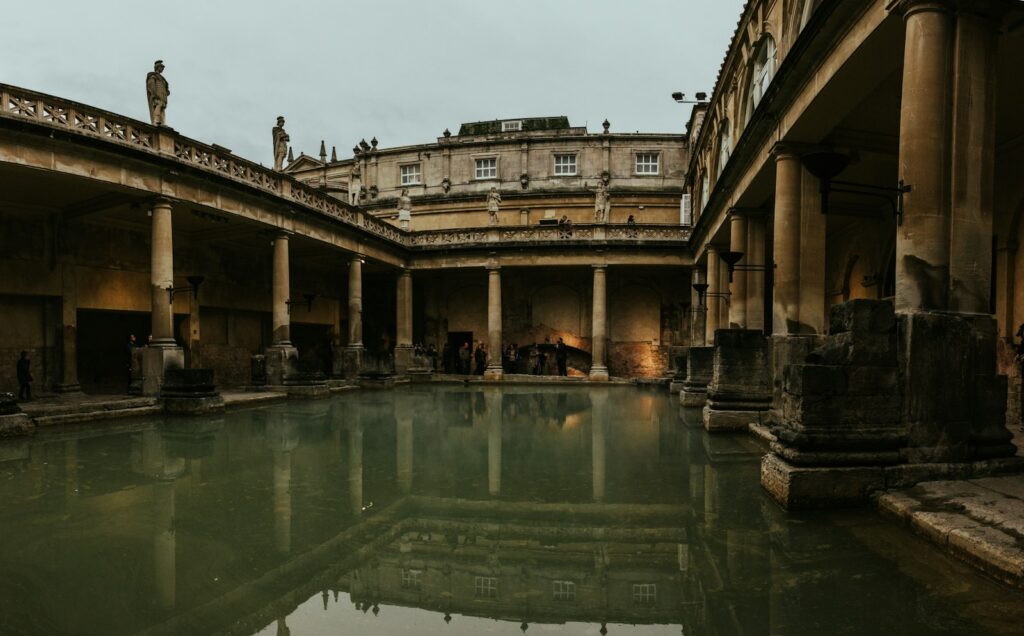
    The green waters of the Great Bath at the Roman Baths in Bath, ringed by stone columns and statues
    The same hot springs that fed the Great Bath now fill the rooftop pool at Thermae Bath Spa. Photo: Mario Klassen / Unsplash

    FAQs

    Which house is the Featheringtons’ in Bath?

    No. 1 Royal Crescent, at the eastern end of the Royal Crescent. Its exterior plays the Featherington townhouse, and it is now a museum you can visit, with Bridgerton-themed tours.

    Is Lady Danbury’s house in Bath?

    Yes. The façade of the Holburne Museum on Great Pulteney Street plays Lady Danbury’s house, including in season four.

    When is the Jane Austen Festival?

    It runs for ten days each September, opening with the Grand Regency Costumed Promenade. Check the official festival website for exact dates.

    Step Into Your Own Regency Season

    Tell us your dates and we will design a Bath and Bridgerton itinerary with private tours, spa stays and country-house day trips.

  • The Folklore Explorer’s Trail: The Rollright Stones and England’s Legend-Haunted Landscapes

    The Folklore Explorer’s Trail: The Rollright Stones and England’s Legend-Haunted Landscapes

    On a quiet ridge where Oxfordshire meets Warwickshire, a ring of weathered stones keeps one of England’s best-loved legends alive, and it makes the perfect first stop on a trail through the country’s most story-haunted landscapes.

    Why Follow a Folklore Trail?

    England’s ancient monuments have lived a second life in story. For centuries, people who had no idea who raised these stones explained them with witches, kings, elf-smiths and dragons, and visiting with those tales in mind brings a field of grey stones vividly to life.

    This trail begins at the Rollright Stones on the northern edge of the Cotswolds, then heads south along the Ridgeway to Wayland’s Smithy, the Uffington White Horse and Avebury, before ending in Somerset and Dorset at Glastonbury Tor and the Cerne Abbas Giant. Most sites are free or nearly so, open in daylight all year, and blissfully quiet outside summer weekends.

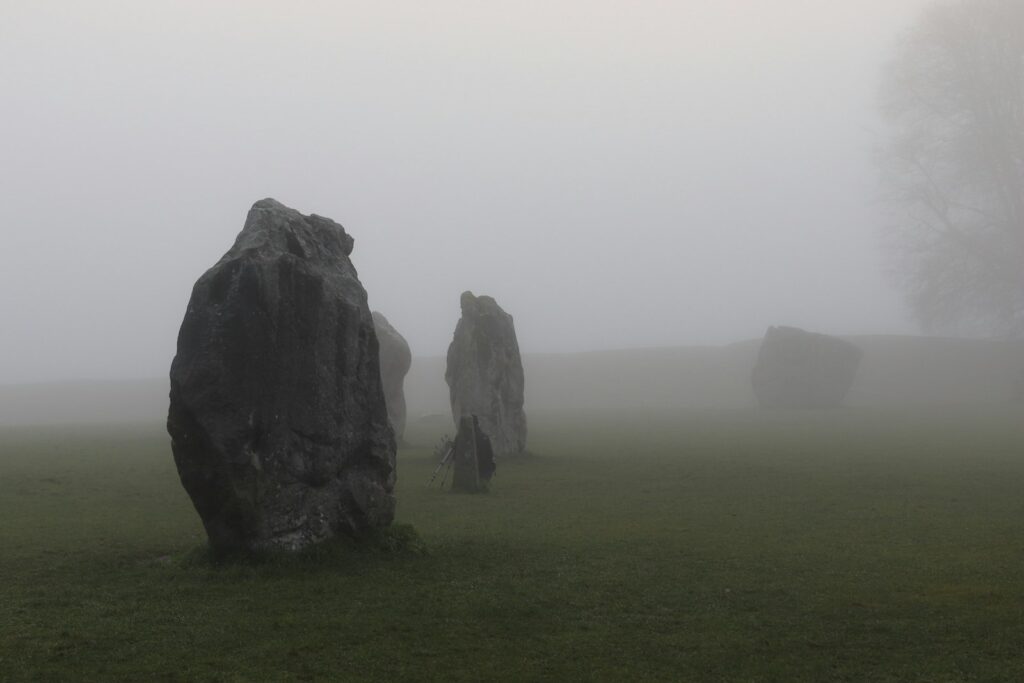
    Weathered prehistoric standing stones in a misty English field
    Ancient standing stones in the mist, the stuff of legends like the Rollright King’s Men. Photo: T / Unsplash

    The Rollright Stones: Witch, King and Knights

    The Rollright Stones lie about two and a half miles north-northwest of Chipping Norton, close to the village of Long Compton, and straddle the county boundary. There are three separate monuments, spanning nearly 2,000 years of prehistory.

    The King’s Men

    The stone circle, in Oxfordshire, dates from the Late Neolithic or Early Bronze Age. It is about 33 metres across, with around 77 closely spaced, heavily weathered stones.

    The King Stone

    Across the lane, in Warwickshire, stands a single tall monolith. Archaeologists think it most likely marked a Bronze Age burial site.

    The Whispering Knights

    A short walk east across the fields, four upright stones and a fallen capstone huddle together like conspirators. This is the oldest of the three monuments, the remains of an Early Neolithic portal dolmen, or burial chamber, built centuries before the circle.

    The legend

    According to local tradition, a king marching with his army to conquer England met a witch on this ridge. She challenged him: “Seven long strides thou shalt take, and if Long Compton thou canst see, King of England thou shalt be.” The king strode forward, but on the seventh step a rise in the ground hid the village from view. The witch turned him to stone as the King Stone, his soldiers became the King’s Men, and four knights who had hung back plotting treachery became the Whispering Knights.

    The stones are also said to be uncountable. Legend holds that no one can count the King’s Men three times and arrive at the same number, and that anyone who does will have their heart’s desire. One story tells of a baker who placed a loaf on each stone to keep track, only to find loaves mysteriously missing each time.

    Visiting the Rollright Stones

    Since 2001 the stones have been owned by the Rollright Trust, a small charity that bought the site after a public campaign and now cares for it. The Trust asks for a modest entry fee (English Heritage lists it at £2 per adult and £1 for children aged 7 to 16, under-7s free), which you can pay online in advance, by QR code on site or in the honesty box. The stones are open daily all year, and the site is a Dark Sky Discovery Site, so a clear night visit is magical.

    There are no facilities at the stones and parking is limited to two small lay-bys, with pubs in Long Compton and Chipping Norton. Please do not climb or sit on the stones.

    Along the Ridgeway: Wayland’s Smithy and the White Horse

    An hour or so south, the Ridgeway National Trail runs about 87 miles along the chalk downs from Avebury to Ivinghoe Beacon, following a route used for thousands of years. Its most legend-rich stretch lies above the Vale of the White Horse.

    Wayland’s Smithy

    Hidden in a ring of beech trees beside the Ridgeway, this Neolithic long barrow was built in two phases, the first around 3590 to 3555 BC and the larger, with its monumental stone façade, around 3460 to 3400 BC. Its name recalls Wayland, the smith of Germanic legend. Tradition says that if you leave your horse here overnight with a small coin, the invisible smith will shoe it by morning. Wayland’s Smithy is in the care of English Heritage, free to enter and open in daylight, and lies just over a mile’s walk along the Ridgeway from the White Horse Hill car park.

    The Uffington White Horse

    Owned by the National Trust, this sleek, abstract chalk horse is Britain’s oldest known hill figure, dated by archaeologists to the Late Bronze Age, roughly 3,000 years ago. It stretches about 110 metres across the hillside and is still re-chalked by volunteers. Below it rises Dragon Hill, a flat-topped mound where St George is said to have slain the dragon; the bare chalk patch on top is where its blood spilled and nothing will grow. Above stands Uffington Castle, an Iron Age hillfort. It is open dawn to dusk, with a pay-and-display car park.

    For walkers, a good OS Explorer map of the Vale of White Horse makes the loop from the horse to Wayland’s Smithy and back an easy, rewarding morning.

    A walker watching the sun set over the Vale of the White Horse from Uffington Castle hillfort
    Sunset from Uffington Castle, the hillfort just above the 3,000-year-old White Horse. Photo: Sam Headland / Unsplash

    Avebury: A Village Inside a Stone Circle

    At the western end of the Ridgeway, Avebury is the largest stone circle in Britain, built and remodelled between roughly 2850 and 2200 BC. A vast bank and ditch encloses an outer ring that once held around 100 stones and two smaller circles within it, and part of the village, including its pub, sits right inside the henge. It forms part of the Stonehenge and Avebury World Heritage Site, and the National Trust manages it on behalf of English Heritage. Entry to the stones is free at any reasonable time in daylight.

    Start at the Alexander Keiller Museum, then wander the stones. To go deeper, a guided Avebury and Stonehenge day tour pairs the two great circles with expert commentary.

    Further South: Glastonbury Tor and the Cerne Abbas Giant

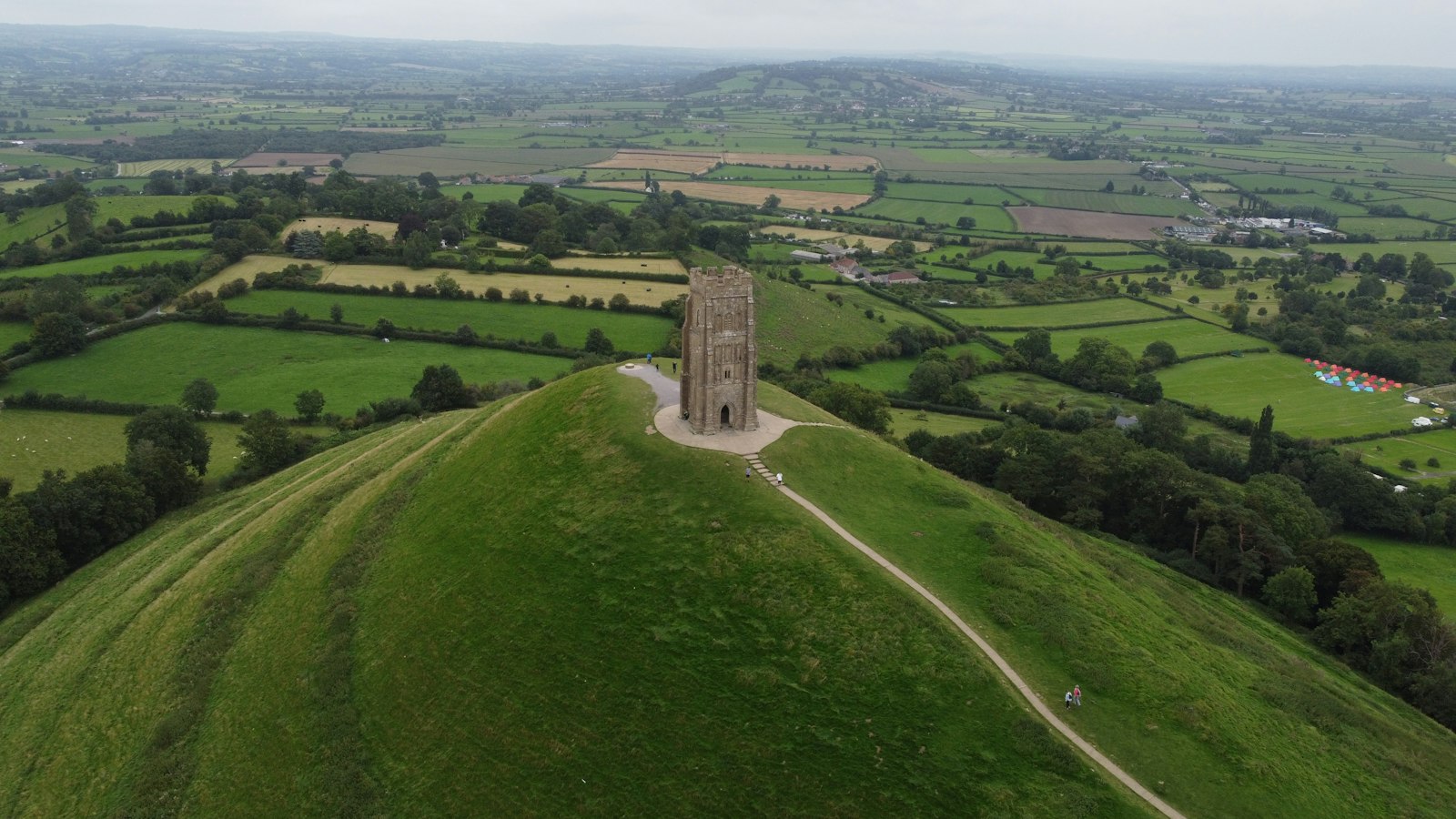
    Glastonbury Tor

    Rising from the Somerset Levels and crowned by the roofless tower of St Michael’s church, the National Trust’s Glastonbury Tor is steeped in story. It is often identified with the Isle of Avalon, where the wounded King Arthur was carried after his last battle. Below, at Glastonbury Abbey, the monks announced in 1191 that they had found the grave of Arthur and Guinevere, a claim most historians now regard as a fundraising coup after a devastating fire. There is almost no parking at the Tor itself, so walk up from the town centre, around 25 minutes. A guided tour of Glastonbury and the stone circles takes the strain out of the logistics.

    The Cerne Abbas Giant

    In Dorset, the National Trust’s 55-metre club-wielding giant is Britain’s largest chalk hill figure. Long assumed to be prehistoric or Roman, he was dated in 2021 to between AD 700 and 1100, the late Saxon period. The best view is from the signposted viewing area, about a quarter mile’s walk from the village.

    Seasonal Customs Worth Timing a Trip Around

    • May Morning, Oxford (1 May): At 6am, Magdalen College Choir sings from the top of Magdalen Tower to thousands gathered below, followed by Morris dancing in the streets.
    • Padstow ‘Obby ‘Oss (1 May): A long way west in Cornwall, but unforgettable. Two hobby horses, each led by a Teaser, dance through the town all day.
    • Bampton Morris (Spring Bank Holiday Monday): The Oxfordshire village of Bampton has one of England’s few unbroken Morris traditions, with several sides dancing around the village from early morning.
    • Clear winter nights: The Rollright Stones’ dark skies make a crisp, starry evening visit memorable, and the sites are wonderfully quiet.

    Before you go, we recommend reading The Lore of the Land by Jennifer Westwood and Jacqueline Simpson, a county-by-county guide to England’s legends and the perfect companion for this trail.

    Where to Stay

    The Wild Rabbit, Kingham

    A short drive from the Rollrights, The Wild Rabbit is a seventeenth-century inn run by Daylesford, with stylish bedrooms, a fine-dining room built on produce from the Daylesford farm. It also features in our guide to boutique hotels in the Cotswolds.

    The Feathered Nest, Nether Westcote

    A former malt house of around 350 years, The Feathered Nest has four individually decorated rooms plus a cottage, sweeping views over the Evenlode Valley and a kitchen with three AA Rosettes. Note that the pub and restaurant close on Tuesdays and Wednesdays, so check before booking.

    The Greyhound Inn, Letcombe Regis

    For the Ridgeway and the White Horse, The Greyhound Inn is an eighteenth-century free house at the foot of the downs, with stylish bedrooms named after local landmarks and award-winning food.

    The Bell at Ramsbury

    Within easy reach of Avebury, The Bell at Ramsbury is an eighteenth-century inn in the Kennet Valley with ten characterful bedrooms, a dining room, a bar and a coffee shop.

    A Four-Day Folklore Trail

    Day 1: The Rollright Stones

    Visit the Rollrights in late afternoon light, try counting the King’s Men, then dine in Kingham or Nether Westcote.

    Day 2: The Ridgeway

    Walk from White Horse Hill along the Ridgeway to Wayland’s Smithy and back. Overnight in Letcombe Regis.

    Day 3: Avebury

    Explore the Avebury stones and museum, lunch inside the henge, and stay in Ramsbury.

    Day 4: Glastonbury

    Climb Glastonbury Tor and explore the abbey ruins, or swing south to the Cerne Abbas Giant.

    FAQs

    Who owns the Rollright Stones?

    The Rollright Trust, a charity, has owned and cared for the stones since 2001. A small entry fee supports its work.

    Can you really not count the Rollright Stones?

    The stones have, in fact, been counted and recorded, but legend says no one can count them three times and get the same number. The weathered stones make it surprisingly hard.

    Do I need a car?

    Realistically, yes: the Rollrights are not on a public transport route. A guided tour is a good alternative for Avebury and Glastonbury.

    Let Us Plan Your Folklore Journey

    Tell us your dates and we will design a seamless trail of stone circles, chalk giants and characterful inns, timed to the seasons and customs you love.

  • Hampton Court Palace: Inside Henry VIII’s River Palace

    Hampton Court Palace: Inside Henry VIII’s River Palace

    Upriver from Westminster, where the Thames runs green and slow past Surrey’s water meadows, Hampton Court Palace holds five centuries of royal ambition in one glorious sweep of Tudor brick and baroque stone.

    Why Hampton Court Belongs on Every Royal Itinerary

    Many palaces tell one story. Hampton Court tells two, side by side. Walk through the gatehouse and you are in the red-brick world of Cardinal Wolsey and Henry VIII, all turrets, twisted chimneys and great courtyards. Keep going and the palace turns into something else entirely: the cool, symmetrical baroque state apartments built for William III and Mary II, opening onto formal gardens that run down to the river.

    It is also one of the easiest grand day trips from London. A direct train from Waterloo takes under 40 minutes, and the palace sits just across the bridge from the station. On our Royal & Castle Britain trail, it is the essential Tudor chapter.

    Fountain Court at Hampton Court Palace, with Wren's red-brick colonnade and Tudor chimneys rising behind under a blue sky
    The Great Gatehouse, the grand Tudor welcome to Hampton Court. Photo: Dennis Norman / Unsplash

    From Cardinal to King to Baroque Palace

    Wolsey’s palace

    The story begins with Thomas Wolsey, Henry VIII’s chief minister, who took on the manor at Hampton in the mid-1510s and transformed it into a palace fit to entertain kings and ambassadors. It was almost too magnificent. As Wolsey fell from favour at the end of the 1520s, the palace passed to Henry, who made it one of his favourite residences.

    Henry VIII’s river palace

    Henry spent lavishly. He built the vast kitchens, the Great Hall and the Chapel Royal’s extraordinary ceiling, and the palace saw some of the most dramatic moments of his reign: honeymoons, the birth of his longed-for son Edward, the death of Jane Seymour, and the arrest of Catherine Howard.

    Wren, William and Mary

    After William III and Mary II came to the throne in 1689, they commissioned Sir Christopher Wren to rebuild the palace in the latest baroque style. Ambitions were scaled back and much of the Tudor palace survived, but Wren’s new royal apartments around Fountain Court, with their elegant South and East Fronts, gave Hampton Court its second, very different face. Today the palace is cared for by Historic Royal Palaces, the independent charity that also looks after the Tower of London and Kensington Palace.

    The Highlights: What Not to Miss

    The Great Hall

    Henry’s Great Hall, built in the 1530s, is the theatrical heart of the Tudor palace. Look up at the carved hammerbeam roof, where tiny painted heads known as the “eavesdroppers” peer down, and look for traces of Anne Boleyn’s arms, carved during her brief reign. The walls are hung with sixteenth-century tapestries telling the story of Abraham, woven for Henry and as rich in colour as they are in symbolism.

    The Tudor Kitchens

    Henry’s kitchens were built to feed a court that could number around a thousand people, and they survive on a remarkable scale. Wander through the boiling house, the great fireplaces and the serving places, and on selected days you may find costumed cooks recreating Tudor recipes. It is the moment the palace comes alive for children and adults alike.

    The Haunted Gallery and the Catherine Howard legend

    Few corridors in England carry a better story. Catherine Howard, Henry’s fifth wife, was confined at Hampton Court in 1541 before her execution the following year. Legend says she broke free from her guards and ran down this gallery, screaming for the king, and that her ghost still repeats the dash. Historians doubt the tale, but it is cherished palace lore, and the gallery is wonderfully atmospheric on a grey afternoon.

    The Chapel Royal

    Still a working chapel after nearly five hundred years, the Chapel Royal is crowned by Henry’s dazzling vaulted ceiling of deep blue and gold, studded with stars and carved pendants. If you can, attend a service: it is a wonderfully atmospheric way to experience the palace.

    Tip: Arrive at opening time and head straight for the Tudor Kitchens and Great Hall, then save the gardens for the afternoon when the light is softer and the morning crowds have moved on.

    The Gardens, the Great Vine and the Maze

    The palace sits in around 60 acres of formal gardens beside the Thames, and they deserve almost as much time as the interiors.

    • The Privy Garden: William III’s private garden, reconstructed in 1995 to its early eighteenth-century design, with clipped yews, formal parterres laid out between the palace and the river.
    • The Great Vine: Planted in 1768 when Lancelot “Capability” Brown was head gardener, it is widely recognised as the largest grapevine in the world. Its black grapes are harvested each year and traditionally sold in the palace shop in early autumn.
    • The Maze: Planted for William III around 1690, it is the oldest surviving hedge maze in Britain.
    • The Magic Garden: An imaginative play garden in Henry VIII’s former Tiltyard, guarded by a great sleeping dragon and full of towers, battlements and hidden corners. Opening is seasonal, so check before you go if you are travelling with children.
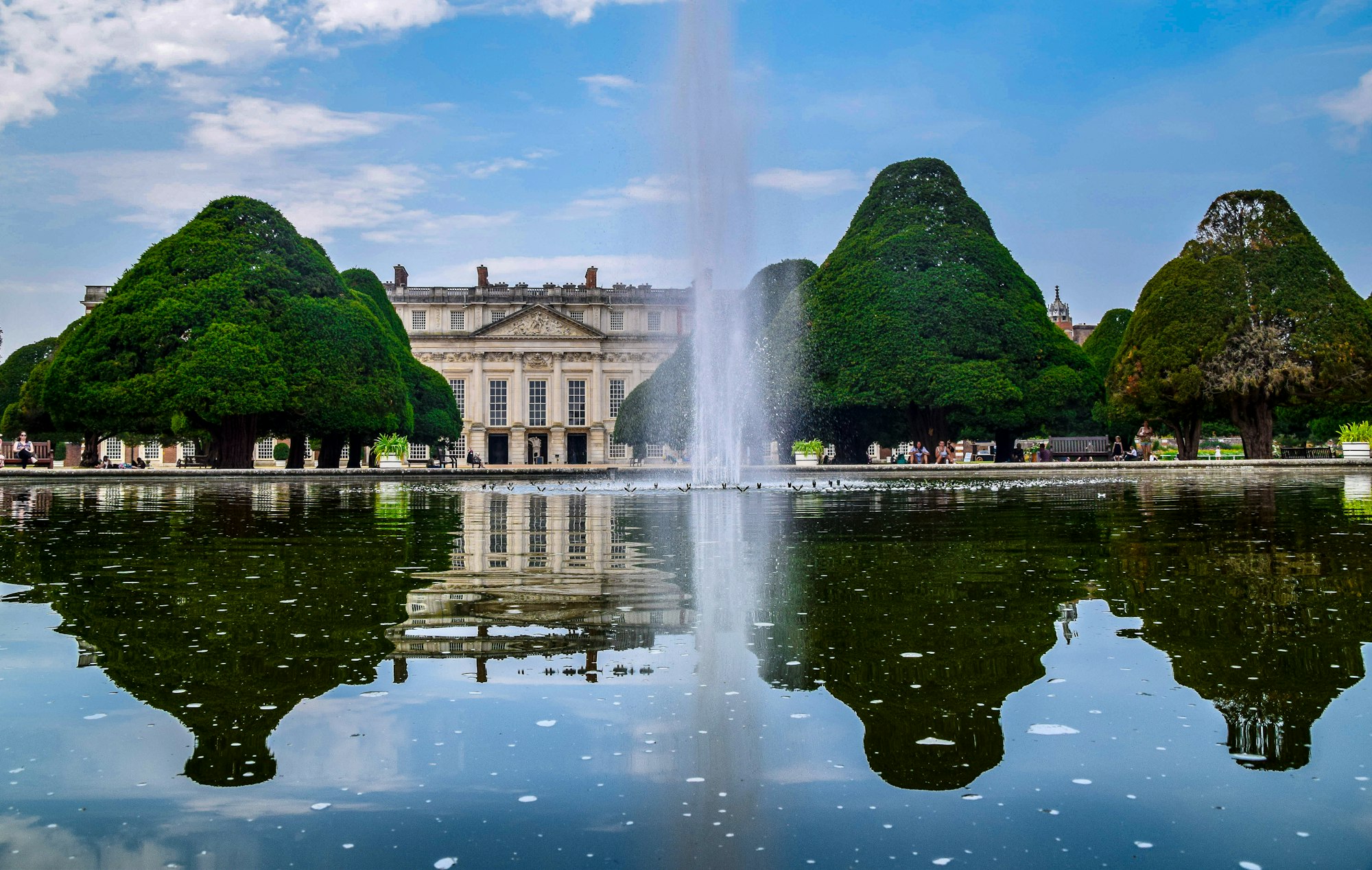
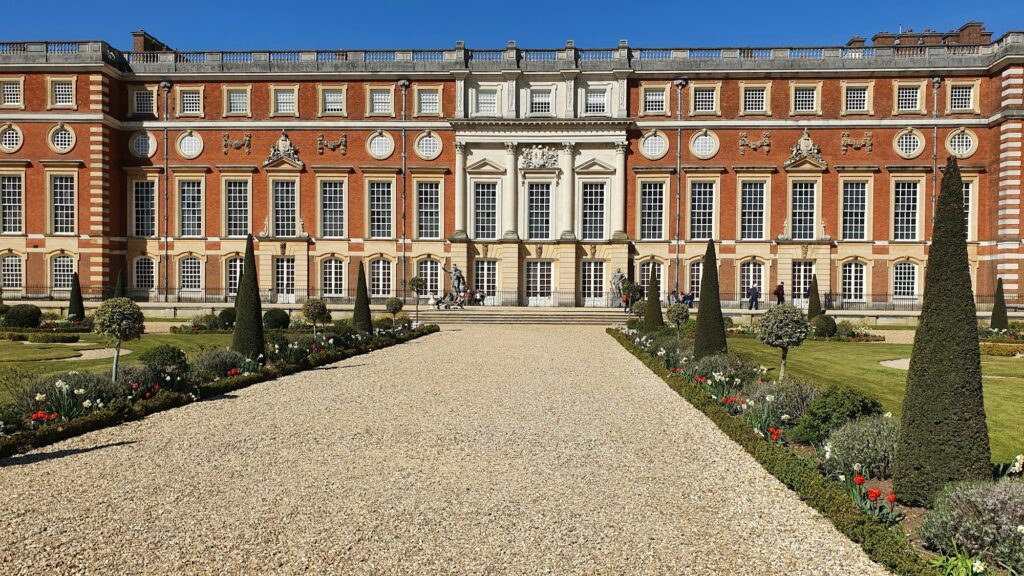
    Clipped yew cones and flower borders along a gravel walk leading to the baroque Wren front of Hampton Court Palace
    The Privy Garden, with Wren’s baroque palace behind. Photo: Dennis Norman / Unsplash

    For skip-the-line entry, consider pre-booked Hampton Court Palace entrance tickets, or let an expert bring the Tudors to life on a guided Hampton Court tour from London.

    Annual Events at the Palace

    Hampton Court Palace Festival

    Each June, the palace’s Base Court becomes an open-air concert venue for the Hampton Court Palace Festival, with picnics in the gardens before the music. The festival runs over selected nights each June; check the line-up and book early. The best tickets go quickly once the next line-up is announced.

    RHS Hampton Court Palace Garden Festival

    The Royal Horticultural Society’s summer show in the palace grounds, formerly known as the Hampton Court Palace Flower Show, has moved to a biennial schedule. It is traditionally held in early July; check the RHS website for the next date and book early.

    Christmas at the palace

    In winter, Hampton Court puts on festive programming and an outdoor ice rink. At Christmas the palace usually stages a festive season; check dates and timed tickets before travelling.

    Getting There from London

    By train

    South Western Railway runs direct trains from London Waterloo to Hampton Court, the end of the line, in around 35 to 40 minutes. From the station, simply cross the bridge over the Thames and the palace gates are a few minutes’ walk away.

    By river

    For a leisurely, quintessentially English approach, seasonal boats run upriver from Westminster Pier via Kew and Richmond to Hampton Court, typically from spring to the end of October. The full trip takes several hours and sailing times vary with the tides, so many visitors take the boat one way and the train back. Services do not usually run from Westminster in winter, so check the operator’s timetable before you plan around it. You can also book a Thames river cruise to see more of the royal river.

    How Long to Allow

    Allow a full day. Three to four hours covers the Tudor and baroque interiors at a good pace, and the gardens, maze and vine easily take another two. With lunch, five to six hours is ideal. Opening hours are shorter in winter, when last admission is in mid-afternoon, so arrive early if you are visiting between November and March.

    Where to Stay Nearby

    Inside the palace: the Landmark Trust

    For a truly once-in-a-lifetime stay, the Landmark Trust lets two historic apartments within the palace itself. The Georgian House, built in 1719 as kitchens for George, Prince of Wales, sleeps up to eight and has its own walled garden, while Fish Court occupies former Tudor service quarters. Both book up far in advance, directly with the Landmark Trust.

    The Mitre, Hampton Court

    Directly across the road from the palace on the riverbank, The Mitre is a characterful boutique hotel with eclectic, colourful interiors, a riverside terrace and a restaurant overlooking the Thames. It is the natural choice if you want to be first through the palace gates in the morning.

    The Petersham, Richmond

    A short drive downriver, The Petersham sits high on Richmond Hill with famous views over the Thames meadows, a fine base for combining Hampton Court with Richmond Park and Kew.

    Combining with Richmond and Kew

    Hampton Court sits at the top of a remarkable stretch of royal river. Richmond offers riverside walks, Richmond Park’s deer herds and the view from Richmond Hill, while Kew has the Royal Botanic Gardens and little Kew Palace, also cared for by Historic Royal Palaces. Both lie on the river boat route, making a two-day “royal Thames” itinerary easy. Pre-book Kew Gardens tickets to save time at the gate.

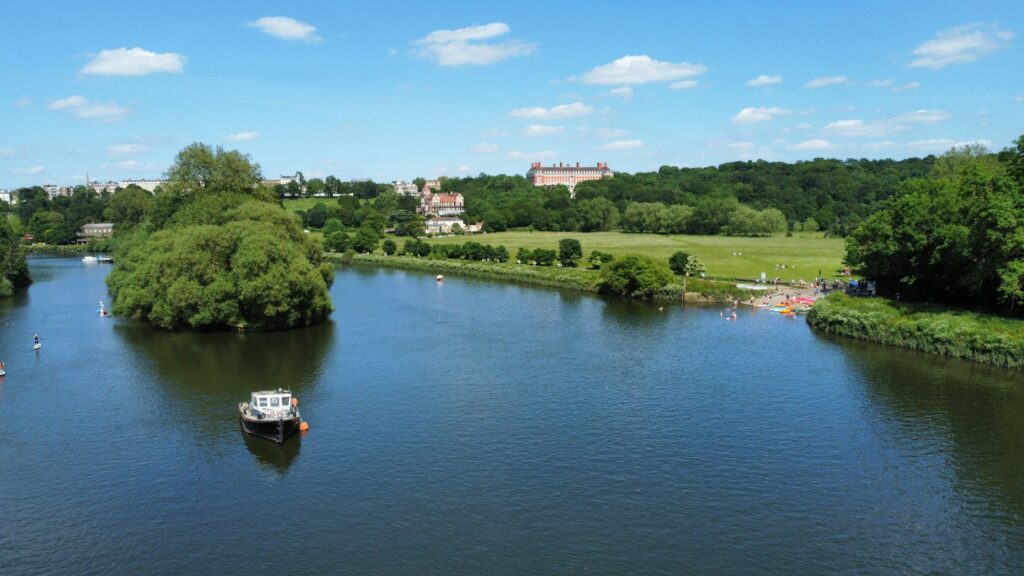
    A small boat on the Thames below Richmond Hill, with a wooded island, riverside meadows and trees on a sunny day
    The royal river at Richmond, a perfect partner to Hampton Court. Photo: Spekboom / Unsplash

    A Perfect Hampton Court Day

    1. Morning: Take an early train from Waterloo and be at the gates for opening. Start in the Tudor Kitchens and Great Hall, then the Chapel Royal and the Haunted Gallery.
    2. Midday: Lunch at the palace café or across the bridge in East Molesey, then the baroque state apartments.
    3. Afternoon: The Privy Garden, the Great Vine and the Maze, with a riverside walk along the Thames.
    4. Evening: Stay for dinner at The Mitre, or head back into town for something special from our guide to Michelin-starred dining in London.

    FAQs

    How do I get to Hampton Court Palace from central London?

    The easiest way is the direct South Western Railway train from London Waterloo to Hampton Court station, around 35 to 40 minutes, then a short walk across the bridge. In season, river boats also run from Westminster.

    Who runs Hampton Court Palace?

    Historic Royal Palaces, an independent charity that also cares for the Tower of London, Kensington Palace, the Banqueting House and Kew Palace.

    Is the Haunted Gallery really haunted?

    The tale of Catherine Howard’s ghost is a much-loved legend, not established fact. Historians doubt the story, but the gallery remains one of the palace’s most atmospheric spaces.

    Is the RHS flower show at Hampton Court every year?

    Not any more. The RHS Hampton Court Palace Garden Festival now runs every other year and is expected to return in 2027. Check the RHS website for confirmed dates.

    Plan Your Royal Thames Escape

    Tell us your dates and we will design a seamless royal itinerary, from palace stays and private guides to riverside hotels and memorable dinners.

  • The Lake District: A Luxury Traveler’s Itinerary

    The Lake District: A Luxury Traveler’s Itinerary

    Glass-calm lakes, wild fells, and spoiling hotels, stitched into a seamless, softly indulgent break.

    Why the Lake District for Luxury?

    There’s a particular kind of quiet in Cumbria, the hush of water on pebbles, wind over bracken, the fizz of wood smoke after rain. The Lake District pairs that elemental beauty with lavish creature comforts: log-fired lounges, chef-led kitchens, stand-out spas, and rooms that open onto water or fell views. Distances are short, but the moods are many, Windermere’s grand sweep, Grasmere’s intimacy, Borrowdale’s drama, Ullswater’s romance.

    For the discerning traveler, luxury here is about pacing. Slow breakfasts, a private boat hour, a gentle fell walk with a guide, then long lunches and a spa treatment. Dinners are event-level, often tasting menus anchored in Cumbrian produce, or classic hotel dining rooms with silver service and a twinkle of nostalgia.

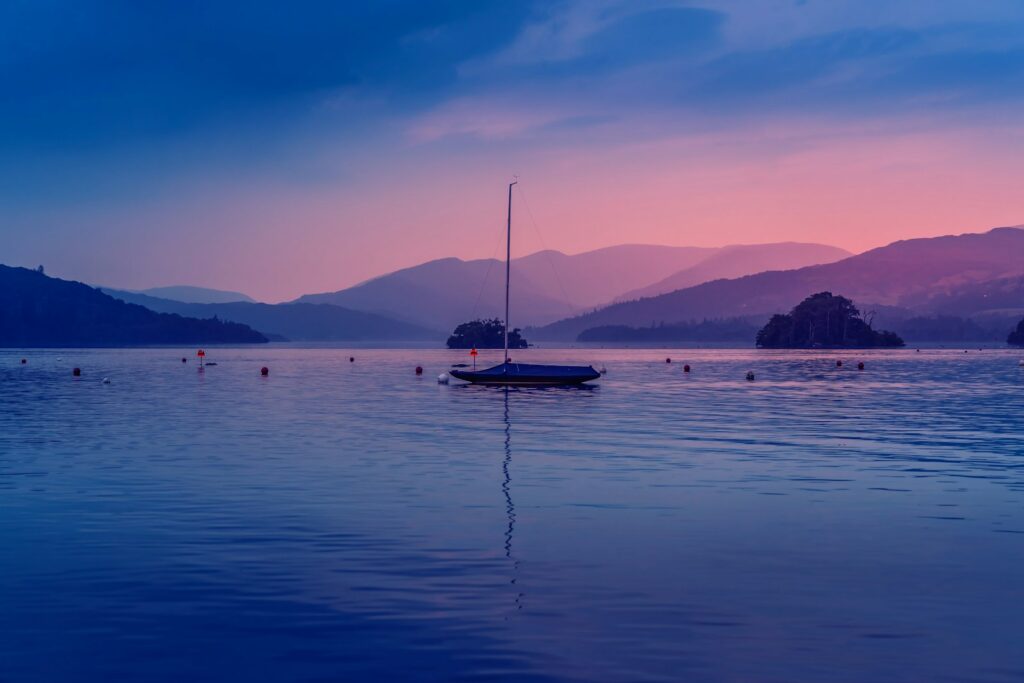
    Sunset over Bowness Bay on Lake Windermere in the Lake District
    Blue hour on Windermere, best admired from a private launch with a picnic hamper. Photo: Jonny Gios / Unsplash

    My Lake District

    Living in the UK as a young man, one of my favourite activities, along with my friend Pete, was to leave Manchester on a Friday night as soon as we finished work and head north to hike in the Lake District.

    Never being short of places to camp, one of our haunts included Troutbeck, just north of England’s largest lake, Windermere, and we would begin the evening at the Queens Head, usually after pitching our tents. Still standing today, the Queens Head provided us with many weekends of fun and warmth.

    Hiking in the UK is not for those who are scared of melting in the rain. The cold and bitter winds that scream across the fells can find any gap in your clothing to get inside and make you miserable. On the other hand, a warm sunny day standing at the top of Stony Cove Pike and looking down Troutbeck Tongue, or taking a break at the Kirkstone Pass Inn, cannot be beaten.

    The countryside is wild, with stone walls and very few trees. Slate bridges cross mountain streams which run crystal clear across stones that have been there since time immemorial. The sight of storm clouds obscuring the sun, rushing across the fells, leaving a sprinkling of rain and then exposing us to the sun again, is magical and majestic.

    The Lake District has always had a special place in my heart, and imagine my surprise when, looking through my family tree, I found that one side of my family has its roots in an area close to Troutbeck. Scafell Pike, Helvellyn, the Wainwrights, Pooley Bridge and Grasmere are names and places that will ever reverberate in my memories.

    Where to Stay: Boutique Hotels & Country Houses

    We favour intimate hotels with character, great kitchens, and views that do the heavy lifting. Below are much-loved names our guests return to. (Awards and ratings change, check the latest details when booking.)

    • Gilpin Hotel & Lake House (Windermere): Private hot tubs and spa lodges; polished service with a playful streak.
    • The Samling (near Ambleside): A hillside sanctuary with glass-walled dining and cinematic lake vistas.
    • Linthwaite House (Bowness-on-Windermere): Arts-and-Crafts lines, statement art, and a serene hilltop setting.
    • Another Place, The Lake (Ullswater): Contemporary country-house spirit with watersports and a relaxed, stylish vibe.
    • Forest Side (Grasmere): Foragers’ garden, refined rooms; a destination dining room.
    • Rothay Manor (Ambleside): Regency bones, modern comfort, great for food-first stays.
    • Armathwaite Hall (Bassenthwaite): Grand country house with an excellent spa overlooking lakeland fells.
    • Lodore Falls Hotel & Spa (Borrowdale): Lakeside setting on Derwentwater, sleek spa facilities, and easy Keswick access.

    Where to Dine

    The Lakes punch far above their weight for culinary ambition. You’ll find celebrated, award-winning kitchens alongside cosy inns where the gravy alone is worth the trip.

    • L’Enclume (Cartmel): Simon Rogan’s flagship, with three Michelin stars and a Green Star, produce-driven tasting menus that showcase the region’s farms and hedgerows.
    • Rogan & Co (Cartmel): A more relaxed, Michelin-starred sibling in the village; polished comfort dishes with exacting technique.
    • Forest Side (Grasmere): A Michelin star and a Green Star for hyper-seasonal menus with foraged elements.
    • Lake Road Kitchen (Ambleside): Michelin-starred; small, serious, quietly brilliant cooking and wine.
    • The Samling Restaurant (near Ambleside): Michelin-starred fine dining wrapped in glass and view.
    • SOURCE at Gilpin (Windermere): Michelin-starred dining inside Gilpin Hotel, ideal for a first night.
    • The Cottage in the Wood (Braithwaite): Michelin-starred, with a woodland setting, thoughtful plates, and a strong wine list.
    • The Old Stamp House (Ambleside): Michelin-starred tasting menus celebrating the Cumbrian larder, with sister bistro The Schelly next door for a more casual night.
    • Allium at Askham Hall (near Penrith): Michelin-starred cooking in a country-house hotel on the Ullswater side.
    • Heft (High Newton, near Cartmel): A Michelin-starred pub with rooms, a short drive from Cartmel.

    Lunch intel: Many top kitchens offer excellent value lunch menus mid-week. It’s a smart way to sample marquee cooking and keep evenings open for a spa or sunset boat ride.

    Signature Experiences (Private & Bespoke)

    • Private Lake Cruise: Charter a classic wooden launch on Windermere or Ullswater with a skipper; add a hamper and a bottle of English fizz.
    • Guided Fell Walk: From gentle Tarn Hows loops to Catbells at golden hour, your guide sets pace and shares stories.
    • Spa Day: Thermal journeys and outdoor hot tubs at destination spas (Armathwaite Hall, Lodore Falls, or Gilpin’s spa suites).
    • Heritage Houses & Gardens: Levens Hall’s topiary and Holker Hall’s grounds (both seasonal, check opening dates), and Wordsworth Grasmere (Dove Cottage) for Wordsworth echoes.
    • Farm Shop Picnic: Sample local cheeses at a farm shop and take a hamper to the lakeshore.
    • Helicopter or Classic Car Add-On: Scenic flights over fells or a day in a vintage roadster for the passes.
    • Photography Session: Capture sunrise on Ullswater or a private proposal on a jetty, the Lakes are absurdly photogenic.

    When to Go

    May–July brings long days and flower-rich lanes; September–October offers bronzed fells and quieter trails. August is lively and fun but book much earlier. Winter can be magical, fires, frost, and empty paths, but daylight is short and weather changeable. The trick is layering: accept the sprinkle and you’ll earn the glow.

    Getting There & Getting Around

    • By rail: Trains from London Euston to Oxenholme (for Windermere) are swift; change to a scenic branch line or arrange a private transfer.
    • By car: From Manchester or Leeds Bradford airports it’s an easy drive; we recommend a comfortable SUV for the passes.
    • Private drivers: Our chauffeurs handle the narrow lanes and parking so you don’t have to.
    • Boats & bikes: Ferries, e-bikes, and classic launches make short distances joyful.

    A 5-Day Luxury Itinerary

    Day 1, Windermere Arrival & Soft Landings

    Arrive via Oxenholme and settle into Gilpin Hotel & Lake House or Linthwaite House. Start with a slow walk to a view, Orrest Head is a gentle classic. Sunset aperitif on the terrace, then a long dinner either in-house at SOURCE or up the lake at The Samling Restaurant where glass-walled views are half the joy.

    Day 2, Water, Woods & a Long Lunch

    Charter a wooden launch for a two-hour spin across Windermere’s bays. Disembark for a stroll through Claife Heights or Blackwell, an Arts & Crafts gem. Lunch can be refined (The Samling, Gilpin) or hearty at a country pub. Afternoon spa time, outdoor hot tubs with fell views are an addictive combination. Dinner at a neighbourhood favourite in Bowness.

    Day 3, Ambleside & Grasmere: Kitchens & Poetry

    Transfer north to Rothay Manor or Forest Side. Drop bags and take a guided walk, Rydal Water to Grasmere via the coffin route is low-effort, high-reward, and ends near Wordsworth Grasmere (Dove Cottage). Lunch in Ambleside; then a gallery browse or a boat to Waterhead. Tonight, book a destination dining room: Forest Side for foraged finesse or Lake Road Kitchen for quietly dazzling plates.

    Day 4, Ullswater Romance

    Day trip east to Ullswater. Hike Aira Force falls and a lakeside section of the Ullswater Way, then a private cruise from Glenridding. Consider a picnic on a secluded shore. Return via Kirkstone Pass for big horizons. Easy supper at your hotel or a firelit inn, or make a night of it at Michelin-starred Allium at Askham Hall.

    Day 5, Cartmel Finale

    Check out and meander south to Cartmel’s cobbles. Book an indulgent lunch or dinner at L’Enclume (plan well ahead) or the village’s more relaxed Rogan & Co, with Heft in nearby High Newton as another starred option. Pick up sticky toffee pudding to take home, wander the priory, then depart with a very happy heart.

    Design My Lake District Escape

    Tell us your dates, desired pace, and must-see corners, we’ll secure rooms with views, arrange private charters and guides, and map a delicious route.

    What to Pack

    • Smart-casual layers (knit, shirt, tailored trousers; a dress for dinners)
    • Waterproof shell & stout walking shoes (paths can be damp underfoot)
    • Swimwear for spa facilities
    • Compact binoculars for views and wildlife
    • A small daypack and insulated bottle
    • Phone power bank for photo-happy days

    FAQs

    How far in advance should I book hotels and top restaurants?

    For peak months, secure rooms 3–6 months ahead. For marquee dining (e.g., Cartmel), plan significantly earlier, availability changes quickly.

    Do I need a car?

    No, rail plus private transfers works beautifully. If you enjoy scenic driving, we’ll route you on the best passes and handle parking at key stops.

    Is the weather really that rainy?

    Showers are part of the charm. With layers and good footwear, you’ll be comfortable, and the post-rain light is gorgeous.

    Can you accommodate dietaries and mobility needs?

    Absolutely. We tailor walks, transport, room choices, and dining to your preferences and access requirements.

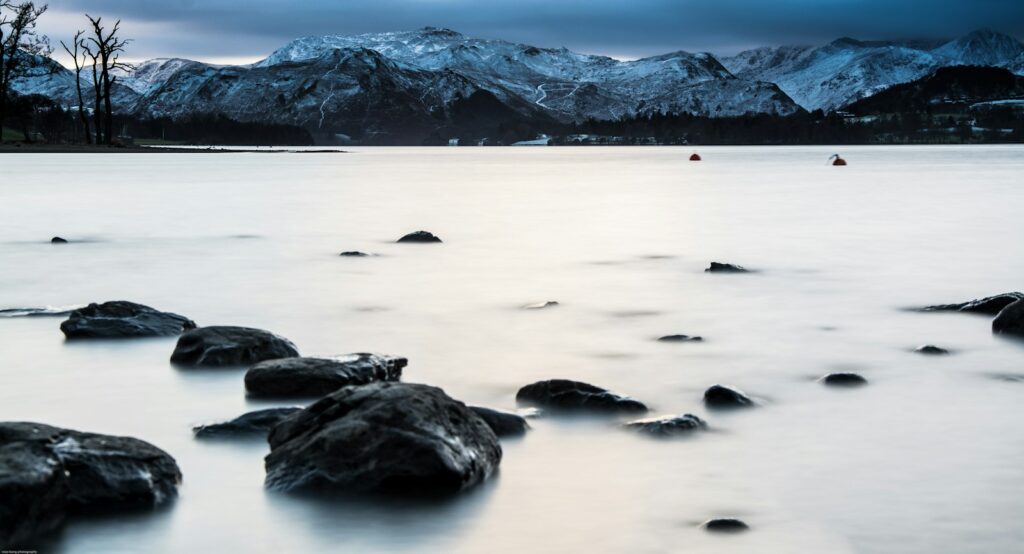
    Long exposure of Ullswater and the surrounding fells, Cumbria
    Golden hour on Ullswater, end your trip on the water if you can. Photo: PAUL SMITH / Unsplash
  • Michelin-Starred Dining in London: A Foodie’s Guide

    Michelin-Starred Dining in London: A Foodie’s Guide

    From three-star temples to tiny counters, how to plan an unforgettable Michelin-led trip to London.

    Understanding London’s Michelin Landscape

    London’s Michelin scene is gloriously plural. Yes, there are hushed dining rooms with white tablecloths and silver cloches, but there are also tiny counters where dinner feels like theatre, casual bistros with exacting technique, and neighbourhood rooms that sparkle with originality. The joy is in variety. On one trip you might experience a tasting menu inspired by British terroir, a Japanese omakase with perfect tempo, and a modern Indian feast anchored by charcoal and spice.

    For the luxury traveler, it’s helpful to think in layers: occasion dining for landmark celebrations; chef’s counters for proximity and craft; lunch deals for outstanding value; and neighbourhood gems to stitch your days together. Mix styles and cuisines across your stay, your palate will thank you.

    Velvet banquette seating and soft lighting in a quiet London restaurant
    A stage for culinary storytelling, London’s Michelin rooms range from grand salons to intimate counters. Photo: dylan nolte / Unsplash

    Essential Tables (By Style)

    Rather than chasing stars alone, choose by style and mood. Below are beloved, frequently celebrated kitchens that consistently thrill discerning diners. (Michelin ratings can change annually, always check the restaurant’s latest status when you reserve.)

    Occasion Dining & Grand Rooms

    • Restaurant Gordon Ramsay, Chelsea (three stars), the definition of precision and polish; a serene setting for milestone meals.
    • Core by Clare Smyth, Notting Hill (three stars), produce-led British cuisine with elegance and clarity.
    • Hélène Darroze at The Connaught, Mayfair (three stars), luxurious, contemporary French cooking in a storied hotel.
    • Alain Ducasse at The Dorchester, Park Lane (three stars), haute technique, impeccable service, and a glamorous dining room.
    • The Ledbury, Notting Hill (three stars), creative dishes with woodland and farm inspirations; refined but never fussy.
    • Sketch, The Lecture Room & Library, Mayfair (three stars), French fine dining in one of London’s most theatrical rooms.
    • Bonheur by Matt Abé, Mayfair (two stars), earned within months of opening on the former Le Gavroche site.
    • Alex Dilling at Hotel Café Royal (two stars), refined French cooking a short stroll from the Royal Academy.

    Modern British & Neighbourhood Gems

    • St. JOHN, Smithfield (one star), a nose-to-tail institution; deceptively simple plates that linger in memory.
    • Brat, Shoreditch (one star), wood-fire mastery; whole turbot and burnt cheesecake have cult status.
    • Chez Bruce, Wandsworth (one star), south-west London classic; gracious service and balanced menus.

    Asian Excellence

    • Endo at the Rotunda, White City or Sushi Kanesaka, Park Lane (one star each), intimate sushi omakase counters with obsessive attention to product.
    • A. Wong, Pimlico (two stars), refined modern Chinese cooking with real wit.
    • Gymkhana, Mayfair (two stars), regal clubby Indian dining; game dishes and tandoor breads are essential.

    Inventive Tasting Menus & New Wave Fine Dining

    • Ikoyi, 180 Strand (two stars), West African flavours expressed through a British lens; beautiful plating and spice-led nuance.
    • Kitchen Table, Fitzrovia (two stars), intimate counter theatre with a narrative arc to the menu.
    • Trivet, Bermondsey (two stars), quietly brilliant dishes and one of the city’s most thoughtful wine lists.
    • The Clove Club, Shoreditch (two stars), tasting menus that feel personal and precise.
    • Row on 5, Savile Row (two stars), Jason Atherton and Spencer Metzger’s showcase, promoted to two stars in 2026.

    Chef’s Counters & Open Kitchens

    At London’s best counters you don’t just watch dinner being made, you participate. The chef places a warm plate in front of you, explains a detail, smiles when you catch the reference. It’s immersive and convivial, and often easier to book than a main dining room. Top counter-style experiences include Kitchen Table, high-craft sushi at Endo at the Rotunda or Sushi Kanesaka, and the always-electric Barrafina (not Michelin-starred, but perfection for a pre-theatre night).

    Booking tip: Follow restaurants on social media for late counter releases, single seats and pairs often pop up 24–48 hours ahead.

    Outstanding Value Lunches

    One of London’s best secrets: many Michelin-starred kitchens run excellent set menus at lunch. Portions are generous, service is unhurried, and the room feels luxuriously quiet. Look for weekday lunch menus at places such as Gymkhana and long-standing classics like Chez Bruce, while Ikoyi serves its tasting menu at lunch midweek. You’ll eat brilliantly, spend less, and still have your evening for theatre or a West End stroll.

    • Plan for 2–3 courses and add a glass of grower Champagne or English sparkling.
    • Ask for counter or bar seating if the dining room is full, lunch counters are a delight.
    • Leave time to wander to a gallery or market nearby (see neighbourhoods below).

    How to Book (and Actually Get In)

    London reservations can feel like a sport. Here’s how to win, without stress. First, build a short-list across styles: a grand occasion dinner, a counter experience, a value-lunch, and a neighbourhood gem. Then use a blend of direct websites, booking platforms, and concierge support to secure the key pieces.

    • Target weekday lunches (Mon–Thu) for higher success rates and calmer rooms.
    • Watch for drops at midnight or 9–10am when many systems release new slots.
    • Join waitlists and enable notifications; pings often arrive 24–72 hours out.
    • Consider bar/counter seating which may open even when the main room is full.
    • Work with a hotel or card concierge for high-demand tables and last-minute options.
    • Be flexible on party size; two tops are always easier than fours.

    Neighbourhood Pairings

    Tie meals to nearby exploring so your days flow beautifully. Here are classic pairings that make logistical, and aesthetic, sense.

    Mayfair & St James’s

    Art galleries, arcades, and elegant parks. Pair a refined lunch with an afternoon at the Royal Academy, then stroll to St James’s for tailoring temples and heritage perfumers.

    Soho & Covent Garden

    Perfect before theatre. Small plates and natural wine at an energetic spot, then curtain up. Ikoyi, on the Strand, is a short walk away. Between shows, hit the Photographers’ Gallery or browsing on Berwick Street.

    Shoreditch & The City

    Contemporary art, Brutalist architecture, and excellent coffee. Book a tasting menu at a modern British pioneer, then wander to the Barbican conservatory.

    Notting Hill & Kensington

    Pastel terraces and antique browsing. Combine a long Notting Hill lunch with a meander through Kensington Gardens and the Design Museum.

    South Bank & Bermondsey

    Riverside walks and warehouse vibes. Plan for Tate Modern in the afternoon and an inventive dinner in Bermondsey afterwards.

    Dietaries & Dress Codes

    London kitchens are deft with dietary needs, gluten-free tasting menus, pescatarian swaps, or thoughtful vegetarian courses are common when requested in advance. Do flag allergies clearly when booking and again with your server.

    Dress codes have relaxed, but this is still a city that enjoys getting dressed. Smart-casual works almost everywhere; jackets are welcome but rarely mandatory. If you’re between museum-day and theatre, a polished pair of trainers is fine in many dining rooms.

    A 3-Day Michelin-Led Foodie Itinerary

    Day 1, Grand Beginnings (Mayfair & St James’s)

    Arrive and settle in near Hyde Park or St James’s. Begin with a value-lunch at an acclaimed kitchen, unhurried courses, a glass of English fizz, and a gentle reset from travel. Spend the afternoon wandering the Royal Academy and the arcades of Burlington and Piccadilly. Dinner is your occasion meal, a landmark dining room where service glides and the menu unfolds like a story. Cap the night with a martini in a classic hotel bar.

    Day 2, Counters, Culture & the West End

    Start in Soho with espresso and pastries before a late-morning gallery or a stroll through Covent Garden’s boutiques. Book a chef’s counter for lunch or early dinner, watch each plate take shape, talk to the team, feel the tempo. Leave time for a show in the West End or a concert at Wigmore Hall. If you have energy, close with a glass of Madeira at a wine bar.

    Day 3, East to Bermondsey (Modern British & Natural Wine)

    Head east for a contemporary art fix; the Barbican conservatory is a hidden oasis (open on select days, so check before you go). Late lunch at a modern British or wood-fire specialist, ingredient-first, generous, and satisfying. Walk the South Bank at golden hour, then celebrate with a final tasting menu in Bermondsey. Pack satisfied.

    Timing tip: London dinners start later than you might expect. If you prefer 6–7pm, target counters and value-lunches to max out your culinary day.

    Know Before You Go

    • Deposits & cancellation policies are common at high-demand restaurants, read confirmation emails carefully.
    • Wine pairings vs. bottle: consider a half-bottle or by-the-glass selections to keep pace with multi-course menus.
    • Allergies: many kitchens are nut-heavy or shellfish-focused, pre-advise to avoid disappointment.
    • Taxis & transfers: plan transport time, cross-town journeys at peak can stretch.
    • Photography: subtle is appreciated; always avoid flash.

    FAQs

    How far in advance should I book Michelin restaurants in London?

    For peak weekends and headline rooms, aim 30–60 days out. For counters and weekday lunches, 7–14 days often works, plus waitlists and same-day drops.

    Is there a dress code?

    Smart-casual is standard; some grand hotels appreciate jackets in the evening, though it’s rarely enforced.

    Can you accommodate dietary needs?

    Yes, London excels at dietary adjustments with advance notice. Flag requirements at booking and again on arrival.

    Where should I stay for a dining-focused trip?

    Mayfair/St James’s for proximity to grand rooms; Soho/Covent Garden for counters and theatre; Shoreditch for modern British pioneers; South Bank/Bermondsey for inventive kitchens and river walks.

    Ready to Plan Your London Dining Escape?

    Tell us your dates, preferred cuisines, and must-visit neighbourhoods, we’ll map reservations, transfers, and culture stops into a seamless itinerary.

  • Unusual Day Trips from York You’ve Never Heard Of

    Unusual Day Trips from York You’ve Never Heard Of

    Most visitors to York stay within the city walls, yet within an easy drive or train ride lie Cistercian ruins, a novelist’s crooked old house, a hillside horse and a moorland valley so vast that legend says a giant scooped it out.

    Why Look Beyond the Usual Day Trips

    York sits at the centre of some of England’s richest countryside. To the north rise the Howardian Hills and the North York Moors; to the west, the gritstone edges of Nidderdale; to the east, the rolling Wolds. The places below are quieter and more personal than the famous names, and just as rewarding. All are within roughly an hour and a half of the city.

    A car gives you the most freedom, though two of our choices work well by public transport.

    1. Rievaulx Abbey and Terrace

    Founded in 1132 by twelve monks from Clairvaux, Rievaulx was the first Cistercian monastery in the north of England, and its soaring ruins fill a wooded valley just outside Helmsley.

    Above the abbey, Rievaulx Terrace is a half-mile Georgian lawn laid out by Thomas Duncombe II as a viewing platform, with a Neoclassical temple at each end. The larger Ionic temple has a richly painted ceiling and gilt settees by William Kent. Since July 2026, English Heritage has run the Terrace on behalf of the National Trust, and a single joint ticket now covers both terrace and abbey.

    • Getting there: About an hour by car via Helmsley. Energetic walkers can park in Helmsley and follow the opening stretch of the Cleveland Way, roughly 3.5 miles each way.
    • Time to allow: Half a day, or a full day with the walk and lunch in Helmsley.
    • When: The abbey opens year round with reduced winter hours; the Terrace is seasonal, so check English Heritage before you go.
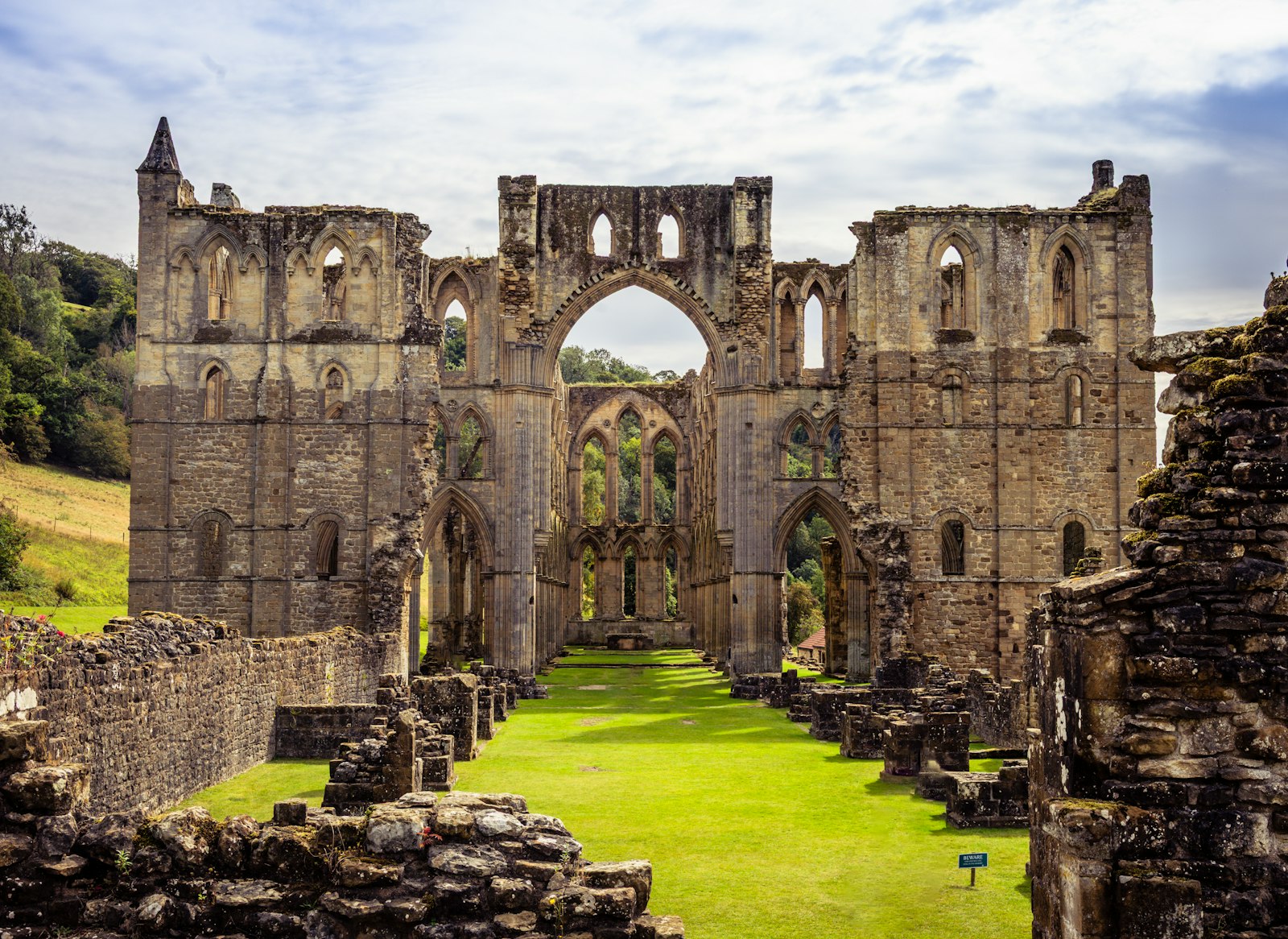
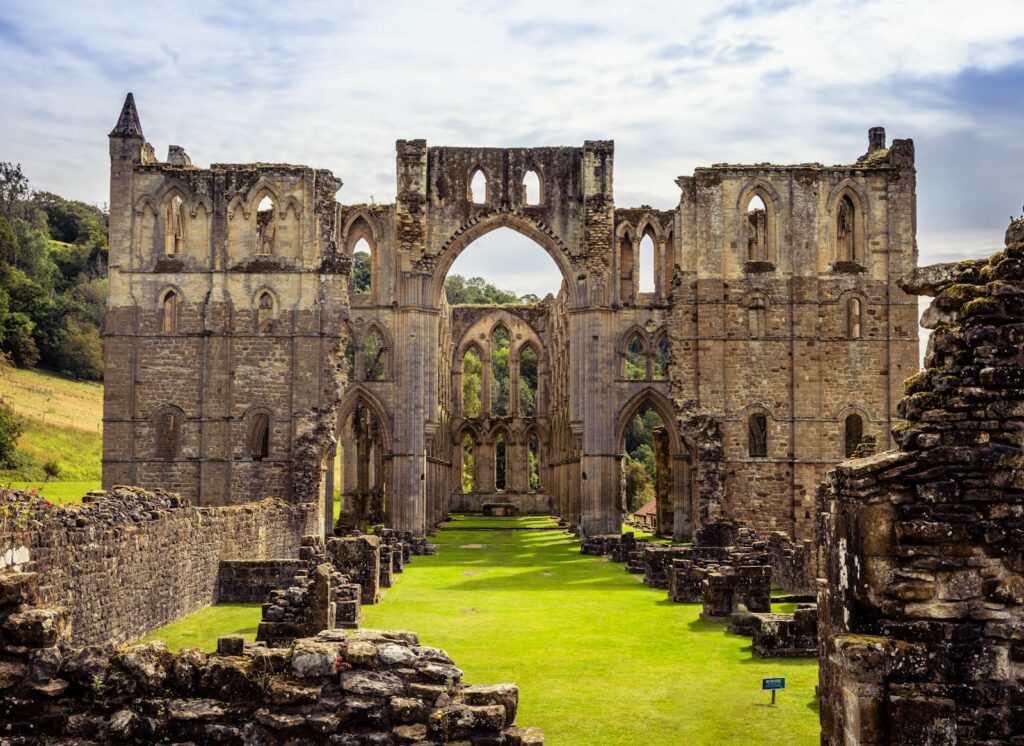
    The roofless Gothic ruins of Rievaulx Abbey, tall pointed arches framing a green lawn with wooded hills beyond
    Rievaulx Abbey, the ruin the Duncombes built a whole terrace lawn to admire. Photo: James Smith / Unsplash

    2. Byland Abbey, Shandy Hall and the Kilburn White Horse

    Three very different treasures sit within a few miles of each other on the edge of the Howardian Hills, making one of our favourite day trips from York.

    Byland Abbey

    Byland’s great west front survives with the shattered rim of a rose window whose design is thought to have inspired the south rose window of York Minster. Inside, large areas of glazed green and yellow medieval floor tiles still lie in place, a rare survival.

    Shandy Hall, Coxwold

    In the pretty village of Coxwold, Shandy Hall is the medieval house where Laurence Sterne lived as curate from 1760 until 1768, writing much of Tristram Shandy and A Sentimental Journey. Run by the Laurence Sterne Trust, it holds the world’s largest collection of editions of his work, and its two acres of gardens include over a hundred roses and a wildlife-friendly woodland garden. The house reopens each May.

    The Kilburn White Horse

    Cut into the hillside in 1857, the White Horse is visible for miles across the Vale of York. Park at the Sutton Bank National Park Centre and walk along the escarpment on the Cleveland Way to stand above it, with what is often called one of the finest views in England spread below.

    • Getting there: About 40 minutes to an hour by car; there is no practical public transport.
    • Time to allow: A full day for all three.
    • When: May to September, when Shandy Hall is open and Byland’s museum is staffed.

    3. Nunnington Hall

    On the quiet banks of the River Rye, this mellow National Trust manor house has a gentle, lived-in charm and riverside gardens made for a slow afternoon. Its secret lies in the attic: the Carlisle Collection of Miniature Rooms, exquisite scaled-down interiors complete with tiny furniture, paintings and even working musical instruments.

    • Getting there: About 40 minutes by car.
    • Time to allow: Two to three hours.
    • When: Spring to autumn, plus a festive opening (usually from mid-November to just before Christmas).

    4. Hutton-le-Hole and the Ryedale Folk Museum

    Sheep graze the greens and a stream runs through Hutton-le-Hole, one of the loveliest villages on the North York Moors. Here the Ryedale Folk Museum has rescued around twenty historic buildings from across the area and rebuilt them on six acres, from a thatched cruck-framed manor house to a roundhouse and craft workshops.

    • Getting there: About an hour by car. In summer the Moorsbus runs at weekends and on bank holidays.
    • Time to allow: Half a day.
    • When: Best from spring to autumn; check the museum’s website for current times.

    5. The Hole of Horcum and Goathland

    Local legend says the giant Wade scooped out the Hole of Horcum to hurl at his wife; geologists credit springs and patient erosion. Either way, this vast natural amphitheatre beside the A169 is spectacular, especially when the heather blooms purple in late summer. A popular five-mile circuit from the Saltergate car park follows the rim and drops into the valley, taking about three hours.

    Continue north to Goathland, where the station on the heritage North Yorkshire Moors Railway played Hogsmeade in the first Harry Potter film; see our guide to Harry Potter filming locations in Britain. In season you can ride steam trains between Pickering, Goathland and Whitby. Bridge repairs have affected Whitby services in recent winters, so check the railway’s timetable before you go. We recommend booking ahead: North Yorkshire Moors Railway steam experiences.

    • Getting there: About an hour and a quarter by car. The Coastliner 840 bus from York to Whitby crosses the moors and has stops at the Hole of Horcum, with selected journeys via Goathland.
    • Time to allow: A full day.

    Tip: There are no facilities on the Hole of Horcum walk and the moor is exposed, so carry water and waterproofs. A good OS Explorer map of the eastern North York Moors is worth packing.

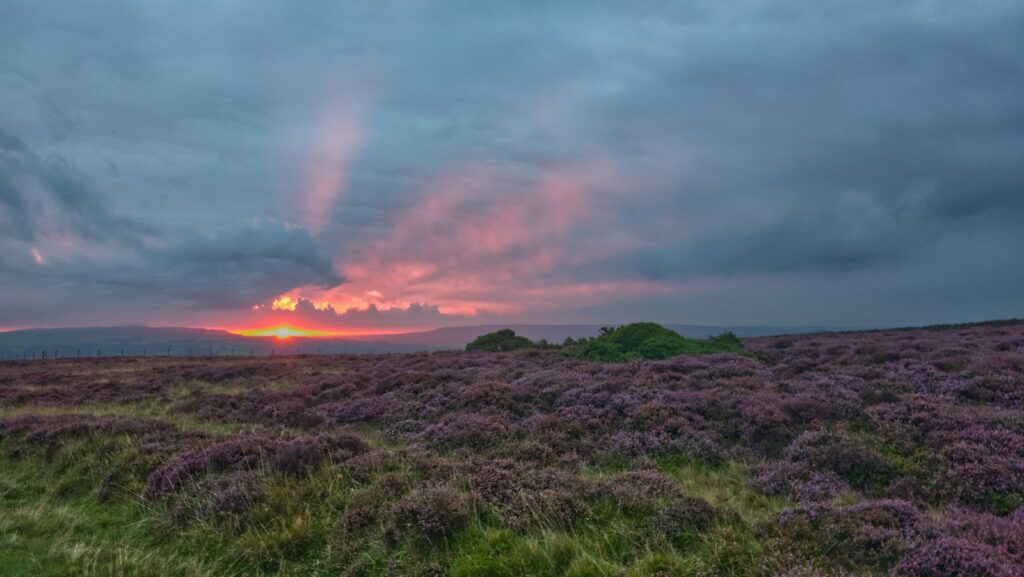
    Purple heather on the North York Moors under a pink sunset sky
    The North York Moors in late summer, when the heather turns the uplands purple. Photo: Andy Carne / Unsplash

    6. Brimham Rocks

    High on the moor above Nidderdale, wind and weather have sculpted millstone grit into extraordinary balancing towers and arches. Owned by the National Trust and open year round, Brimham Rocks is pure fun for clambering, with sweeping views; on a clear day you can see York Minster. It sits just a short drive from Fountains Abbey and Studley Royal, so you can combine the two; read our guide to Fountains and Tintern abbeys first.

    • Getting there: About an hour by car, via Harrogate.
    • Time to allow: Two hours, or a full day with Fountains.

    7. Saltaire

    A UNESCO World Heritage Site since 2001, Saltaire is the model village built by the Victorian industrialist Sir Titus Salt for his mill workers, with neat stone terraces, a grand church and a park on the River Aire. The vast Salts Mill, opened in 1853, now houses the 1853 Gallery with a permanent display of work by Bradford-born David Hockney. The mill is closed on Mondays and Tuesdays.

    • Getting there: By train, usually changing at Leeds; Saltaire station sits beside the mill. This is the easiest car-free day out on our list.
    • Time to allow: Half to a full day.

    8. Burton Agnes Hall

    Built between about 1601 and 1610 for Sir Henry Griffith, probably to designs by Robert Smythson, Burton Agnes is a glorious red-brick Elizabethan house on the edge of the Wolds, still a family home today. Inside are fine carved ceilings and an eclectic art collection; outside, a walled garden. A Norman manor house of the 1170s survives beside it. The festive opening (usually from mid-November to just before Christmas) is magical.

    • Getting there: About an hour by car, between Driffield and Bridlington.
    • Time to allow: Half a day.

    If you would rather someone else did the driving, a guided North York Moors day tour from York covers several of these highlights. And if you do want a famous name, Castle Howard, half an hour from the city, remains a magnificent alternative.

    Where to Stay in York

    Grays Court

    Tucked behind the Minster with gardens bounded by the city walls, Grays Court claims continuous occupation since the eleventh century and was once the residence of the Treasurers of York Minster. Its twelve bedrooms are individually designed, and The Bow Room restaurant holds three AA Rosettes and is listed in the Michelin Guide 2026.

    The Grand, York

    Built in 1906 as the headquarters of the North Eastern Railway, The Grand is the city’s five-star address, a short walk from the station. Its new underground spa, SubRosa, opened in late 2025 and has already earned Good Spa Guide Five Bubble status.

    Middlethorpe Hall and Spa

    For a country-house feel within reach of the city, Middlethorpe Hall is a William and Mary house of around 1699 set in some twenty acres, about two miles from the centre. Owned by the National Trust since 2008, it donates its profits to the charity, and it has a spa with an indoor pool.

    A Sample Day: Abbeys and a Novelist

    Leave York after breakfast and drive to Helmsley. Walk the Cleveland Way to Rievaulx, explore the abbey, then climb to the Terrace. Lunch back in Helmsley, then drive on to Coxwold for Shandy Hall and a glimpse of Byland on the way. Finish at Sutton Bank as the light softens over the Vale of York and the White Horse, and be back in the city for dinner. A Yorkshire walking guidebook opens up many more routes.

    FAQs

    Which of these day trips can I do without a car?

    Saltaire is easiest, by train via Leeds. The Coastliner 840 bus reaches the Hole of Horcum and Goathland. For the rest, a car or guided tour is far more practical.

    When is the best time to visit?

    May to September, when every site is open. Late August brings heather on the moors, and several houses reopen for Christmas.

    Is the North Yorkshire Moors Railway running in winter?

    Mainly festive specials. Repairs to a bridge near Grosmont are planned for the 2026 to 2027 winter, so check timetables before planning a 2027 trip to Whitby.

    Can I visit Rievaulx Terrace with National Trust membership?

    Yes. Members still enter free but should book in advance through English Heritage, which now runs the site.

    Discover the Yorkshire Few Visitors See

    Tell us your interests and we will design a York itinerary with hidden abbeys, private drivers and the finest places to stay.

  • 10 Boutique Hotels in the Cotswolds You Need to Experience

    10 Boutique Hotels in the Cotswolds You Need to Experience

    Honey-stone villages, crackling fires, and design-led stays in England’s prettiest countryside.

    Why the Cotswolds Captivate Luxury Travelers

    There’s something magnetic about the Cotswolds. Perhaps it’s the light that softens every honeyed stone, or the way each market town, Burford, Stow-on-the-Wold, Broadway, feels preserved yet lived-in. For centuries, artists, aristocrats, and weary Londoners have sought refuge here. Today, the Cotswolds are home to a new kind of luxury, one rooted in craft, comfort, and connection. Expect log fires and linen sheets, tasting menus built on the day’s garden pickings, and staff who remember your dog’s name.

    Hotel bedroom with exposed stone walls, timber beams and linen bedding
    Stone, linen, and soft light, the textures of a perfect Cotswolds stay. Photo: Man Pan / Unsplash

    What Defines a Boutique Hotel Here

    A true Cotswolds boutique stay offers more than a room, it tells a story. Interiors blend heritage beams with modern art; kitchens champion local provenance; service balances polish with ease. You’ll find lavish manor suites and award-winning spas, yes, but the real appeal is atmosphere, the kind that feels like visiting a friend’s beautiful country home (if your friend had an in-house sommelier and lavender fields out back).

    Booking tip: Shoulder weeks (late May, mid-September) offer golden light, quieter lanes, and more flexible rates than peak weekends.

    Top 10 Boutique Hotels (Mini Profiles)

    1) Thyme, Southrop, “A Village Within a Village”

    Set in a lovingly restored cluster of honey-stone buildings, Thyme is the Cotswolds at its most elegant and serene. This 150-acre estate feels like a pastoral dream, complete with kitchen gardens, meadows, and an apothecary-inspired spa. Rooms exude countryside luxury: hand-painted botanical murals, deep roll-top baths, and crisp linens. Dining at The Ox Barn celebrates seasonal ingredients straight from the garden.

    Approx. £450 per night • Check latest rates and packages →

    2) The Wild Rabbit, Kingham, Chic Country Simplicity

    Part of the Daylesford Organic family, The Wild Rabbit redefines the modern inn. Inside, stone walls meet pale oak floors and sculptural lighting. Bedrooms, some with four-poster beds and log-burning stoves, are the epitome of understated luxury. The restaurant holds a Michelin star, where field-to-fork meets finesse: roast partridge, Cotswold lamb, and foraged herbs.

    Approx. £400 per night • Check latest rates and packages →

    3) Barnsley House, Cirencester, A Romantic Classic

    Few addresses capture the English garden dream quite like Barnsley House. The grounds remain spectacular, an intoxicating mix of formality and wildness. Indoors, it’s all quiet opulence: velvet sofas, stone fireplaces, and deep soaking tubs overlooking green lawns. The leafy spa offers botanical treatments and outdoor hydrotherapy pools.

    Approx. £375 per night • Check latest rates and packages →

    4) Dormy House, Broadway, Modern Country Glamour

    Perched above Broadway, Dormy House blends design polish and homely warmth. Expect roaring fires, plush interiors in calming neutrals, and one of the region’s best spas, complete with infinity pool and outdoor hot tub. The Back Garden serves elevated comfort food and a superb breakfast that runs on sunshine and sourdough.

    Approx. £420 per night • Check latest rates and packages →

    5) The Fish Hotel, Farncombe Estate, Playful, Stylish, Relaxed

    Where upscale fun lives. The Fish spans woodland slopes with Scandi-inspired rooms, family-friendly cabins, and treehouses with hot tubs. Spend days on e-bikes or forest walks, then gather for G&Ts by the fire pit. It’s a rare blend of informality and indulgence, ideal for luxe-but-laid-back escapes.

    Approx. £250 per night • Check latest rates and packages →

    6) The Painswick, Stroud, Georgian Grace Meets Playful Edge

    In the artistic village of Painswick, this 18th-century mansion balances charm and cheek. The Painswick pairs bold colour palettes and velvet textures with impeccable, un-stuffy service. Many rooms have valley views and claw-foot tubs. The kitchen shines with creative plates and excellent Cotswold gin cocktails.

    Approx. £290 per night • Check latest rates and packages →

    7) Calcot & Spa, Tetbury, Family-Friendly Luxury

    A beloved Cotswolds institution on 220 acres of meadows. Calcot & Spa balances romance with family needs: an outdoor hot tub for adults; an Ofsted-registered crèche for little ones. The spa is world-class, with Elemis treatments and a serene relaxation lounge. Dinner at The Conservatory feels celebratory yet easygoing.

    Approx. £400 per night • Check latest rates and packages →

    8) The Lygon Arms, Broadway, History and Grandeur

    Once a 14th-century coaching inn, The Lygon Arms has hosted everyone from Oliver Cromwell to Elizabeth Taylor. After a sensitive refresh, it feels grand yet welcoming. Think vast fireplaces, flagstone floors, and four-poster suites. The spa offers thermal experiences, while the grill dishes hearty seasonal British fare.

    Approx. £370 per night • Check latest rates and packages →

    9) Cowley Manor Experimental, near Cheltenham, Bold, Artistic, Unmistakable

    Reborn under the Experimental Group, Cowley Manor fuses stately British architecture with Parisian flair: mid-century furniture, colourful fabrics, and an avant-garde art collection. The 55-acre grounds hide lakes, sculptures, and secret gardens. The C-Side spa offers indoor/outdoor pools and cutting-edge treatments.

    Approx. £500 per night • Check latest rates and packages →

    10) The Old Stocks Inn, Stow-on-the-Wold, Contemporary Cool in a Historic Setting

    In the heart of Stow, The Old Stocks Inn marries Georgian character with sleek design. Expect patterned wallpapers, brass details, and an easygoing lounge bar. Its restaurant is a local favourite, creative small plates and craft cocktails overlooking the square.

    Approx. £250 per night • Check latest rates and packages →

    Design & Dining Highlights

    The Cotswolds’ boutique hotels excel at blending rustic charm with contemporary design. Expect tactile layers, stone, wool, linen, paired with modern art, muted palettes, and candlelit lounges. Culinary excellence is a shared language here: homegrown vegetables at Thyme, seasonal tasting menus at The Wild Rabbit, farm-to-table simplicity at Dormy House. It’s Michelin-level skill without pretense.

    Long dining table laid with white plates, candles and glass bottles
    From kitchen garden to plate, seasonal menus that celebrate place. Photo: Nadia Valko / Unsplash

    When to Visit

    Spring (March–May): Blossom-filled lanes and the start of garden season, perfect for walkers and photography.

    Summer (June–August): Lavender fields, festivals, and long golden evenings on terraces.

    Autumn (September–October): Crisp air, crimson leaves, and the cosiest fireside stays.

    Winter (November–February): Frosted mornings, roaring hearths, and festive markets in Chipping Campden and Broadway.

    Travel tip: Shoulder seasons offer the best light, quieter lanes, and more flexible rates.

    Romance, Wellness & Family Escapes

    Romance: Barnsley House, Thyme, and The Painswick brim with atmosphere and privacy, think garden paths, freestanding tubs, and late-night cocktails.

    Wellness: Calcot & Spa and Dormy House deliver world-class treatments and hydrotherapy circuits.

    Families: The Fish Hotel’s treehouses and nature trails make luxury playful and easy.

    Planning Your Stay & Getting Around

    Most guests arrive by car from London (around 2 hours). Train hubs include Moreton-in-Marsh, Kingham, and Kemble, each with car hire or local transfers available. Base in one or two regions, perhaps the North Cotswolds for Broadway, Stow, and Chipping Campden; and the South Cotswolds for Tetbury, Cirencester, and Southrop. Allow at least three nights to settle in, though a week lets you blend spa time, slow lunches, and antique-hunting in Tetbury.

    • Pairings: Day trips to Blenheim Palace, Sudeley Castle, and Tetbury’s antique shops.
    • Transfers: We’ll arrange private drivers so every day feels effortless.
    • Dining: Reserve key restaurants when you book rooms, intimate dining rooms fill quickly.

    Inspired to Stay in Style?

    Tell us your dates, interests, and preferred vibe, then we’ll pair you with the perfect Cotswolds hotel (or two) and build a seamless itinerary.

    Know Before You Go

    • Dress code: Smart-casual; countryside chic goes a long way.
    • Best rooms: Ask for suites with roll-top baths or private terraces; many book out early.
    • Accessibility: Historic manors often have stairs; request ground-floor rooms where needed.
    • Pets: Many properties welcome dogs, The Fish and The Wild Rabbit especially.
    • Value: Midweek stays and shoulder season dates can offer excellent packages.

    FAQs

    How many nights do you need in the Cotswolds?

    Three to four nights is ideal for exploring a few villages at a relaxed pace. For a deeper stay, a week lets you mix hiking, spa time, and long lunches.

    Are the Cotswolds suitable for car-free travel?

    Yes, if you stay near train-linked hubs like Kingham or Moreton-in-Marsh. Use local taxis or private transfers arranged by your hotel or by us.

    When should I book?

    Spring and summer dates open 9–12 months ahead. For late autumn or winter escapes, 8 weeks is usually sufficient.

    Golden hour light on the Cotswold village of Lower Slaughter, Gloucestershire
    Golden hour across a timeless English landscape. Photo: martin fenton / Unsplash