Category: Royal and Castle Britain

Palaces, royal history, great houses and castles you can sleep in, across England and Scotland.

  • Castle Stays in Scotland: Living Like Royalty

    Castle Stays in Scotland: Living Like Royalty

    Turrets, tapestries, roaring fires, and the easy grace of Scottish hospitality, woven into every stay.

    Why Choose a Castle Stay?

    Staying in a Scottish castle isn’t just a tick-box, it’s a feeling. Stone steps polished by centuries, portraits whose eyes seem to follow, the hush of a library after dinner. Modern castle hotels blend this romance with comforts that make you exhale: four-poster beds, deep baths, quietly excellent service, and kitchens that celebrate Scotland’s larder. It’s immersive, evocative, and wonderfully restorative.
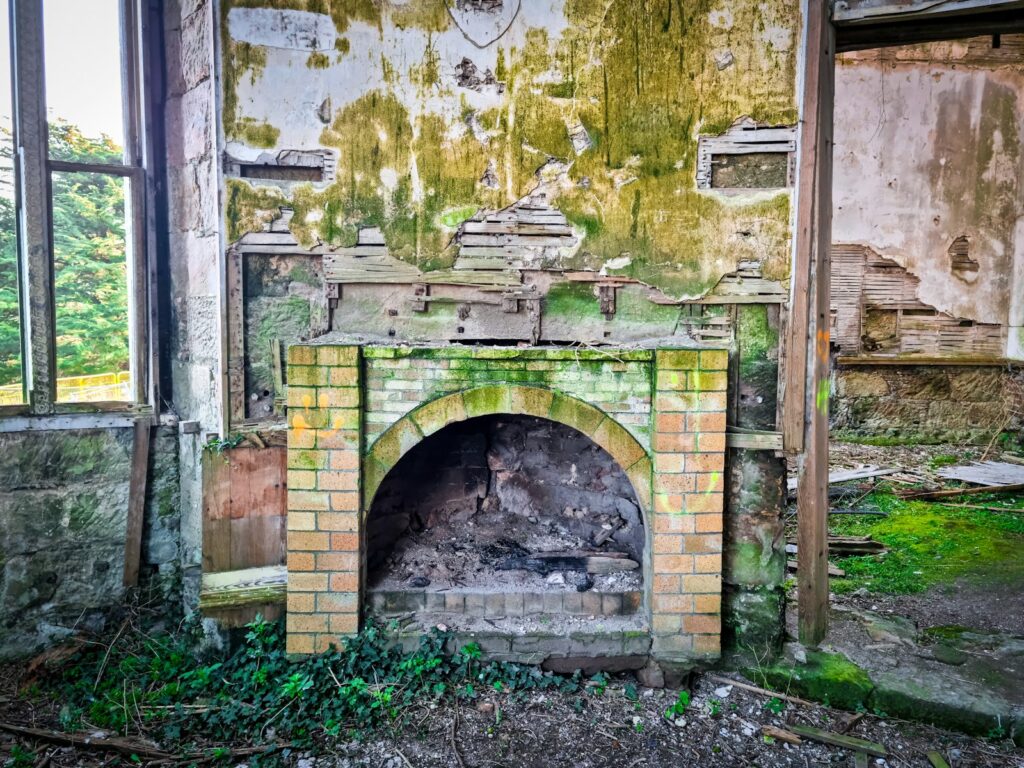
    Stone fireplace in the interior of a Scottish castle
    Firelight, a dram, and stories older than the beams overhead. Photo: Johnny Briggs / Unsplash

    Grand Castle Hotels (Full-Service)

    These storied addresses deliver the full country-house experience, fine dining, activities on the estate, and staff who make everything feel effortless. (Availability, dining formats, and amenities evolve, always check the latest details when you book.)

    • Inverlochy Castle (near Fort William), mountain-ringed romance at the foot of Ben Nevis; white-glove dining and tranquil lounges.
    • Glenapp Castle (Ayrshire), walled gardens, sea views, and boat trips to Ailsa Craig; a joy for nature lovers.
    • Crossbasket Castle (near Glasgow), lovingly restored grandeur, with Trocadero’s restaurant overseen by Michel Roux Jr, and riverside walks.
    • Dalhousie Castle (Bonnyrigg), spa, falconry, and a dungeon-set dining room just outside Edinburgh, freshly restored after a £6m refurbishment completed in 2026.
    • Fonab Castle (Pitlochry), a setting on Loch Faskally, contemporary touches, and a strong spa and dining scene.
    • Dornoch Castle (Sutherland), atmospheric rooms near a soaring cathedral; excellent whisky bar.
    • Barcaldine Castle (Argyll), intimate “Black Castle” with loch and hill views; perfect for quiet escapes.
    • Stonefield Castle (Knapdale), Victorian baronial charm and gardens tumbling to Loch Fyne.

    Private-Hire & Exclusive-Use Castles

    For celebrations and family gatherings, exclusive-use castles turn a trip into a legend. Think candlelit banquets, lawn games, and a house entirely to yourselves, with a butler to top up the Champagne.

    • Borthwick Castle (near Edinburgh), a 15th-century fortress with towering great hall; ideal for intimate groups.
    • Dundas Castle (South Queensferry), private estate minutes from the capital; polished events and serene rooms.
    • Skibo Castle (Carnegie Club, memberships), for the truly private escape; manicured grounds and legendary hospitality.
    • Aldourie Castle (Loch Ness), a restored exclusive-use castle for around 24 guests, with its own boathouse on the loch.
    • Ardross Castle (Easter Ross), the castle made famous by The Traitors, available for exclusive hire; ask about overnight stays.

    Note: Many exclusive-use properties require multi-night minimums and curated F&B, perfect for milestone birthdays and weddings.

    Stand-Out Suites & Rooms

    • The Queen’s Suite at Inverlochy Castle, named for Queen Victoria’s 1873 visit, a romantic retreat with garden views and generous proportions.
    • Grand Sea View Suites at Glenapp Castle, looking out to Ailsa Craig and Arran, with sea-air freshness and classic fabrics.
    • Castle Suites and Four-Poster Rooms at Dalhousie Castle, four-posters and stone embrasures for full medieval drama.
    • Castle Rooms and Lodges at Fonab Castle, traditional castle rooms or contemporary lodges by the loch.
    • The Breadalbane Room at Barcaldine Castle, with a four-poster bed made for Andrew Carnegie’s Skibo Castle.

    Signature Experiences

    • Falconry & Archery: Try your hand on the lawn with expert handlers.
    • Ghillie-led Fishing & Highland Walks: Estate guides share lore and the best quiet corners.
    • Boat Safaris: From Glenapp, trips out to the island of Ailsa Craig, weather allowing.
    • Whisky Evenings: Private tastings in a panelled library, Speyside sherry bombs to West-coast peat.
    • Castle Kitchens: From tasting menus to classic roast lunches; some offer foraging walks with the chef.

    When to Go

    May–September brings long evenings and garden colour; April and October mean softer light and calmer roads. Winter is glorious for fireside lounging and value, though daylight is brief and weather lively, perfect for a cocooning weekend with spa time and long lunches.

    Getting There & Getting Around

    • By rail: Edinburgh and Glasgow are excellent gateways; private transfers or a driver-guide complete the journey.
    • By car: If self-driving, we’ll map scenic routes (Glencoe, Cairngorms, the Argyll coast) and arrange effortless parking.
    • Driver-guides: Keep the mood easy, no single malts for the driver and no navigating for you.

    A 7-Day Castle Trail

    Day 1, Edinburgh Arrival → Dalhousie Castle

    Land in Edinburgh, then a short transfer to Dalhousie Castle. Drop your bags, book the spa, and walk the grounds before a candlelit dinner.

    Day 2, Whisky & Walls

    Morning archery or falconry; after lunch, a private tasting in the library. Optional half-day into the city for galleries and a dram on the Royal Mile.

    Day 3, North to the Highlands → Inverlochy Castle

    Scenic transfer via Stirling and Glencoe to Inverlochy Castle. Pause for photos in the pass. Dinner is white-tablecloth perfection.

    Day 4, Glen Nevis or Road to the Isles

    Choose a gentle glen walk with a guide or a coastal drive to Arisaig and silver-sand beaches. Return to the drawing room for tea and scones.

    Day 5, Perthshire Pause → Fonab Castle

    Roll east to Fonab Castle near Pitlochry. Spa, a stroll around Loch Faskally, and dinner at the 1892 Grill.

    Days 6 and 7, Ayrshire Finale → Glenapp Castle

    Allow most of the day for the drive south-west to Glenapp Castle, and stay two nights so there is time for a sea safari to Ailsa Craig (weather allowing). Toast the sunset over the Firth of Clyde before heading home via Glasgow.

    Design My Castle Journey

    Tell us your dates and style, romantic hideaway, family celebration, or friends’ house-party, and we’ll secure rooms, experiences, and elegant transfers.

    Packing, Dress & Etiquette

    • Smart-casual by day; many guests enjoy dressing up for dinner (jackets welcome, not mandatory).
    • Layers and waterproofs for gardens and coastal walks.
    • Leave space for souvenirs, castle shops and local makers are tempting.
    • Gratuities: discreet envelopes or at-table; we can advise customary amounts per property.

    FAQs

    How far in advance should I book?

    Peak summer and festive periods can sell out months ahead; shoulder seasons offer more flexibility and a beautiful light.

    Are castles suitable for families?

    Yes, many offer interconnecting rooms and lawn activities. For exclusive-use, we’ll tailor menus and timings around little ones.

    Can you accommodate accessibility needs?

    Historic buildings vary, tell us your requirements and we’ll match you with lifts, ground-floor rooms, and accessible paths.

    Is there a minimum stay?

    Some exclusive-use castles require 2–3 nights; most hotel-style castles are flexible. We’ll optimise stays for your route.
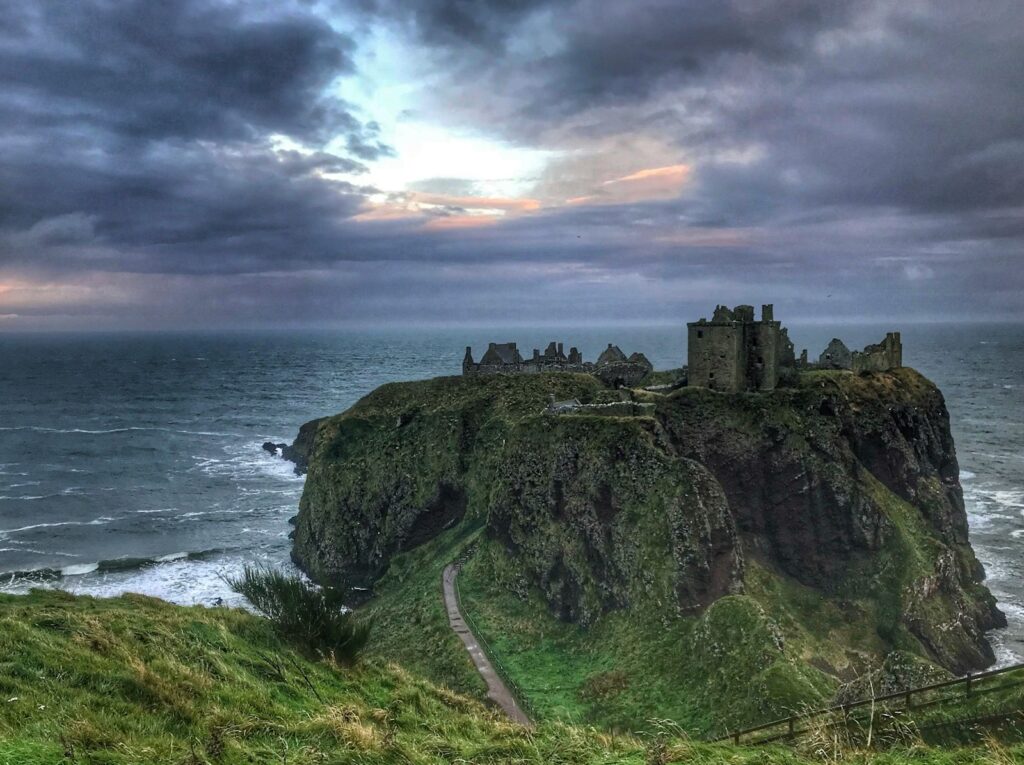
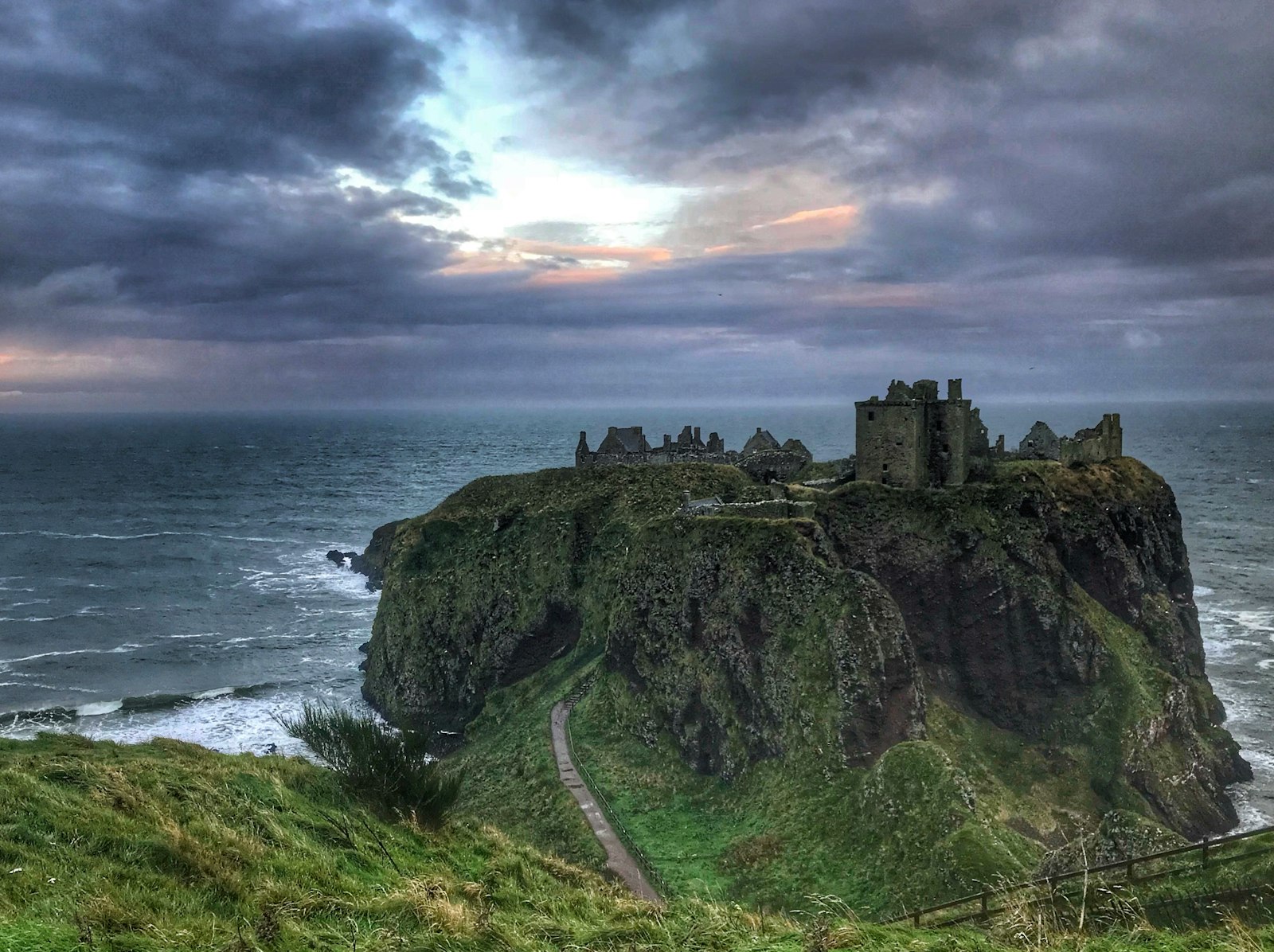
    Dunnottar Castle on its clifftop above the North Sea, Aberdeenshire
    Golden hour from the ramparts, Scotland wears twilight well. Photo: John Roberts / Unsplash
  • 5 Haunted Castles You Can Sleep In

    5 Haunted Castles You Can Sleep In

    Five castle hotels across England, Scotland and Wales where a four-poster, a fine dinner and a centuries-old ghost story all come with the room key.

    Why Sleep in a Haunted Castle?

    There is something irresistible about turning in for the night behind walls that have seen sieges, scandals and royal visits. Britain’s castle hotels lean happily into their legends: a grey lady on the stair, a sobbing figure at a window, a tragic bride at the bottom of a well. Whether you believe a word of it or not, the stories add a delicious frisson to a stay that is, above all, deeply comfortable. Think log fires, candlelit dining rooms and bedrooms with stone window seats, rather than anything that truly goes bump in the night.

    Every tale below is presented as it is told locally: as legend, not history. The castles themselves, however, are very real, and every one is a working hotel you can book.

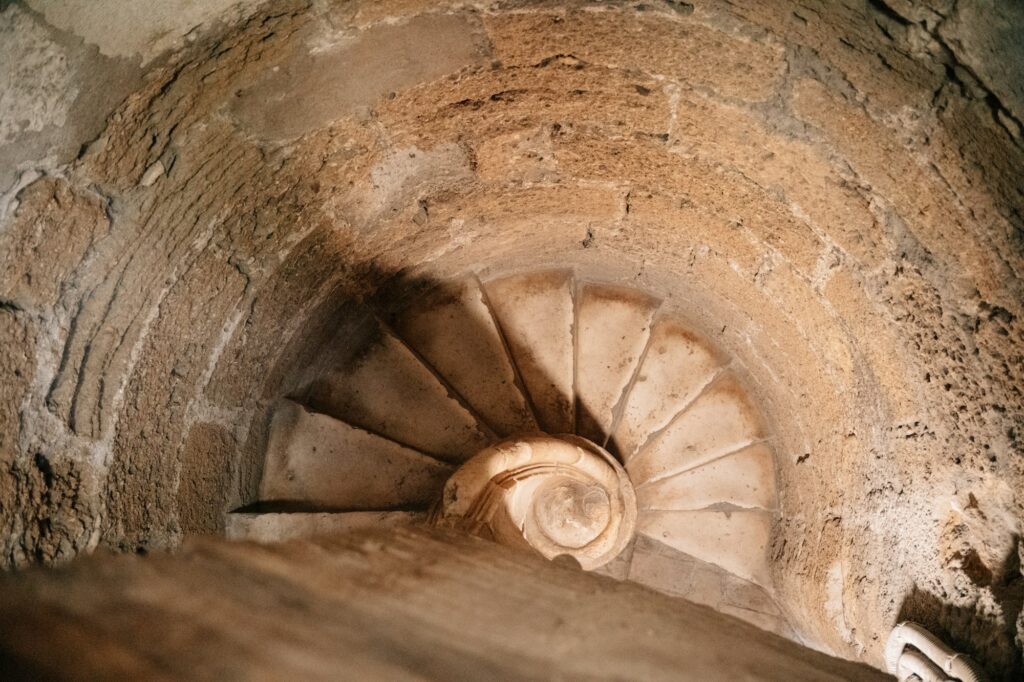
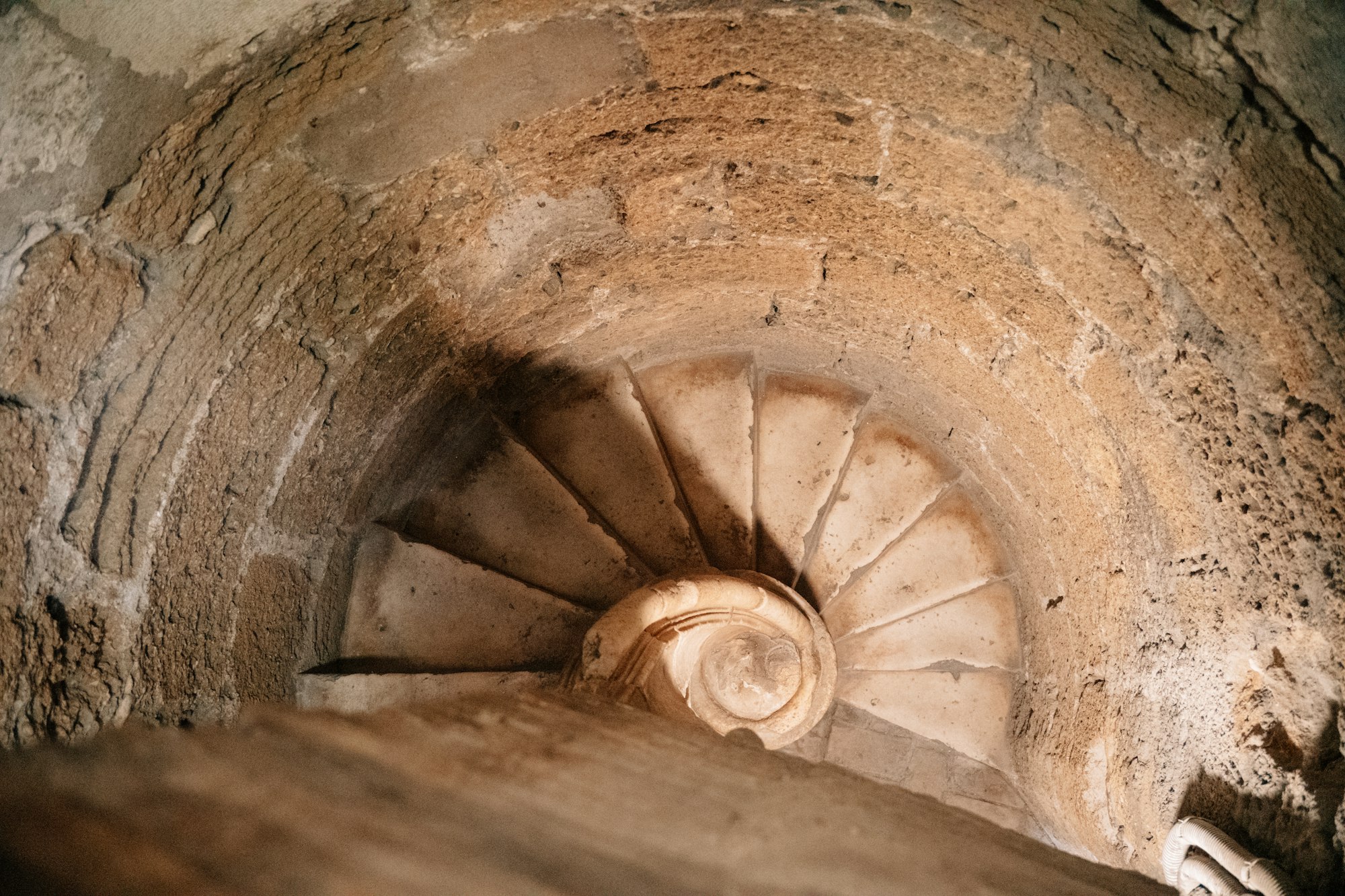
    A worn spiral stone staircase winding down inside an old building, lit by warm light
    Stone stairs, flickering light and a story waiting around every corner. Photo: Maryam Tello / Unsplash

    1. Lumley Castle, County Durham

    Where: Chester-le-Street, a short drive north of Durham.

    The legend

    The story goes that Lily, said to be the first wife of Sir Ralph Lumley, the castle’s builder, refused to give up her faith and was thrown down a well in the grounds by two priests, who then told her husband she had gone to a nunnery. Her ghost, known as the Lily of Lumley, is said to rise from the well and drift through the corridors. Historians point out that there is no record of Sir Ralph ever marrying a Lily, which has never troubled the legend one bit. Lumley’s ghostly reputation reached the sports pages in 2005, when members of the touring Australian cricket team reportedly asked to share rooms after a spooked night here.

    Why it’s a great stay

    Lumley is a proper medieval quadrangular castle, theatrical and atmospheric, yet relaxed and good value compared with many castle hotels. The hotel hosts Elizabethan banquets on selected evenings, and there has been a Lily of Lumley escape room in the old beer cellar, run by Escape Rooms Durham, for those who want to play detective with the legend itself.

    Rooms to ask for

    Rooms come in Classic, Superior and State categories, split between the castle itself and the courtyard. For the full ghost-story effect, ask for a room in the castle rather than the courtyard, and a State Room if you want the grandest proportions.

    2. Langley Castle, Northumberland

    Where: Langley-on-Tyne, near Hexham, within easy reach of Hadrian’s Wall.

    The legend

    Langley was built around 1350 for Sir Thomas de Lucy, gutted by fire in the early 1400s, and left a ruin until Cadwallader Bates began restoring it in the 1880s, a project his widow Josephine completed in the early twentieth century. Its resident spirit is a Grey Lady, said to appear sobbing before running to a window and leaping from it. For years she was believed to be Maud de Lucy, but in 2020 hotel staff researching the de Lucy family tree suggested she might instead be Agnes, Maud’s stepmother. Mistaken identity, it seems, can follow you into the afterlife.

    Why it’s a great stay

    This is an intimate fortified tower house with a cosy bar and restaurant, and wonderful Northumberland countryside all around. It makes a superb base for walking the most dramatic stretches of Hadrian’s Wall by day before retreating to the fire.

    Rooms to ask for

    Book a Castle Room inside the medieval tower: the hotel describes them as having deep window seats and four-poster beds. The Castle View rooms, as the name suggests, look onto the castle and are the family and dog-friendly option.

    3. Thornbury Castle, Gloucestershire

    Where: Thornbury, north of Bristol, an easy run from Bath and the Cotswolds.

    The legend

    Thornbury was built in the early sixteenth century for Edward Stafford, 3rd Duke of Buckingham, whose wealth rivalled the king’s. It did not end well: Henry VIII had him executed for treason in 1521 and took the castle for himself, later staying here with Anne Boleyn in 1535. The ghost most often linked with Thornbury, however, is Jasper Tudor, uncle of Henry VII, who died at his manor of Thornbury in 1495 and whose spirit, the story goes, still wanders the castle after dark. Other tales speak of a lady whose footsteps echo through the corridors.

    Why it’s a great stay

    Of our five, this is the most polished: a Relais & Châteaux hotel with historic gardens, a vineyard within the walls and a celebrated restaurant. It is perfect for a romantic weekend with a whisper of the macabre, and pairs beautifully with our favourite Cotswolds boutique hotels for a longer trip.

    Rooms to ask for

    History lovers should request the Duke’s Bedchamber, which the hotel says is the room Henry VIII and Anne Boleyn shared. Thornbury calls its rooms “bedchambers”, and many have four-posters and open fireplaces, so ask when booking.

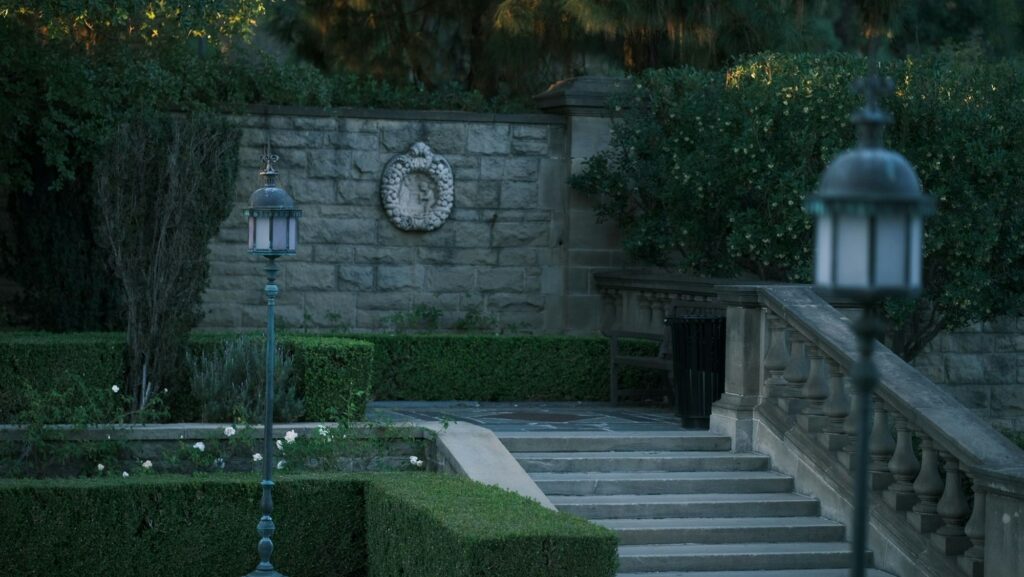
    Stone steps, clipped hedges and lit lanterns in a formal walled garden at dusk
    Thornbury’s gardens and oriel windows glow at dusk. Photo: Xnm Wu / Unsplash

    4. Ruthin Castle, Denbighshire, Wales

    Where: The market town of Ruthin in the Vale of Clwyd, North Wales.

    The legend

    Ruthin’s story begins in the late thirteenth century, when Edward I granted the lordship to Reginald de Grey, and it was a later de Grey’s feud with Owain Glyndŵr that sparked Glyndŵr’s attack on the town in 1400. The castle’s famous ghost is the Grey Lady. The story goes that she was the wife of the castle’s second in command who, discovering her husband’s affair with a local woman, killed her rival with an axe. She was executed for the crime and, denied burial in consecrated ground, laid to rest just outside the castle walls, where a grave is still pointed out. Her shade is said to walk the battlements and grounds.

    Why it’s a great stay

    Ruthin mixes medieval ruins and Victorian grandeur in extensive grounds with woodland and a self-guided history trail of information boards. The spa, set in the castle’s former moat, has woodland hot tubs, and the hotel runs medieval evenings, ideal for leaning into the theme.

    Rooms to ask for

    Categories run from Standard and Deluxe rooms to Suites and individually styled Feature Rooms, with the Prince of Wales Suite at the top. A Feature Room is the sweet spot for character.

    5. Dalhousie Castle, Midlothian, Scotland

    Where: Bonnyrigg, just south of Edinburgh.

    The legend

    Dalhousie’s Grey Lady is said to be Lady Catherine, a young member of the Ramsay family who, the story goes, was confined to a tower and died there after falling for a man the family considered unsuitable. Versions differ on the century and the details, but she is said to haunt the stairs, corridors and turrets, and has supposedly turned up in a wedding photograph or two.

    Why it’s a great stay

    Restored after a £6m refurbishment completed in 2026, Dalhousie now has a candlelit Dungeon Restaurant serving a tasting menu, falconry in the grounds and a spa. We cover it in more depth, alongside other Scottish favourites, in our guide to castle stays in Scotland. Combine it with an evening ghost tour of Edinburgh’s Old Town for a properly spine-tingling weekend.

    Tips for a Ghost-Themed Castle Break

    • Ask for the old part of the building. Many castle hotels have modern wings or courtyard rooms. If atmosphere is the point, request a room in the original castle when you book, and confirm it in writing.
    • Talk to the staff. Night porters and long-serving team members often have the best stories, and most are delighted to share them over a nightcap.
    • Time it for autumn and winter. Long, dark evenings and roaring fires suit a ghost-story break perfectly. Halloween weekends book up early, so plan ahead.
    • Look out for themed events. Banquets, murder mystery dinners and medieval evenings run at several of these castles on selected dates. Check each hotel’s events page before you travel.
    • Pack for old buildings. Spiral stairs and uneven floors are part of the charm, so bring soft-soled shoes, a warm layer and a small pocket torch for moonlit walks in the grounds.
    • Bring a bedtime read. A collection of classic British ghost stories is the perfect companion for a night in a four-poster.

    Tip: If you are travelling with a nervous partner or children, tell the hotel when you book. Staff can steer you towards a cosy room away from the most storied corners, or towards them, if that is the plan.

    A Haunted Castle Road Trip

    For the full experience, link two or three castles into a week. Begin at Dalhousie with an Edinburgh ghost walk, then head south to Langley for Hadrian’s Wall and Northumberland’s big skies. Continue to Lumley, pausing for Durham’s cathedral, before crossing the Pennines and heading for North Wales and Ruthin. Finish in style at Thornbury, within easy reach of Bath and Bristol for the journey home.

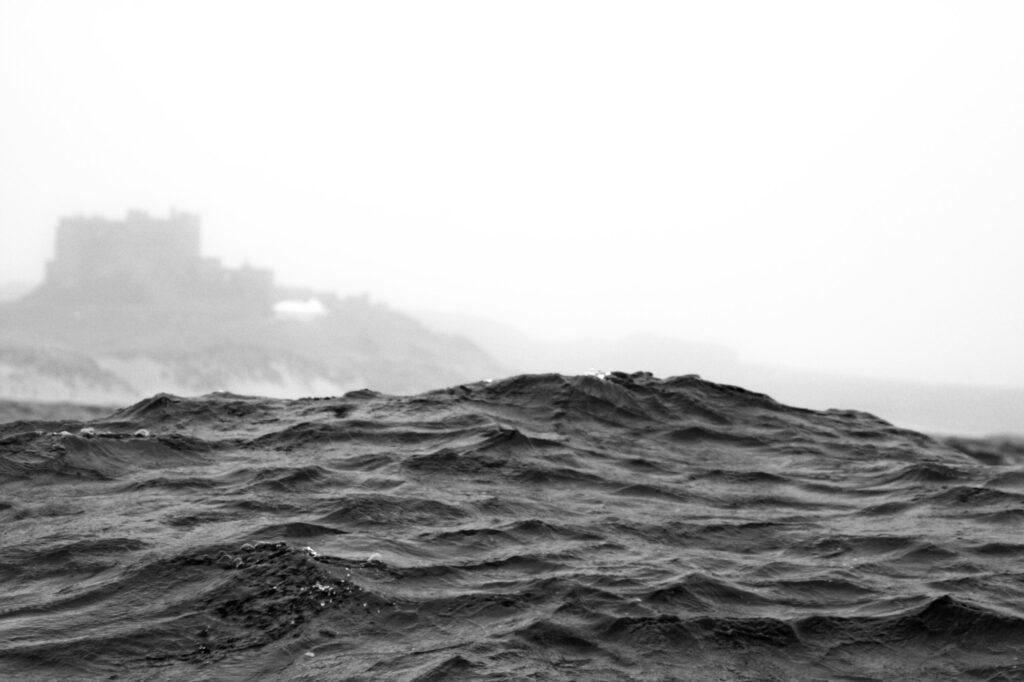
    Bamburgh Castle half hidden in sea mist beyond rolling waves, seen from a boat off the Northumberland coast
    Northumberland mist, perfect weather for ghost stories. Photo: Dave Clubb / Unsplash

    FAQs

    Are these castles really haunted?

    That depends on whom you ask. The stories are long-standing local legends, and many have little or no basis in the historical record, but they are part of each castle’s character and great fun to hear on a dark evening.

    Can I book a specific “haunted” room?

    Some hotels will note a room request, such as a room in the original castle or a named bedchamber like Thornbury’s Duke’s Bedchamber, but specific rooms are rarely guaranteed. Call the hotel after booking to confirm.

    Do these castles run ghost hunts?

    Offerings change from year to year. Some host themed events, banquets or escape rooms, while others prefer to let the legends speak for themselves. Check each hotel’s events calendar before you go.

    When is the best time to visit?

    October to February brings the moodiest atmosphere, with long nights and firelit lounges. Spring and summer are lovely for gardens and walks, and the stories are just as good in daylight.

    Plan Your Haunted Castle Escape

    Tell us your dates and how brave you are feeling, and we will design a castle journey with the right rooms, the best stories and seamless travel between them.

  • Windsor Beyond the Castle: A Royal Day Out

    Windsor Beyond the Castle: A Royal Day Out

    Most visitors give Windsor a few hurried hours and a castle ticket, yet the royal town on the Thames rewards a slower day, with ancient parkland, glorious gardens, a river made for boating and the meadow where Magna Carta was sealed.

    Why Windsor Deserves More Than a Morning

    Windsor is the classic royal day out from London, and for good reason. The castle is still a royal residence, and it feels like a working home rather than a museum. But step away from the crowds on Castle Hill and a quieter Windsor appears: a three-mile avenue of trees running into thousands of acres of royal parkland, woodland gardens bursting with colour in spring, a lake with a Roman ruin on its shore, and the water meadows of Runnymede a short boat ride downstream.

    We recommend seeing the castle early, then spending the rest of the day, or better an overnight stay, exploring the royal landscape around it.

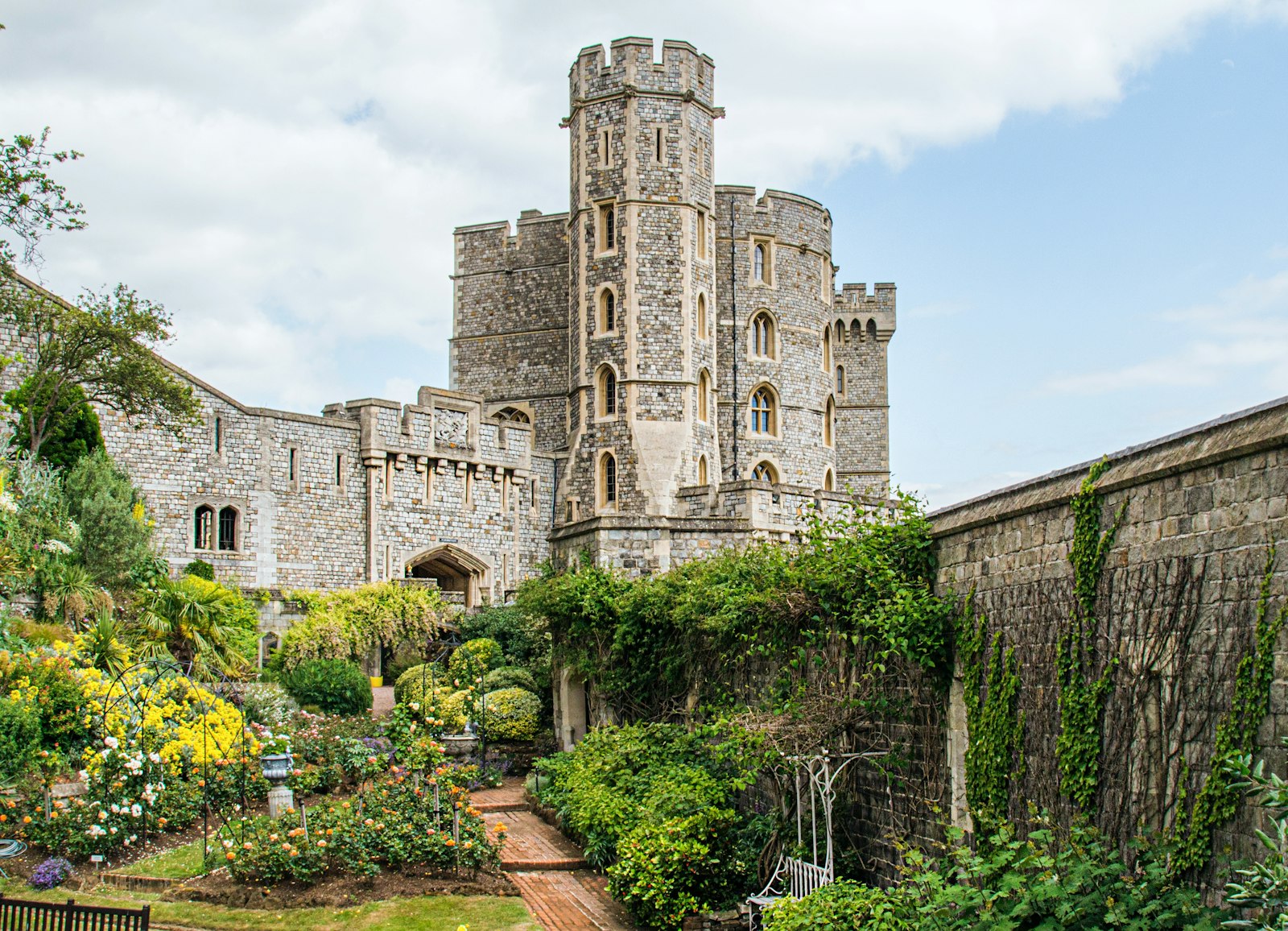
    Windsor Castle seen from across the water
    Windsor Castle has watched over the Thames for more than nine centuries. Photo: Juhi Sewchurran / Unsplash

    Windsor Castle: The Essentials

    Begin with the castle, ideally as the gates open. Highlights include:

    • The State Apartments: A sequence of richly furnished rooms used for state occasions, hung with masterpieces from the Royal Collection. Look out for St George’s Hall and the Waterloo Chamber.
    • St George’s Chapel: One of the finest examples of Perpendicular Gothic architecture in England, begun under Edward IV in 1475 and completed in 1528. Ten sovereigns are buried here, among them Henry VIII, Jane Seymour and Charles I beneath the quire, and Queen Elizabeth II, who rests in the King George VI Memorial Chapel. Note that the chapel is closed to sightseers on Sundays, when visitors are welcome at services instead.
    • The Semi-State Rooms: Usually open in the autumn and winter months, these more intimate rooms are a lovely bonus if your visit falls in season.

    Opening days

    Windsor Castle is normally open Thursday to Monday and closed on Tuesdays and Wednesdays. From November to February it opens from 10am to 4.15pm, and from March to October until 5.15pm, with last admission 75 minutes before closing. As a working royal palace it can also close at short notice for official events, so always check the Royal Collection Trust website before you travel. Book ahead at weekends and in school holidays. Windsor Castle entry tickets can be booked ahead, or combined with transport on a guided Windsor day trip from London.

    Changing the Guard

    The Windsor Castle Guard usually changes at 11am on Tuesdays, Thursdays and Saturdays, weather permitting, with a band or Corps of Drums marching through the town. The ceremony itself takes place in the castle’s Lower Ward, so you need a castle ticket to watch it there; on Tuesdays, when the castle is closed, you can still enjoy the march along the High Street for free. The schedule changes through the year, so check the Household Division’s Changing the Guard calendar a week or two before your visit.

    Tip: Aim for a Thursday or Saturday. The castle is open and the guard changes, so you can see both in one morning.

    The Long Walk and Windsor Great Park

    From the castle’s south side, the Long Walk runs in a dead-straight, tree-lined avenue for around two and a half miles to Snow Hill, crowned by the Copper Horse, a great equestrian statue of George III. The view back towards the castle from the top is one of the most famous in England.

    Beyond lies Windsor Great Park, managed by the Crown Estate. It is open daily and free to enter, a vast landscape of ancient oaks and lakes; you pay only for parking, the Savill Garden and a few seasonal events. In winter, the park’s illuminated light trail is a festive draw: it usually runs from mid-November into early January, so check dates and book ahead.

    The Long Walk leading up to Windsor Castle
    The view down the Long Walk from the Copper Horse, one of England's great royal vistas. Photo: Tomasz Zielonka / Unsplash

    The Savill Garden

    Created in the 1930s by Sir Eric Savill, this 35-acre garden in the southern reaches of the park is a year-round delight: woodland walks, ornamental beds, a rose garden and superb autumn colour. Admission is ticketed, and booking online at least a day in advance usually gives the best price.

    Virginia Water and the Valley Gardens

    At the southern edge of the park, the lake at Virginia Water makes a beautiful, largely level circuit of around four and a half to five miles, about two hours on foot. Along the way you pass the Cascade waterfall, a towering totem pole, and the romantic Leptis Magna ruins, genuine Roman columns brought from Libya and rebuilt as a folly. Just above the lake’s northern shore, the Valley Gardens are a woodland garden of azaleas, camellias, magnolias and heathers, at their peak from April to May.

    Frogmore House and Eton

    Frogmore House and Gardens

    Set in the private Home Park, Frogmore House has been a royal retreat since George III and Queen Charlotte acquired it in the 1790s, and it hosted the evening reception after the Duke and Duchess of Sussex’s wedding in May 2018. Access is very limited: the house and gardens open to individual visitors on only a handful of charity open days a year, with pre-booked group visits at other times. Dates are announced by the Royal Collection Trust, so check well in advance if you want to include it.

    Eton College

    Cross the footbridge over the Thames and you are in Eton, with its charming High Street and the famous school founded by Henry VI. Note that Eton College’s public Heritage Tours have been paused for building works; check the Eton College Collections website for the current programme. Its museums usually open free on Sunday afternoons, though some are closed during the works.

    Runnymede and the Thames by Boat

    A few miles downstream, the National Trust cares for Runnymede, the water meadows where King John sealed Magna Carta in 1215. The domed Magna Carta Memorial was designed by Sir Edward Maufe for the American Bar Association and dedicated in 1957, which makes it a particularly meaningful stop for American travellers. Nearby stands the John F. Kennedy Memorial, on an acre of land given to the United States, and Mark Wallinger’s contemplative artwork Writ in Water, which opened in 2018 and reflects Clause 39 of the charter in a still pool. There is a tea-room, and parking is free for National Trust members.

    The loveliest way to arrive is by river. French Brothers run short round trips from Windsor’s riverside through much of the year, and in summer a scheduled service links Runnymede and Windsor, giving you time ashore at each end. Timetables vary by season, so check before you go, or book a Windsor Thames river cruise in advance.

    Royal Ascot Nearby

    Each June, the royal procession of horse-drawn carriages opens five days of racing at Royal Ascot, a short drive from Windsor. The meeting runs for five days in mid-June each year, so check the official Ascot website and book early. Windsor’s best hotels fill months ahead for race week.

    Where to Stay: Luxury Near Windsor

    Coworth Park, Ascot

    Dorchester Collection’s country house hotel sits in some 240 acres of parkland near Ascot, with its own polo fields, a spa and Adam Smith’s acclaimed restaurant, Woven. The Stable Rooms, Suites and Cottages were recently redesigned by Martin Hulbert. Check availability at Coworth Park.

    Cliveden House, Taplow

    A short drive up the Thames, Cliveden House is a five-star stately home hotel set within National Trust grounds. Its history is irresistible, from the Astors to the Profumo affair, and Meghan Markle stayed here the night before her 2018 wedding at St George’s Chapel. Expect indoor and outdoor pools, a spa in the walled garden and memorable afternoon tea.

    Sir Christopher Wren Hotel, Windsor

    For a stay in town, the Sir Christopher Wren Hotel occupies a cluster of historic buildings by Eton Bridge, with a Grade II listed 17th-century core and a riverside brasserie. It is a few minutes’ walk from both the castle and Windsor & Eton Central station.

    Note that the Gothic riverside mansion of Oakley Court is being reinvented by Soho House as Soho River House, a members’ club with rooms; check whether it has opened.

    Getting There

    • From London Waterloo: South Western Railway runs direct trains to Windsor & Eton Riverside, taking around 55 minutes to an hour.
    • From London Paddington: Take a Great Western Railway train to Slough and change for the short branch line to Windsor & Eton Central, about six minutes on. The total journey is typically around 25 to 40 minutes, depending on connections.
    • By car: Windsor lies west of London, close to Heathrow, which makes it an easy first or last night of a British tour.

    Both stations are a short walk from the castle. For the Great Park, Virginia Water and Runnymede, a car or private driver makes life easier.

    A Perfect Royal Day Out

    1. 9.30am: Arrive by train and walk up to the castle for opening time.
    2. 11am: Watch Changing the Guard in the Lower Ward (on guard days), then visit St George’s Chapel.
    3. 1pm: Lunch in town, then walk the Long Walk to the Copper Horse.
    4. 3pm: Drive to the Savill Garden for a cream tea, or stroll the shores of Virginia Water.
    5. 5pm: Pause at Runnymede as the light softens over the meadows.
    6. Evening: Dinner and a night at Coworth Park or Cliveden.

    For a longer trip, our guide to Michelin-starred dining in London makes a fine prelude.

    FAQs

    Which days is Windsor Castle closed?

    It is normally closed on Tuesdays and Wednesdays, and occasionally on other days for royal or state events. Check the Royal Collection Trust website before you go.

    Is Windsor Great Park free?

    Yes. The park, the Long Walk and Virginia Water are free to enter; you pay for parking and for entry to the Savill Garden.

    Can you tour Eton College?

    Public Heritage Tours have been paused for building works. Check the Eton College Collections website for the current programme.

    How long do you need in Windsor?

    A full day covers the castle, the Long Walk and one more garden or Runnymede. Stay a night to enjoy it all without rushing.

    Let Us Plan Your Royal Escape

    Tell us your dates and we will design a seamless Windsor itinerary, from castle tickets and private drivers to a country house stay.

  • Northumberland’s Castle Coast: Bamburgh, Alnwick and Dunstanburgh

    Northumberland’s Castle Coast: Bamburgh, Alnwick and Dunstanburgh

    Between the Tyne and the Scottish border, the Northumberland coast unfolds as a run of empty golden beaches, fishing harbours and some of the most dramatic castles in Britain, each one standing guard over the North Sea.

    Why Northumberland’s Castle Coast?

    England’s northernmost county was a frontier for centuries, fought over by Northumbrian kings, Vikings, Scots and rival English barons. The legacy is a coastline studded with fortresses, some still lived in, some gloriously ruined, all set against wide skies and sand that you can often have almost to yourself.

    Much of this shore is protected as the Northumberland Coast National Landscape, the new name (since late 2023) for what was the Northumberland Coast Area of Outstanding Natural Beauty. Designated in 1958, it is a narrow ribbon of dunes, cliffs and islands running roughly from Berwick-upon-Tweed down to Amble. In a few days you can walk to a ruined castle, sail out to a puffin colony and cross a tidal causeway to a holy island.

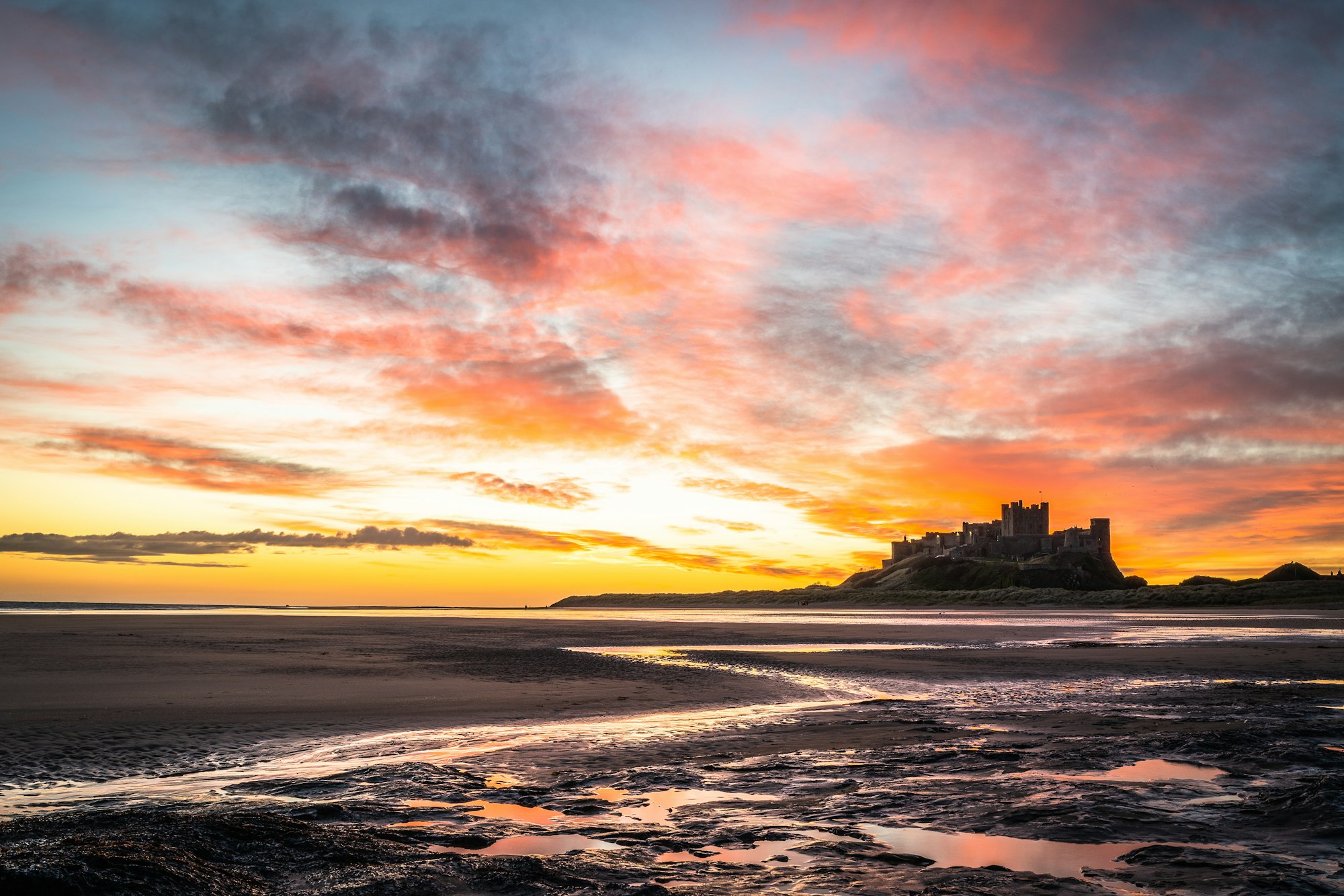
    Bamburgh Castle on its rocky outcrop above a wide, wet sandy beach under a vivid sunset sky, Northumberland
    Bamburgh Castle rises above one of the finest beaches in England. Photo: Petr Bouda / Unsplash

    The Castles

    Bamburgh Castle

    Few castles make an entrance like Bamburgh, sprawled along a volcanic crag above the dunes. The Northumbrian kings made it their royal capital in the sixth century, and fans of Bernard Cornwell’s novels and The Last Kingdom will know it as Bebbanburg, home of Uhtred. The Norman keep at its heart dates from after 1095, and during the Wars of the Roses it became the first castle in England to be destroyed by gunfire.

    What you see today owes much to the Victorian industrialist William Armstrong, who bought the half-derelict castle in 1894 and poured more than a million pounds into restoring it. It remains the private home of the Armstrong family, with fourteen rooms open to visitors, including the medieval kitchen and the splendid King’s Hall. Opening hours change through the year and there is a short closure in November while the Christmas displays go up, so check the castle website before you travel.

    Alnwick Castle and The Alnwick Garden

    A few miles inland, Alnwick Castle has been the seat of the Percy family for more than 700 years and is still the family home of the Duke of Northumberland. Film lovers may recognise its courtyards: Alnwick stood in for Hogwarts in the first two Harry Potter films, and today’s broomstick training sessions take place in the Outer Bailey where Harry had his first flying lesson. The castle is seasonal, usually open from late March to the end of October.

    Next door, The Alnwick Garden is a contemporary garden created by the Duchess of Northumberland and run by a charitable trust. Highlights include the tiered Grand Cascade, a cherry orchard and the famous Poison Garden, visited only on a guided tour. Book Alnwick Castle tickets and tours ahead in summer.

    Dunstanburgh Castle and the walk from Craster

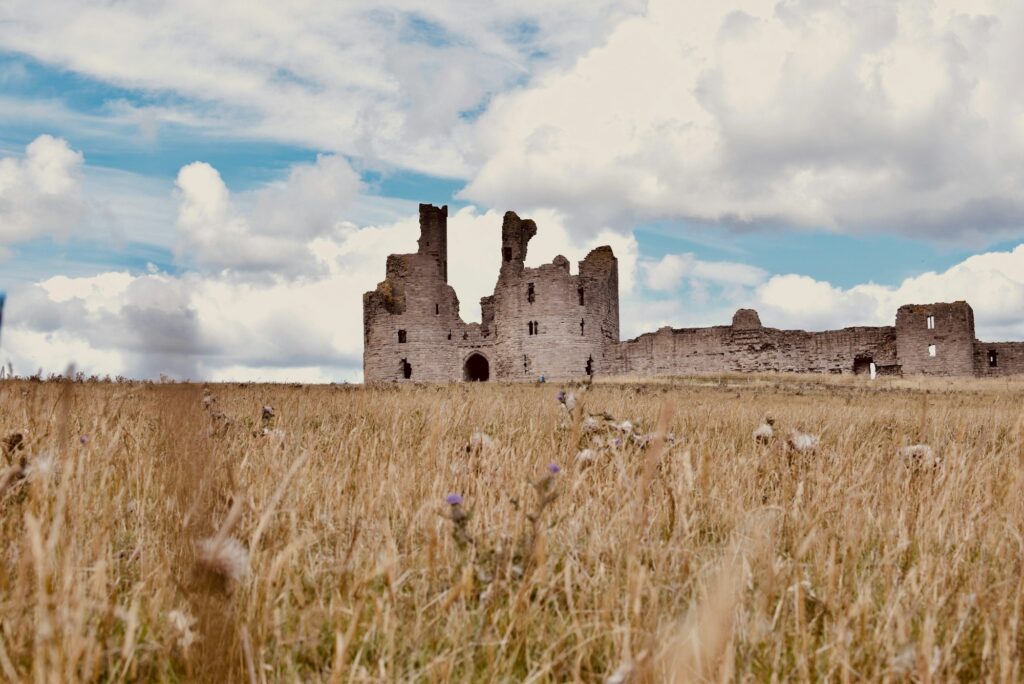
    Dunstanburgh is the coast’s great romantic ruin, its shattered gatehouse silhouetted on a headland with nothing but sea beyond. It is owned by the National Trust and cared for by English Heritage, and you can only reach it on foot. The classic approach is the National Trust’s coastal trail of about 1.3 miles from the fishing village of Craster, across sheep-cropped grass beside the rocks. Strong walkers can continue along Embleton Bay to Low Newton-by-the-Sea.

    Before or after, follow your nose to Craster’s smokehouse. L. Robson & Sons, now in its fourth generation, still oak-smokes herring into the celebrated Craster kippers in smokehouses dating back to the nineteenth century.

    Tip: National Trust members enter Dunstanburgh free, but because tickets are sold by English Heritage, choose the “Associated Organisation” option if booking online.

    Warkworth Castle and Hermitage

    South towards Amble, Warkworth Castle crowns a loop of the River Coquet above a pretty village. For around three centuries it was a favourite home of the Percys, and its great tower was begun for the first Earl of Northumberland in 1377. The castle is in the care of English Heritage. Upriver, a small boat ferries visitors in summer to a medieval hermitage chapel carved into the cliff, one of the most atmospheric corners of the county.

    Chillingham Castle

    Inland, near Wooler, Chillingham Castle is a privately owned medieval fortress rescued from ruin by Sir Humphry Wakefield from 1982 onwards. It is famously eccentric, crammed with curiosities and reputed to be one of Britain’s most haunted castles, with evening ghost tours. You can also stay here in self-catering apartments.

    Lindisfarne, the Holy Island

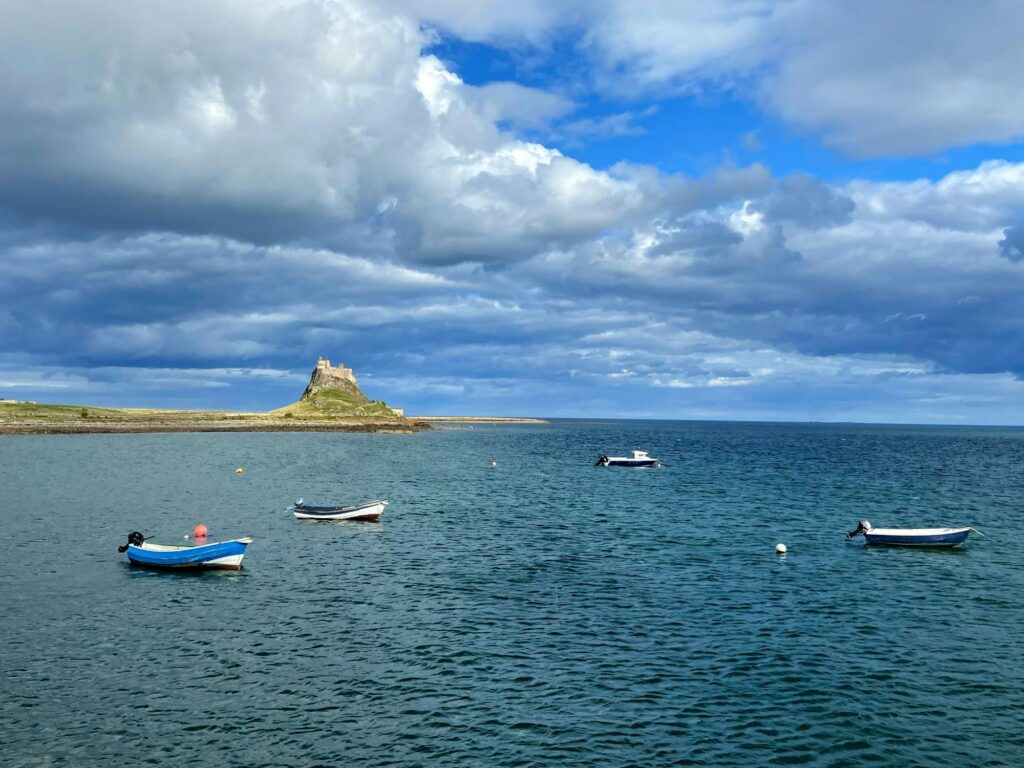
    St Aidan came from Iona in 635 to found a monastery on Lindisfarne, and the island became the cradle of Christianity in northern England. Today you can explore the red sandstone ruins of the later Lindisfarne Priory (English Heritage) and the little Lindisfarne Castle (National Trust) perched on its rock, restored in the early twentieth century and gifted to the Trust in 1944.

    Holy Island is reached by a causeway that floods twice a day. Northumberland County Council publishes official safe crossing times, which change daily with the tides, and vehicles are stranded every year by drivers who misjudge them. The tide comes in fast, and the road becomes deep water within minutes.

    Tip: Always check the official Holy Island safe crossing times for your exact date (and make sure the page shows the right year) before you set off. Never drive onto the causeway if there is any water on the road. If you miss the window, relax and enjoy a few more hours on the island: it is never worth the risk.

    Lindisfarne Castle on its rocky crag seen across the harbour with small boats, Holy Island, Northumberland
    The causeway to Lindisfarne, safe only at low tide. Photo: John-Mark Strange / Unsplash

    The Farne Islands: Puffins and Seals

    From Seahouses harbour, boats sail out to the Farne Islands, a National Trust nature reserve and one of Britain’s great seabird spectacles. Puffins return in April and are best seen in the breeding season from May to July, when the Farnes host around 40,000 pairs, alongside guillemots, razorbills and terns. In autumn the islands belong to England’s largest breeding colony of Atlantic grey seals, with pups appearing from September and numbers peaking in late October.

    Landing on Inner Farne, where St Cuthbert lived as a hermit, is generally possible from spring to the end of September; boat trips run from April to October, weather permitting. Landing fees are paid separately from the boat fare (National Trust members land free), and landing times can be limited, so check current arrangements. Book a Farne Islands boat trip from Seahouses in advance for puffin season, wear a hat (the terns dive-bomb), and pack waterproof binoculars.

    Dark Skies and Wide Horizons

    Northumberland has some of the darkest skies in England. The International Dark Sky Park covering Northumberland National Park and Kielder lies inland, but the coast also enjoys very little light pollution, and on a clear winter night the Milky Way arcs over Bamburgh and Dunstanburgh. Wrap up warmly, find a spot away from village lights and give your eyes twenty minutes to adjust.

    Best Time to Visit

    • May to July: Puffin season, long light evenings and all the castles open. The busiest time, so book boats and hotels early.
    • September and October: Golden light, quieter beaches and the start of the seal pupping season.
    • November to February: Empty sands, dramatic seas and the best dark skies, though Alnwick Castle and some attractions close for winter.

    Where to Stay

    Doxford Hall Hotel & Spa, near Chathill

    Our pick for a polished country-house base, Doxford Hall is a nineteenth-century mansion on a rural estate roughly fifteen minutes north of Alnwick, perfectly placed for Bamburgh, Craster and Seahouses. Expect fireside afternoon tea in the library, a spa with an indoor pool and the two AA Rosette George Runciman Restaurant.

    The Lord Crewe, Bamburgh

    Right on Front Street below the castle, The Lord Crewe is a stylishly updated seventeenth-century inn with smart rooms (some with window seats overlooking the village) and a short stroll to the beach.

    The Bamburgh Castle Inn, Seahouses

    For a characterful harbourside stay, The Bamburgh Castle Inn overlooks the boats in Seahouses, steps from the Farne Islands sailings. It is a relaxed, dog-friendly inn rather than a luxury hotel, but the location is hard to beat.

    The Cookie Jar, Alnwick

    A former convent a short walk from Alnwick Castle, The Cookie Jar is an intimate boutique hotel of eleven individually styled bedrooms with a bistro and walled garden.

    Castle stays

    To sleep inside the walls, Chillingham Castle lets apartments in the castle and its Coaching Rooms (book directly). Further inland near Hexham, Langley Castle Hotel is a natural add-on if you are heading for Hadrian’s Wall; we feature it in our guide to haunted castles you can sleep in. Continuing north over the border? See our favourite castle stays in Scotland.

    A Three-Day Castle Coast Itinerary

    Day 1: Alnwick and Warkworth

    Spend the morning at Alnwick Castle and lunch in the Treehouse at The Alnwick Garden. In the afternoon, drive down to Warkworth for the castle and, in summer, the boat to the hermitage. Overnight at Doxford Hall.

    Day 2: Craster, Dunstanburgh and Bamburgh

    Walk from Craster to Dunstanburgh, then pick up kippers on the way back. Head north to Bamburgh for the castle in the afternoon and a sunset walk on the beach. Overnight at The Lord Crewe.

    Day 3: Farne Islands and Lindisfarne

    Take a morning boat from Seahouses to the Farnes, then time your afternoon around the Holy Island safe crossing times to explore the priory and castle on Lindisfarne.

    For route planning, pack a good Northumberland coast walking guide.

    The ruined towers of Dunstanburgh Castle beyond a field of long summer grass under a cloudy sky, Northumberland
    The coastal path from Craster to Dunstanburgh Castle. Photo: BEN ELLIOTT / Unsplash

    FAQs

    Who owns the Northumberland castles?

    Bamburgh is the private home of the Armstrong family, Alnwick belongs to the Duke of Northumberland, and Chillingham is privately owned by the Wakefield family. Dunstanburgh is owned by the National Trust and run by English Heritage, Warkworth and Lindisfarne Priory are in the care of English Heritage, and Lindisfarne Castle belongs to the National Trust.

    When can I see puffins on the Farne Islands?

    Puffins return in April and are best seen from May to July. By August most have left for the open sea.

    Is it safe to drive to Holy Island?

    Yes, but only within the official safe crossing times published by Northumberland County Council. Never cross if there is water on the road.

    Let Us Plan Your Castle Coast Escape

    Tell us your dates and we will design a seamless Northumberland itinerary, with puffin trips, tide-timed island visits and beautiful places to stay.

  • Hampton Court Palace: Inside Henry VIII’s River Palace

    Hampton Court Palace: Inside Henry VIII’s River Palace

    Upriver from Westminster, where the Thames runs green and slow past Surrey’s water meadows, Hampton Court Palace holds five centuries of royal ambition in one glorious sweep of Tudor brick and baroque stone.

    Why Hampton Court Belongs on Every Royal Itinerary

    Many palaces tell one story. Hampton Court tells two, side by side. Walk through the gatehouse and you are in the red-brick world of Cardinal Wolsey and Henry VIII, all turrets, twisted chimneys and great courtyards. Keep going and the palace turns into something else entirely: the cool, symmetrical baroque state apartments built for William III and Mary II, opening onto formal gardens that run down to the river.

    It is also one of the easiest grand day trips from London. A direct train from Waterloo takes under 40 minutes, and the palace sits just across the bridge from the station. On our Royal & Castle Britain trail, it is the essential Tudor chapter.

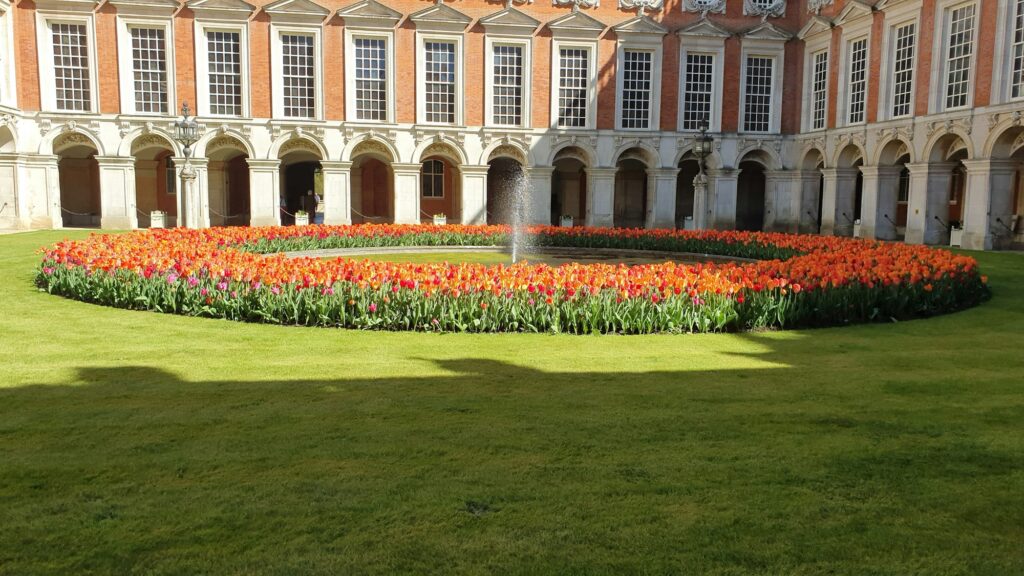
    Fountain Court at Hampton Court Palace, with Wren's red-brick colonnade and Tudor chimneys rising behind under a blue sky
    The Great Gatehouse, the grand Tudor welcome to Hampton Court. Photo: Dennis Norman / Unsplash

    From Cardinal to King to Baroque Palace

    Wolsey’s palace

    The story begins with Thomas Wolsey, Henry VIII’s chief minister, who took on the manor at Hampton in the mid-1510s and transformed it into a palace fit to entertain kings and ambassadors. It was almost too magnificent. As Wolsey fell from favour at the end of the 1520s, the palace passed to Henry, who made it one of his favourite residences.

    Henry VIII’s river palace

    Henry spent lavishly. He built the vast kitchens, the Great Hall and the Chapel Royal’s extraordinary ceiling, and the palace saw some of the most dramatic moments of his reign: honeymoons, the birth of his longed-for son Edward, the death of Jane Seymour, and the arrest of Catherine Howard.

    Wren, William and Mary

    After William III and Mary II came to the throne in 1689, they commissioned Sir Christopher Wren to rebuild the palace in the latest baroque style. Ambitions were scaled back and much of the Tudor palace survived, but Wren’s new royal apartments around Fountain Court, with their elegant South and East Fronts, gave Hampton Court its second, very different face. Today the palace is cared for by Historic Royal Palaces, the independent charity that also looks after the Tower of London and Kensington Palace.

    The Highlights: What Not to Miss

    The Great Hall

    Henry’s Great Hall, built in the 1530s, is the theatrical heart of the Tudor palace. Look up at the carved hammerbeam roof, where tiny painted heads known as the “eavesdroppers” peer down, and look for traces of Anne Boleyn’s arms, carved during her brief reign. The walls are hung with sixteenth-century tapestries telling the story of Abraham, woven for Henry and as rich in colour as they are in symbolism.

    The Tudor Kitchens

    Henry’s kitchens were built to feed a court that could number around a thousand people, and they survive on a remarkable scale. Wander through the boiling house, the great fireplaces and the serving places, and on selected days you may find costumed cooks recreating Tudor recipes. It is the moment the palace comes alive for children and adults alike.

    The Haunted Gallery and the Catherine Howard legend

    Few corridors in England carry a better story. Catherine Howard, Henry’s fifth wife, was confined at Hampton Court in 1541 before her execution the following year. Legend says she broke free from her guards and ran down this gallery, screaming for the king, and that her ghost still repeats the dash. Historians doubt the tale, but it is cherished palace lore, and the gallery is wonderfully atmospheric on a grey afternoon.

    The Chapel Royal

    Still a working chapel after nearly five hundred years, the Chapel Royal is crowned by Henry’s dazzling vaulted ceiling of deep blue and gold, studded with stars and carved pendants. If you can, attend a service: it is a wonderfully atmospheric way to experience the palace.

    Tip: Arrive at opening time and head straight for the Tudor Kitchens and Great Hall, then save the gardens for the afternoon when the light is softer and the morning crowds have moved on.

    The Gardens, the Great Vine and the Maze

    The palace sits in around 60 acres of formal gardens beside the Thames, and they deserve almost as much time as the interiors.

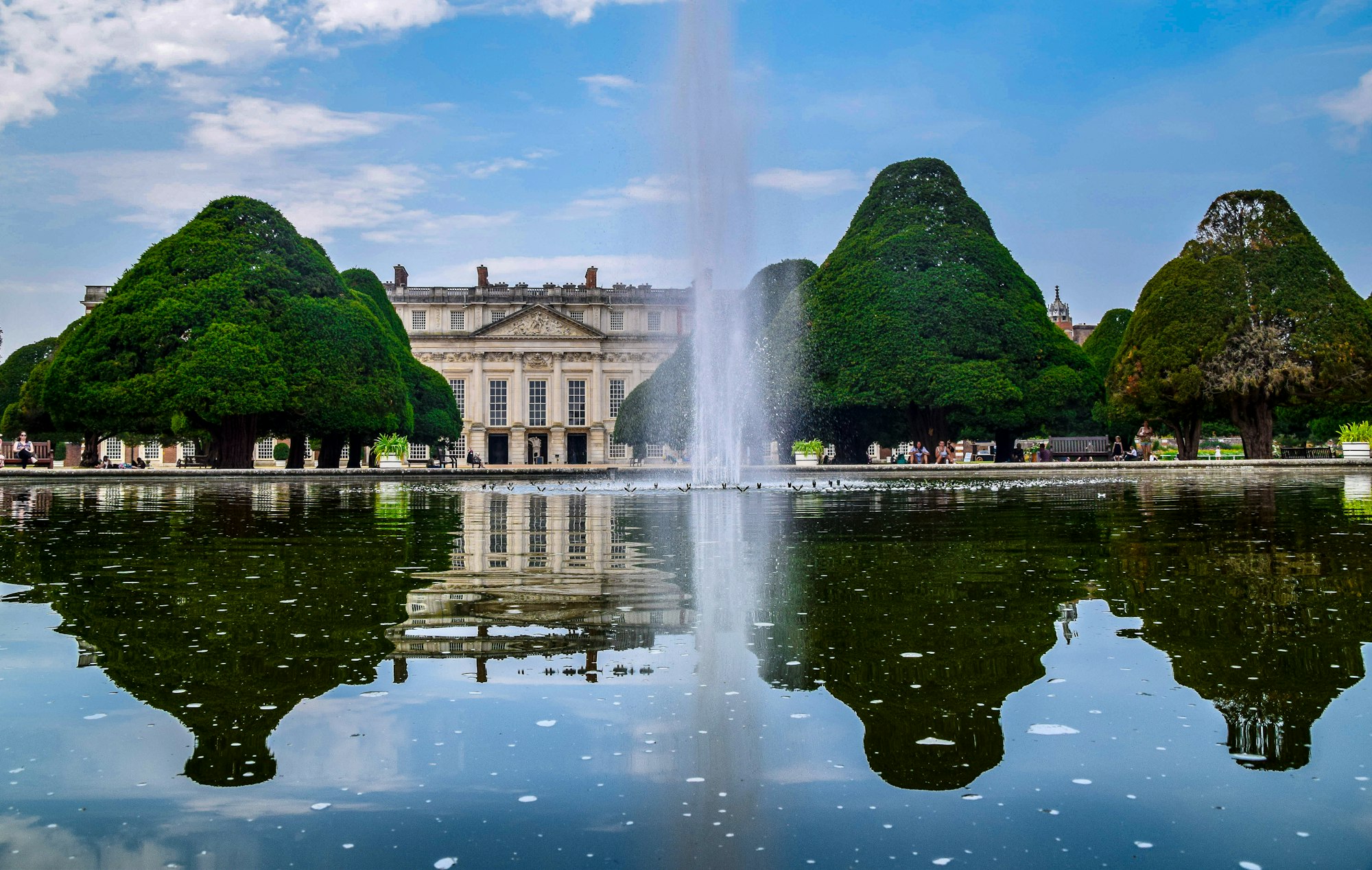
    • The Privy Garden: William III’s private garden, reconstructed in 1995 to its early eighteenth-century design, with clipped yews, formal parterres laid out between the palace and the river.
    • The Great Vine: Planted in 1768 when Lancelot “Capability” Brown was head gardener, it is widely recognised as the largest grapevine in the world. Its black grapes are harvested each year and traditionally sold in the palace shop in early autumn.
    • The Maze: Planted for William III around 1690, it is the oldest surviving hedge maze in Britain.
    • The Magic Garden: An imaginative play garden in Henry VIII’s former Tiltyard, guarded by a great sleeping dragon and full of towers, battlements and hidden corners. Opening is seasonal, so check before you go if you are travelling with children.
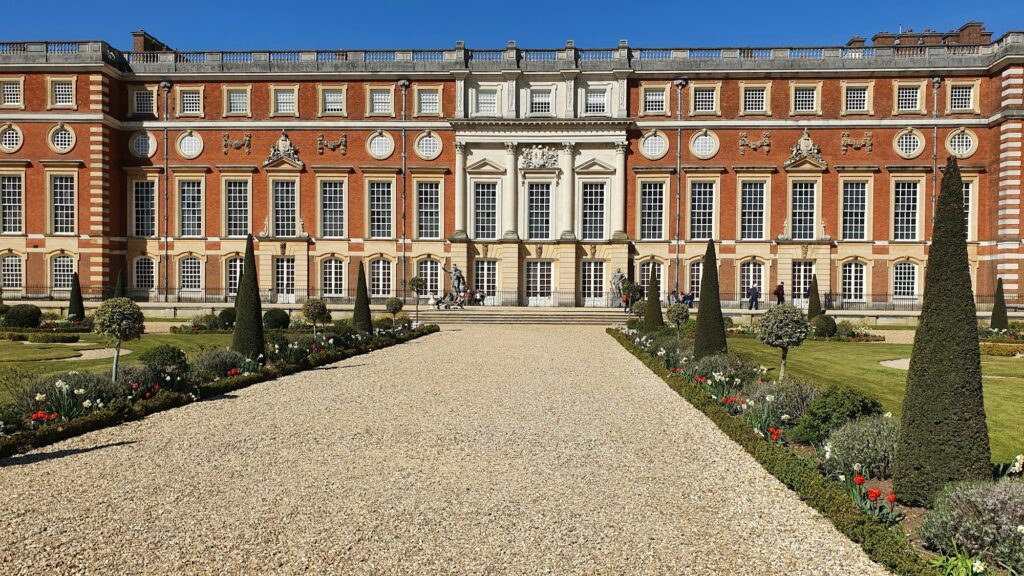
    Clipped yew cones and flower borders along a gravel walk leading to the baroque Wren front of Hampton Court Palace
    The Privy Garden, with Wren’s baroque palace behind. Photo: Dennis Norman / Unsplash

    For skip-the-line entry, consider pre-booked Hampton Court Palace entrance tickets, or let an expert bring the Tudors to life on a guided Hampton Court tour from London.

    Annual Events at the Palace

    Hampton Court Palace Festival

    Each June, the palace’s Base Court becomes an open-air concert venue for the Hampton Court Palace Festival, with picnics in the gardens before the music. The festival runs over selected nights each June; check the line-up and book early. The best tickets go quickly once the next line-up is announced.

    RHS Hampton Court Palace Garden Festival

    The Royal Horticultural Society’s summer show in the palace grounds, formerly known as the Hampton Court Palace Flower Show, has moved to a biennial schedule. It is traditionally held in early July; check the RHS website for the next date and book early.

    Christmas at the palace

    In winter, Hampton Court puts on festive programming and an outdoor ice rink. At Christmas the palace usually stages a festive season; check dates and timed tickets before travelling.

    Getting There from London

    By train

    South Western Railway runs direct trains from London Waterloo to Hampton Court, the end of the line, in around 35 to 40 minutes. From the station, simply cross the bridge over the Thames and the palace gates are a few minutes’ walk away.

    By river

    For a leisurely, quintessentially English approach, seasonal boats run upriver from Westminster Pier via Kew and Richmond to Hampton Court, typically from spring to the end of October. The full trip takes several hours and sailing times vary with the tides, so many visitors take the boat one way and the train back. Services do not usually run from Westminster in winter, so check the operator’s timetable before you plan around it. You can also book a Thames river cruise to see more of the royal river.

    How Long to Allow

    Allow a full day. Three to four hours covers the Tudor and baroque interiors at a good pace, and the gardens, maze and vine easily take another two. With lunch, five to six hours is ideal. Opening hours are shorter in winter, when last admission is in mid-afternoon, so arrive early if you are visiting between November and March.

    Where to Stay Nearby

    Inside the palace: the Landmark Trust

    For a truly once-in-a-lifetime stay, the Landmark Trust lets two historic apartments within the palace itself. The Georgian House, built in 1719 as kitchens for George, Prince of Wales, sleeps up to eight and has its own walled garden, while Fish Court occupies former Tudor service quarters. Both book up far in advance, directly with the Landmark Trust.

    The Mitre, Hampton Court

    Directly across the road from the palace on the riverbank, The Mitre is a characterful boutique hotel with eclectic, colourful interiors, a riverside terrace and a restaurant overlooking the Thames. It is the natural choice if you want to be first through the palace gates in the morning.

    The Petersham, Richmond

    A short drive downriver, The Petersham sits high on Richmond Hill with famous views over the Thames meadows, a fine base for combining Hampton Court with Richmond Park and Kew.

    Combining with Richmond and Kew

    Hampton Court sits at the top of a remarkable stretch of royal river. Richmond offers riverside walks, Richmond Park’s deer herds and the view from Richmond Hill, while Kew has the Royal Botanic Gardens and little Kew Palace, also cared for by Historic Royal Palaces. Both lie on the river boat route, making a two-day “royal Thames” itinerary easy. Pre-book Kew Gardens tickets to save time at the gate.

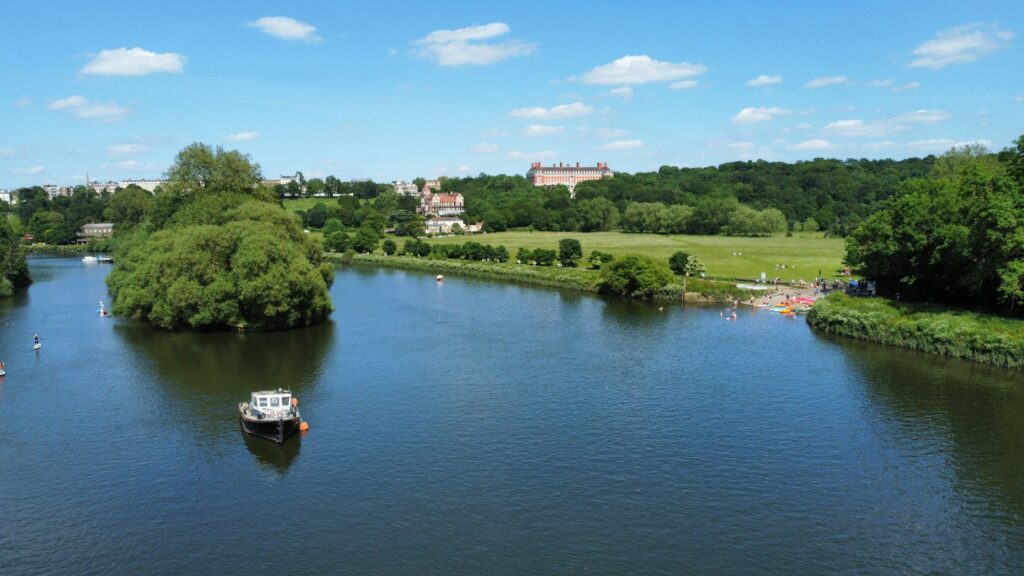
    A small boat on the Thames below Richmond Hill, with a wooded island, riverside meadows and trees on a sunny day
    The royal river at Richmond, a perfect partner to Hampton Court. Photo: Spekboom / Unsplash

    A Perfect Hampton Court Day

    1. Morning: Take an early train from Waterloo and be at the gates for opening. Start in the Tudor Kitchens and Great Hall, then the Chapel Royal and the Haunted Gallery.
    2. Midday: Lunch at the palace café or across the bridge in East Molesey, then the baroque state apartments.
    3. Afternoon: The Privy Garden, the Great Vine and the Maze, with a riverside walk along the Thames.
    4. Evening: Stay for dinner at The Mitre, or head back into town for something special from our guide to Michelin-starred dining in London.

    FAQs

    How do I get to Hampton Court Palace from central London?

    The easiest way is the direct South Western Railway train from London Waterloo to Hampton Court station, around 35 to 40 minutes, then a short walk across the bridge. In season, river boats also run from Westminster.

    Who runs Hampton Court Palace?

    Historic Royal Palaces, an independent charity that also cares for the Tower of London, Kensington Palace, the Banqueting House and Kew Palace.

    Is the Haunted Gallery really haunted?

    The tale of Catherine Howard’s ghost is a much-loved legend, not established fact. Historians doubt the story, but the gallery remains one of the palace’s most atmospheric spaces.

    Is the RHS flower show at Hampton Court every year?

    Not any more. The RHS Hampton Court Palace Garden Festival now runs every other year and is expected to return in 2027. Check the RHS website for confirmed dates.

    Plan Your Royal Thames Escape

    Tell us your dates and we will design a seamless royal itinerary, from palace stays and private guides to riverside hotels and memorable dinners.

  • Royal Deeside: Balmoral, Braemar and the Royal Highlands

    Royal Deeside: Balmoral, Braemar and the Royal Highlands

    Follow the River Dee west from Aberdeen into the Cairngorms and you travel through the landscape Queen Victoria fell for, a valley of castles, pine forest, heather hills and Highland villages that still carries the royal family’s quiet stamp.

    Why Royal Deeside?

    Queen Victoria and Prince Albert first came to Balmoral in 1848 and found in the upper Dee valley a Highland retreat they would never give up. The royal family still spends late summer here, and the connection shows everywhere: royal warrants above Ballater’s shops, a parish church where monarchs worship, a distillery with a “Royal” title and a Highland gathering the sovereign has traditionally attended.

    You do not need to be a royal watcher to love it. The drive runs from farmland and tower houses near Banchory to the high, wild Cairngorms around Braemar, and pairs easily with a whisky trail on Speyside or a few nights in one of the great castle hotels of Scotland.

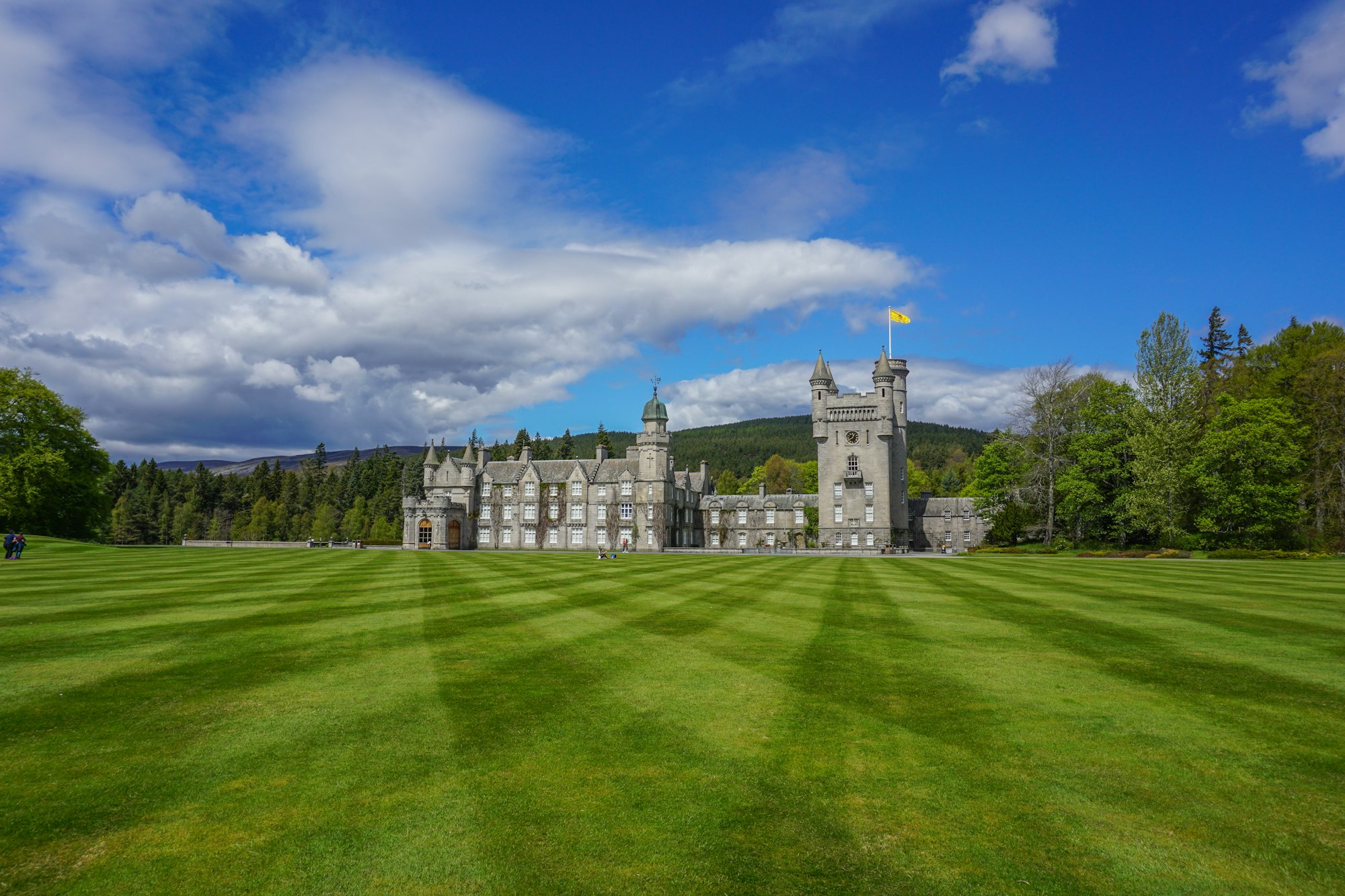
    Balmoral Castle's granite towers seen across wide striped lawns, with wooded hills behind, Royal Deeside
    Balmoral, the Highland home Prince Albert built for Queen Victoria. Photo: Cassie / Unsplash

    Balmoral Castle

    Balmoral remains a private royal residence, so visiting depends on the season. In 2026 the estate opened for a spring and summer season from 28 March to 9 August, closed while the royal family was in residence, then reopened for an autumn season from 29 September to 1 November. In those seasons visitors can walk the grounds and gardens, see the Ballroom (the castle’s largest room, and the only interior on a standard ticket) and visit the shop and café.

    Inside the castle

    The real prize is a guided interior tour. First offered in 2024 and run again in 2025 and 2026, these small-group tours (no more than 12 people) take in rooms still used by the royal family, including the Entrance Hall, the Red Corridor, the Library, the Family Dining Room and the Drawing Room. By spring 2026 most summer dates had sold out. Tours run on selected dates only, have a minimum age of 16 and must be booked through the official Balmoral website.

    Winter visits

    Since early November 2026 the estate has been on winter opening, with free entry to the grounds on selected days (Wednesday to Sunday through November and much of December); the Ballroom is closed. 2027 dates had not been announced at the time of writing, so check balmoralcastle.com and join its mailing list.

    Tip: If you want to see inside Balmoral, book the moment the new season’s tour dates are released. Then build the rest of your trip around it.

    Crathie Kirk

    Across the A93 from the Balmoral gates stands Crathie Kirk, the small granite parish church where every monarch since Queen Victoria has worshipped while staying on the estate. Victoria began attending services at Crathie in 1848 and laid the foundation stone of the present church in 1893; it opened in 1895. The church is usually open to visitors in the warmer months, from around April to October, and remains a working parish church, so be respectful of services.

    Royal Lochnagar Distillery

    A short walk or drive from Balmoral, Royal Lochnagar was founded by John Begg in 1845, and gained its royal title after Queen Victoria and Prince Albert visited in 1848. It is one of Scotland’s smallest traditional distilleries, which makes for an intimate tour beneath the slopes of Lochnagar itself. It is open to visitors year round (fewer days in winter), with tours and tastings from a one-hour introduction to an in-depth manager’s tour. Book ahead, especially in summer; tours can be reserved up to 90 days in advance.

    For more ideas on private and behind-the-scenes tastings, see our guide to private whisky distillery tours in Scotland.

    Braemar, the Gathering and Braemar Castle

    Ringed by mountains, Braemar is the wildest of the Deeside villages and a gateway to the heart of the Cairngorms.

    The Braemar Gathering

    The Braemar Gathering is the most famous Highland games in Scotland, held on the first Saturday in September at the Princess Royal and Duke of Fife Memorial Park. Expect caber tossing, hammer throwing, hill racing, Highland dancing and massed pipe bands. The reigning monarch has regularly attended since Queen Victoria’s time, and in September 2026 the King and Queen were among the spectators, though royal attendance is never announced as guaranteed. The next Gathering falls on Saturday 4 September 2027. Stand tickets and nearby rooms sell out early, so plan well ahead.

    Braemar Castle

    Just outside the village, the turreted, star-walled Braemar Castle tells a turbulent story. It was built in 1628 by John Erskine, Earl of Mar, burned by Jacobites in 1689, rebuilt as a government garrison after the 1745 rising, and later became a Farquharson family home where Queen Victoria was a guest during the Gathering. Since 2007 the Braemar community has leased and run the castle as a charity, and it reopened in May 2024 after a major conservation project. The castle opens from spring to autumn (daily in summer) and closes on Gathering day; check its website for current days.

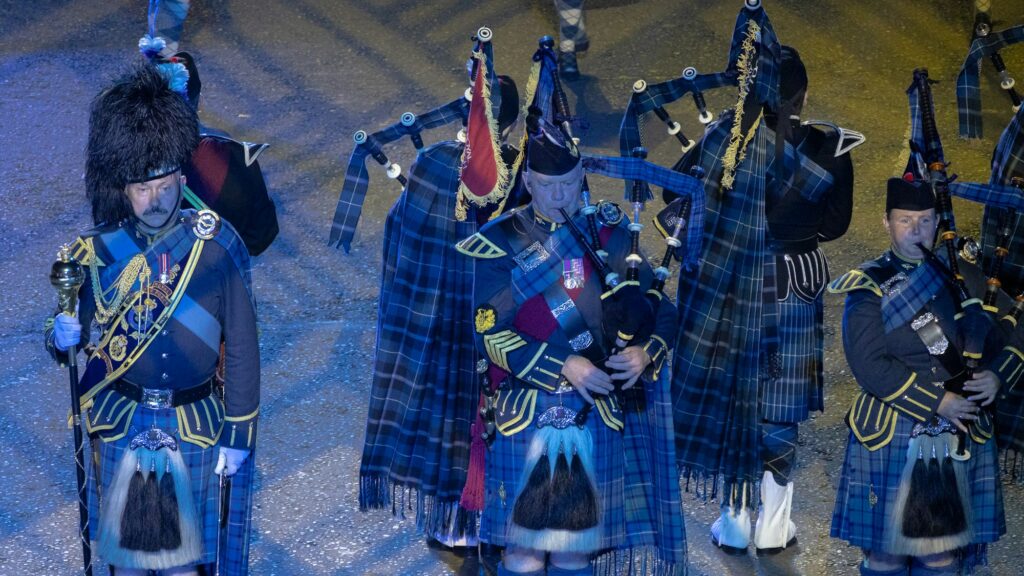
    Pipers in tartan Highland dress and feather bonnets playing bagpipes in a pipe band
    The Braemar Gathering, held on the first Saturday in September. Photo: Vedanth Ravi / Unsplash

    Ballater

    Ballater is the elegant Victorian heart of Royal Deeside, a village of granite villas, a wide green and shopfronts proudly displaying royal warrants. Its restored Old Royal Station, where Victoria’s trains terminated, was rebuilt after a fire in 2015 and now houses a VisitScotland information centre, the royal waiting room and the Rothesay Rooms restaurant, established by the then Prince of Wales to help the village recover after severe flooding (check current opening days before you go). Ballater is a natural base for walks to the Falls of Muick and the lovely circuit of Loch Muick on the Balmoral estate.

    Crathes and Drum: The Castles of the Lower Dee

    Closer to Aberdeen, two National Trust for Scotland castles rank among the finest in the north east.

    • Crathes Castle, near Banchory, was built in the second half of the 16th century and was home to the Burnett family until 1951. Look up at its remarkable painted ceilings, find the ivory Horn of Leys (said to have been granted by Robert the Bruce) in the High Hall, and wander the walled gardens with their great yew hedges, thought to date from the early 1700s. Unusually, Crathes opens all year, with guided-only access in winter.
    • Drum Castle, near Drumoak, centres on one of Scotland’s oldest tower houses, probably dating from the late 13th century. Robert the Bruce granted the Royal Forest and Tower of Drum to William de Irwyn in 1323, and the Irvines lived here until 1975. Don’t miss the Garden of Historic Roses, at its best in June and July, and the ancient Old Wood of Drum.

    Opening days vary by season, so check the Trust’s website before setting off.

    The Cairngorms Setting

    Upper Deeside lies within the Cairngorms National Park, Britain’s largest national park, Lochnagar, the mountain that inspired a young Lord Byron, rises above Balmoral; ancient Caledonian pinewoods shelter red squirrels; and the hills around Braemar are home to red deer and golden eagles. The Loch Muick circuit or a guided wildlife safari shows off the landscape without serious hillwalking.

    Where to Stay in Royal Deeside

    • The Fife Arms, Braemar. Owned by Iwan and Manuela Wirth of the gallery Hauser & Wirth, this restored Victorian coaching inn is one of Britain’s most original hotels: 47 rooms and suites, more than 16,000 artworks and antiques (including a Lucian Freud in reception), the Clunie Dining Room and Bertie’s Whisky Bar. It holds MICHELIN Keys, the guide’s hotel award. Book very early for Gathering weekend.
    • Douneside House, Tarland. A former MacRobert family home run by the charitable MacRobert Trust, set in 17 acres of gardens. Its restaurant holds three AA Rosettes, and there is an indoor pool and health club.
    • Raemoir House, near Banchory. A characterful listed Georgian country house with around 18 rooms, ideally placed for Crathes and Drum. Relaxed charm rather than five-star polish.

    Best Seasons to Visit

    • Spring (April to June): long evenings, gardens in bloom and the best chance of a Balmoral interior tour.
    • Summer (July and August): warmest weather and Drum’s roses, but Balmoral closes in August.
    • September and October: the Braemar Gathering, heather, autumn colour and quieter roads. Balmoral reopens in late September.
    • Winter: snow on Lochnagar, roaring fires and free entry to the Balmoral grounds on open days; some attractions reduce their hours.

    Getting There and Around

    Aberdeen, with its airport and rail station, is the natural gateway. The A93 follows the Dee through Banchory, Ballater and Crathie to Braemar, then climbs over the Cairnwell Pass towards Perthshire, so you can also arrive from Edinburgh by the mountain road. A car or private driver-guide is by far the best way to explore.

    A Three-Day Royal Deeside Itinerary

    Day 1: Castles of the lower Dee

    Drive west from Aberdeen to Drum Castle for the tower and rose garden, then on to Crathes for its painted ceilings and gardens. Continue to Tarland for dinner and the night at Douneside House.

    Day 2: Balmoral and Ballater

    Spend the morning at Balmoral (on an interior tour if you secured one), visit Crathie Kirk, then take a tour and tasting at Royal Lochnagar. Late afternoon, stroll Ballater’s green and shops, or walk by Loch Muick.

    Day 3: Braemar and the Cairngorms

    Head up the valley to Braemar Castle, then out into the hills on a guided wildlife safari or a walk to the Linn of Dee. End with a dram in Bertie’s Whisky Bar and dinner at The Fife Arms.

    A warmly lit bar with backlit wooden shelves lined with whisky and spirit bottles
    A dram by the fire in Braemar to end the day. Photo: Edgar Chaparro / Unsplash

    FAQs

    Can you go inside Balmoral Castle?

    On a standard ticket you can usually see the Ballroom only. To see the private rooms you need one of the limited guided interior tours, which run on selected dates and must be booked well in advance.

    Will the King be at the Braemar Gathering?

    Royal attendance is a long tradition and the King and Queen attended in 2026, but it is never guaranteed in advance. Treat a royal sighting as a bonus.

    How many days do I need?

    Two or three nights lets you see Balmoral, Braemar and the lower Dee castles at an easy pace. Add a night or two if you want serious walking in the Cairngorms or to combine Deeside with Speyside.

    Plan Your Royal Highlands Journey

    Tell us your dates and interests and we will design a Royal Deeside itinerary with the right hotels, private guides and hard-to-get tour tickets.