
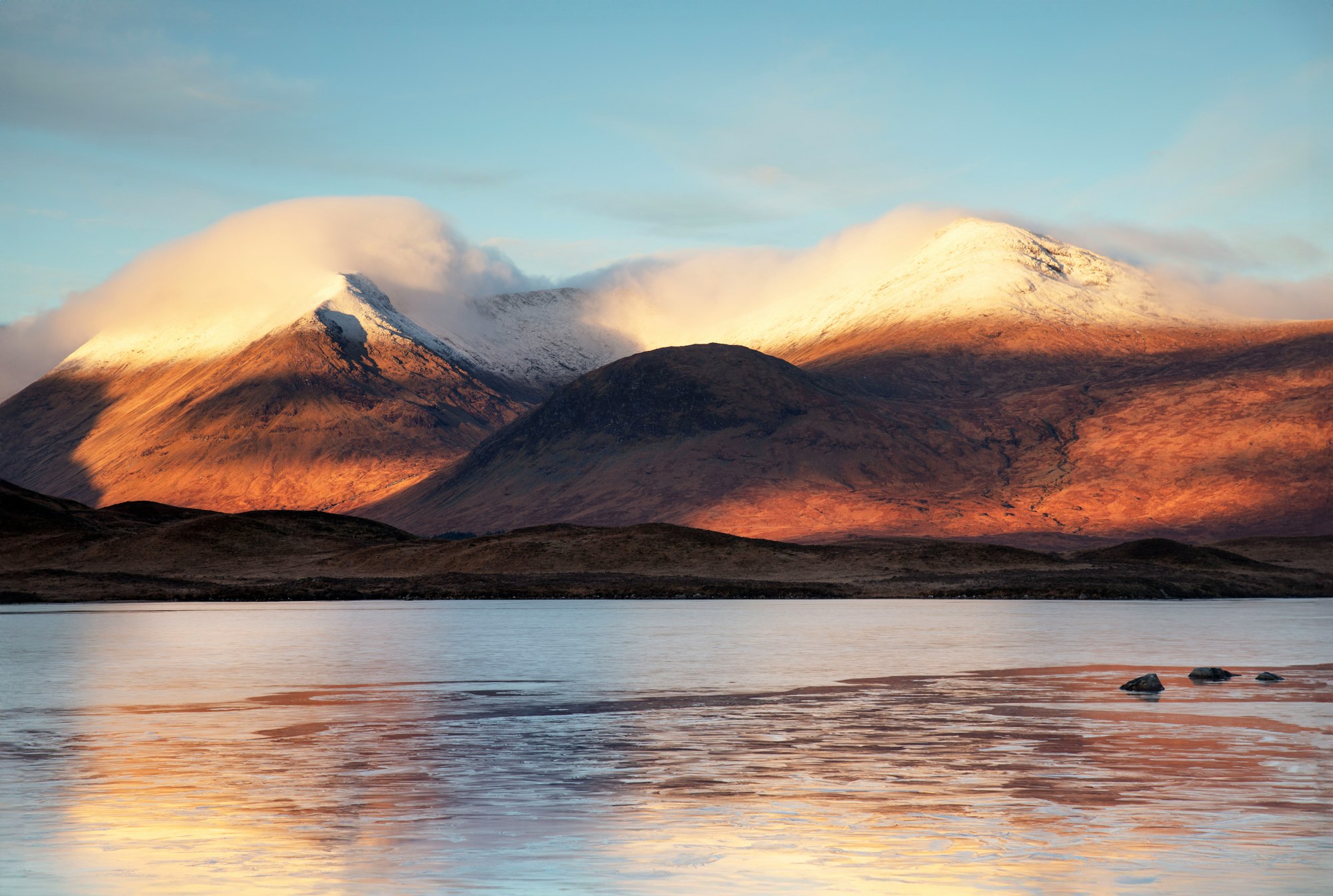
North of Glasgow, the West Highland Line leaves the lochs behind and strikes out across Rannoch Moor, a vast, roadless sweep of bog, lochan and sky that you can only really reach by train.
Table of Contents
Why Rannoch Moor by Train?
Most visitors to the Highlands see Rannoch Moor from the A82, a quick glimpse of water and heather on the way to Glencoe. The railway takes a very different line. It swings east, away from the road, and crosses the heart of the moor, roughly 50 square miles of peat bog, scattered lochans and granite boulders ringed by distant mountains. For long stretches there is no road, no house and no signal, just the train, the deer and the weather.
That is what makes this a true Places Less Visited journey. You can step off at stations with no public road, eat a two-rosette dinner beside a platform on the edge of nowhere, and walk out into a landscape that feels unchanged for centuries.
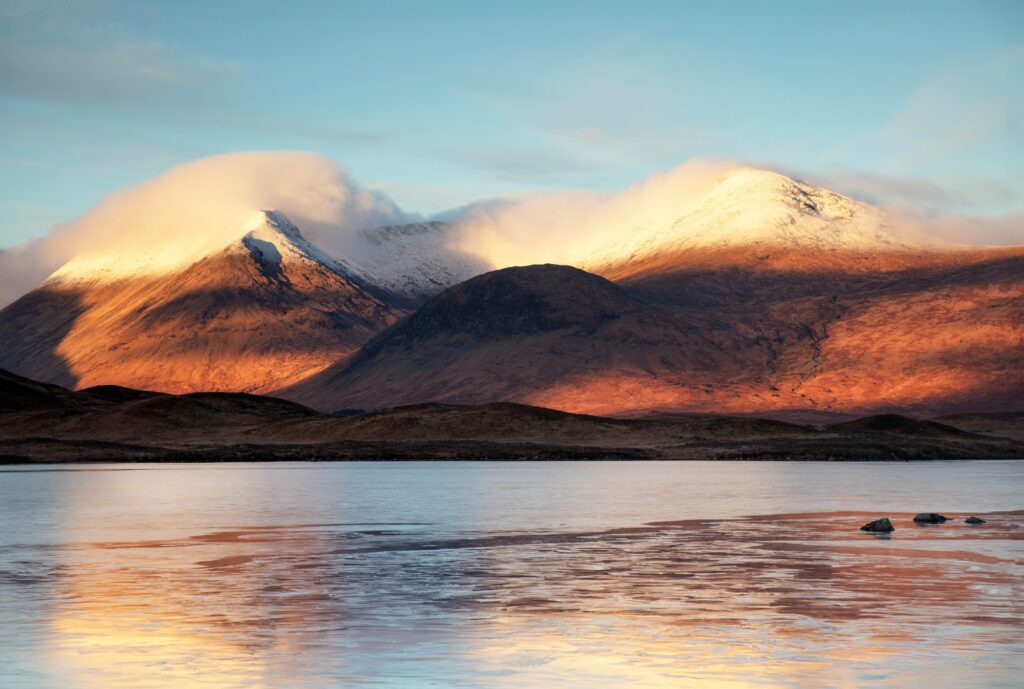
A Railway Floated on a Bog
The West Highland Railway opened between Glasgow and Fort William in 1894, with the extension to Mallaig following in 1901. Crossing Rannoch Moor was the great engineering puzzle. The peat was too deep to reach solid ground, so the builders floated the track on a mattress of tree roots, brushwood and thousands of tons of earth and ash. It still carries trains today.
The work nearly broke the company. As the brushwood raft kept sinking, money ran short, and the line was rescued when one of its directors, James Renton, put part of his own fortune into the project. At the north end of the platform at Rannoch station you can still see a head carved in stone by the navvies in his honour.
Just north of Rannoch, the train crosses the Rannoch Viaduct, a curving lattice-girder structure of nine spans resting on granite piers, around 684 feet long and the longest viaduct between Craigendoran and Fort William.
The Journey: What You See from the Train
The full run from Glasgow Queen Street to Fort William takes about three and three-quarter hours, and around five and a quarter hours if you continue to Mallaig. The scenery builds steadily:
- The Clyde and the sea lochs: Out past Helensburgh, the line climbs above the Gare Loch and Loch Long.
- Loch Lomond: A long, wooded stretch high above the loch’s northern reaches towards Ardlui.
- The Horseshoe Curve: Beyond Tyndrum, the line loops around the base of Beinn Dorain on a great curve and viaduct, a favourite moment for photographers.
- Rannoch Moor: After Bridge of Orchy, the trees fall away and the moor opens out, with Rannoch station and its viaduct at the centre.
- Corrour: The summit of the line, then down beside the long, steep-sided waters of Loch Treig.
- Monessie Gorge: The River Spean churns through a rocky gorge just below the line, after Tulloch.
- Onwards to Mallaig: From Fort William, the Glenfinnan Viaduct, Loch Eilt and the white sands of Arisaig lead to the sea views of the Small Isles.
Which side to sit
Heading north from Glasgow, the usual advice is to sit on the left-hand side for the Horseshoe Curve, Loch Treig and Monessie Gorge; coming south, choose the right. Loch Lomond is visible from both sides at different moments, so do not worry too much there. Note that the train reverses at Fort William, so if you continue to Mallaig you will need to swap sides to keep the best views. Seat reservations cannot specify a side, so pick your spot once aboard if the carriage allows.
Tip: Tickets cannot be bought at Rannoch or Corrour stations. Book in advance or buy from the guard on board.
Corrour: Britain’s Most Remote Mainline Station
At around 1,340 feet above sea level, Corrour is the highest mainline railway station in the UK, and it has no public road access. The only vehicle route is a long private estate track, so for almost everyone, arriving means stepping off a train into total silence. Film fans will recognise it: Corrour and the nearby hill of Leum Uilleim appear in Trainspotting (1996), in the scene where the friends head to the countryside and Renton delivers his famously unflattering verdict on being Scottish.
Beside the platform, the estate’s Station House runs as a restaurant with rooms, open seasonally from roughly the end of March to the end of October. Next door, the old signal box, a listed building, has been converted into three en-suite double rooms with a sitting room in the former lookout. Staying here, with the last train gone and stars over the moor, is the whole point.
Walking from Corrour to Loch Ossian
From the station, a good estate track leads about a mile east to Loch Ossian, where Hostelling Scotland runs an eco-hostel powered by solar and hydro. The circuit of the loch is about nine miles on largely level tracks, with woodland at the far end and the mountains of the Ben Alder range around you. Stronger walkers can tackle the Munros above the loch, or walk between Rannoch and Corrour stations and catch the train back. Carry a proper map, waterproofs and food: there is nothing out here, and the weather changes quickly. We recommend an OS Explorer map of Rannoch Moor and Ben Alder and a compass even on the easy loop.
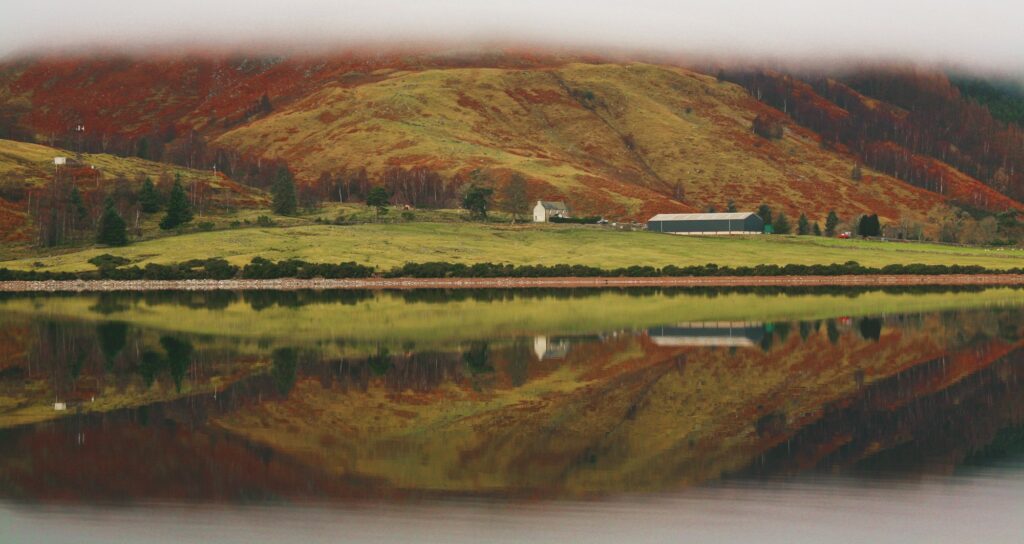
Wildlife and the Best Light
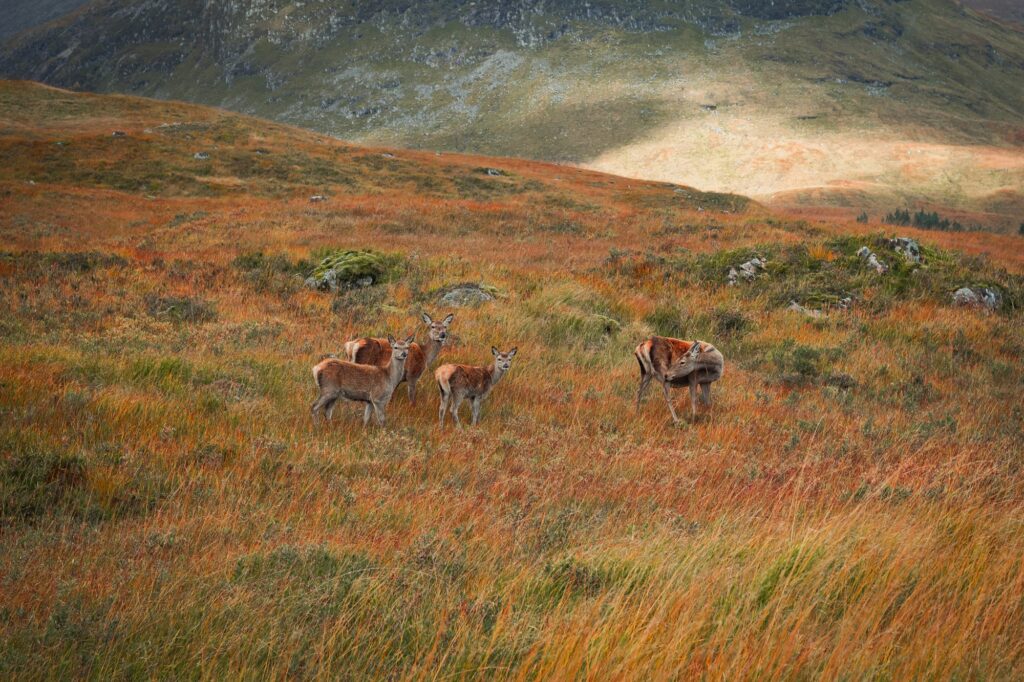
Red deer are the stars of the moor, often seen grazing close to the line or silhouetted on a ridge. Autumn, when the stags roar during the rut, is especially atmospheric. Rannoch Moor is a Site of Special Scientific Interest and a Ramsar wetland, home to rare plants such as the Rannoch-rush. A good pair of compact binoculars transforms the journey.
When to go
- May and June: Long, luminous evenings and fresh green on the moor, generally before the worst of the midges.
- September and October: Russet bracken and deer grass, the rut, and low golden light. Our favourite season for photography.
- Winter: Snow-dusted mountains and dramatic skies, but very short days and many places closed. Ideal for a cosy night or two if you plan carefully.
ScotRail and the Caledonian Sleeper
ScotRail runs the day trains between Glasgow Queen Street, Fort William and Mallaig, typically three a day in each direction, with fewer on Sundays, calling at Rannoch and Corrour.
The most romantic approach is the Caledonian Sleeper from London Euston to Fort William, which runs Sunday to Friday nights and calls at Rannoch and Corrour. You fall asleep in the city and wake to the moor sliding past the window, arriving at Corrour mid-morning and Fort William soon after. Choose a Club en-suite or a Caledonian Double for a private shower and breakfast. For more on the sleeper and other rail journeys, see our guide to luxury train travel in Scotland.
If you would like to add steam to the trip, the seasonal Jacobite steam train runs between Fort William and Mallaig over the Glenfinnan Viaduct from spring to autumn. See Jacobite steam train and Glenfinnan experiences, or pair the railway with a guided Glencoe and Rannoch Moor day tour to see the western edge of the moor from the road.
Affiliate-ready: Browse West Highland Line rail tours and Highland day trips →
Where to Stay Along the Route
Moor of Rannoch Restaurant & Rooms, Rannoch Station
Steps from the platform, Moor of Rannoch is one of the most characterful small hotels in Scotland: five en-suite rooms, lounges with wood-burning stoves, and a daily-changing dinner menu from a kitchen holding two AA Rosettes, built on foraged and local produce. There is no TV, no wifi and barely any mobile signal, which is exactly why guests love it. It is seasonal, usually open from mid-February to late November, so check dates before you plan.
Corrour Station House and Signal Box
For the most remote night of your trip, book the Signal Box rooms at Corrour, with dinner in the Station House. The estate also lets a handful of renovated nineteenth-century cottages for longer stays. Book directly with Corrour Estate; availability for the following season is usually released in late summer.
Inverlochy Castle, near Fort William
To end in style, Inverlochy Castle sits about three miles outside Fort William, at the foot of the mountains in grounds with a loch. Expect classic country-house luxury, three AA Rosettes and polished service, a perfect counterpoint to the wild moor. For more grand stays, see our guide to castle stays in Scotland.
Affiliate-ready: Compare hotels in and around Fort William →
A Three-Day West Highland Rail Escape
Day 1: London to Corrour by sleeper
Board the Caledonian Sleeper at Euston and wake to Rannoch Moor. Step off at Corrour, drop your bags at the Signal Box, and walk the Loch Ossian circuit. Dinner at the Station House as the light fades.
Day 2: Corrour to Rannoch
Take a short morning train back to Rannoch (or walk between the stations if you are experienced and the weather is kind). Find the Renton head on the platform, then settle in for dinner at Moor of Rannoch.
Day 3: Over the summit to Fort William
Ride north past Corrour, Loch Treig and Monessie Gorge to Fort William, sitting on the left. Check in at Inverlochy Castle for afternoon tea and a final night of comfort, or continue to Mallaig for the sea.
FAQs
Can you drive to Corrour station?
No. There is no public road; access is by train or on foot, with only a private estate track for vehicles. That remoteness is the appeal.
How long is the train from Glasgow to Fort William?
About three hours and 45 minutes on ScotRail, with around another hour and a half to Mallaig.
Which side of the train is best?
Sit on the left heading north from Glasgow and on the right heading south. Swap sides at Fort William if continuing to Mallaig.
Are Rannoch and Corrour open all year?
The stations are, but accommodation is largely seasonal. Moor of Rannoch and the Corrour Station House both close for part of the winter, so check before you travel.
Let Us Plan Your Wilderness Rail Journey
Tell us your dates and we will craft a seamless West Highland Line itinerary, with sleeper cabins, remote stays and a castle finale.
Leave a Reply