Tag: trail-film-tv

  • Harry Potter Filming Locations Beyond the Studio Tour

    Harry Potter Filming Locations Beyond the Studio Tour

    Long before the Studio Tour opened its doors, Hogwarts was being pieced together from real British places: a Northumberland castle, cathedral cloisters in Gloucester and Durham, an Oxford staircase and a Highland viaduct, all of which you can still visit today.

    Why Go Beyond the Studio Tour?

    The Harry Potter films were shot largely on sound stages at Leavesden, but the filmmakers kept returning to Britain’s medieval cathedrals, Tudor colleges and wild landscapes to give Hogwarts its sense of age. Visiting those places is a different pleasure from seeing the sets. You stand in cloisters that have echoed with plainsong for centuries, then wander into a market town or a Highland glen that has nothing to do with wizards at all.

    For travellers who love history as much as film, it is the perfect excuse for a journey from London to the West Highlands.
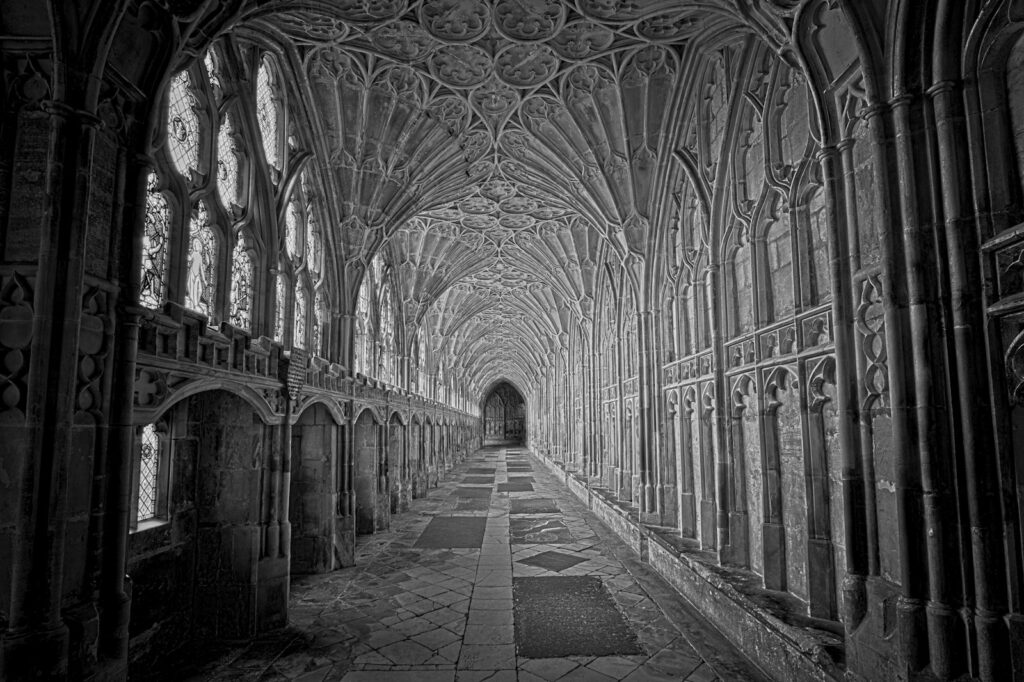
    Gloucester Cathedral
    Gloucester Cathedral's cloister, one of the most recognisable Hogwarts corridors. Photo: Michael D Beckwith / Unsplash

    Hogwarts in Stone: Castles, Cathedrals and Abbeys

    Alnwick Castle, Northumberland

    Home of the Dukes of Northumberland, Alnwick Castle played Hogwarts in exterior scenes for Philosopher’s Stone, most memorably Madame Hooch’s first flying lesson in the Outer Bailey. The castle still leans into the connection, with free broomstick training sessions included in admission (collect a timed slot on arrival, first come, first served). Alnwick is seasonal, usually open from late March to the end of October. Our guide to the Northumberland castle coast covers the shoreline nearby.

    Durham Cathedral

    Durham’s Norman cathedral appeared in both Philosopher’s Stone and Chamber of Secrets. The cloister garth is where Harry releases Hedwig into a snowy sky, and where Ron’s slug-eating curse backfires; the Chapter House became Professor McGonagall’s Transfiguration classroom. The cathedral even lent props: the inkwell on McGonagall’s desk had been used by its own Chapter Clerks. Allow time for the nave and tower too: the cathedral is a World Heritage Site in its own right.

    Gloucester Cathedral

    The fan-vaulted cloister at Gloucester appears in three of the films. It is where Harry and Ron hide from the troll in the first film, where the ominous writing appears on the wall in Chamber of Secrets, and, in the lavatorium, where Harry overhears Snape and Malfoy in Half-Blood Prince. The cathedral has begun a long-term conservation programme on the cloister, so expect some areas to be screened at times.

    Lacock Abbey and village, Wiltshire

    Owned by the National Trust, Lacock is a double prize. The abbey’s medieval cloisters served as Hogwarts corridors and classrooms in the first two films: VisitBritain notes the Chapter House as the setting for the Mirror of Erised, the Sacristy as Snape’s Potions class and the Warming Room, with its giant cauldron, as Quirrell’s classroom. Outside, the honey-stone village itself had two roles: a cottage stood in for Harry’s childhood home in Godric’s Hollow in Philosopher’s Stone, and its streets became Budleigh Babberton, where Harry and Dumbledore find Slughorn in Half-Blood Prince.

    Tip: Lacock is a living village with residents, not a film set. Arrive early, park in the National Trust car park and explore on foot.

    Oxford: Christ Church and the Divinity School

    At Christ Church, the fan-vaulted staircase in Bodley Tower is the one Harry and the first-years climb on their way to their Sorting. The present stairs date from 1805, beneath a vaulted ceiling of 1638. At the top is the college’s Great Hall, the inspiration for the Hogwarts dining hall that was recreated on set at Leavesden. As a working dining hall it closes for meals and events, so check visiting times.

    A few minutes’ walk away, the Bodleian Library’s fifteenth-century Divinity School served as the Hogwarts hospital wing, and it later hosted McGonagall’s dance lesson in Goblet of Fire. Entry requires a ticket, and the Bodleian’s guided tours carry on to Duke Humfrey’s Library upstairs. To see both properly, we recommend a guided Harry Potter walking tour of Oxford led by a local guide.
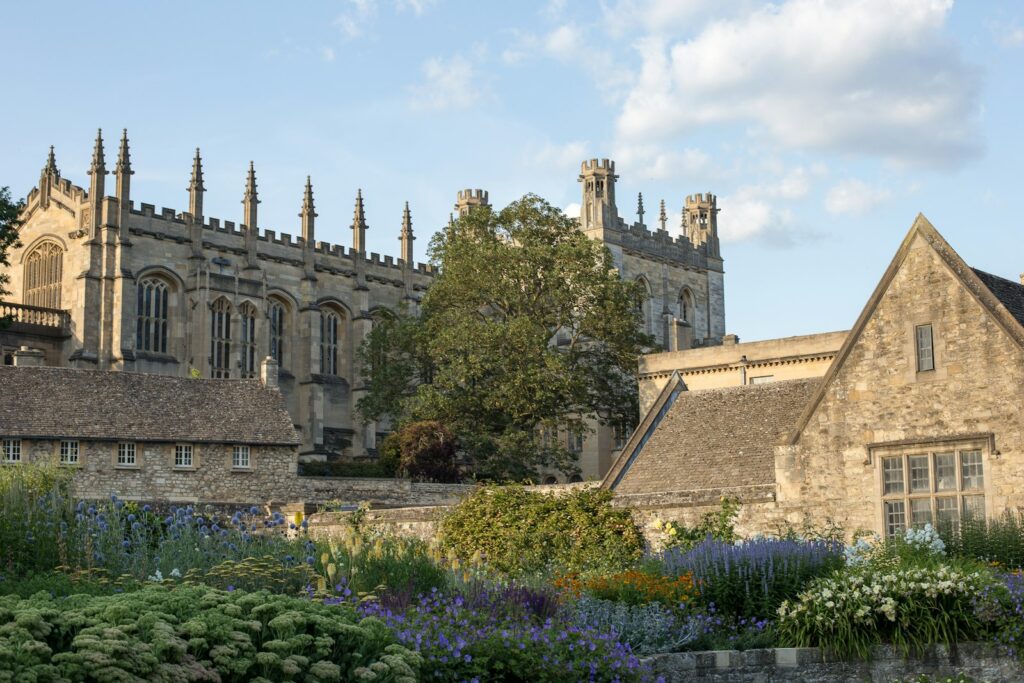
    Christ Church, Oxford, seen across Christ Church Meadow
    The Christ Church staircase, climbed by the first-years on their way to the Great Hall. Photo: Tetiana Shyshkina / Unsplash

    Steam Railways: Glenfinnan and Goathland

    Glenfinnan Viaduct and the Jacobite

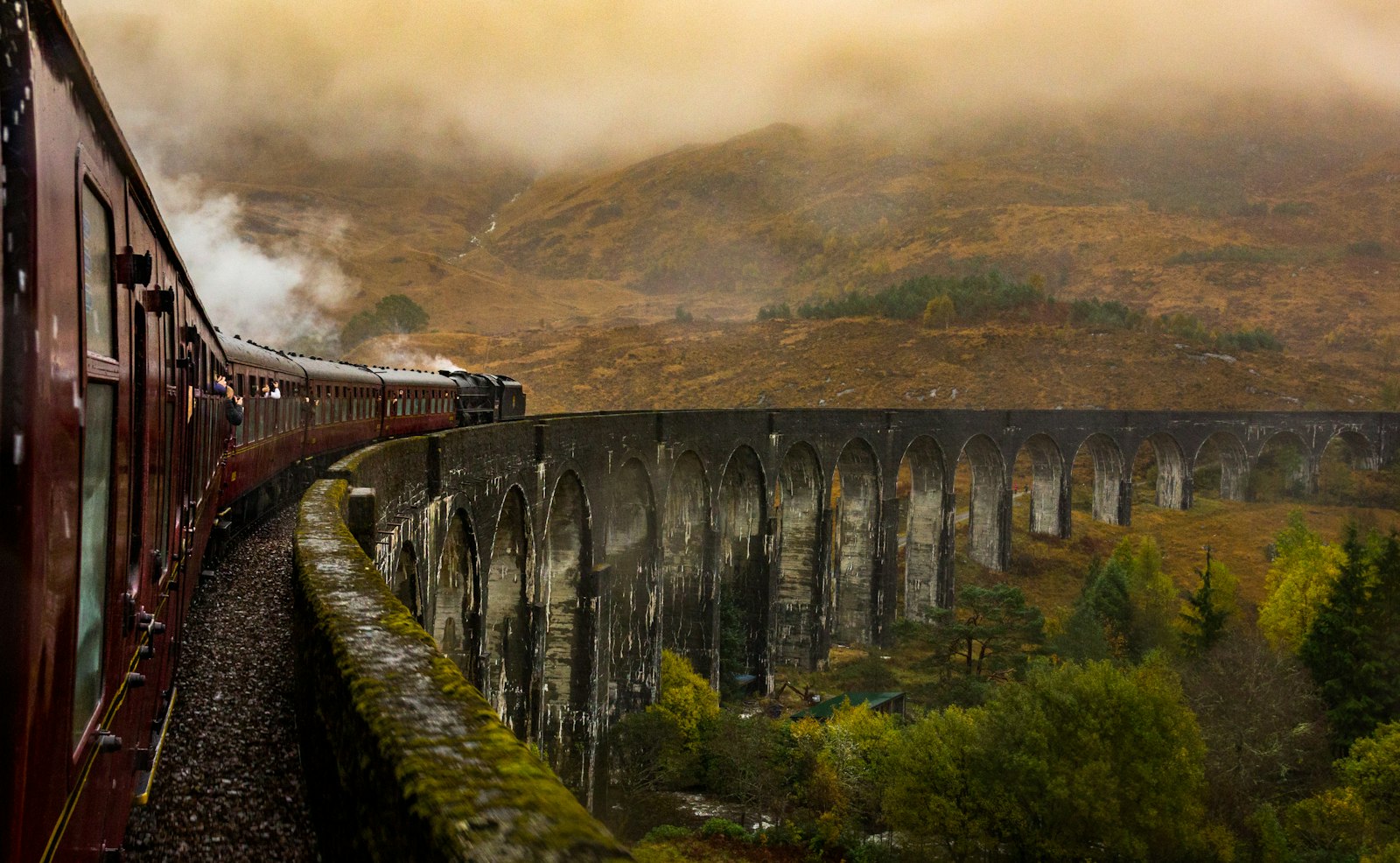
    The curving, 21-arch Glenfinnan Viaduct in the West Highlands is the image most people picture when they think of the Hogwarts Express. It features in Chamber of Secrets, when Harry and Ron fly the Ford Anglia alongside the train, and in Prisoner of Azkaban, when the Dementors board. Loch Shiel, below the viaduct, is where Buckbeak skims the water in the same film.

    You can ride the line yourself on the Jacobite steam train from Fort William to Mallaig, operated by West Coast Railways. It is seasonal, typically running from late spring to the end of October, so check West Coast Railways for this year’s dates. Seats sell out, so book as soon as dates are released: browse Jacobite steam train experiences. For the Caledonian Sleeper and other rail journeys, see our guide to luxury train travel in Scotland.

    Goathland, North Yorkshire Moors Railway

    On the heritage North Yorkshire Moors Railway, little Goathland station played Hogsmeade station in Philosopher’s Stone. It is also the village from TV’s Heartbeat. Steam trains run between Pickering and Whitby in season, so a day here can end with fish and chips by the sea. Timetables vary year to year, so check the railway’s own website before you plan.
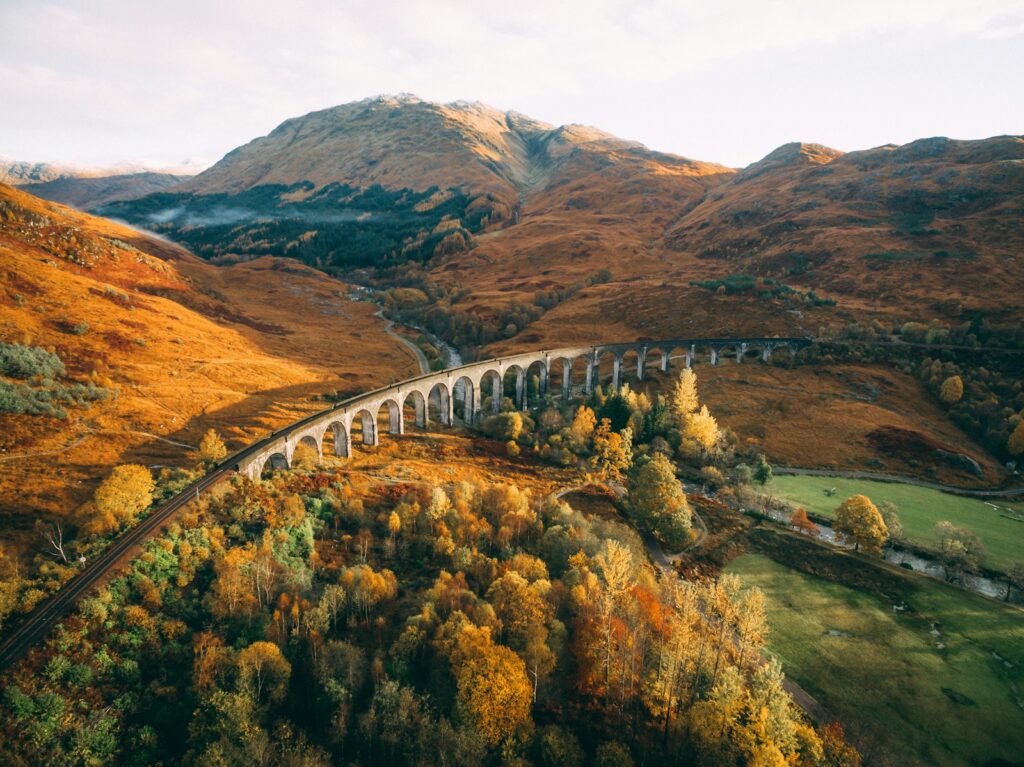
    Glenfinnan Viaduct near Fort William
    The Jacobite crossing the Glenfinnan Viaduct in late summer. Photo: Connor Mollison / Unsplash

    London Locations

    • King’s Cross: The films used the real station, with the Platform 9¾ scenes shot on platforms 4 and 5. Today a half-vanished luggage trolley on the concourse makes a free photo spot, beside the Harry Potter Shop at Platform 9¾. Queues build quickly, so go early.
    • Leadenhall Market: The Victorian covered market in the City stood in for the streets around Diagon Alley in Philosopher’s Stone, and a blue door in Bull’s Head Passage was the entrance to the Leaky Cauldron.
    • Millennium Bridge: The steel footbridge between St Paul’s and Tate Modern is destroyed by Death Eaters in the opening of Half-Blood Prince.

    Round off the day with a dinner from our guide to Michelin-starred dining in London.

    The Warner Bros. Studio Tour London

    No Potter pilgrimage is complete without the Warner Bros. Studio Tour London, The Making of Harry Potter, at Leavesden, about 20 miles north-west of central London. It is the best way to see the Great Hall set, Diagon Alley and the vast Hogwarts model used for exterior shots. Tickets are timed and must be booked in advance: there are no sales on the door, and popular dates sell out weeks ahead. If you would rather not drive, a Studio Tour ticket with return transport from London takes care of the logistics.

    The New HBO Series

    A new chapter is on the way. HBO’s television adaptation began filming in summer 2025, based at Warner Bros. Studios Leavesden, where the films were made. HBO has announced that the first season, Harry Potter and the Philosopher’s Stone, is set to arrive on HBO and HBO Max from Christmas 2026, and a second season based on Chamber of Secrets has been commissioned. Location work around Britain has been widely reported, but few sites have been officially confirmed, so treat any “new filming location” claims with caution until the show airs. Expect interest in the original locations, and in the wider Wizarding World, to rise once it does.

    Where to Stay

    London: St Pancras London

    Next door to King’s Cross, the Gothic Revival St Pancras London (formerly the St Pancras Renaissance, now part of Marriott’s Autograph Collection) is a theatrical base. Film fans may recognise its station frontage: it stood in for the exterior of King’s Cross in Chamber of Secrets.

    Oxford: Old Parsonage Hotel

    A short walk from the colleges, the Old Parsonage Hotel is a seventeenth-century house with around 35 rooms, a library and the Parsonage Grill.

    Near Lacock: Lucknam Park

    A short drive from Lacock and Bath, Lucknam Park is a Palladian country house hotel with a spa and Restaurant Hywel Jones, which holds a Michelin star. For more Cotswold options, see our 10 boutique hotels in the Cotswolds.

    York, for Goathland: Grays Court

    Tucked against the city walls beside York Minster, Grays Court is a family-owned historic house with 12 bedrooms and the Bow Room restaurant, which holds three AA Rosettes.

    Durham: Lumley Castle

    For a night in a real fourteenth-century castle, Lumley Castle Hotel sits just outside Chester-le-Street, a short drive from Durham Cathedral.

    Near Alnwick: Doxford Hall

    About 15 minutes north of Alnwick, Doxford Hall Hotel & Spa offers a country-house stay with an indoor pool and spa, ideal for the castles and coast.

    Glenfinnan: Glenfinnan House Hotel

    Reopened in 2024 after a major refurbishment, Glenfinnan House Hotel sits on the shore of Loch Shiel, close to the viaduct. For grander Highland stays, see our castle stays in Scotland.

    A Ten-Day Route from London to the Highlands

    1. Days 1 to 2, London: King’s Cross, Leadenhall Market and the Millennium Bridge, then a timed visit to the Studio Tour.
    2. Day 3, Oxford: Christ Church in the morning, the Divinity School after lunch.
    3. Days 4 to 5, Wiltshire and Gloucestershire: Lacock Abbey and village, then Gloucester Cathedral, with nights at Lucknam Park.
    4. Day 6, York and the moors: Train north to York, then a day on the North Yorkshire Moors Railway via Goathland.
    5. Day 7, Durham: The cathedral cloisters and Chapter House, with a night in a castle.
    6. Day 8, Northumberland: Alnwick Castle and broomstick training, then the coast.
    7. Days 9 to 10, the West Highlands: Travel via Edinburgh to Fort William, ride the Jacobite over the Glenfinnan Viaduct and spend a final night by Loch Shiel.

    Because Alnwick and the Jacobite are seasonal, this route works best from late spring to early autumn.

    FAQs

    Was the Great Hall filmed at Christ Church?

    No. Christ Church’s Great Hall inspired the Hogwarts hall, which was built as a set at Leavesden. The college’s staircase, however, was used for filming.

    When does the Jacobite steam train run?

    It is seasonal, usually from late spring to the end of October. Check West Coast Railways for confirmed 2027 dates and book early.

    Do I need to book the Studio Tour in advance?

    Yes. Tickets are timed and sold online only, with no tickets on the door.

    Let Us Plan Your Film Lover’s Britain

    Tell us your dates and we will design a seamless journey through Britain’s most magical filming locations, with timed tickets, steam trains and characterful stays arranged for you.
  • Outlander Locations in Scotland

    Outlander Locations in Scotland

    From the castle walls of Leoch to the haunted moor at Culloden, Scotland lets you step straight into the world of Outlander, and most of its finest locations lie within easy reach of Edinburgh.

    Why Follow the Outlander Trail Now?

    Few television series have done more to send travellers to Scotland. Over eight seasons, the Starz drama turned medieval tower houses, Fife villages and quiet country kirks into places of pilgrimage. The story of Claire and Jamie came to a close with the final episode of season eight in May 2026, and the prequel, Outlander: Blood of My Blood, which follows Jamie’s parents, has run for two seasons on Starz. Interest in the locations has rarely been higher.

    The good news is that the trail is wonderfully compact. Most of the key sites sit in West Lothian, Fife and the Stirling area, so you can see them without long drives, then head north through Perthshire to the real Culloden. Many are cared for by Historic Environment Scotland (HES) or the National Trust for Scotland (NTS), while others are private estates with their own rules, which we note below.

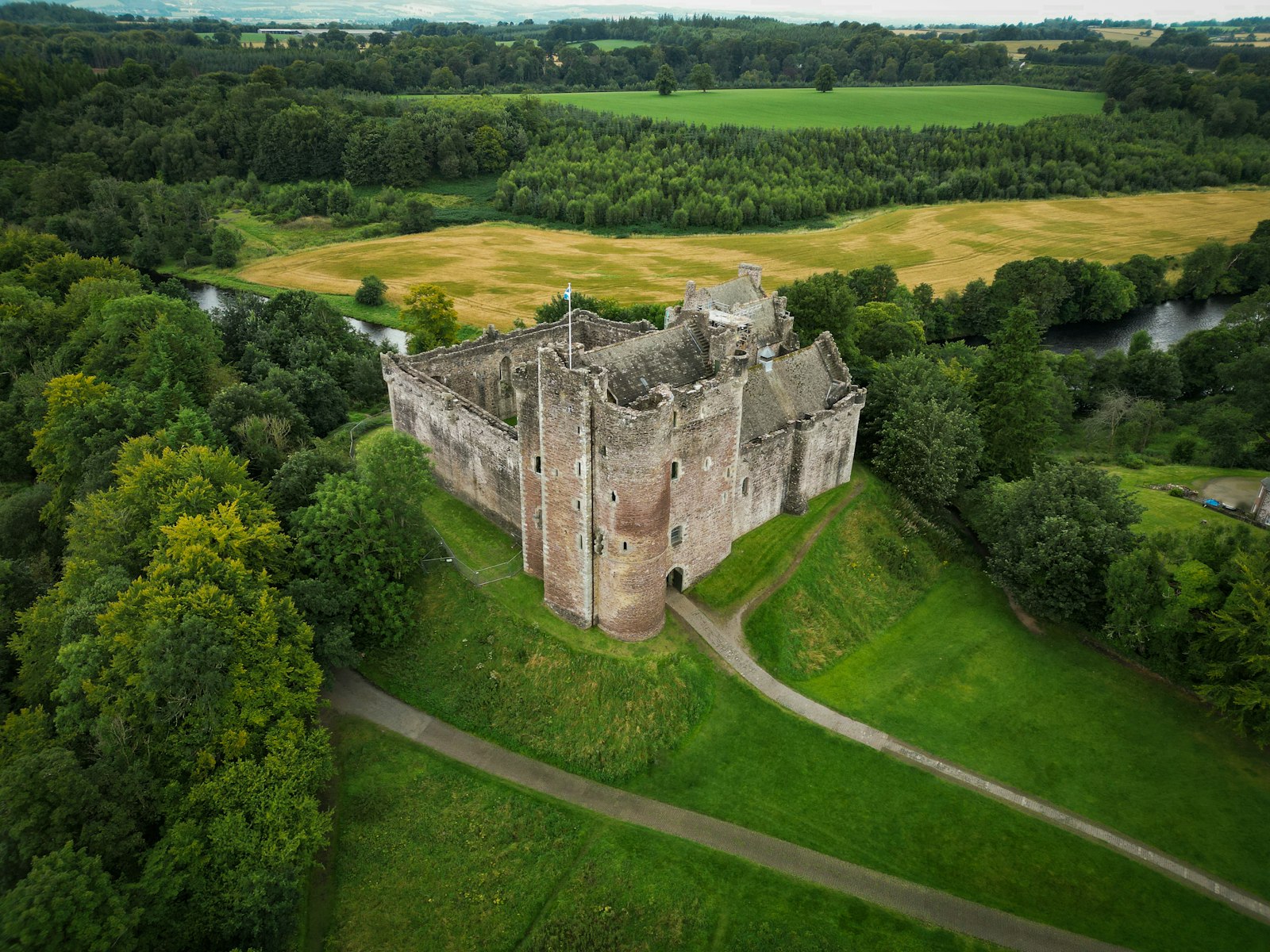
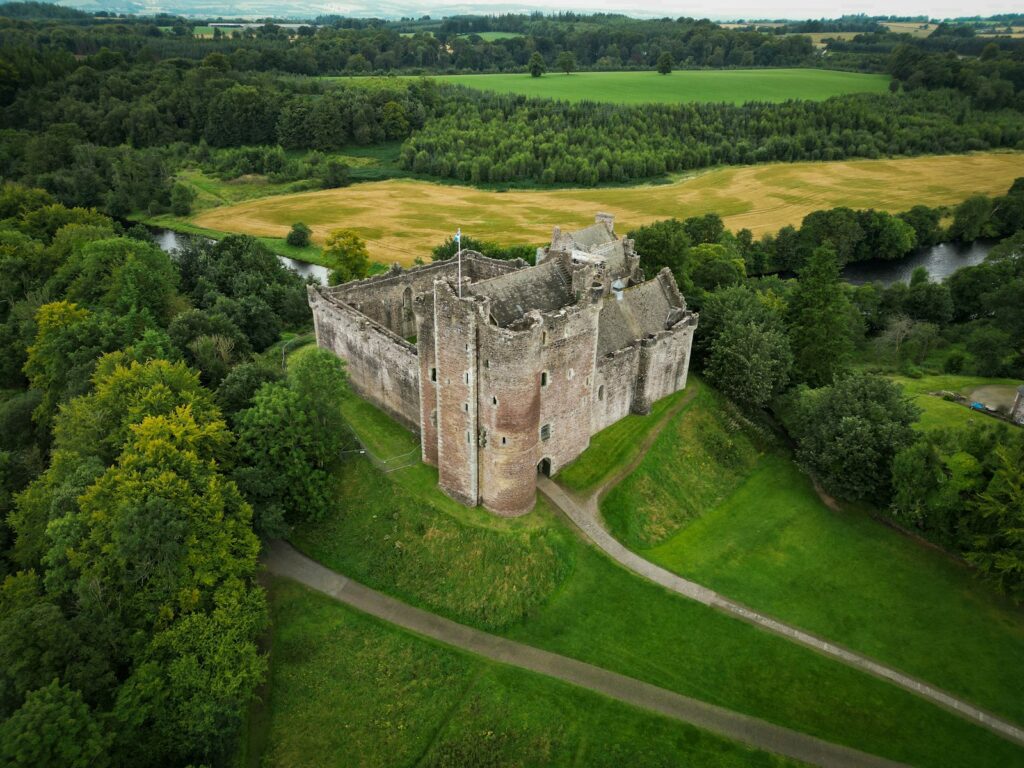
    Doune Castle's stone gatehouse and curtain wall above green grass, Stirlingshire
    Doune Castle, the series’ Castle Leoch and seat of the MacKenzie clan. Photo: Johnny Briggs / Unsplash

    The Key Filming Locations

    Doune Castle: Castle Leoch

    The fourteenth-century courtyard castle near Stirling is Outlander’s Castle Leoch, home of Colum MacKenzie, and it returned as Leoch for the second season of Blood of My Blood. Its great hall, kitchen and towering gatehouse are instantly recognisable, and fans of a certain comedy film will know it from Monty Python and the Holy Grail too. Run by: Historic Environment Scotland. Book timed tickets in advance in busy months.

    Midhope Castle: Lallybroch

    The roofless sixteenth-century tower house on the Hopetoun Estate is Lallybroch, the Fraser family home, and for many fans it is the emotional heart of the trail. Access is to the exterior only, as the interior is derelict and closed. The castle sits within a working farm, and the estate says access can be refused on some days for filming, farming operations, estate activities or large events. Grounds access tickets are sold separately from standard Hopetoun admission. Run by: the private Hopetoun Estate. Always check the estate’s Midhope access page before you set out.

    Tip: Midhope is reached along an estate drive, and access arrangements change. Confirm the current ticket and vehicle pass system with Hopetoun before travelling, or join a guided tour that has access arranged for you.

    Hopetoun House: the Duke of Sandringham’s Residence

    Just along the estate from Midhope, this grand Adam-style mansion overlooking the Firth of Forth was used as the Duke of Sandringham’s home and appears in several other scenes. Inside, the state rooms are among the most opulent in Scotland. Run by: the Hopetoun House Preservation Trust. The house opens seasonally, usually from early April to late September, Thursday to Monday; check dates before you go.

    Blackness Castle: Fort William

    Nicknamed “the ship that never sailed” for its prow-like shape jutting into the Forth, Blackness Castle played Fort William, Black Jack Randall’s headquarters, where Jamie is flogged in season one. It also returned for Blood of My Blood. Run by: Historic Environment Scotland.

    Linlithgow Palace: Wentworth Prison

    The roofless royal palace beside Linlithgow Loch, birthplace of Mary, Queen of Scots, provided the interiors and corridors of Wentworth Prison, scene of some of the series’ darkest moments. Run by: Historic Environment Scotland. Like several older HES sites, it can close at short notice for weather or safety, so check before visiting.

    Culross: Cranesmuir

    The cobbled lanes and ochre-harled houses of this seventeenth-century Fife burgh became Cranesmuir, the village where Geillis Duncan lives. The garden behind Culross Palace doubled as Claire’s herb garden at Castle Leoch. Run by: the National Trust for Scotland cares for the palace and several historic buildings. The palace is seasonal, so check the NTS website for opening dates.

    Falkland: 1940s Inverness

    In the very first episode, Falkland stands in for Inverness, where Claire and Frank take their second honeymoon in 1945. The exterior of the Covenanter Hotel plays Mrs Baird’s guesthouse, and the Bruce Fountain in the square is where Jamie’s ghost gazes up at Claire’s window. Falkland Palace, a Renaissance royal palace run by the National Trust for Scotland, makes a fine addition.

    Glencorse Old Kirk: the Wedding

    Jamie and Claire’s wedding in season one was filmed at this ruined kirk in the grounds of Glencorse House, south of Edinburgh near Penicuik. It is privately owned and visits are by appointment only through Glencorse House, so do not turn up unannounced.

    Craigh na Dun: Kinloch Rannoch

    The stones themselves are fictional: the circle on screen was a set of props placed on a hill on private farmland near Kinloch Rannoch in Perthshire. There is nothing to see on the hill today and it is not a visitor attraction, but the drive along Loch Rannoch is beautiful in its own right. If the wild country beyond appeals, our guide to Rannoch Moor and the West Highland Line explores the moor by train.

    Clava Cairns: the Inspiration

    Just east of Inverness, these Bronze Age burial cairns and standing stones, around 4,000 years old, are widely seen as a real-world echo of Craigh na Dun. They were not used for filming, but standing among the stones in the early morning, it is easy to see why fans make the journey. Run by: Historic Environment Scotland, free to visit.

    Culloden Battlefield and Visitor Centre

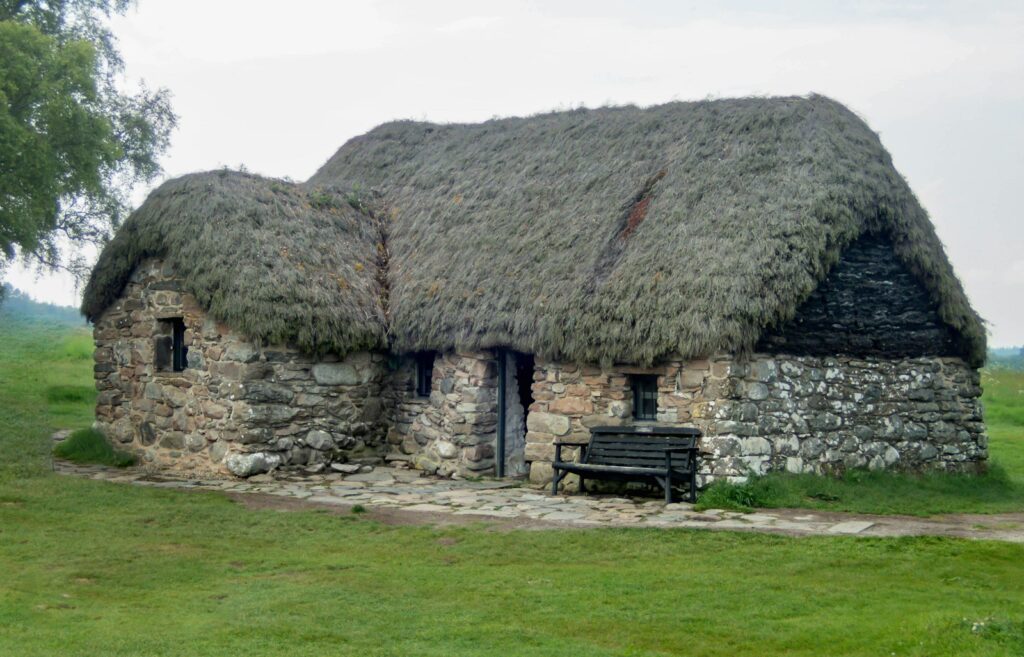
    Culloden is where the story’s great tragedy unfolds, and the real moor, where the Jacobite rising ended in April 1746, is profoundly moving. Out of respect for a site with war graves, the battle scenes themselves were filmed elsewhere, but nothing replaces walking among the clan markers here. The excellent visitor centre includes an immersive battle film. Run by: the National Trust for Scotland. The battlefield is open year round; NTS advises pre-booking the visitor centre.

    Leanach Cottage, a thatched stone cottage on Culloden battlefield near Inverness
    Leanach Cottage on Culloden Moor, the poignant heart of the Jacobite story. Photo: Ray Harrington / Unsplash

    A Three-Day Outlander Route from Edinburgh

    Day 1: Lallybroch and the Forth

    Leave Edinburgh for the Hopetoun Estate, touring the state rooms of Hopetoun House and walking up to Midhope Castle (access permitting). After lunch, continue west to Blackness Castle on the shore, then on to Linlithgow Palace for Wentworth’s shadowy corridors. If you have arranged a visit to Glencorse Old Kirk, it fits neatly into an arrival day or an extra morning south of the city. Return to Edinburgh for the night.

    Day 2: Fife Villages and Castle Leoch

    Cross the Forth to Culross for the Cranesmuir lanes and the palace garden, then drive on to Falkland for 1940s Inverness, the Bruce Fountain and Falkland Palace. In the afternoon, head west to Doune Castle and wander the great hall of Castle Leoch. Spend the night at a country house near Stirling or in Perthshire.

    Day 3: North to Culloden

    Take the A9 north into the Highlands. Allow time for a scenic detour along Loch Rannoch from Pitlochry if you want to see Craigh na Dun country, then continue to Inverness. Visit Clava Cairns in the late afternoon light and Culloden Battlefield before checking in for a final night in Inverness.

    Tip: Many sites are seasonal, and Hopetoun opens Thursday to Monday only. For the full trail with the houses and palaces open, plan your trip between April and September.

    Guided Outlander Tours

    If you would rather not drive, several operators run small-group and private Outlander tours from Edinburgh, many with Midhope access included. We recommend browsing Outlander filming location day tours from Edinburgh or, for a longer journey, multi-day Outlander tours from Edinburgh to the Highlands. In the north, a Culloden and Clava Cairns tour from Inverness pairs neatly with a Loch Ness cruise.

    Before you go, reread the novel that started it all: Diana Gabaldon’s Outlander makes the perfect companion for the journey.

    Where to Stay

    Edinburgh: Prestonfield House

    Theatrical, candlelit and wonderfully romantic, Prestonfield House is a seventeenth-century mansion set in parkland beneath Arthur’s Seat, with peacocks on the lawns and rich, jewel-coloured interiors. Jamie and Claire would feel quite at home.

    Edinburgh: The Balmoral

    For classic grandeur at the top of Princes Street, The Balmoral is Edinburgh’s landmark five-star hotel, with a spa and views over the Old Town and castle.

    Near Stirling: Cromlix or Gleneagles

    Close to Doune, Cromlix is an intimate Victorian country house hotel near Dunblane, owned by Sir Andy Murray, with its own chapel and lovely grounds. A little further north in Perthshire, The Gleneagles Hotel offers the full country estate experience, with golf, falconry, a spa and outstanding dining. For more grand stays, see our guide to castle stays in Scotland.

    Inverness: Rocpool Reserve

    Ending in the Highland capital, Rocpool Reserve is a stylish boutique hotel above the River Ness, a short drive from Culloden and Clava Cairns.

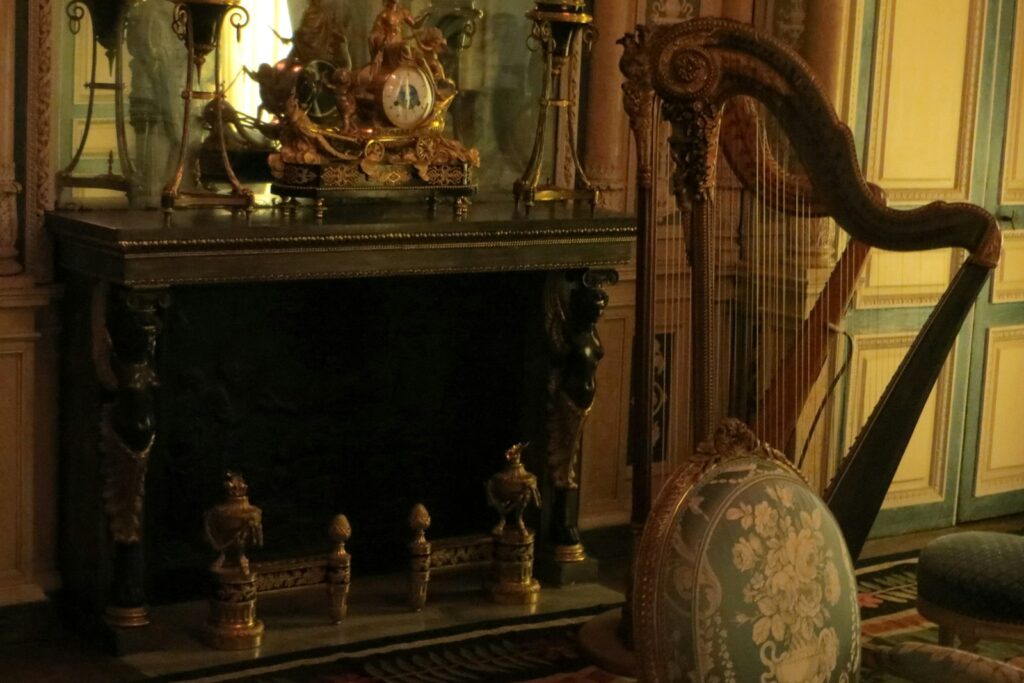
    A harp beside the fireplace in an elegant period drawing room
    Country house comfort to end each day on the Outlander trail. Photo: Lisa Yount / Unsplash

    FAQs

    Can you go inside Lallybroch?

    No. Midhope Castle’s interior is derelict and closed. Visitors can see the exterior and courtyard when the Hopetoun Estate allows access, which can be restricted on some days.

    Are the Craigh na Dun standing stones real?

    No. The stones on screen were props placed on private farmland near Kinloch Rannoch. For real ancient stones, visit Clava Cairns near Inverness, which inspired many fans but was not a filming location.

    Was the Battle of Culloden filmed at Culloden?

    The battle scenes were filmed elsewhere, but the real battlefield and its visitor centre, run by the National Trust for Scotland, are an essential stop for anyone following the story.

    When is the best time to visit Outlander locations?

    April to September, when seasonal sites such as Hopetoun House and Culross Palace are open. HES castles such as Doune and Blackness open year round but with shorter winter hours, so check before you go.

    Let Us Plan Your Outlander Journey

    Tell us your dates and we will design a seamless Outlander itinerary, with private guides, castle access and beautiful places to stay.

  • Downton Abbey Country: Highclere Castle, Bampton and Beyond

    Downton Abbey Country: Highclere Castle, Bampton and Beyond

    From the Gothic towers of Highclere Castle to the honey-stone lanes of Bampton, the world of Downton Abbey is real, a short journey west of London, and still beautifully easy to step into.

    Why Follow the Downton Trail?

    Six series, five Christmas specials and three feature films later, Downton Abbey remains one of the most loved period dramas ever made. The story ended on the big screen with Downton Abbey: The Grand Finale, directed by Simon Curtis from Julian Fellowes’ screenplay, which premiered in London and New York on 8 September 2025 and reached cinemas on 12 September 2025. It followed Downton Abbey (2019) and Downton Abbey: A New Era (2022).

    What makes this trail so rewarding is that the key places are not studio sets. Highclere Castle is a working family home, Bampton is a living Oxfordshire village, and many of the supporting houses are historic estates you can visit, admire from the street or even stay near.

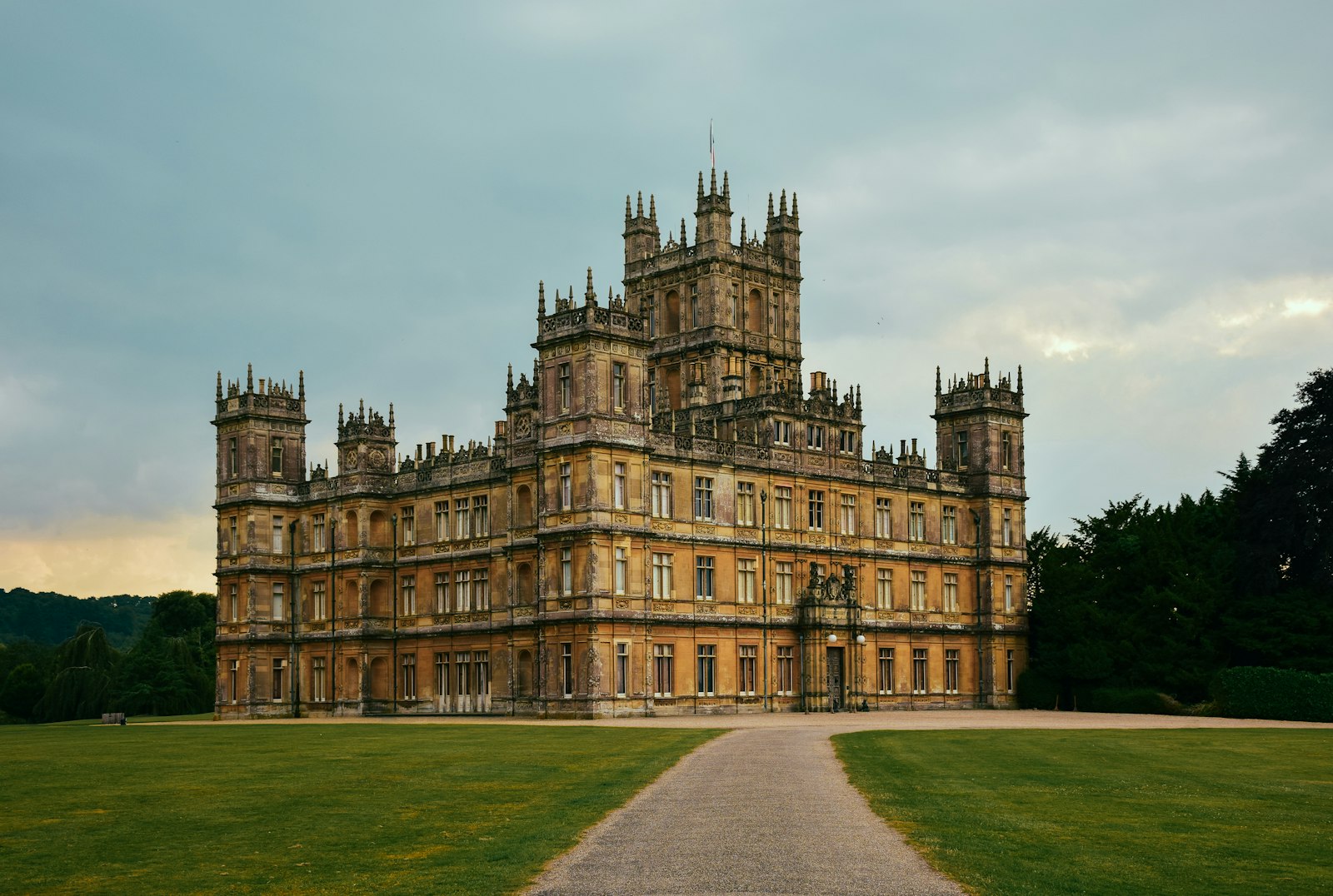
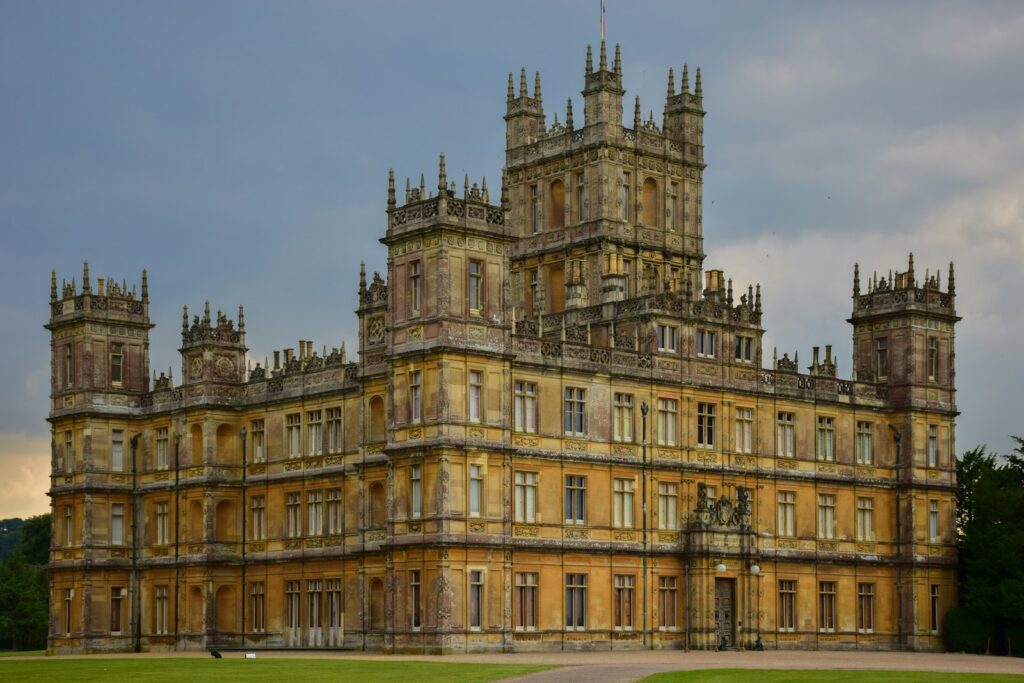
    Highclere Castle in Hampshire, the real Downton Abbey
    Highclere Castle, the real Downton Abbey, set in rolling parkland west of London. Photo: Tim Alex / Unsplash

    Highclere Castle: The Real Downton Abbey

    Highclere Castle stands in rolling parkland west of London, close to the M4 and the market town of Newbury, and has long been the seat of the Earls of Carnarvon. Today it is the home of the 8th Earl and Countess of Carnarvon, which is exactly why it feels so alive: you walk through rooms that are lived in, not museum pieces. Fans will instantly recognise the Saloon, the library and the great staircase, and the castle appears in all three films as well as the series.

    The Egyptian Exhibition and the Tutankhamun story

    Highclere has a second, entirely true story that rivals any plot twist. The 5th Earl of Carnarvon financed Howard Carter’s excavations in Egypt, and in 1922 they discovered the tomb of Tutankhamun. Down the old servants’ stairs in the castle cellars, the Egyptian Exhibition tells the story of the 5th Earl’s work and the discovery, with replicas from the tomb alongside antiquities from the family’s collection. For background reading, the Countess of Carnarvon’s own book, Egypt at Highclere, makes a lovely companion.

    Opening times and tickets

    Highclere opens to the public only on limited dates, and popular days sell out, so plan this first and build the rest of the trip around it. The official ticket shop currently lists:

    • Spring Public Opening: selected dates from March to June 2027.
    • Summer Public Opening: Sunday 11 July to Thursday 2 September 2027, closed to the public every Friday and Saturday.
    • Guided and seasonal tours: including winter guided tours in January 2027, Downton Abbey and Tutankhamun guided tours in February 2027 and summertime guided tours in June and July 2027, alongside special events such as Christmas tours.

    On public opening days you choose a timed entry slot for the castle (morning, midday or afternoon), with self-guided rooms and guides on hand to answer questions. The gardens, tearooms and gift shop stay open through the day. Tickets are non-transferable and non-refundable.

    Tip: Book Highclere tickets as soon as your dates are fixed, then arrange hotels and transport around your slot. The Champagne picnic afternoon tea add-on is especially popular and often sells out first.

    Getting there

    The nearest station is Newbury, served by trains from London Paddington, and the castle is about 15 minutes away by taxi. Taxis do not wait outside the station, so book your return in advance. Drivers should follow the brown signs from the A34 rather than relying on sat nav close to the castle.

    Bampton: The Village of Downton

    About 20 miles west of Oxford, on the edge of the Cotswolds, Bampton played the village of Downton throughout the series and returned for the films. The main filming locations cluster around the church, so it is easy to explore on foot in an hour or two.

    • St Mary’s Church: the setting for Downton’s weddings, christenings and funerals, including Mary and Matthew’s wedding and Edith’s ill-fated wedding day. It is generally open to visitors.
    • Bampton Library (Downton Cottage Hospital): the seventeenth-century former grammar school that served as Dr Clarkson’s hospital. It is home to the Bampton Library and Community Archive, and fans’ donations helped with its restoration. Look out for the inexpensive “Downton Abbey Mile” map sold here.
    • Churchgate House: the former vicarage overlooking Church Green played Isobel Crawley’s house. It is private and behind a high wall, so you only glimpse the upper storeys.
    • The Grantham Arms: a private house opposite the church, dressed as the village pub for filming.

    Please remember that much of Bampton is private homes. Parking is free but limited, so arrive early on summer weekends, when tour coaches visit.

    Honey-coloured Cotswold village street
    St Mary's Church, Bampton, the backdrop to Downton's weddings and christenings. Photo: Linda Gerbec / Unsplash

    More Downton in Oxfordshire

    Nearby, Cogges Manor Farm in Witney played Yew Tree Farm, home of the Drewe family, and is open to visitors. In Swinbrook, the riverside Swan Inn appeared in series two as the inn where Lady Sybil and Branson stopped on their planned elopement.

    Other Downton Locations Worth Seeking Out

    Basildon Park, Berkshire

    This Palladian National Trust mansion supplied the interiors of Grantham House, the family’s London home, in the films, and its reception rooms feature heavily in The Grand Finale. It is a natural add-on to a Highclere day; check house opening dates with the National Trust.

    West Wycombe Park, Buckinghamshire

    Still home to the Dashwood family, this Italianate house provided interiors for Lady Rosamund’s London house, and you may recognise its Blue Drawing Room. The house opens only in summer, partly by guided tour, so check dates before travelling.

    Byfleet Manor, Surrey

    The exterior of the Dowager Countess’s Dower House was filmed at this Grade II* listed manor. It is a private home, so treat it as a photo stop rather than a visit.

    London: Lancaster House, Bridgewater House and more

    Lancaster House stood in for Buckingham Palace in the 2013 Christmas special, when Lady Rose was presented at court, while Bridgewater House played the exterior of Grantham House. Neither is open for public tours, but both can be admired from outside near Green Park.

    Further afield: Alnwick and Inveraray

    In Northumberland, Alnwick Castle played Brancaster Castle in the 2014 and 2015 Christmas specials, and its State Rooms are open seasonally. In Argyll, Inveraray Castle became Duneagle Castle for the 2012 Christmas special, when the family travelled to the Highlands; it is open from spring to autumn. Both reward a longer journey north, and Inveraray pairs beautifully with our guide to castle stays in Scotland.

    Where to Stay: Luxury near Highclere and the Cotswolds

    Heckfield Place, Hampshire

    About an hour from London, Heckfield Place is one of England’s most serene country house hotels, set on an estate with its own organic Home Farm and biodynamic market garden. Dining at Marle, which holds a Green Michelin Star, and the open-fire Hearth is led by chef Eleanor Henson, and the Bothy spa has a lovely indoor pool. It makes a polished base for Highclere and Basildon Park.

    The Vineyard, Stockcross

    Just outside Newbury and very close to Highclere, The Vineyard is famous for one of England’s great wine collections. It is currently closed for refurbishment and is scheduled to reopen on 1 February 2027, with refreshed rooms and its Seyval restaurant, and a spa to follow later in 2027. Check it has reopened before you book.

    Estelle Manor, Oxfordshire

    For the Bampton side of the trip, Estelle Manor is a glamorous Grade II listed house on a large estate near Eynsham, part country house hotel and part members’ club, with four restaurants, a Roman-inspired spa and an outdoor pool. Hotel guests enjoy the estate’s facilities.

    The Swan Inn, Swinbrook

    For something smaller and full of Downton charm, The Swan Inn sits on the banks of the Windrush near Burford, with rooms in its stables and a riverside cottage. It is the very inn where Sybil and Branson paused on their elopement.

    If you would like to extend into the hills, see our pick of 10 boutique hotels in the Cotswolds.

    Downton Tours from London

    If you would rather not drive, guided day trips from London combine Highclere with Bampton, often with time in Oxford too. Several run only on Highclere’s public opening dates and include castle entry, which can be the simplest way to secure a ticket. We like the Downton Abbey, Oxford and Highclere Castle tour from London for first-timers, while a private Highclere and Downton day tour gives you your own pace and a door-to-door car.

    A Two-Day Downton Itinerary from London

    Day 1: London to Highclere

    Take a morning train from Paddington to Newbury and a pre-booked taxi to Highclere for your timed entry. Explore the State Rooms, then head down to the Egyptian Exhibition before tea and a wander in the gardens. If time and opening dates allow, add Basildon Park on the way. Check in at Heckfield Place or The Vineyard for a long, unhurried dinner.

    Day 2: Bampton and the Cotswolds edge

    Drive north to Bampton in the morning, before the tour coaches arrive. Pick up the Downton map at the library, visit St Mary’s Church and stroll past Churchgate House. Continue to Cogges Manor Farm in Witney, then lunch beside the river at the Swan Inn in Swinbrook. Either return to London in the evening or stay a final night at Estelle Manor.

    FAQs

    Can you visit Highclere Castle all year?

    No. Highclere is a family home and opens on limited dates, mainly a spring opening from March to June and a summer opening in July and August, plus special guided tours at other times. In 2027 the summer opening runs from 11 July to 2 September, closed Fridays and Saturdays.

    Where is the Downton village filmed?

    In Bampton, Oxfordshire, about 20 miles west of Oxford. The church, the library (Downton Cottage Hospital) and Churchgate House are the key sights.

    Can you do Highclere and Bampton in one day from London?

    Yes, many guided day tours combine both, but it makes for a long day. Two days allows time for the Egyptian Exhibition, afternoon tea and a night in a beautiful country house.

    What was the last Downton Abbey film?

    Downton Abbey: The Grand Finale, released in September 2025, which brought the Crawley story to a close.

    Step Into Downton, Seamlessly

    Tell us your dates and we will design a Downton journey with Highclere tickets, private drivers and the finest country house stays.

  • Bridgerton’s Bath: A Regency City Guide

    Bridgerton’s Bath: A Regency City Guide

    Honey-coloured crescents, colonnaded streets and candlelit ballrooms: Bath is where Bridgerton‘s Regency London comes to life, and where the real Regency still waits around every corner.

    Why Bath Is Bridgerton’s Real Home

    Netflix’s Bridgerton is set in Mayfair, but much of its glittering London was filmed a hundred miles west, in Bath. It is easy to see why. The city was built for exactly the society the show portrays: a Georgian resort where the fashionable came to take the waters, dance at the Assembly Rooms and be seen promenading along elegant streets. So much of that architecture survives intact that UNESCO inscribed the entire city as a World Heritage Site in 1987, and in 2021 Bath was inscribed a second time as one of the Great Spa Towns of Europe.

    For fans, that means a double pleasure: stand where the Featheringtons’ carriage pulled up, then sip tea in the Pump Room that Jane Austen knew. With four seasons now on Netflix, and Bath back on screen once more, there has never been a better moment to visit.

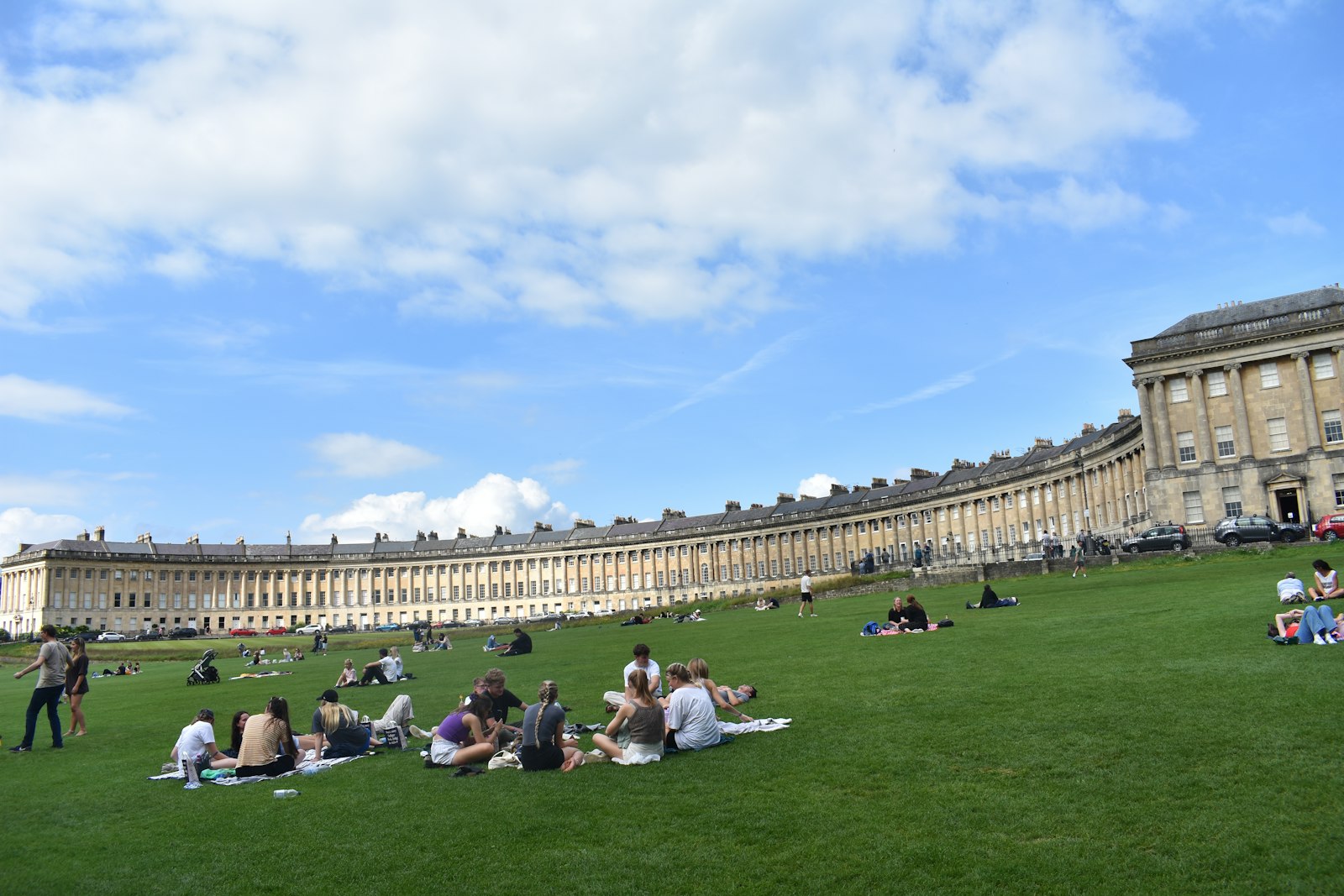
    The curving Georgian terrace of the Royal Crescent in Bath
    The Royal Crescent, the most famous street in Bath and a recurring Bridgerton backdrop. Photo: Martina Jorden / Unsplash

    Bridgerton Filming Locations in Bath

    No. 1 Royal Crescent: the Featherington house

    The front door and façade of No. 1 Royal Crescent play the Featheringtons’ London townhouse. For the show, the production added stone lions, pediments and rosettes to suggest the family’s showy taste, and digital effects placed the house on one side of a grand square facing the Bridgertons. The house was used again in season three. Today No. 1 is a museum run by Bath Preservation Trust, furnished as a fashionable Georgian home, with the servants’ quarters below stairs. It offers Bridgerton-themed tours showing how the house was used during filming.

    The Holburne Museum: Lady Danbury’s house

    At the end of Great Pulteney Street, the grand façade of the Holburne Museum is the exterior of Lady Danbury’s house, and it reprises the role in season four. Behind it is one of Bath’s finest small galleries, beside Sydney Gardens.

    Abbey Green: the modiste

    Tucked beside Bath Abbey, the leafy little square of Abbey Green starred in seasons one and two. The Abbey Deli became the Modiste, Madame Delacroix’s dress shop, while another corner of the square stood in for Covent Garden.

    The Assembly Rooms and Guildhall: the ballrooms

    The Tea Room and Ball Room of the Bath Assembly Rooms provided backdrops for ball scenes, as did the Banqueting Room of the Guildhall. The Assembly Rooms are cared for by the National Trust and are being transformed into a new Georgian visitor experience due to open in 2027. In the meantime, access is by pre-booked guided tour of the principal rooms, so check the National Trust website before you go.

    The streets: Bath Street, Trim Street, Beauford Square and Edward Street

    Much of the show’s street life was filmed on Bath’s cobbles. The colonnades of Bath Street, the quiet corners of Trim Street and Beauford Square, and, from season three, Edward Street off Great Pulteney Street, where crews filmed carriages, horses and costumed extras in January 2023. Many of those Edward Street scenes were shot right outside the Dukes hotel.

    Tip: The film locations are compact and walkable. Start at the Royal Crescent early in the morning, before the crowds, and work downhill towards Abbey Green, Pulteney Bridge and the Holburne Museum.

    To hear the behind-the-scenes stories as you go, we recommend a guided Bridgerton walking tour of Bath, which links the main sites in a couple of hours.

    The Real Regency City

    The Royal Crescent and the Circus

    The Royal Crescent, a sweeping arc of 30 houses designed by John Wood the Younger and built between 1767 and 1774, is the city’s showpiece. A short walk away is the Circus, designed by his father, John Wood the Elder. Work began in 1754, and when the elder Wood died within months of the first stone being laid, his son completed it to his design.

    Pulteney Bridge

    Designed by Robert Adam and completed in 1774, Pulteney Bridge is one of only a handful of bridges in the world lined with shops along its full span on both sides.

    The Roman Baths and the Pump Room

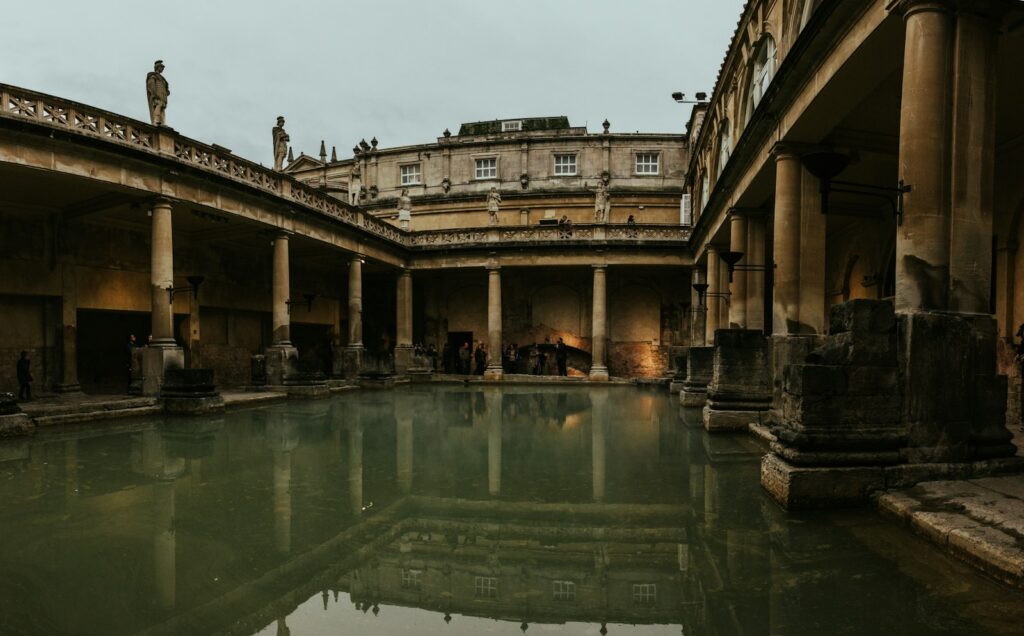
    The Roman Baths are the reason Bath exists, and no visit is complete without them. Next door, the elegant Pump Room, completed in the 1790s, was the social heart of Regency Bath, where visitors gathered to drink the waters and exchange gossip. Today it is a restaurant run by Searcys, serving morning coffee and afternoon tea to live music. Pre-book a Roman Baths entry ticket or guided visit to skip the queue, then book a table in the Pump Room for afterwards.

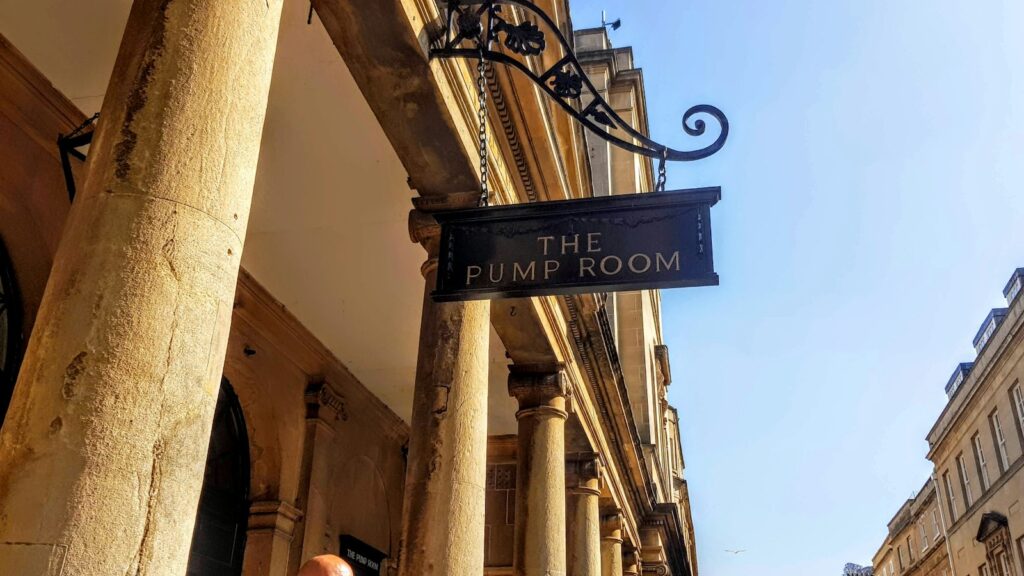
    The Pump Room sign hanging beneath the stone colonnade in Bath
    The Pump Room, the social heart of Regency Bath and still the place for afternoon tea. Photo: Elizabeth Jamieson / Unsplash

    Jane Austen’s Bath

    Jane Austen lived in Bath in the early 1800s and set parts of Northanger Abbey and Persuasion here. The Jane Austen Centre at 40 Gay Street, just below the Circus, tells her story and has a Regency Tea Room upstairs. Every September the city hosts the Jane Austen Festival, ten days of talks, dances and balls opening with the Grand Regency Costumed Promenade through the streets. It usually runs in mid-September; check the official festival website for dates.

    For reading on the train, we love a beautiful clothbound edition of Persuasion, Austen’s most Bath-soaked novel.

    Prior Park Landscape Garden

    On the hillside south of the city, Prior Park is an eighteenth-century landscape garden created by Ralph Allen, with input from the poet Alexander Pope and, possibly, Capability Brown. Now cared for by the National Trust, it has one of only four Palladian bridges of its design left in the world, with sweeping views back over the city. It is not a Bridgerton location, but it is pure Regency romance.

    Thermae Bath Spa

    To take the waters as the Georgians did, but with a modern twist, head to Thermae Bath Spa. Its natural thermal water fills both the indoor Minerva Bath and an open-air rooftop pool with views across the city’s rooftops and towards the surrounding hills.

    Bridgerton Beyond Bath

    Several of the show’s grandest houses are within easy reach, ideal for a longer trip:

    • Wilton House, near Salisbury: Used for interiors of Clyvedon, the Duke of Hastings’s estate, including the dining room, and for royal rooms. Roughly an hour’s drive from Bath.
    • Badminton House, Gloucestershire: Used for some Clyvedon scenes in season one and as the Danbury estate in Queen Charlotte. A private estate with limited public access.
    • Castle Howard, North Yorkshire: The exterior, entrance hall and grounds of Clyvedon Castle in season one, with the nearby village of Coneysthorpe as Clyvedon village.
    • Ranger’s House and the Old Royal Naval College, Greenwich: The wisteria-clad Bridgerton House and many London street scenes.

    Bath also makes a natural base for the Cotswolds, where Bridgerton-style country houses and honey-stone villages abound. See our guide to the best boutique hotels in the Cotswolds if you plan to extend your stay.

    Where to Stay in Bath

    The Royal Crescent Hotel & Spa

    For the ultimate Bridgerton address, The Royal Crescent Hotel & Spa occupies the centre of the crescent itself, a five-star hotel of 45 rooms with hidden gardens behind and a spa with an indoor pool.

    The Gainsborough Bath Spa

    In the heart of the old city, near the Roman Baths, The Gainsborough Bath Spa draws natural thermal water into its own Spa Village, with two thermal pools, saunas, a steam room and an ice alcove.

    No.15 by GuestHouse, Great Pulteney Street

    Now part of the GuestHouse group, No.15 Great Pulteney is a witty, art-filled Georgian townhouse hotel with a small spa, a short stroll from the Holburne Museum and Pulteney Bridge.

    Dukes, Great Pulteney Street

    Fans will love Dukes, a characterful boutique townhouse on the corner of Edward Street, where many of the season three street scenes were filmed right outside the door. Note that there is no lift.

    Homewood Hotel & Spa, Freshford

    For country-house calm, Homewood sits in gardens above the Avon Valley in Freshford, about 15 minutes by taxi from Bath Spa station. Expect a spa with an outdoor heated pool and hot tubs, and some rooms with private hot tubs of their own.

    Practicalities

    • Getting there: Direct trains run from London Paddington to Bath Spa, taking around an hour and a half. The station is a short walk from the Roman Baths and Abbey Green.
    • Getting around: The compact centre is best explored on foot, though the climb to the Royal Crescent is steep.
    • When to go: Spring and early summer bring long evenings; September brings the Jane Austen Festival. Book hotels well ahead for festival week.
    • Booking ahead: No. 1 Royal Crescent tours, Assembly Rooms tours, Thermae Bath Spa and Pump Room afternoon tea can all sell out, so reserve in advance and check opening times before you go.

    A Perfect Bridgerton Day in Bath

    Morning

    Begin at the Royal Crescent and tour No. 1 Royal Crescent, then stroll through the Circus to the Jane Austen Centre on Gay Street. Continue to the Assembly Rooms if you have booked a guided tour.

    Afternoon

    Wander down to Abbey Green for the Modiste, explore the Roman Baths, then settle in for afternoon tea in the Pump Room. Cross Pulteney Bridge and walk the length of Great Pulteney Street, past Edward Street, to the Holburne Museum and Sydney Gardens.

    Evening

    Watch the sun set from the rooftop pool at Thermae Bath Spa, or retreat to your hotel’s thermal pools before dinner.

    The green waters of the Great Bath at the Roman Baths in Bath, ringed by stone columns and statues
    The same hot springs that fed the Great Bath now fill the rooftop pool at Thermae Bath Spa. Photo: Mario Klassen / Unsplash

    FAQs

    Which house is the Featheringtons’ in Bath?

    No. 1 Royal Crescent, at the eastern end of the Royal Crescent. Its exterior plays the Featherington townhouse, and it is now a museum you can visit, with Bridgerton-themed tours.

    Is Lady Danbury’s house in Bath?

    Yes. The façade of the Holburne Museum on Great Pulteney Street plays Lady Danbury’s house, including in season four.

    When is the Jane Austen Festival?

    It runs for ten days each September, opening with the Grand Regency Costumed Promenade. Check the official festival website for exact dates.

    Step Into Your Own Regency Season

    Tell us your dates and we will design a Bath and Bridgerton itinerary with private tours, spa stays and country-house day trips.