
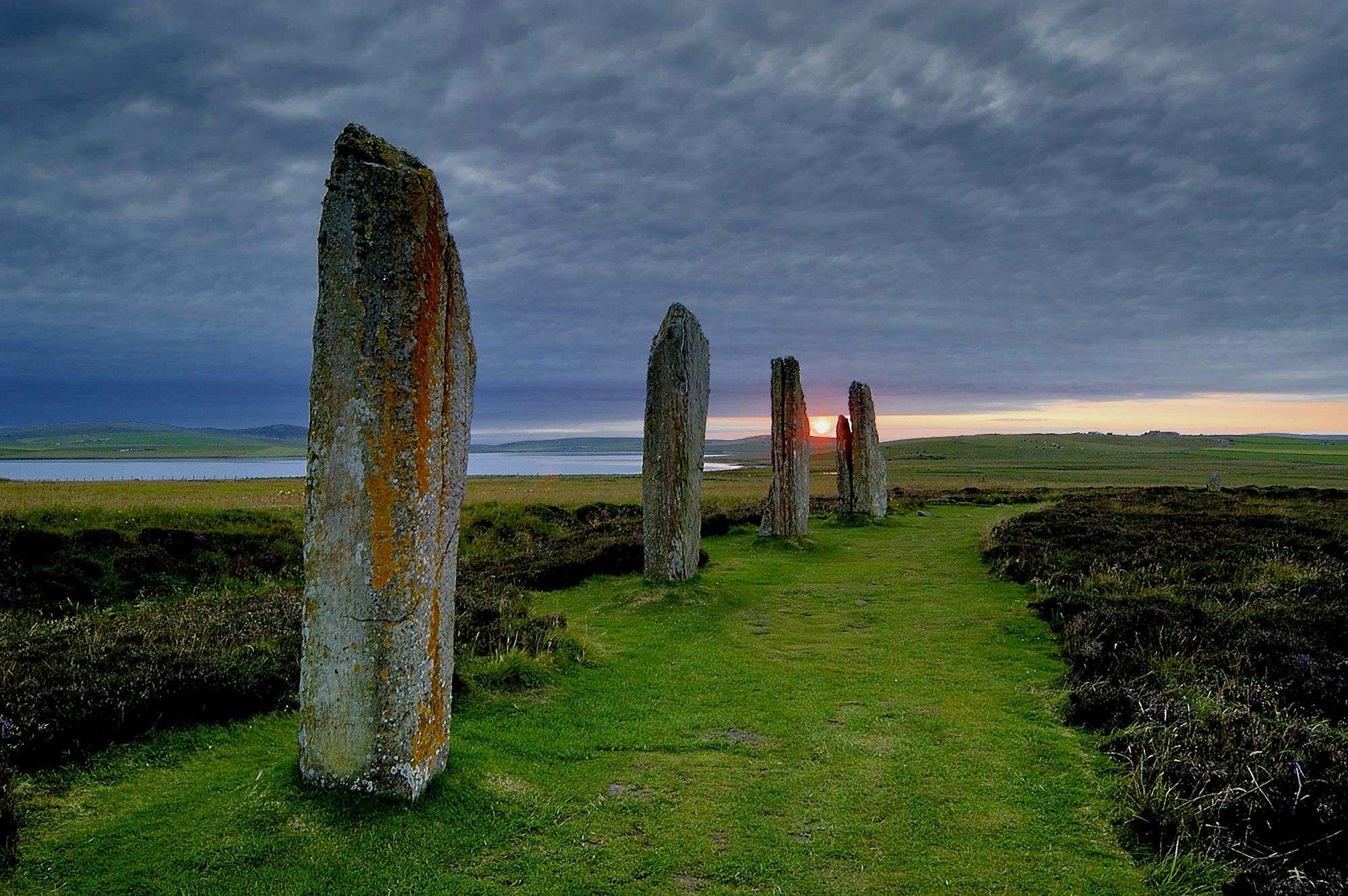
Off Scotland’s northern tip, Orkney keeps a 5,000-year-old world of stone villages, standing stones and chambered tombs, and few places in Britain let you stand so close to the distant past.
Table of Contents
Why Orkney Belongs on Your List
Most travellers to Scotland head for Edinburgh, the Highlands and perhaps Skye. Far fewer cross the Pentland Firth to Orkney, and that is exactly why we love it. On the West Mainland, within a few miles of each other, sit some of the most remarkable prehistoric monuments in Europe: a Neolithic village with its stone furniture still in place, two great stone circles, and a chambered tomb that catches the midwinter sunset. Together they form the Heart of Neolithic Orkney UNESCO World Heritage Site.
Add a red sandstone cathedral founded in the 12th century, a wartime chapel of astonishing beauty, two whisky distilleries and wide, luminous skies, and you have one of the most rewarding short breaks in Britain.
The Heart of Neolithic Orkney
Most of the main sites are cared for by Historic Environment Scotland (HES). Some need a timed ticket, others are open access, so a little planning goes a long way. HES members and Explorer Pass holders get free entry to the ticketed sites.
Skara Brae
A great storm in 1850 stripped the turf from a dune on the Bay of Skaill and revealed a village around 5,000 years old. HES describes Skara Brae as the best-preserved Neolithic settlement in Western Europe, and stone dressers and box beds still stand where their makers placed them. A visitor centre displays finds such as gaming dice and jewellery, and a replica house shows how an interior may once have looked.
In summer, tickets also cover nearby Skaill House, a 17th-century mansion that is run separately, so check what your ticket includes for the month you visit. We recommend booking a timed slot online in high season.
The Ring of Brodgar
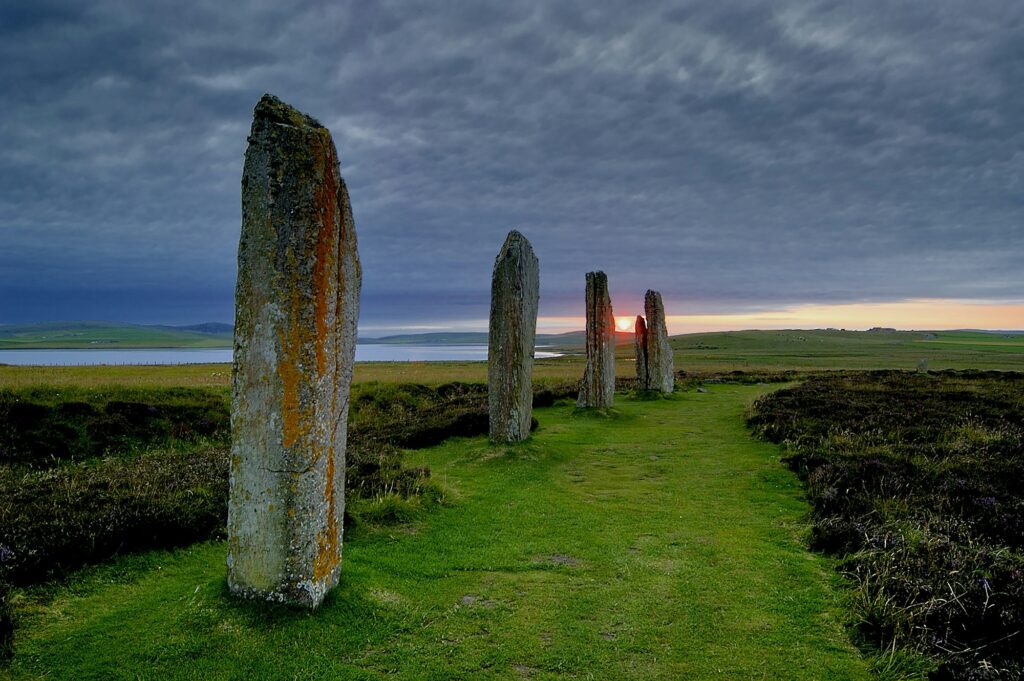
Set on a narrow neck of land between two lochs, the Ring of Brodgar is one of the great stone circles of the British Isles. It dates to the 3rd millennium BC; of an original 60 stones, 36 survive, some reaching 4.7 metres. It is open all year with no ticket required. Because of erosion, access within the circle itself has at times been restricted to marked paths, so please follow the signage on the day.
The Standing Stones of Stenness
A short walk away, the tall, slender Stones of Stenness are fewer in number but no less dramatic, and you can usually walk among them. HES Rangers have run free guided walks at Stenness and Brodgar, daily in the summer months and on selected days in winter, with no booking needed. They are an excellent introduction; check the current schedule with HES before you go, as walks can be cancelled at short notice.
Maeshowe
Maeshowe is a chambered cairn of extraordinary craftsmanship, built around 5,000 years ago. You stoop along a long, low passage into a corbelled stone chamber. The passage is aligned so that, in the weeks around the winter solstice, the light of the setting sun reaches the back wall of the chamber. HES suggests that, weather permitting, the effect may be seen from roughly the end of November to the middle of January, during the 2pm tour.
The chamber also holds a very different kind of history. In the 12th century, Norsemen broke into the tomb and carved around thirty runic inscriptions on its walls, which HES calls the largest collection of runic inscriptions to survive outside Scandinavia. Among them are boasts, names and a carved creature known as the Maeshowe Dragon.
Access to Maeshowe is by guided tour only, and capacity is small. Tours start from the Maeshowe Visitor Centre in Stenness (the old centre at Tormiston Mill is no longer used), with a shuttle bus to the cairn followed by a short walk. There is no wheelchair access into the cairn itself.
Tip: Book your Maeshowe tour online as soon as your dates are fixed, and arrive about 15 minutes early to collect tickets. In the solstice season, the afternoon tours are in particular demand.
The Ness of Brodgar
Between Stenness and Brodgar lies the Ness of Brodgar, a vast Neolithic complex whose excavation transformed our understanding of the period. The final excavation season took place in 2024, after which the trenches were backfilled to protect the fragile stonework. Today it is a grassy mound while analysis of the finds continues, but knowing what lies beneath adds a thrilling layer to the walk between the two circles.
Affiliate-ready: Browse guided tours of Neolithic Orkney with expert local guides →
Beyond the Neolithic
St Magnus Cathedral, Kirkwall
Founded in 1137 by Earl Rognvald in memory of his uncle, St Magnus, Kirkwall’s red and yellow sandstone cathedral is the finest medieval building in the north of Scotland. Since a royal charter of 1486 it has belonged to the people of Kirkwall rather than the church, and it remains a working parish church. For a rare perspective, book one of the upper-level tours, which climb into the galleries and tower. They run on set days, need advance booking through Orkney Museums or the cathedral custodians, and are not suitable for young children.
The Italian Chapel
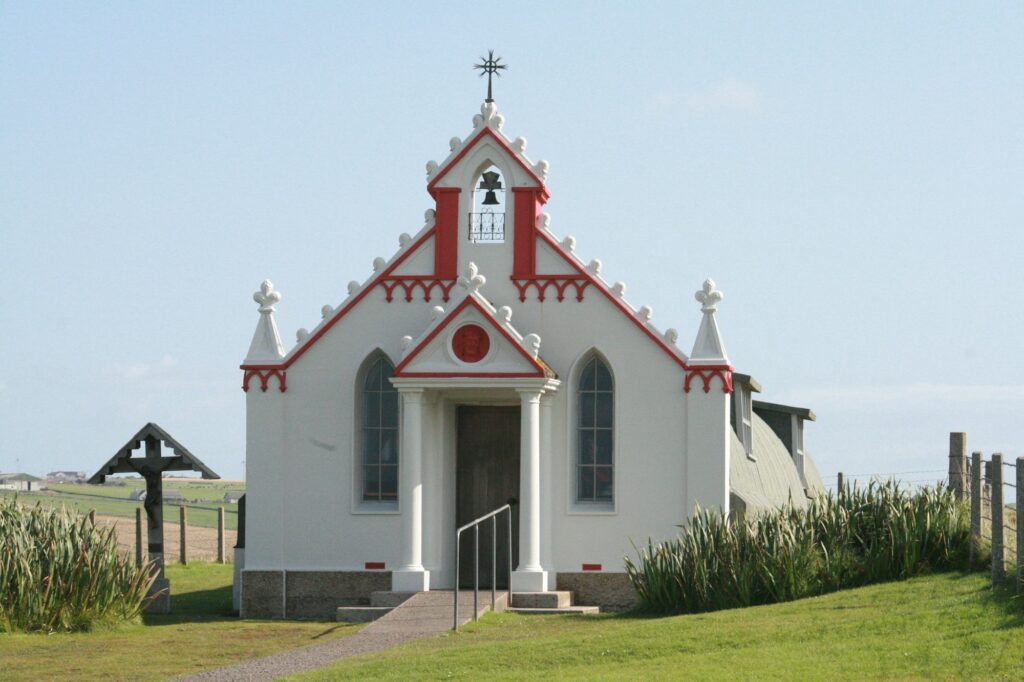
On the tiny island of Lamb Holm, linked by the Churchill Barriers, stands one of Scotland’s most touching buildings. Italian prisoners of war, brought to Orkney during the Second World War to work on the barriers, transformed two Nissen huts into a chapel in 1943 to 1944. The interior was painted by Domenico Chiocchetti, who stayed on to finish it as the war drew to a close. Opening hours are shorter in winter, and a small entry charge applies; check current details before you go.
Whisky: Highland Park and Scapa
Orkney has two whisky distilleries, barely half a mile apart on the edge of Kirkwall. Highland Park, founded in 1798, is known for its gently smoky, heathery style, shaped by Orkney’s own peat. Scapa, founded in 1885, overlooks the great natural harbour of Scapa Flow. Both offer tours, but schedules change with the seasons and tours often need booking in advance, so check each distillery’s own website before you travel. For more ideas on planning a dram-led journey, see our guide to private whisky distillery tours in Scotland.
Where to Stay
Expect characterful, independently run places with excellent local produce rather than grand luxury hotels. We suggest basing yourself in or near Kirkwall, which puts both the Neolithic sites and the cathedral within easy reach.
- The Storehouse (Kirkwall): a restaurant with rooms in a converted 19th-century curing store close to St Magnus Cathedral, with eight en suite rooms upstairs and a menu built around Orkney seafood and beef.
- The Kirkwall Hotel (Kirkwall): a traditional hotel on the harbour front, handy for ferries and the town centre. Ask for a refurbished harbour-view room.
- The Foveran (St Ola, just outside Kirkwall): a small, relaxed hotel whose restaurant looks out over Scapa Flow and is well regarded for seafood.
- Lynnfield Hotel (Kirkwall): a comfortable hotel on the southern edge of town, a short stroll from Highland Park.
Affiliate-ready: Check live availability for hotels across Orkney →
Getting There and Getting Around
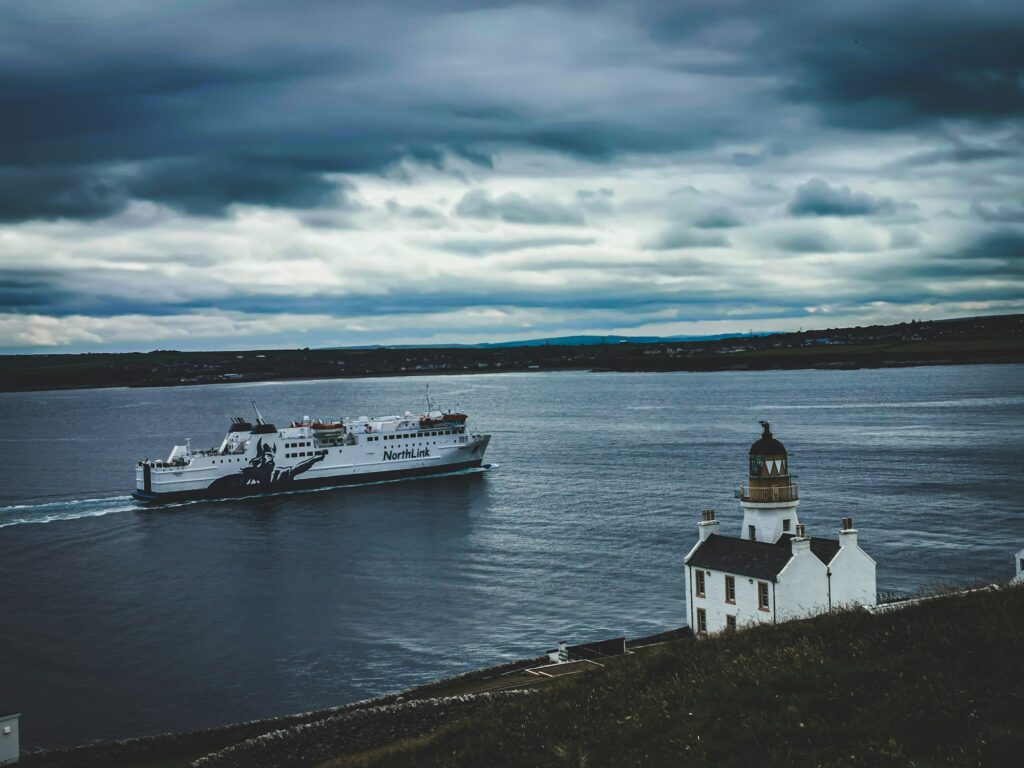
- By ferry from Aberdeen: NorthLink Ferries sails overnight from Aberdeen to Kirkwall, with cabins available.
- By ferry from Scrabster: NorthLink also runs from Scrabster, near Thurso, to Stromness, passing close to the sea stack of the Old Man of Hoy.
- By ferry from Gills Bay: Pentland Ferries crosses from Gills Bay in Caithness to St Margaret’s Hope on South Ronaldsay, a short drive from the Italian Chapel.
- By air: Loganair flies to Kirkwall from Scottish airports including Edinburgh, Glasgow, Aberdeen and Inverness. Some Inverness services were reduced in 2026, so check the current timetable.
Once on Orkney, a car gives you the most freedom; the Neolithic sites are around a 20 to 30 minute drive from Kirkwall. Without a car, a private guide or small-group tour is the most relaxing option.
When to Go
May to September brings long, light evenings, the fullest programme of tours and Ranger walks, and the chance to see Skaill House with your Skara Brae ticket. Book ferries, cars and the best rooms well ahead for July and August.
Late November to mid January is the season for the Maeshowe solstice sunset. Days are short and the weather unpredictable, but the islands are wonderfully quiet, and a successful sunset is something you will never forget. Expect reduced opening hours at many sites, and closures over Christmas and New Year.
A Perfect Neolithic Day
- Morning: Arrive at Skara Brae for an early timed slot, before the coaches, and allow time in the visitor centre and replica house.
- Late morning: Drive to the Ring of Brodgar. If a Ranger walk is running, join it.
- Lunch: Head to Stromness for lunch by the harbour.
- Afternoon: Walk among the Stones of Stenness, look across to the Ness of Brodgar, then take your pre-booked Maeshowe tour.
- Evening: Return to Kirkwall for a twilight look at St Magnus Cathedral and dinner featuring local seafood.
Spend a second day on Kirkwall, the distilleries and the Italian Chapel, and a third on Hoy or the outer islands if time allows. For background reading on the journey, the Orkneyinga Saga tells the story of the Norse earls, including St Magnus and Rognvald.
FAQs
How many days do I need in Orkney?
Two full days covers the Neolithic sites, Kirkwall and the Italian Chapel at a comfortable pace. Three or four days lets you add Hoy, the outer islands and a relaxed distillery visit.
Do I need to book Maeshowe in advance?
Yes, we strongly recommend it. Access is by guided tour only, groups are small, and tours start from the Maeshowe Visitor Centre in Stenness rather than at the cairn.
Can I still see the Ness of Brodgar excavation?
No. The final excavation season was in 2024 and the site was then backfilled to protect it. You can see where it lies between the Stones of Stenness and the Ring of Brodgar, but the remains themselves are now under the turf.
Let Us Plan Your Orkney Journey
Tell us your dates and interests, and we will design a seamless Orkney itinerary with the right stays, guides and timed tickets.
Leave a Reply