
On a quiet ridge where Oxfordshire meets Warwickshire, the Rollright Stones keep one of England’s best-loved legends alive, and they make the perfect first stop on a trail through the country’s most story-haunted landscapes.
Table of Contents
- Why Follow a Folklore Trail?
- The Rollright Stones: Witch, King and Knights
- Along the Ridgeway: Wayland’s Smithy and the White Horse
- Avebury: A Village Inside a Stone Circle
- Further South: Glastonbury Tor and the Cerne Abbas Giant
- Seasonal Customs Worth Timing a Trip Around
- Where to Stay
- A Four-Day Folklore Trail
- FAQs
Why Follow a Folklore Trail?
England’s ancient monuments have lived a second life in story. For centuries, people who had no idea who raised these stones explained them with witches, kings, elf-smiths and dragons, and visiting with those tales in mind brings a field of grey stones vividly to life.
This trail begins at the Rollright Stones on the northern edge of the Cotswolds, then heads south along the Ridgeway to Wayland’s Smithy, the Uffington White Horse and Avebury, before ending in Somerset and Dorset at Glastonbury Tor and the Cerne Abbas Giant. Most sites are free or nearly so, open in daylight all year, and blissfully quiet outside summer weekends.
The Rollright Stones: Witch, King and Knights
The Rollright Stones lie about two and a half miles north-northwest of Chipping Norton, close to the village of Long Compton, and straddle the county boundary. There are three separate monuments, spanning nearly 2,000 years of prehistory.
The King’s Men
The stone circle, in Oxfordshire, dates from the Late Neolithic or Early Bronze Age. It is about 33 metres across, with around 77 closely spaced, heavily weathered stones.
The King Stone
Across the lane, in Warwickshire, stands a single tall monolith. Archaeologists think it most likely marked a Bronze Age burial site.
The Whispering Knights
A short walk east across the fields, four upright stones and a fallen capstone huddle together like conspirators. This is the oldest of the three monuments, the remains of an Early Neolithic portal dolmen, or burial chamber, built centuries before the circle.
The legend
According to local tradition, a king marching with his army to conquer England met a witch on this ridge. She challenged him: “Seven long strides thou shalt take, and if Long Compton thou canst see, King of England thou shalt be.” The king strode forward, but on the seventh step a rise in the ground hid the village from view. The witch turned him to stone as the King Stone, his soldiers became the King’s Men, and four knights who had hung back plotting treachery became the Whispering Knights.
The stones are also said to be uncountable. Legend holds that no one can count the King’s Men three times and arrive at the same number, and that anyone who does will have their heart’s desire. One story tells of a baker who placed a loaf on each stone to keep track, only to find loaves mysteriously missing each time.
Visiting the Rollright Stones
Since 2001 the stones have been owned by the Rollright Trust, a small charity that bought the site after a public campaign and now cares for it. The Trust asks for a modest entry fee (English Heritage lists it at £2 per adult and £1 for children aged 7 to 16, under-7s free), which you can pay online in advance, by QR code on site or in the honesty box. The stones are open daily all year, and the site is a Dark Sky Discovery Site, so a clear night visit is magical.
There are no facilities at the stones and parking is limited to two small lay-bys, with pubs in Long Compton and Chipping Norton. Please do not climb or sit on the stones.
Along the Ridgeway: Wayland’s Smithy and the White Horse
An hour or so south, the Ridgeway National Trail runs about 87 miles along the chalk downs from Avebury to Ivinghoe Beacon, following a route used for thousands of years. Its most legend-rich stretch lies above the Vale of the White Horse.
Wayland’s Smithy
Hidden in a ring of beech trees beside the Ridgeway, this Neolithic long barrow was built in two phases, the first around 3590 to 3555 BC and the larger, with its monumental stone façade, around 3460 to 3400 BC. Its name recalls Wayland, the smith of Germanic legend. Tradition says that if you leave your horse here overnight with a small coin, the invisible smith will shoe it by morning. Wayland’s Smithy is in the care of English Heritage, free to enter and open in daylight, and lies just over a mile’s walk along the Ridgeway from the White Horse Hill car park.
The Uffington White Horse
Owned by the National Trust, this sleek, abstract chalk horse is Britain’s oldest known hill figure, dated by archaeologists to the Late Bronze Age, roughly 3,000 years ago. It stretches about 110 metres across the hillside and is still re-chalked by volunteers. Below it rises Dragon Hill, a flat-topped mound where St George is said to have slain the dragon; the bare chalk patch on top is where its blood spilled and nothing will grow. Above stands Uffington Castle, an Iron Age hillfort. It is open dawn to dusk, with a pay-and-display car park.
For walkers, a good OS Explorer map of the Vale of White Horse makes the loop from the horse to Wayland’s Smithy and back an easy, rewarding morning.

Avebury: A Village Inside a Stone Circle
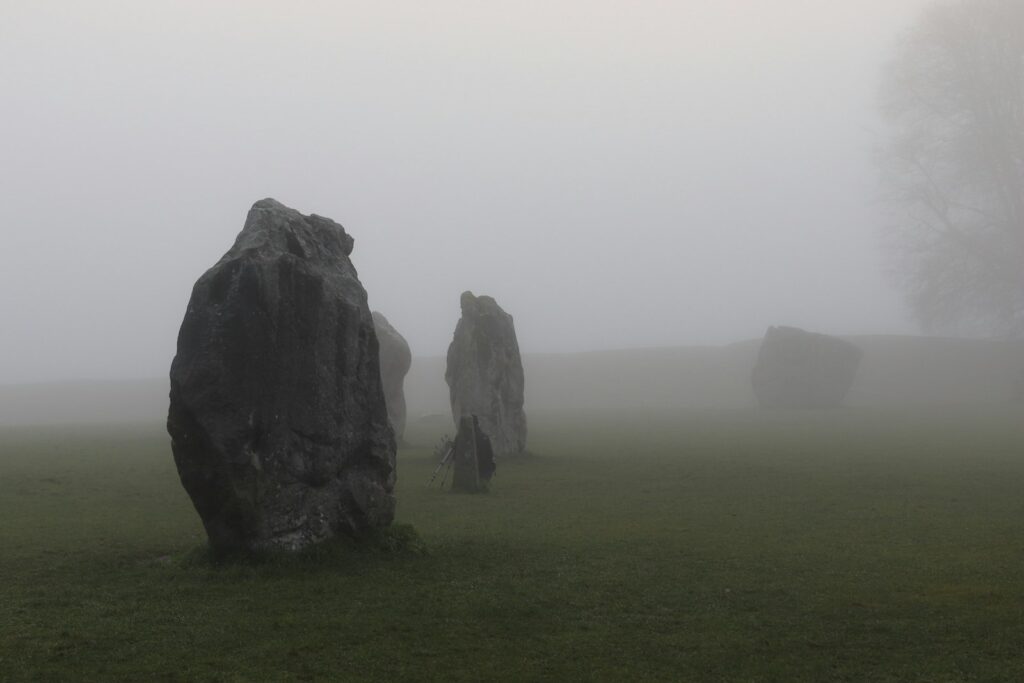
At the western end of the Ridgeway, Avebury is the largest stone circle in Britain, built and remodelled between roughly 2850 and 2200 BC. A vast bank and ditch encloses an outer ring that once held around 100 stones and two smaller circles within it, and part of the village, including its pub, sits right inside the henge. It forms part of the Stonehenge and Avebury World Heritage Site, and the National Trust manages it on behalf of English Heritage. Entry to the stones is free at any reasonable time in daylight.
Start at the Alexander Keiller Museum, then wander the stones. To go deeper, a guided Avebury and Stonehenge day tour pairs the two great circles with expert commentary.
Further South: Glastonbury Tor and the Cerne Abbas Giant
Glastonbury Tor
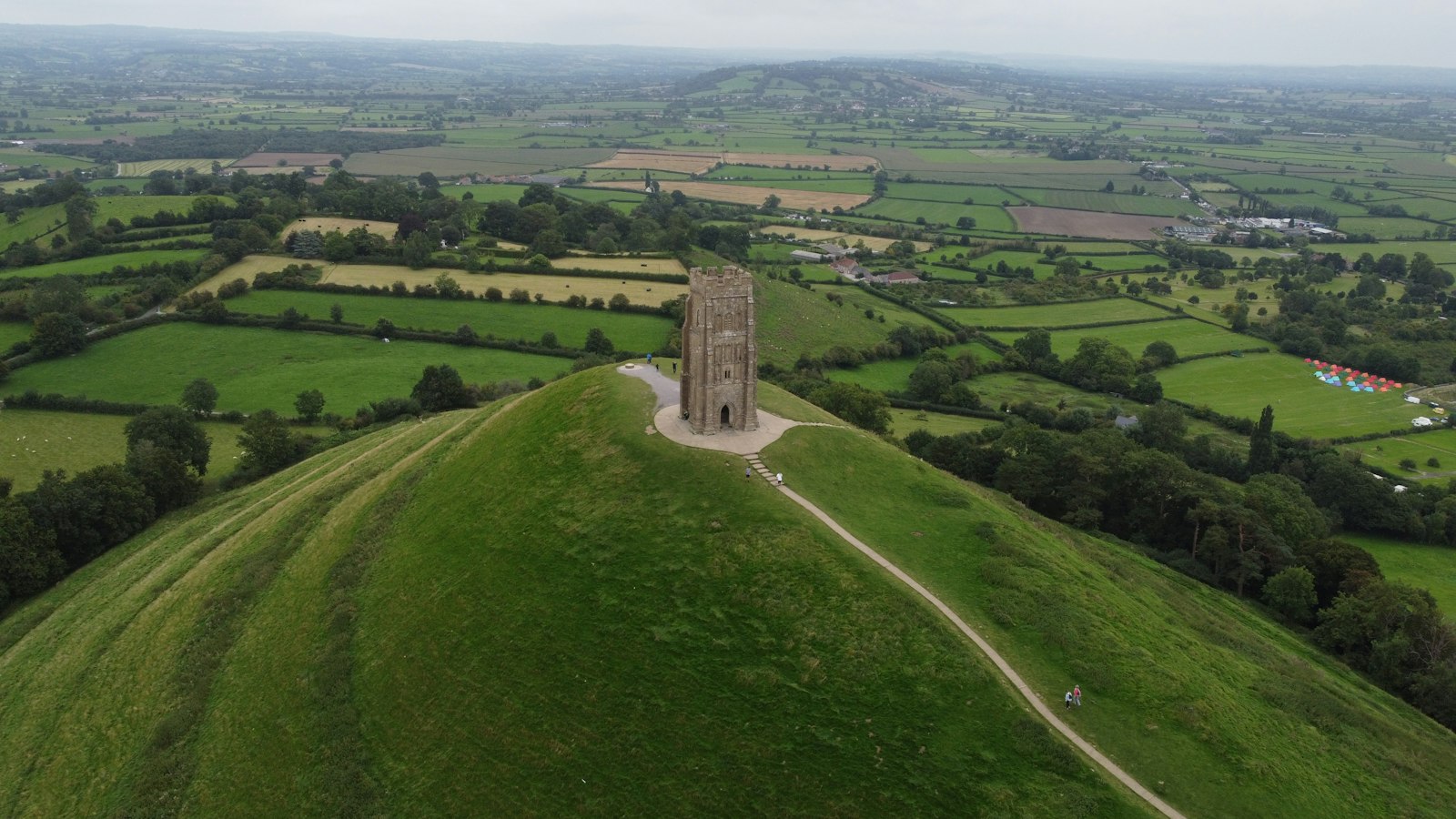
Rising from the Somerset Levels and crowned by the roofless tower of St Michael’s church, the National Trust’s Glastonbury Tor is steeped in story. It is often identified with the Isle of Avalon, where the wounded King Arthur was carried after his last battle. Below, at Glastonbury Abbey, the monks announced in 1191 that they had found the grave of Arthur and Guinevere, a claim most historians now regard as a fundraising coup after a devastating fire. There is almost no parking at the Tor itself, so walk up from the town centre, around 25 minutes. A guided tour of Glastonbury and the stone circles takes the strain out of the logistics.
The Cerne Abbas Giant
In Dorset, the National Trust’s 55-metre club-wielding giant is Britain’s largest chalk hill figure. Long assumed to be prehistoric or Roman, he was dated in 2021 to between AD 700 and 1100, the late Saxon period. The best view is from the signposted viewing area, about a quarter mile’s walk from the village.
Affiliate-ready: Browse stone circle, Avebury and Glastonbury tours →
Seasonal Customs Worth Timing a Trip Around
- May Morning, Oxford (1 May): At 6am, Magdalen College Choir sings from the top of Magdalen Tower to thousands gathered below, followed by Morris dancing in the streets.
- Padstow ‘Obby ‘Oss (1 May): A long way west in Cornwall, but unforgettable. Two hobby horses, each led by a Teaser, dance through the town all day.
- Bampton Morris (Spring Bank Holiday Monday): The Oxfordshire village of Bampton has one of England’s few unbroken Morris traditions, with several sides dancing around the village from early morning.
- Clear winter nights: The Rollright Stones’ dark skies make a crisp, starry evening visit memorable, and the sites are wonderfully quiet.
Before you go, we recommend reading The Lore of the Land by Jennifer Westwood and Jacqueline Simpson, a county-by-county guide to England’s legends and the perfect companion for this trail.
Where to Stay
The Wild Rabbit, Kingham
A short drive from the Rollrights, The Wild Rabbit is a seventeenth-century inn run by Daylesford, with stylish bedrooms, a fine-dining room built on produce from the Daylesford farm. It also features in our guide to boutique hotels in the Cotswolds.
The Feathered Nest, Nether Westcote
A former malt house of around 350 years, The Feathered Nest has four individually decorated rooms plus a cottage, sweeping views over the Evenlode Valley and a kitchen with three AA Rosettes. Note that the pub and restaurant close on Tuesdays and Wednesdays, so check before booking.
The Greyhound Inn, Letcombe Regis
For the Ridgeway and the White Horse, The Greyhound Inn is an eighteenth-century free house at the foot of the downs, with stylish bedrooms named after local landmarks and award-winning food.
The Bell at Ramsbury
Within easy reach of Avebury, The Bell at Ramsbury is an eighteenth-century inn in the Kennet Valley with ten characterful bedrooms, a dining room, a bar and a coffee shop.
Affiliate-ready: Compare inns and hotels around Chipping Norton and the Cotswolds →
A Four-Day Folklore Trail
Day 1: The Rollright Stones
Visit the Rollrights in late afternoon light, try counting the King’s Men, then dine in Kingham or Nether Westcote.
Day 2: The Ridgeway
Walk from White Horse Hill along the Ridgeway to Wayland’s Smithy and back. Overnight in Letcombe Regis.
Day 3: Avebury
Explore the Avebury stones and museum, lunch inside the henge, and stay in Ramsbury.
Day 4: Glastonbury
Climb Glastonbury Tor and explore the abbey ruins, or swing south to the Cerne Abbas Giant.
FAQs
Who owns the Rollright Stones?
The Rollright Trust, a charity, has owned and cared for the stones since 2001. A small entry fee supports its work.
Can you really not count the Rollright Stones?
The stones have, in fact, been counted and recorded, but legend says no one can count them three times and get the same number. The weathered stones make it surprisingly hard.
Do I need a car?
Realistically, yes: the Rollrights are not on a public transport route. A guided tour is a good alternative for Avebury and Glastonbury.
Let Us Plan Your Folklore Journey
Tell us your dates and we will design a seamless trail of stone circles, chalk giants and characterful inns, timed to the seasons and customs you love.
Leave a Reply