
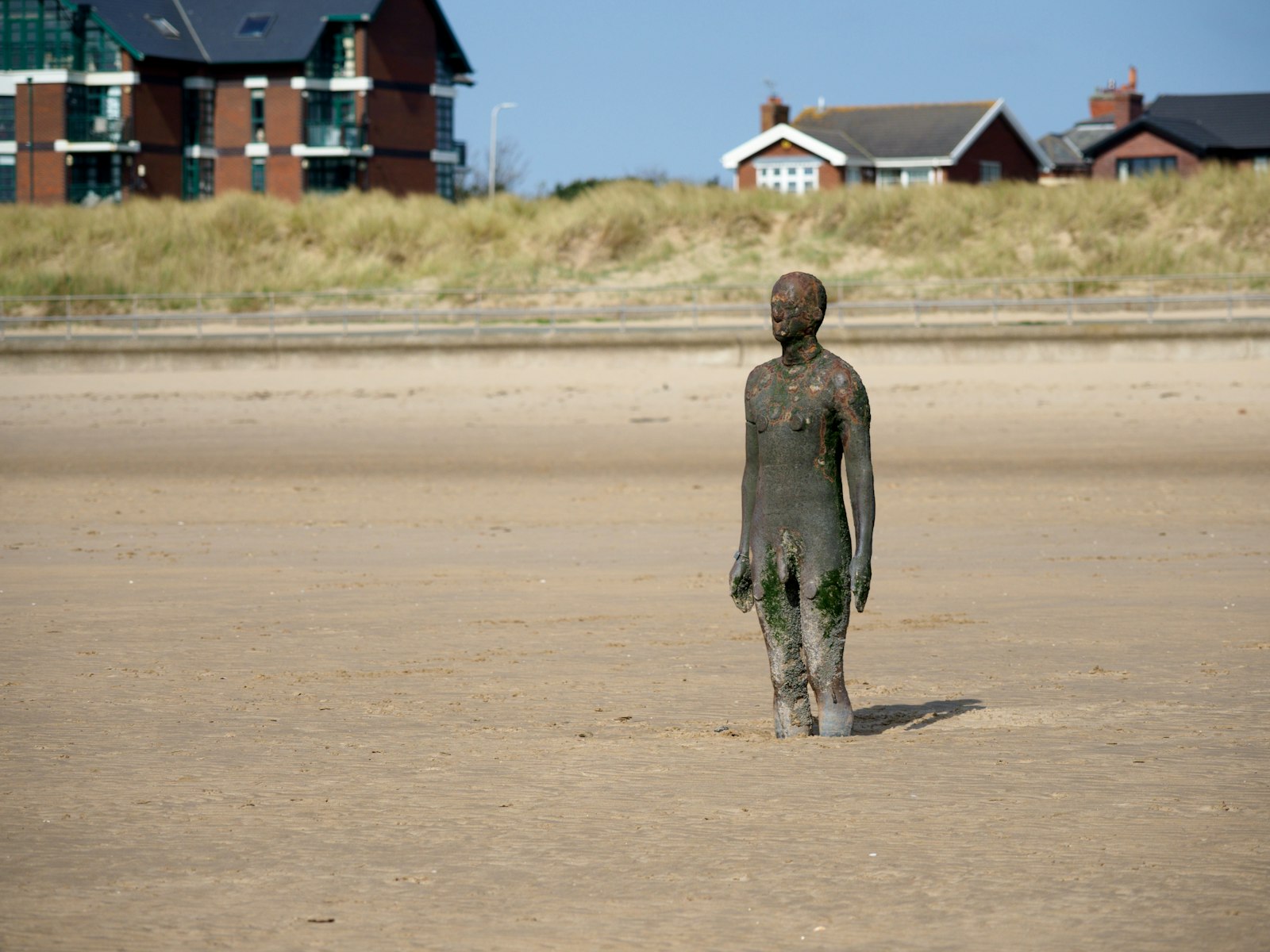
Places Less Visited: two seaside sculptures that divide opinion, from Antony Gormley’s iron men at Crosby to Maggi Hambling’s Scallop at Aldeburgh.
Table of Contents
Art Where the Tide Comes In
There are few items that generate more different points of view or discussion than art works or sculpture outside of a gallery, and some of the most intense discussions seem to happen when an installation is created on a pristine beach where until now only the tide had disturbed the sand.
I came across several intriguing installations that are close to the ocean or on the beach. These are two of my favourites.
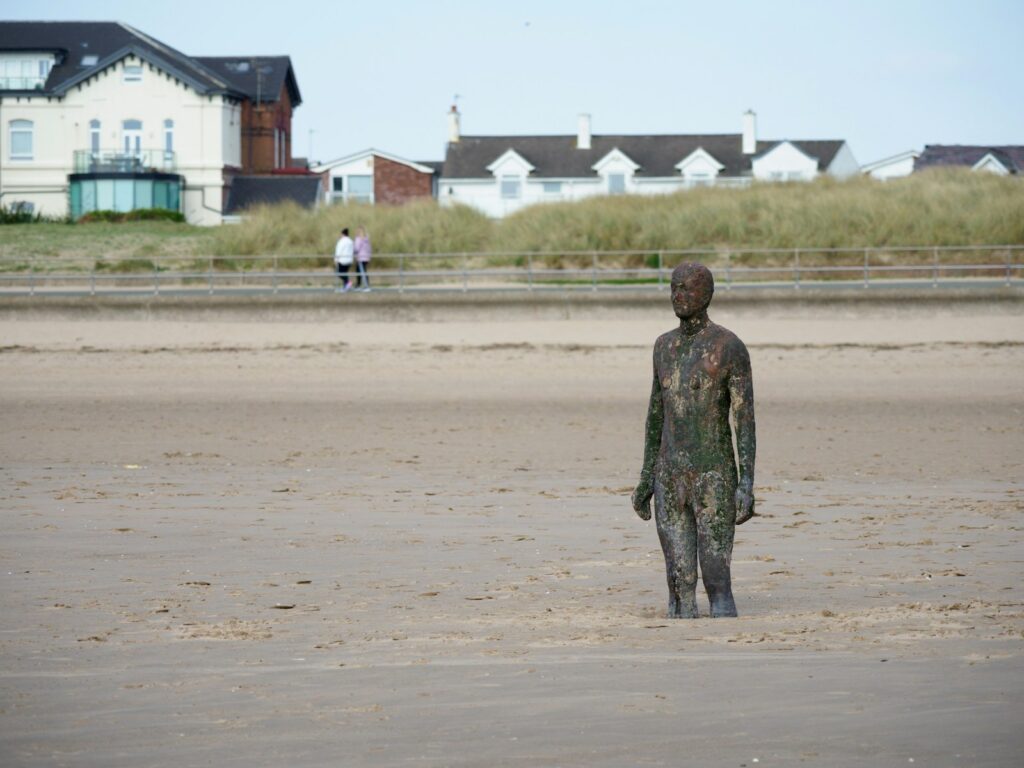
Another Place, Crosby
The first that caught my eye is known as Another Place, by the artist Antony Gormley. This installation is in Crosby, just north of Liverpool, and consists of 100 figures, all of which are casts of Antony Gormley’s own body, rising out of the sand. These life-size iron figures are spread along about three kilometres of the shore. Many are covered by the tide, and you can see where the sea and its marine life have left their mark on the statues.
Controversy has followed this exhibit wherever it has been. It was shown in Cuxhaven in Germany, Stavanger in Norway and De Panne in Belgium before finding a permanent home in Crosby in 2007.
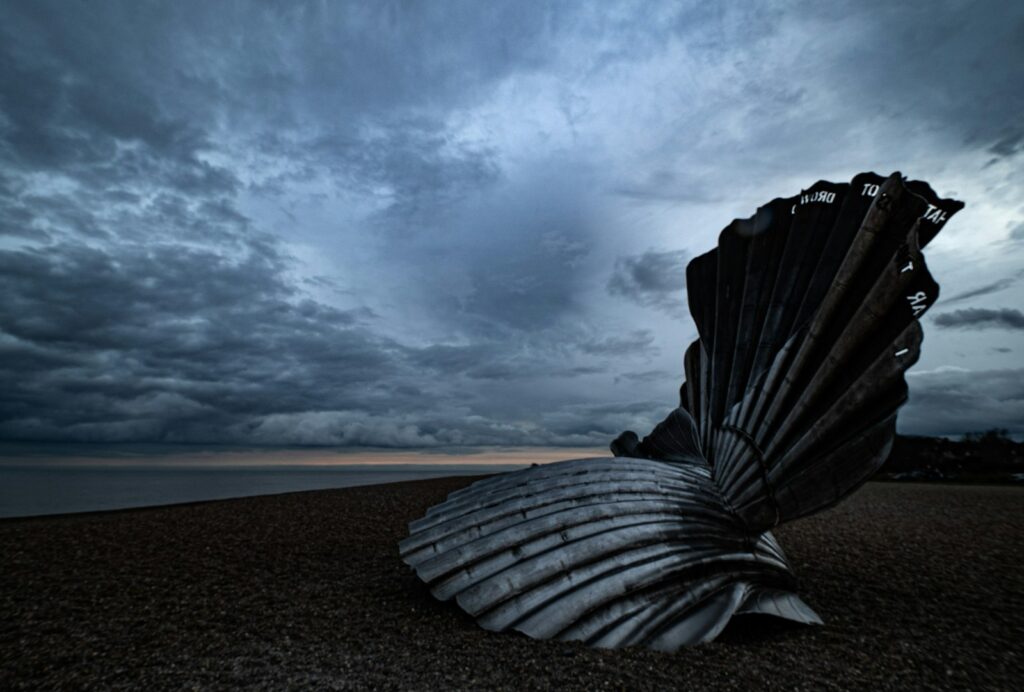
Scallop, Aldeburgh
Created as a tribute to the composer Benjamin Britten (1913 to 1976), this giant scallop shell rises from the beach at Aldeburgh in Suffolk, where Britten regularly walked. The Scallop was created by the Suffolk-born artist Maggi Hambling, who is herself a fan of Britten’s music.
The sculpture depicts two broken, interlocking scallop shells. Words from Britten’s opera Peter Grimes are cut into the rim of the upright shell and read “I hear those voices that will not be drowned”. Maggi Hambling describes Scallop as a conversation with the sea and said, “An important part of my concept is that at the centre of the sculpture, where the sound of the waves and the winds are focused, a visitor may sit and contemplate the mysterious power of the sea.”
As with Another Place, the Scallop has attracted a considerable number of different opinions. Some residents campaigned to have it moved, and in 2015 a national newspaper critic named it among the worst public art in Britain. Love it or not, it is well worth seeing for yourself.
Planning Your Visit
- Crosby: The figures stand between Waterloo and Blundellsands, a short train ride from Liverpool. Stay on the promenade and paths, as the tide comes in fast and the sand can be soft.
- Aldeburgh: Scallop stands on the beach north of the town, towards Thorpeness. Walk along the shingle from the town, or park nearby.
- Best light: Late afternoon and sunset, at both.
Add Coastal Art to Your Journey
Tell us your dates and interests, and we’ll build the quieter corners of Britain into your trip.
Leave a Reply